Modern Pickleball Grip Techniques That High-Level Players Love
High-level pickleball players are making subtle but impactful adjustments to their pickleball grip that separate them from recreational players. These modern techniques focus on choking up on the paddle, adjusting grip styles at the kitchen, and improving positioning for faster reactions.
High-level pickleball players are making subtle but impactful adjustments to their pickleball grip that separate them from recreational players.
These modern techniques focus on choking up on the paddle, adjusting pickleball grip styles at the kitchen, and improving positioning for faster reactions.
The pickleball grip might seem like one of the most basic fundamentals of the sport, but it's also one of the most misunderstood.
While recreational players tend to grip their paddles the same way throughout an entire match, high-level players are constantly adjusting their pickleball grip based on the situation, the incoming ball speed, and what they're trying to accomplish at the kitchen line.
According to PADDLIX a pickleball coaching channel focused on modern technique, these pickleball grip adjustments are becoming increasingly common at the professional level and represent a significant evolution in how the sport is being played.
The introduction of these subtle but impactful adjustments shows that pickleball continues to evolve beyond its tennis roots.
Players who understand and master these pickleball grip techniques gain a competitive edge that translates directly into better control, faster reactions, and improved consistency during high-pressure exchanges.
Love pickleball? Then you'll love our free newsletter. We send the latest news, tips, and highlights for free each week.
Why Pickleball Grip Changes Are So Important in Modern Pickleball
The answer is simple:
Hand speed and control matter more than raw power at the kitchen line.
When you're engaged in a fast-paced dinking exchange or defending against an aggressive attack, the ability to react quickly and adjust your paddle angle on the fly separates winners from players who get caught flat-footed.
Traditional pickleball instruction often emphasizes holding the paddle with a full pickleball paddle grip at the bottom of the handle, similar to how tennis players hold their rackets.
This position maximizes leverage and power generation, which works great for serves and drives.
But at the kitchen line, where most points are actually decided, that same grip can slow you down and limit your touch.
High-level players recognize this trade-off and adjust accordingly.
They understand that different situations call for different grip positions, and they've developed the muscle memory to make these transitions seamlessly during live play.
Choking Up: The Most Noticeable Pickleball Grip Adjustment
One of the clearest differences between recreational and advanced players is how they hold the paddle during kitchen exchanges.
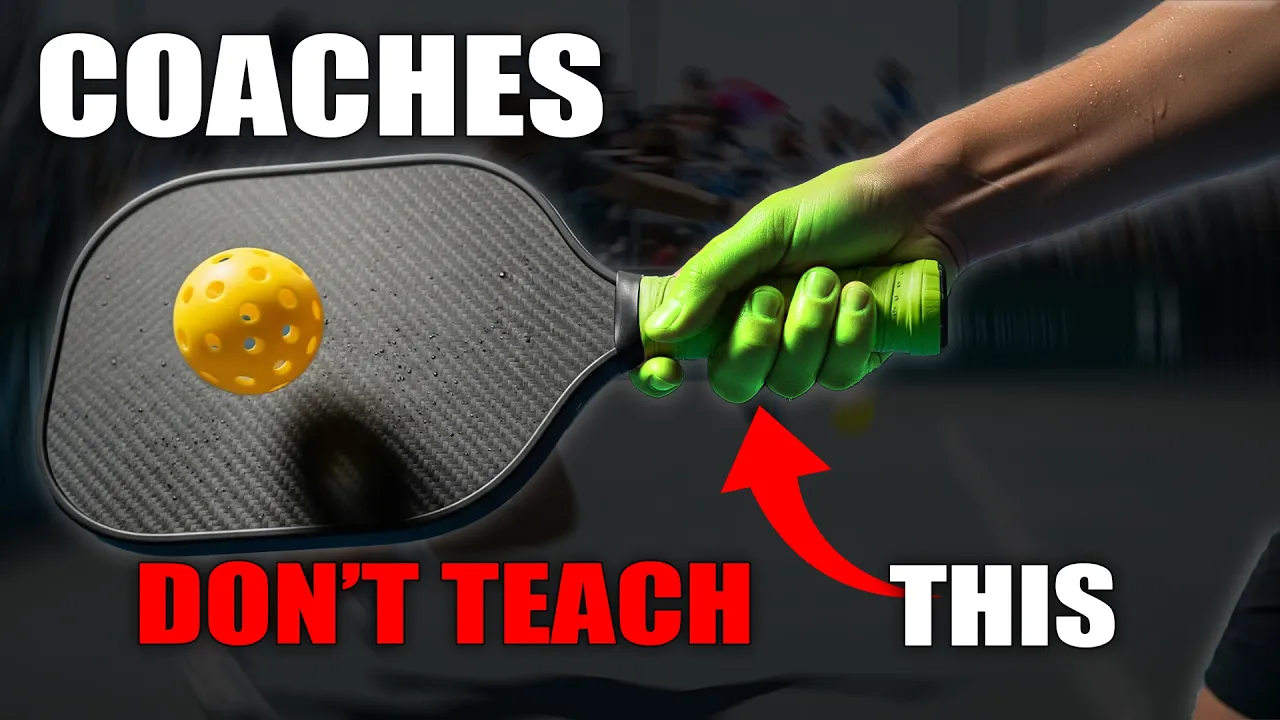
Choking up on the paddle means moving your hand slightly higher on the grip, closer to the paddle face, rather than gripping all the way at the bottom.
The primary benefit is reduced swing weight.
When your hand is closer to the paddle face, the paddle becomes significantly easier to maneuver.
This translates into faster hand speed during rapid exchanges and smoother transitions between forehand and backhand shots.
In situations where reaction time matters more than power, this adjustment is invaluable.
Think about a scenario where your opponent hits a soft dink and you need to attack it.
- With a full pickleball paddle grip at the bottom, your paddle has more leverage but also more inertia.
- With a choked-up grip, your paddle moves more quickly and you can make smaller, more precise adjustments with greater control.
During dinks and drop shots, players generally don't need maximum power anyway.
Holding lower on the paddle naturally creates more leverage, but it can also reduce touch and precision.
Choking up slightly helps stabilize the paddle and improves consistency on softer shots where feel is critical.
However, there are trade-offs worth considering. Serving and driving power can decrease because the paddle generates less leverage through the swing.
This means players need to determine whether they benefit more from added control and hand speed or from maintaining maximum power on their attacking shots.
The effectiveness of this adjustment also depends on paddle design.
Elongated paddles tend to support pickleball grip changes more effectively because they provide enough space for slight hand position adjustments without crowding your hand.
If you're using a shorter, more compact paddle, choking up might feel awkward or restrictive.
Adjusting Your Pickleball Grip at the Kitchen: A Game-Changer
Here's where modern pickleball technique gets really interesting:
High-level players change their pickleball grip mid-rally based on the incoming ball speed and the time available to make the adjustment.
In fast exchanges, players typically stay in a continental grip because it allows quick reactions on both sides without requiring any adjustment.
The continental grip is neutral and versatile, which is exactly what you need when the ball is coming at you quickly.
But when a slower ball is coming, such as a soft dink or drop shot, high-level players often make slight pickleball grip styles changes to generate more topspin and improve their reach.
This is where understanding pickleball grip mechanics becomes a real competitive advantage.
On the forehand side, transitioning from a continental grip to an eastern grip allows the paddle face to move into a more favorable angle for topspin.
This creates better access to spin and allows you to contact the ball farther out in front of your body.
With a continental grip, wrist mobility limits how far forward the paddle can naturally angle.
The eastern grip changes that alignment, making it easier to create topspin while reaching farther into the court.
A similar concept applies on the backhand side.
Adjusting toward a backhand eastern grip creates additional spin potential and allows better extension through the shot.
These pickleball paddle grip changes can be used both out of the air and after the bounce.
The important detail is timing.
These changes only work when the incoming ball is slow enough to allow the grip transition without compromising your reaction speed.
If you try to adjust your grip when the ball is coming at you hard, you'll be caught mid-transition and vulnerable.
Posture and Positioning: The Often-Overlooked Pickleball Grip Factor
While pickleball grip adjustments get most of the attention, posture at the kitchen line plays an equally important role in how effectively you can use your grip and react to incoming shots.
One of the clearest differences between high-level players and recreational players is posture at the kitchen line.
Advanced players tend to lean slightly forward while many lower-level players stand upright.
This forward lean creates a more effective reaction position.
When standing upright, the elbow naturally stays closer to the body.
As a result, reacting to shots directed at the shoulder or hip requires a larger movement to clear space for the paddle.
You have to move your entire arm away from your body, which takes time and energy.
Leaning forward changes the natural positioning of the arm. The elbow sits slightly farther away from the body without requiring tension or forced positioning.
This makes it easier to react to fast shots, especially those aimed at the body.
The improvement is particularly noticeable during "chicken wing" situations where the ball targets the right shoulder or hip area.
Since the elbow is already positioned slightly forward, the player can react with a shorter and quicker movement.
This posture also creates a more athletic and prepared position overall.
Instead of reacting from a passive upright stance, the player remains engaged and ready for rapid exchanges.
The adjustment is subtle rather than exaggerated.
The goal is not excessive leaning, but simply enough forward posture to improve readiness and reaction efficiency.
You're not trying to look like you're about to fall forward; you're just positioning yourself to be ready for anything.
How These Techniques Work Together
Modern pickleball continues to evolve through small but meaningful technical adjustments. Choking up on the paddle can improve hand speed and control.
Pickleball grip changes at the kitchen create better access to topspin and extension. Leaning forward improves reaction efficiency during fast exchanges.
Together, these adjustments reflect the growing specialization of high-level pickleball and show how subtle refinements can significantly improve performance at the kitchen.
The players who master these techniques aren't necessarily stronger or more athletic than their competitors.
They're simply more efficient with their movements and more intentional about how they position themselves and their paddle.
The beauty of these adjustments is that they're not complicated or difficult to understand.
They're just different from what most recreational players have been taught.
Once you understand the reasoning behind each adjustment, you can start experimenting with them in your own game and see which ones work best for your playing style and pickleball grip setup.
Frequently Asked Questions
What Is the Best Pickleball Grip for the Kitchen Line?
The best pickleball grip for the kitchen line is the continental grip because it allows fast reactions on both the forehand and backhand without requiring any mid-rally adjustment. When the incoming ball slows down, advanced players shift toward an eastern grip to generate more topspin and extend their reach.
How Does Choking Up Change Your Pickleball Grip?
Choking up means moving your hand higher on the handle, closer to the paddle face, which reduces swing weight and improves maneuverability during fast exchanges. It is most effective at the kitchen line where touch and hand speed matter more than power.
Should Recreational Players Adjust Their Pickleball Grip Styles?
Recreational players should first build a consistent continental grip before experimenting with different pickleball grip styles. Once you can execute basic shots reliably, start practicing grip transitions during slow dinking drills so the movements become automatic under pressure.
How Does My Pickleball Grip Affect Topspin?
Your pickleball grip directly controls the paddle face angle, which determines how much topspin you can generate. Transitioning from a continental to an eastern grip on the forehand side moves the paddle face into a more favorable angle for topspin and allows you to contact the ball farther out in front of your body.
Does Paddle Shape Affect How You Should Hold Your Pickleball Paddle Grip?
Yes, elongated paddles support pickleball paddle grip adjustments more effectively than shorter compact designs because they provide more handle space for repositioning your hand. If you are using a compact paddle and choking up feels restrictive, that is a sign your paddle shape may be limiting your grip flexibility.

Love Pickleball? Join 100k+ readers for free weekly tips, news & gear deals.
Subscribe to The Dink