How to Fix an Inconsistent Pickleball Serve in One Practice Session
If you want to know how to fix inconsistent pickleball serve mechanics, the fix usually lives in your toss, your contact point, and your follow through, not your talent. One focused practice session and three targeted drills can turn a shaky serve into your most reliable shot.
Learning how to fix inconsistent pickleball serve mechanics doesn't require a full offseason.
It requires one honest practice session and a plan you actually stick to. Most players treat a shaky serve like bad luck.
It's not. It's a mechanical leak, and leaks get fixed with reps, not hope.
Here's the thing: your serve is the only shot in the sport you control completely.
That's exactly why it's fixable in an afternoon.
Love pickleball? Then you'll love our free newsletter. We send the latest news, tips, and highlights for free each week.
Why Your Serve Keeps Breaking Down
Your serve fails for one of three reasons: an inconsistent toss, a moving contact point, or a rushed motion under match pressure.
Nail down which one is yours before you touch a drill. A lot of it traces back to a shaky base stance, which throws off everything downstream.
Is It Your Toss, Your Grip, Or Your Head?
Start with the toss. Drop it from a different height or angle every time and your body has to improvise contact on the fly, which is where consistency goes to die.
Grip matters just as much. A lot of players don't even have a consistent serve grip locked in, so the paddle face angle shifts serve to serve without them noticing.
And then there's the mental piece: rushing the motion because you're anxious about the return, which is a mistake most players don't realize they're making until it's pointed out.
That rush shows up as a shortened backswing and a serve that dies in the net.
How to Fix Inconsistent Pickleball Serve Mechanics Step by Step
The fix breaks into three parts: the toss, the contact point, and the follow through. Handle all three in order and the serve stops being a coin flip.
Fix One: Lock In One Drop, Every Time
Pick a release point. Same hand height, same drop, same spot relative to your front foot, every time. Shoulder height matters more than most players realize here, since a drop that's too high invites your arm to chase the ball instead of meeting it. Do this for 20 reps before you even care where the ball lands.
Fix Two: How to Fix Inconsistent Pickleball Serve Contact Point Problems
This is where most inconsistency actually lives. Players contact the ball at a different point relative to their body on nearly every swing, and a few inches of variance at contact turns into feet of variance at the baseline. It's the same logic as picking a drive over a drop on your fifth shot: commit to one choice so your body isn't guessing mid-swing. Find your ideal contact point, usually just in front of your lead hip, and mark it with a mental cue every rep.
A recent motor learning review in the Journal of Sports Sciences (2025) found that racket-sport athletes who fixed a single, repeatable contact point cut unforced errors on serve-like motions within a handful of sessions. Consistency isn't talent. It's a rehearsed skill investment that pays off fast, and it's the fastest route to real pickleball serve consistency.
Fix Three: Follow Through Like You Mean It
Change one thing at a time here, and resist the urge to fix your strengths instead of your actual weaknesses. A serve that stops dead at contact loses power and control. Weaponizing your serve starts with a full follow through toward your target, paddle finishing near your opposite hip or higher, not stalling at your waist. That finish also sets up where the ball lands. Players chasing placement near the kitchen line almost always have a longer, more committed finish.
 The Dink Media Team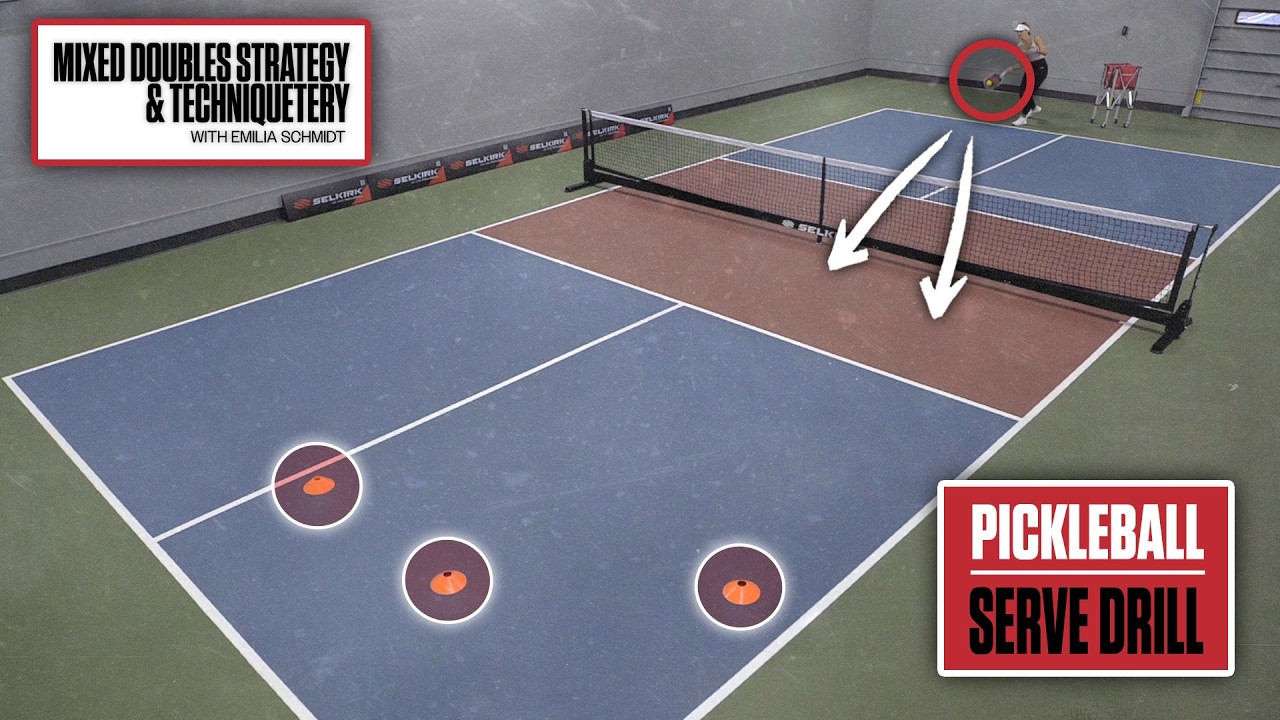
Add Spin Without Losing Your Consistency
Direct answer first: don't add spin until your flat serve is repeatable. Spin amplifies whatever inconsistency already exists in your motion.
Once your toss and contact point are locked, spin becomes a weapon instead of a liability.
Topspin pulls the ball down fast and forces awkward returns, while a well-placed backspin serve dies low and short.
Plenty of players use training tools built for spin development to isolate the wrist and paddle path.
Most club players should skip spin entirely until they can hit ten flat serves in a row under mild pressure, ideally during a focused practice session with a partner who can track your makes.
Spin on top of an inconsistent base just means inconsistent spin.
 The Dink Media Team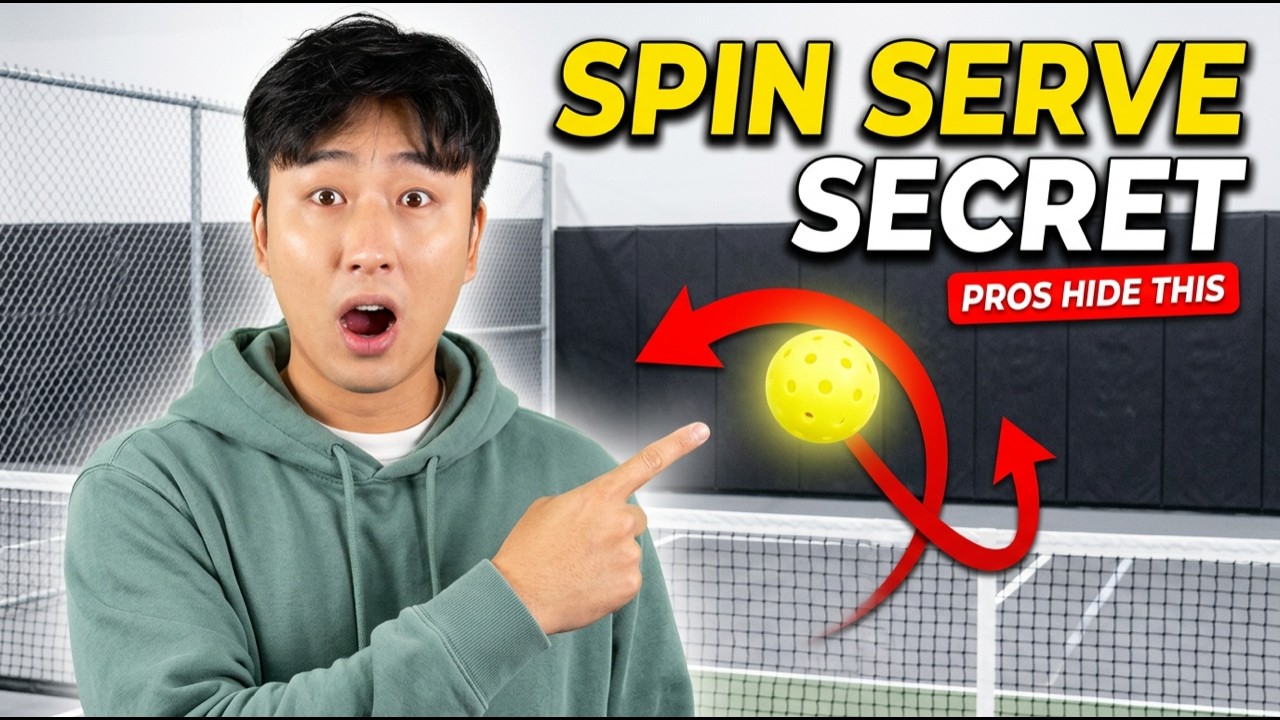
The One-Session Drill Plan That Actually Sticks
You don't need three weeks.
You need one focused session with a clear progression, about 30 minutes of undistracted reps, and this is the fastest path to how to fix inconsistent pickleball serve issues without overthinking every rep.
USA Pickleball has even built entire charity initiatives around the word serve, but the version we care about here is the one that lands in bounds every time.
- Toss only (5 minutes): Drop the ball to your mark without swinging. Catch it every time. Boring on purpose.
- Shadow swings (5 minutes): Full motion, no ball, focused entirely on a high follow through.
- Target serves (15 minutes): Serve to a specific quadrant, tracking makes out of ten. Solo drills like this one work fine without a partner.
- Pressure reps (5 minutes): Serve right after 10 jumping jacks to simulate a raised heart rate mid-match.
If you want variety, the figure-8 drill builds the same repeatable pattern this relies on, just applied to footwork.
And if mindless repetition sounds appealing, the fridge and toaster drill is built around exactly that.
Beginners rushing this should circle back to the fundamentals first, since a shaky base makes every one of these drills less effective.
Don't skip the warmup either.
A proper warmup routine loosens the shoulder before you groove a new motion, and grooving anything on cold muscles just invites old habits back.
Once the serve lands, positioning yourself at the kitchen line matters too.
A great serve wasted on poor court position is still a wasted point, and it pays to know where returners are taught to attack, since a predictable serve gives them an easy read.
DUPR's 2025 competitive play data showed that serve-related unforced errors remain one of the biggest predictors of match losses at the 3.5 to 4.0 level, exactly where most players are still guessing at mechanics instead of drilling them.
 The Dink Media Team
Key Takeaways
If you remember nothing else about how to fix inconsistent pickleball serve mechanics, remember this: reps without diagnosis just deepen the flaw. Real pickleball serve consistency comes from rehearsed checkpoints and knowing calls like the middle rule cold, not raw talent.
- An inconsistent pickleball serve almost always traces back to three things: the toss, the contact point, and a rushed follow through.
- Fix mechanics in order. Skipping ahead just grooves a new flaw on top of the old one.
- Hold off on spin until your flat serve is repeatable under mild pressure.
- One focused 30-minute session beats weeks of unstructured serving practice.
Frequently Asked Questions
What is the most common cause of an inconsistent pickleball serve?
An inconsistent toss is the most common root cause. When the release point changes serve to serve, the body has to improvise the swing to meet it, and that variance is exactly what lets returners make the most of their return of serve against you.
How to fix inconsistent pickleball serve issues if I've been playing for years?
Long-time players usually have a deeply grooved compensation, so the fix is the same three steps: lock the toss, fix the contact point, commit to a full follow through. It takes longer to unlearn a habit than build one, so expect a session or two of feeling worse before it clicks.
Should I add spin if my serve isn't consistent yet?
No. Spin exaggerates whatever flaw already exists in your motion, the same way an inconsistent drive technique gets worse under pressure instead of better. Get ten flat serves in a row under mild pressure first, then start layering in topspin or backspin.
How long does it take to fix a pickleball serve?
Most players see a real difference within one to two focused sessions, since the fixes are mechanical, not physical. Full retention under match pressure usually takes a few weeks, and doubles strategy around serve placement tends to click into place around the same time.
What counts as a legal serve in pickleball?
A legal serve has to be hit underhand and below the waist, with the paddle moving in an upward arc at contact, landing in the diagonal service box beyond the kitchen line. The 2026 USA Pickleball Official Rulebook covers every edge case, including foot faults and the two-bounce rule.

Love Pickleball? Join 100k+ readers for free weekly tips, news & gear deals.
Subscribe to The Dink