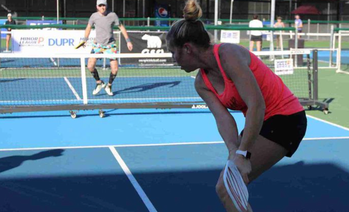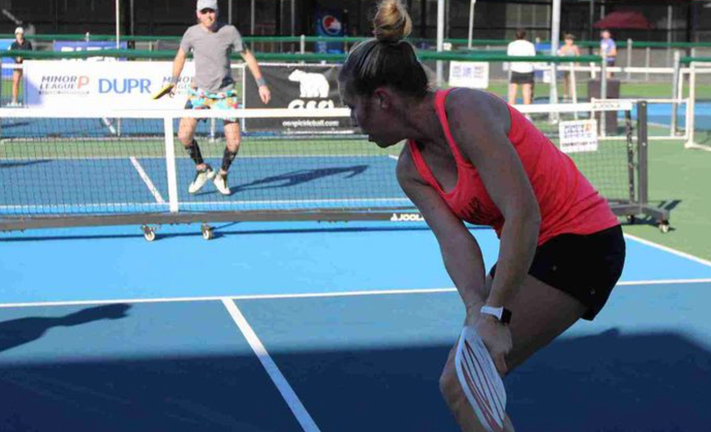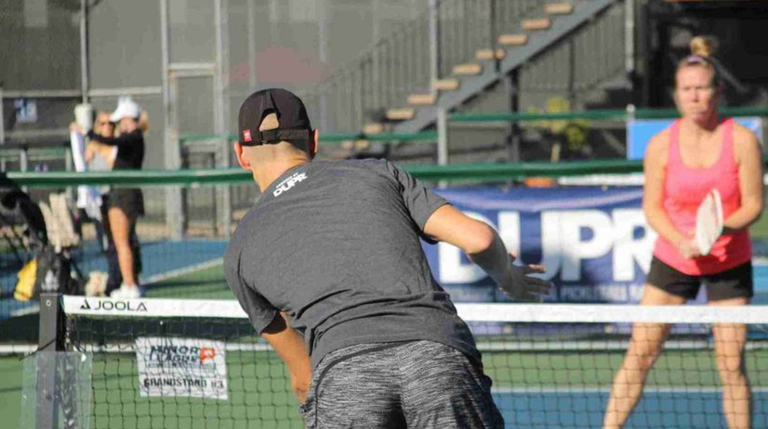
The right pickleball singles strategy beginners can rely on starts with better court coverage, not a bigger swing. This guide breaks down the serve, return, and shot selection habits that actually hold up once the rallies get long.
Building a real pickleball singles strategy beginners can lean on starts with one hard truth: singles is a different sport than doubles.
There's no partner to bail you out on a bad angle.
Nobody's covering the middle while you camp at the net. It's just you, 44 feet of open court, and a serve clock that does not care how nervous you are.
Here's the thing. Most beginners drag their doubles habits straight into singles, then wonder why they're gassed by game two.
If you skipped the fundamentals when you started, it's worth circling back to the basics every beginner needs before layering on strategy.
The best singles players treat the format as an endurance event wrapped inside a chess match.
Love pickleball? Then you'll love our free newsletter. We send the latest news, tips, and highlights for free each week.
The Pickleball Singles Strategy Beginners Need to Learn First: Own the Whole Court
Court coverage is the actual foundation of any pickleball singles strategy beginners try to build, and most people get it wrong before the first serve even lands.
Here's the myth to kill immediately: singles does not use a narrower court like tennis does.
The USA Pickleball official rulebook confirms singles and doubles share identical 20-by-44-foot dimensions, alley included.
You're solely responsible for a full 20 feet of width, and there's no one to bail you out on a shot to the far sideline.
A simple figure-8 footwork drill builds that court awareness fast.
That single fact changes everything about your footwork and positioning.
Beginners who learned the game through doubles tend to hug the middle out of habit, since a partner usually covered one half.
In singles, that habit gets punished fast, and it shows up first as a pressure zone problem before it ever looks like a conditioning one.
Your opponent finds the open space and makes you sprint corner to corner until your legs give out.
The Footwork Habit Every Beginner Should Ditch
Standing flat-footed between shots is the fastest way to lose a singles match.
Instead, use a quick split step the moment your opponent contacts the ball, then push off toward its likely path.
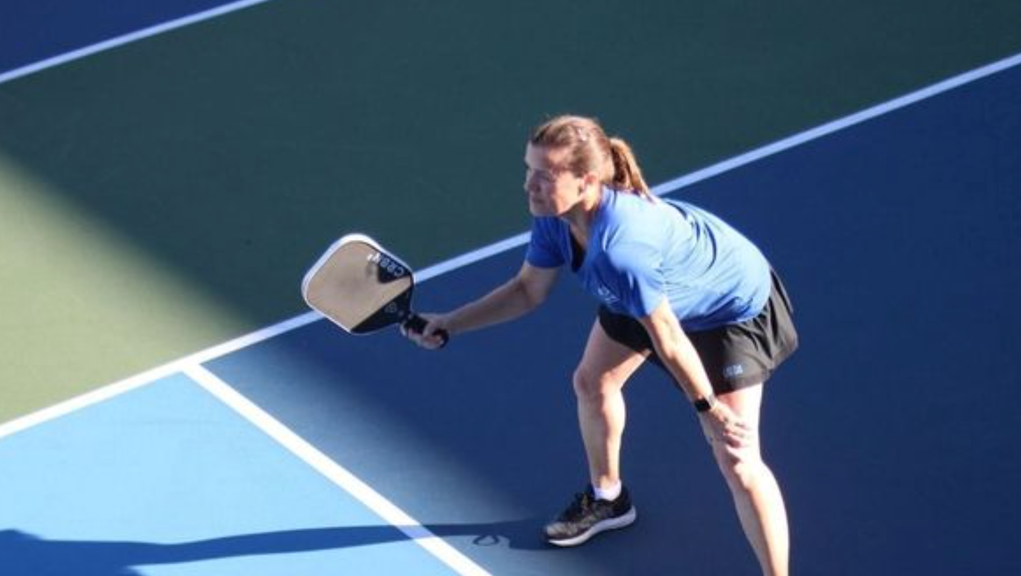
Think of your ready position like a shortstop: weight forward, knees soft, eyes on the paddle face.
Reaction time is trainable, and it shows up first in your feet, not your hands.
This look at some of the fastest hands in the game is proof that quickness can be drilled like any other skill.
Spend time on mid-court situations specifically, since singles forces you through the transition zone constantly with no partner to shield you there.
And once you arrive at the net, know how to position yourself at the kitchen line so you're not stuck straddling it, unable to attack or retreat cleanly.
A quick definition, since it trips up new players: the "kitchen" is the seven-foot non-volley zone on each side of the net.
You cannot volley a ball while standing inside it, in singles or doubles.
Step in to hit a groundstroke off a bounce, then get back out before your next volley chance.
A fun drill for training that in-and-out footwork pattern is the fridge and toaster drill.
Why Does Your Serve and Return Set the Tone for Everything Else?
Your serve and return are the only two shots in singles you fully control before your opponent touches the ball, so they deserve more attention than beginners usually give them.
A deep serve to the backhand pushes your opponent behind the baseline and buys you time to get into position for the next shot.
That's more valuable early on than trying to ace someone.
Focus on consistency before power. Weaponizing your serve does not mean blasting it as hard as possible.
It means placing it deep to a spot that limits your opponent's angles, then following it with a plan. Check your serve grip too.
A continental-style grip gives you more control over placement than the full forehand grip most beginners default to.
 The Dink Media Team
A Serve Placement Move Smart Pickleball Players Steal
Serve deep to the middle of the court on big points.
It removes sharp angles, cuts down your opponent's reaction time, and keeps the ball away from their strongest wing more often than pure guesswork would.
For extra detail on exact target zones, this breakdown of serve placement near the kitchen is worth bookmarking.
Return of serve deserves equal attention.
Most beginners just try to get the ball back in play, which is fine early on, but where you return serve actually dictates the shape of the entire point.
Study how to make the most of your return of serve and rallies start tilting in your favor before shot three even happens.
 The Dink Media Team
The Pickleball Singles Strategy Beginners Overlook Once the Rally Starts
Shot selection, not raw power, decides most singles rallies, and that's the part beginners skip while they're busy trying to hit winners.
Once serve and return are done, singles becomes a game of patience punctuated by opportunity.
Get comfortable with your three shot options from the baseline: drive it deep, drop it soft into the kitchen, or lob over an opponent who has crashed the net.
Beginners who drill shot selection specifically, rather than just grooving mechanics, tend to improve faster in match play.
Here's a stat worth knowing.
Research published through the Journal of Sports Sciences has found singles-format racquet sports carry significantly higher aerobic demand than doubles, since one player covers the entire court alone across a longer rally count.
Translation: your third shot drop needs to hold up in the fourth game, not just the first.
Practicing how to spice up your third shot with more variety keeps opponents guessing instead of anticipating.
 The Dink Media Team
When Should You Actually Sprint to the Net?
You should move to the net once you've hit a shot that forces your opponent to pop the ball up or scramble out of position, not on autopilot after every serve.
In doubles, teams crash the net constantly because a partner covers the middle.
In singles, sprinting forward too early leaves the entire back half of the court open, and a decent opponent will lob you every time.
That doesn't mean you avoid the net altogether. It means earning your way there.
Practicing unusual dinking technique and working through pickleball's hardest dinking drill will sharpen the soft-game skills you need once you get there, since the net exchange in singles rewards touch over power just as much as it does in doubles.
Mixing in a go-to slice dink once you're comfortable at the kitchen line adds another layer your opponent has to respect.
And don't sleep on the lob. A well timed lob is one of the most underused weapons in beginner singles play, largely because nobody drills it.
It's worth understanding how doubles strategy differs here too, mainly so you can spot which habits to unlearn.
Concepts like T and sideline positioning exist for two-player coverage. In singles, you're the only one covering that ground.
 The Dink Media Team
What's the Smartest Way to Close Out a Point?
Closing out a singles point comes down to patience under pressure, waiting for a genuinely attackable ball instead of forcing one.
Beginners lose more points by going for a low-percentage winner on a neutral ball than they ever do from an opponent's great shot.
This guide to power shots breaks down when to actually drive the ball versus when to keep it soft.
According to a 2026 participation report from the Sports & Fitness Industry Association, casual players who transition into more competitive play increasingly cite singles as the format where strategic patience improves fastest, largely because there's nowhere to hide a poor decision.
A little deception helps too.
Mixing your pace and disguising your intent, the way this breakdown of pickleball deception tips covers, keeps opponents guessing on when you're going to speed up or drop the ball short.
 The Dink Media Team
Key Takeaways
- Singles uses the exact same court dimensions as doubles. There's no narrower alley like tennis, so full-court coverage matters from your first point.
- A smart pickleball singles strategy beginners should start with is deep, consistent serving, not aggressive placement.
- Patience in the rally beats a highlight-reel winner almost every time in singles.
- Coming to the net still matters, but the timing looks different without a partner covering your back. Study good shot or bad positioning before you decide when to move forward.
- Conditioning is part of your strategy. Singles rallies run longer and hit harder on your legs than doubles ever will. Scoring works the same way it always has, so brush up on the scoreboard if it's been a while.
Frequently Asked Questions
Is pickleball singles strategy really that different from doubles?
Yes. The court dimensions stay the same, but you cover all of it alone, so it pays to focus on your strengths since there's no partner to cover a weaker shot. Positioning, conditioning, and shot selection all shift too. A pickleball singles strategy beginners can trust leans harder on deep, consistent shots and smart net timing than the net-rushing habits common in doubles.
What's the biggest mistake beginners make in pickleball singles?
Rushing the net without earning it. Without a partner to cover the back half of the court, an early or unforced trip to the kitchen line leaves you exposed to a simple lob or a passing shot down either sideline. Learning to reset a fast exchange instead of panicking fixes a lot of these unforced errors.
How important is serve placement in singles?
Extremely important. A deep serve to the middle or backhand limits your opponent's angles and buys you time to reset your position, which matters more in singles since you're covering the entire court by yourself on every point.
Do beginners need to be in great shape to play singles well?
You don't need elite fitness to start, but conditioning matters more in singles than in doubles because rallies run longer and you're covering more ground per point. Building a real training routine over time will improve your strategy execution late in matches.
How can a beginner practice singles strategy without a coach?
Drill specific shots in isolation, like the third shot drop, return of serve, and dinking, rather than only playing full points. A set of solo pickleball drills works well if you don't have a regular practice partner.

Love Pickleball? Join 100k+ readers for free weekly tips, news & gear deals.
Subscribe to The Dink