

Your pickleball serve is costing you points, and you probably don't even realize it.
Most recreational players stick to the same basic serve over and over, which makes them predictable and easy to attack.
But what if you could add five different serve techniques to your arsenal that would immediately make you harder to read and more effective on the court?
Ashley Griffith, a professional pickleball player on the PPA Tour, recently broke down exactly which serves you should be using and how to hit them.
The good news? You don't need to master all five. Adding even one of these serves into your game can transform your effectiveness instantly.
Love pickleball? Then you'll love our free newsletter. We send the latest news, tips, and highlights for free each week.
Why Your Serve Matters More Than You Think
Here's the thing:
Your serve is the only shot you control completely.
Your opponent can't influence it, can't pressure you into a mistake, and can't change the outcome. It's entirely on you.
That's why serve variety is such a powerful weapon in pickleball.
When you hit the same serve every time, your opponent learns exactly what to expect. They know the depth, the spin, the pace, and the placement.
They can position themselves accordingly and attack your third shot. But when you mix up your serves, you keep them guessing.
You force them to stay back, to adjust their positioning, and to react rather than anticipate.
The difference between a good serve and a great serve often comes down to one thing: setting up your third shot.
A well-placed serve doesn't just win the point outright.
It puts your opponent in a position where they have to hit a weaker return, which gives you an easier third shot to attack.
1. Deep Consistent Serve
Let's start with the foundation: the deep consistent serve. This is the serve you should hit most of the time, and it's exactly what it sounds like.
You're aiming for depth, consistency, and control.
The goal is to push your opponent back behind the baseline. When they're standing deeper in the court, they have less time to react to your third shot.
They also have to hit their return from a more defensive position, which typically results in a weaker ball that you can attack.
Ashley Griffith emphasizes that this serve doesn't need to be flashy or fast. It just needs to be deep and reliable.
Most players make the mistake of trying to hit winners on their serve, but that's not the point.
Your serve is about setting up the point, not ending it.
The mechanics are straightforward: smooth motion, consistent toss, and follow-through.
The key is repeatability. You want to hit this serve the same way every single time so that your opponent can't pick up any tells about what's coming next.
2. Topspin Serve
Now let's add some spin.
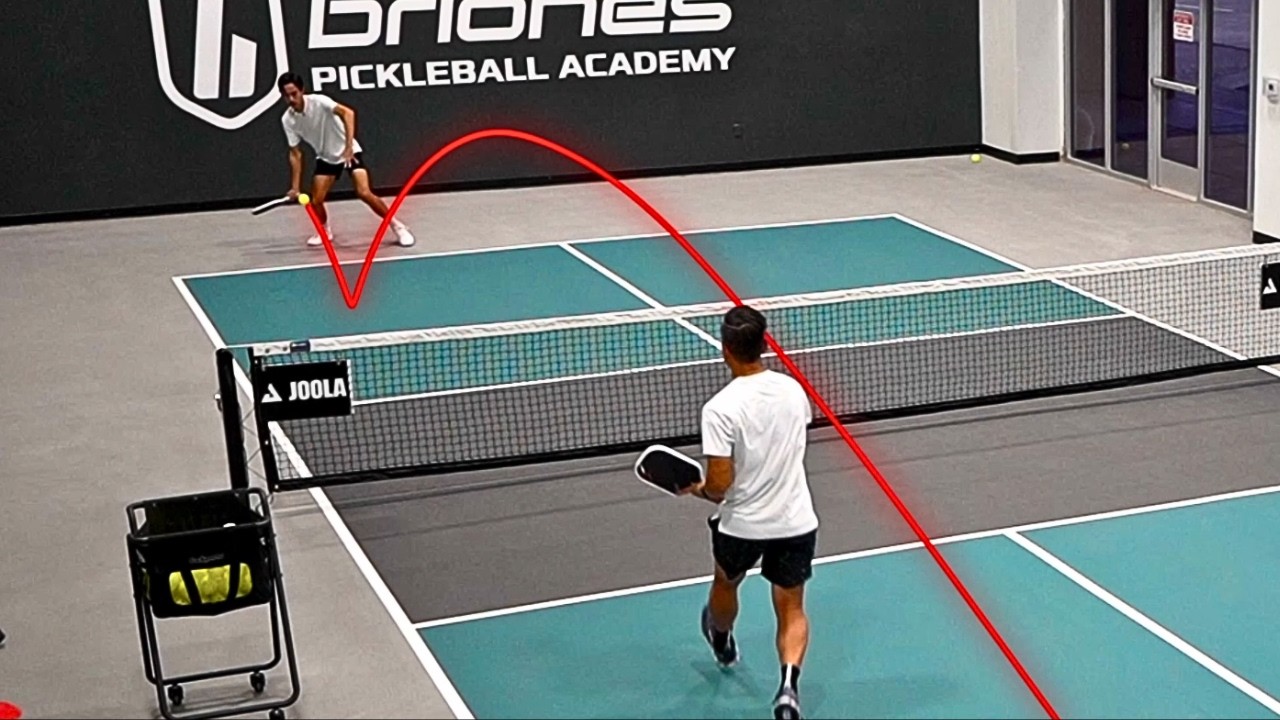
The topspin serve is a game-changer because it does something your opponent might not expect: it dips quickly after crossing the net.
With a topspin serve, you're brushing up on the ball, which creates forward rotation.
This causes the ball to drop faster than a flat serve would, even though you're hitting it with more pace.
The result? Your opponent has less time to react, and the ball lands deeper in the court.
The topspin serve is particularly effective against players who like to stand close to the baseline and attack.
Because the ball dips so quickly, they can't step in and take it early. They're forced to let it bounce, which gives you more control over the point.
The technique requires a slightly different motion than a flat serve. You're coming up through the ball rather than straight through it.
It takes a bit of practice to get the feel right, but once you do, it becomes a reliable weapon.
 The Dink Media Team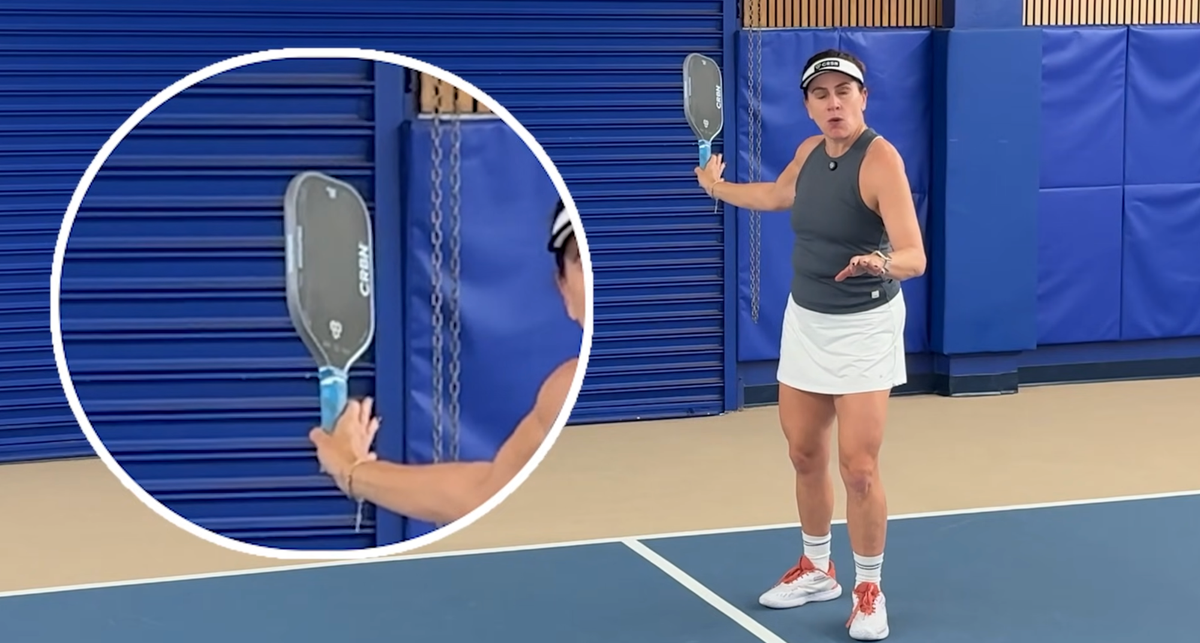
3. Slice/Side Spin Serve
Here's where things get interesting. The slice serve (also called a side spin serve) curves away from your opponent, which creates all sorts of problems for them.
If you're a right-handed player serving to the deuce court, a slice serve curves away to the right.
Your opponent has to reach for it, which pulls them off the court.
If they do manage to return it, they're often hitting from an awkward position, which means a weaker return.
The slice serve is also great for changing the angle of the court. By pulling your opponent wide, you're opening up the middle of the court for your third shot.
You can hit a dink down the line or even attack the open court if they don't recover quickly enough.
The mechanics involve brushing the side of the ball rather than the back. Your racket path goes across the ball, creating that sideways spin.
It's a different feel than a topspin or flat serve, so it takes some dedicated practice.
The Dink Media Team
4. Body Serve
The body serve is one of the most underrated weapons in pickleball.
Instead of aiming for a corner or the sideline, you're aiming directly at your opponent's body.
Why is this effective? Because it's uncomfortable. Your opponent can't step into the serve the way they normally would.
They have to back up or move to the side to create space. This disrupts their rhythm and often results in a defensive return.
The body serve is also harder to attack. When the ball is coming right at you, you can't take a big swing.
You're forced to make a more compact stroke, which usually means a softer return. That's exactly what you want.
The key is placement. You're not trying to hit them hard; you're trying to hit them in a spot where they can't get comfortable.
Aim for the chest or shoulder area, and vary the pace so they can't time it up.
The Dink Media Team
5. Change of Pace Serve
Finally, we have the change of pace serve. This is where you slow things down and hit a softer, slower serve than usual.
Why would you want to hit a slower serve? Because it messes with your opponent's timing.
If you've been hitting fast serves all match, suddenly hitting a slow one throws them off. They're expecting pace, so they start their swing early.
The ball arrives slower than they anticipated, and they either hit it into the net or pop it up.
The change of pace serve is also great for keeping your opponent honest.
If they're standing too close to the baseline, waiting to attack, a slow serve forces them to come in and take it early.
That's when you can hit a more aggressive third shot.
The technique is simple: just reduce your swing speed and hit a softer serve. You can still add spin if you want, but the main thing is the reduced pace.
The Dink Media Team
Putting It All Together
So here's the real question: which serves should you actually use? Ashley Griffith recommends starting with the deep consistent serve as your bread and butter.
Hit that about 70 percent of the time. Then mix in the other serves based on what your opponent is doing.
- If they're standing too close, hit a topspin serve to push them back.
- If they're standing too far back, hit a change of pace serve to bring them in.
- If they're in the middle, hit a slice serve to pull them wide.
- And if they're getting too comfortable with any particular serve, hit a body serve to disrupt their rhythm.
The beauty of having multiple serves is that you're not just hitting serves; you're controlling the point before it even starts.
You're dictating where your opponent stands, how they move, and what kind of return they can hit.
That's the difference between a good player and a great player.
The Dink Media Team
How to Practice These Serves
Adding new serves to your game doesn't happen overnight. You need to practice them deliberately and consistently.
Start by hitting each serve 20 to 30 times in a row until the motion becomes automatic.
Then mix them up during practice matches so you get comfortable using them in real situations.
The key is not to overthink it. Once you've practiced the motion enough times, trust your muscle memory and just hit the serve.
The more you practice, the more natural it becomes.
Frequently Asked Questions
What's the easiest serve to learn first?
The deep consistent serve is the easiest to learn because it requires the least amount of spin and technique. Focus on hitting it deep and reliably before moving on to the other serves.
How often should I use each serve?
Hit your deep consistent serve about 70 percent of the time. Use the other serves strategically based on what your opponent is doing and where they're positioned on the court.
Do I need to be a pro to use these serves?
Absolutely not. These serves work at every level of play. Even recreational players can benefit from adding variety to their serve game.
How long does it take to master these serves?
It depends on how much you practice. Most players can develop a reliable topspin or slice serve within a few weeks of dedicated practice. The body serve and change of pace serve are even quicker to learn.
Can I use these serves in doubles?
Yes, all of these serves work in both singles and doubles. In doubles, serve variety is even more important because you're playing against two opponents instead of one.

Love Pickleball? Join 100k+ readers for free weekly tips, news & gear deals.
Subscribe to The Dink