Why You're Stuck Below 4.0 (And What's Actually Holding You Back)
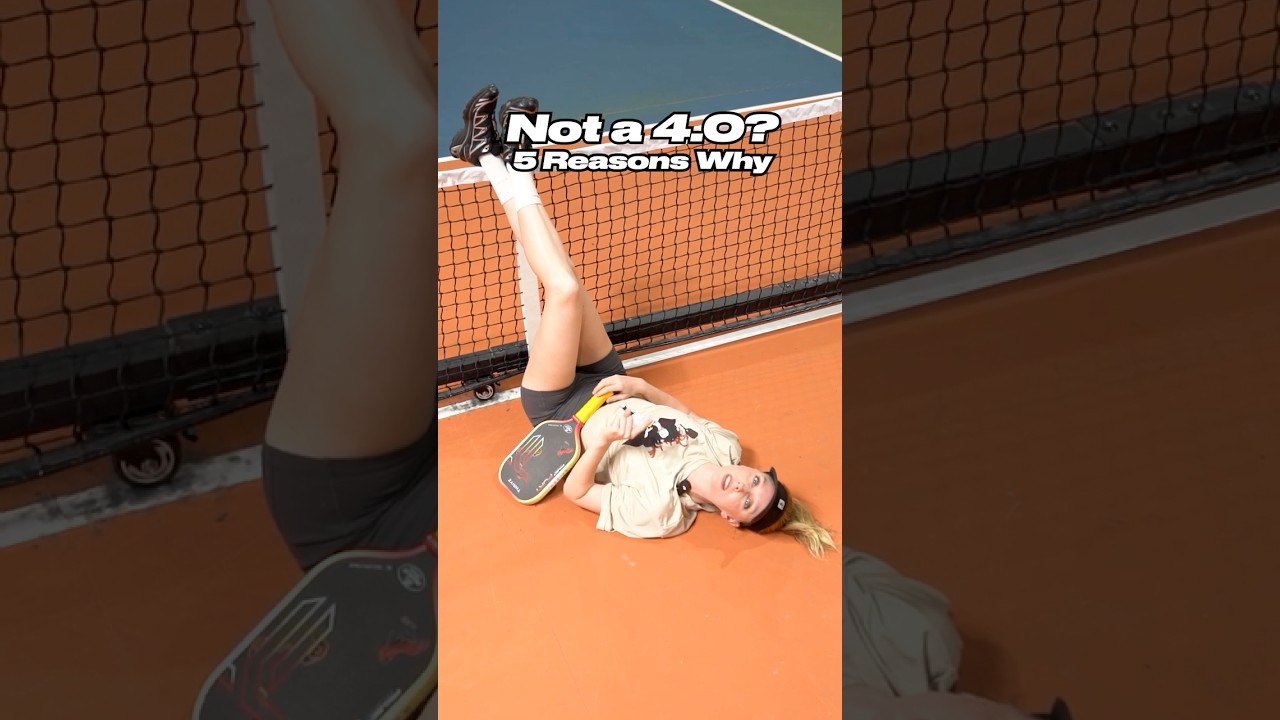
If you've been playing for two years and still can't crack 4.0, the problem probably isn't your athleticism. These five habits are what's actually keeping you stuck as a 4.0 pickleball player.
You've been grinding for two years, playing multiple times a week, and you still can't crack the 4.0 pickleball player threshold.
It's not your backhand. It's not your fitness. It's not even your footwork.
It's your habits.
These five reasons come from Cori Elliott on YouTube, and every one of them is fixable once you know what to look for.
Love pickleball? Then you'll love our free newsletter. We send the latest news, tips, and highlights for free each week.
The Real Gap Between 3.5 and 4.0
Most players assume the jump to 4.0 is about hitting harder or adding new shots. That assumption is wrong.
The real gap is decision-making.
A 4.0 pickleball player doesn't necessarily have better mechanics than a 3.5, but they make better choices about when to attack, when to reset, and when to be patient.
The official rating definitions published by USA Pickleball describe this same divide: consistency and shot selection under pressure, not raw power.
If your rating hasn't moved in two years, at least one of these five habits is the reason.
Reason 1: You Play More Than You Drill
Games expose your weaknesses. Drilling fixes them.
If your weekly routine is 90% open play and 10% structured practice, you're going to keep running into the same walls.
Open play feels productive because you're moving and competing.
But the situations that actually cost you points, the awkward half-volleys, the wide resets, the third shot drops you pop up, don't show up on a schedule you can control.
Drilling lets you isolate the exact shot costing you games and repeat it until it's reliable.
Check out these 6 progressive pickleball drills that take you from 3.0 to 5.0 if you're not sure where to start, or work through the 12 drills you need to play your best pickleball in 2026.
A good rule of thumb: for every hour of open play, spend at least 20 to 30 minutes on intentional drilling.
Most players flip that ratio and wonder why they plateau.
Here's the catch. Volume alone doesn't do it, and research on structured skill practice consistently points to targeted repetition over unstructured reps.
If you've been drilling for months with no change, your drilling probably isn't working because you're rehearsing what you're already good at.
Reason 2: You Speed Up Everything
Not every attackable ball is a good attack. This is the most common pattern at 3.5, and one of the hardest to shake.
You see a ball sitting up, your instincts say attack, and you rip it into the net or straight at a defender who puts you on the defensive.
The result is a lost rally you should have won.
The problem isn't that you're attacking. The problem is you're attacking without a plan.
A speed up needs a clear target, a readable setup, and a follow-up ready if your opponent gets a paddle on it.
Understanding when, how, and why to hit a speed up off the bounce is one of the fastest ways to stop giving away free points.
Ask yourself before every speed up: is this ball sitting up because my opponent made a mistake, or because they want me to attack it?
That one question will save you a lot of rallies.
 The Dink Media Team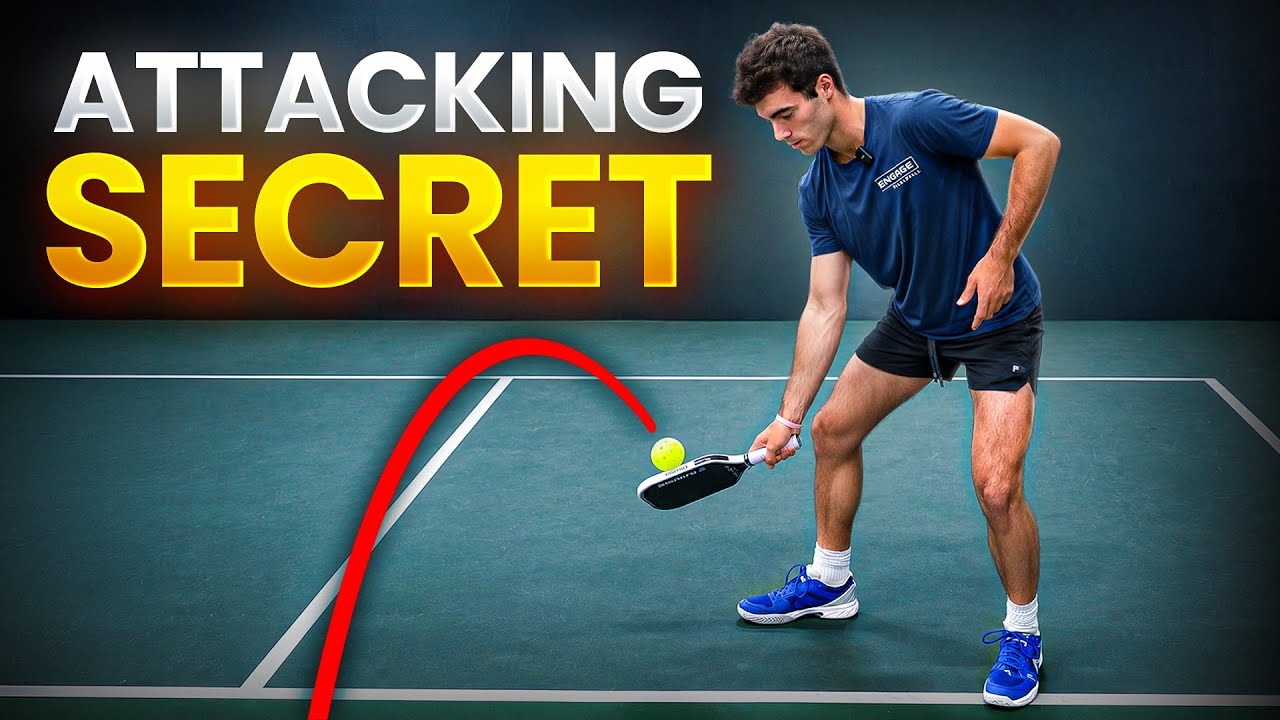
Is Your Drilling Actually Working?
Before going further, it's worth asking whether the drilling you are doing is actually moving the needle.
Many players drill the same things they're already good at, which feels satisfying but accomplishes nothing.
If you've been drilling for months and your game hasn't changed, the issue might be your approach to practice itself.
This breakdown on why your pickleball drilling isn't working addresses exactly that.
 The Dink Media Team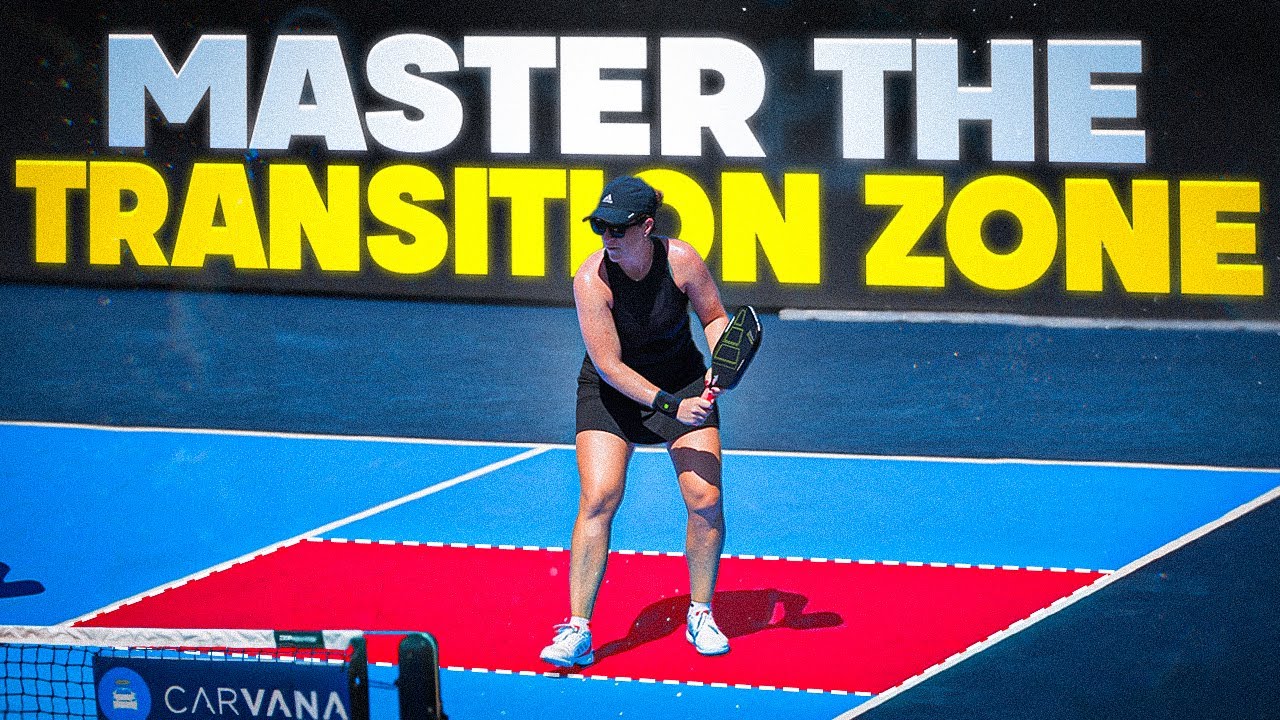
Reason 3: You Avoid Your Weaknesses
Your favorite shots are not what's costing you games. Your worst shots are.
This is uncomfortable because it means spending time on the thing you're worst at instead of the thing that feels good.
That's exactly what separates players who improve from players who stay stuck.
If your backhand dink breaks down under pressure, drill it until it doesn't.
If your third shot drop goes long when you're moving, that's your practice priority, not your forehand roll that already works fine.
How a 4.0 Pickleball Player Identifies Real Weaknesses
Here's a simple framework:
- After every game, note the shot type that caused your last three unforced errors
- Track whether those errors happen in the same situations repeatedly
- If the same shot keeps showing up, that's your number one drill priority
- Spend the first half of every drill session on that shot before anything else
The players who break into 4.0 are the ones willing to be bad at something in practice so they can be better at it in a game.
 The Dink Media Team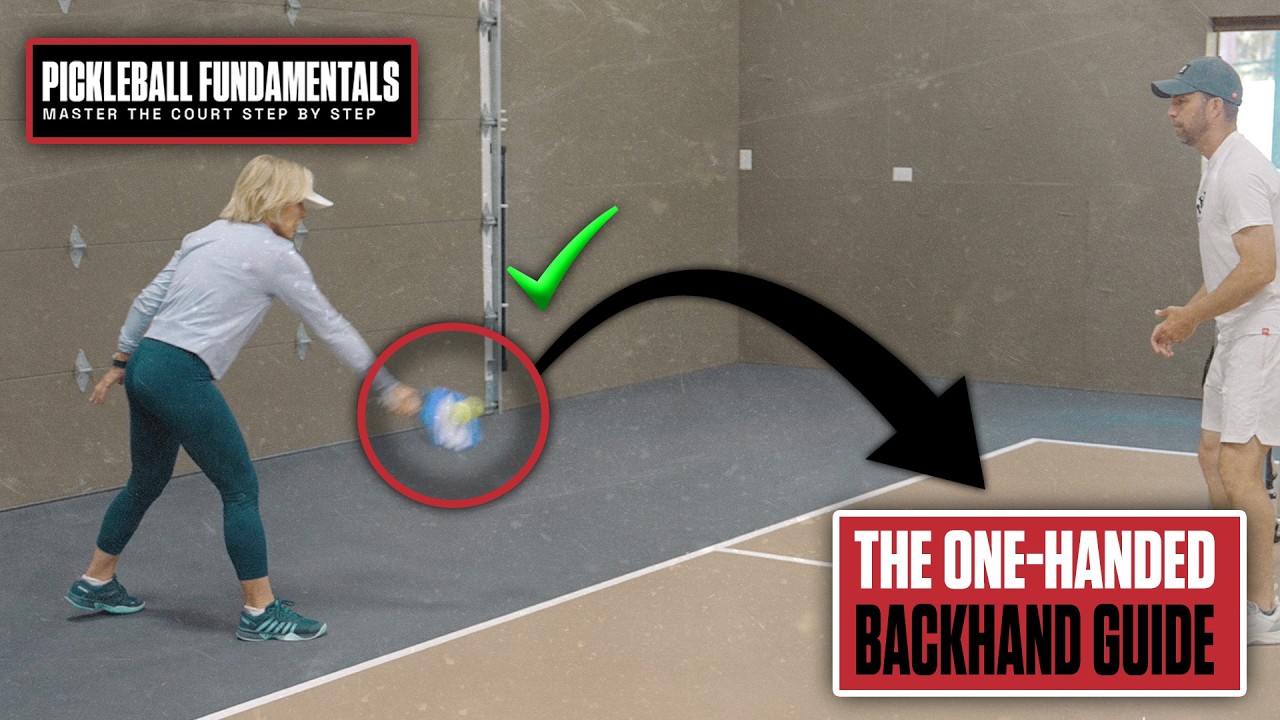
Reason 4: Your Decision-Making Has Not Improved
Decision-making separates every rating level in pickleball, and it's the skill players spend the least time deliberately practicing.
Shot selection, positioning, reading body language, knowing when to reset versus attack, all of it falls under decision-making.
You can have textbook mechanics and still lose consistently if your decisions are wrong.
The good news is that pickleball IQ is trainable. It's not some innate gift.
It comes from paying attention during play and actively questioning your choices after the fact.
These 5 pickleball IQ tips to outsmart better players are a strong starting point.
A specific habit that helps: after every rally, win or lose, ask what the best shot choice would have been at the critical moment.
Not whether your mechanics were good. Whether your decision was right.
 The Dink Media Team
What Does Good Decision-Making Actually Look Like?
A 4.0 pickleball player chooses the highest percentage shot for the situation, not the highest reward shot.
It means resetting when you're out of position instead of gambling on a hero attack.
It also means recognizing when your opponent has set a trap and refusing to walk into it.
Watch how Ben Johns handles pressure at the kitchen line and you'll notice he almost never takes low percentage risks.
He makes the boring, correct choice and lets his opponents make the mistake.
The four key strategies behind modern pickleball in 2026 give you a useful framework for understanding when you're dictating a point versus reacting to it, and smart shot decisions beat raw power at every level above 3.5.
 The Dink Media Team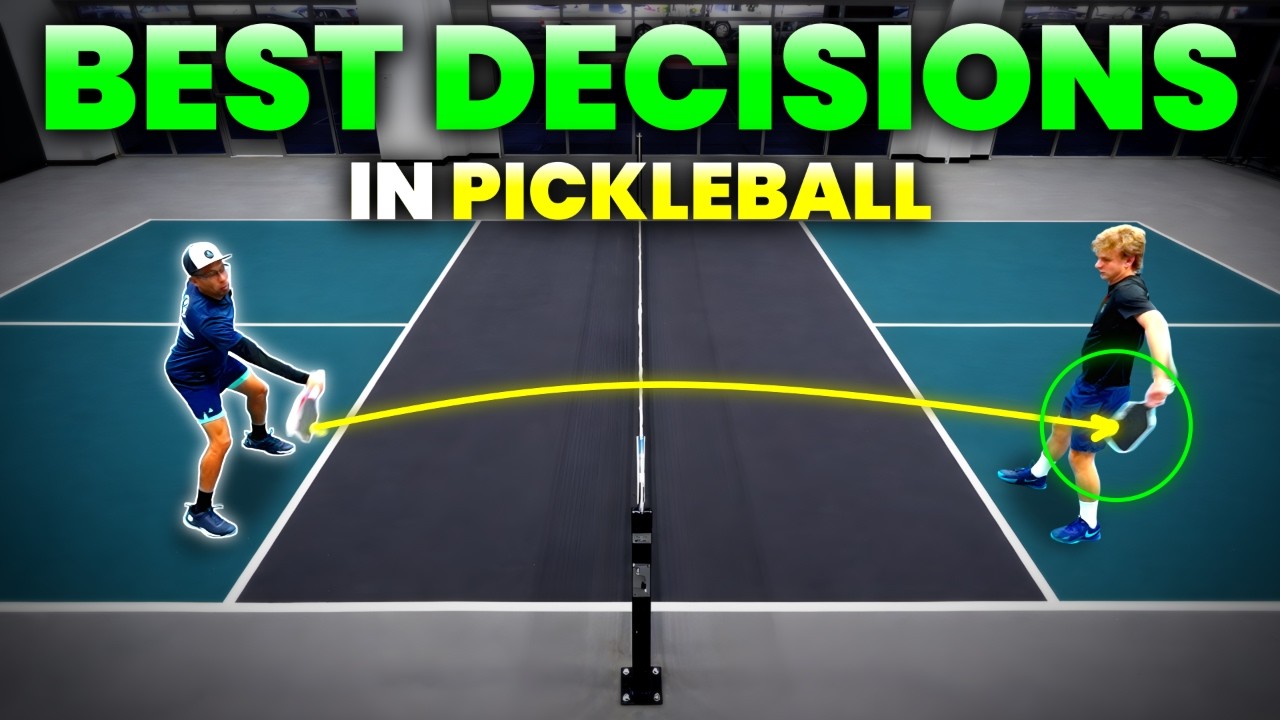
Reason 5: You Never Play People Better Than You
Playing up is the fastest way to improve. When you only play at your level or below, you never face the patterns and pressures that force you to grow.
Better players won't let your weaknesses hide.
Your predictable speed up gets punished, your soft third shot that sits up gets attacked, and your tendency to back off the kitchen line gets exploited every time.
That exposure is exactly what you need. It's uncomfortable, and you'll lose a lot. That's the point.
How a 4.0 Pickleball Player Finds Better Competition
- Show up early to 4.0 open play sessions and ask if you can jump in
- Enter a 4.0 tournament bracket even if you're not confident yet
- Find one 4.0 or 4.5 player willing to drill with you once a week
- Watch your own footage next to higher-level play and compare decision patterns
If you're serious about making this jump, these 5 signs you're ready to move up a pickleball skill level can tell you when to push.
 The Dink Media Team
The Mindset Shift That Actually Moves the Needle
Here's the thing most players miss: getting to 4.0 is not about adding more to your game. It's about stopping the things that are costing you points.
The errors, the bad decisions, the avoided weaknesses, the comfortable habits that feel productive but aren't, all of that adds up to a ceiling you keep bumping into.
Players who break through are not always the most athletic. They're the most honest about what isn't working.
They're also the ones checking out resources like 15 pickleball tips for 4.0 players that actually work and applying what they find.
The 4 reasons every 3.5 pickleball player stays stuck covers similar ground and is worth reading alongside this breakdown.
Stop measuring your progress by how good your best rallies feel. Start measuring it by how few mistakes you make in the tough ones.
And if you want to look ahead to what's required after you clear 4.0, this guide on why you're stuck at 4.0 and the habits of a 5.0 pickleball player is exactly what you'll need next.
The path is clear. More drilling, smarter attack selection, deliberate work on your weakest shots, sharper decisions under pressure, and consistent exposure to better players.
None of it is complicated.
But all of it requires honesty about where you actually are right now.
Use these 5 pickleball drills that raise your DUPR rating fast to start building the structured practice routine that makes all of this stick.
Also consider tracking your kitchen arrival rate and shot errors over a few sessions.
The kitchen arrival percentage is the stat that defines your level, and it will tell you more about your real game than your feelings after a win ever will.
Frequently Asked Questions
What is the difference between a 3.5 and a 4.0 pickleball player?
A 4.0 pickleball player makes consistently better decisions under pressure, particularly around when to attack and when to reset. It's less about shot quality and more about shot selection and avoiding unforced errors. The 3.5 player often has similar mechanics but gives away points through poor choices at key moments.
How long does it take to get from 3.5 to 4.0 in pickleball?
There is no fixed timeline, but players who combine structured drilling with intentional open play typically improve faster than those who just play games. Most players who stall at 3.5 for more than a year are caught in a cycle of practicing their strengths instead of fixing their weaknesses. Focused, honest practice can accelerate this significantly.
Should I speed up the ball to become a better 4.0 pickleball player?
Speed ups are a valuable weapon at 4.0, but only when you choose the right ball at the right moment. Attacking every ball that sits up is one of the most common patterns holding 3.5 players back. Learn to read whether a ball is a genuine opportunity or a bait before committing to the attack.
Does playing against better pickleball players really help you improve?
Yes, playing up is one of the most effective ways to expose weaknesses your current competition isn't punishing. Better players will attack your predictable patterns and force you to solve problems you didn't know you had. The discomfort of losing to higher-level players is the fastest feedback loop available.
How do I know which part of my game is holding me back from 4.0?
Track the shot type responsible for your last three unforced errors after every game. If the same shot keeps appearing across multiple sessions, that is your limiting factor. Address it in drilling before anything else, no matter how uncomfortable it feels to practice the thing you're worst at.

Love Pickleball? Join 100k+ readers for free weekly tips, news & gear deals.
Subscribe to The Dink