
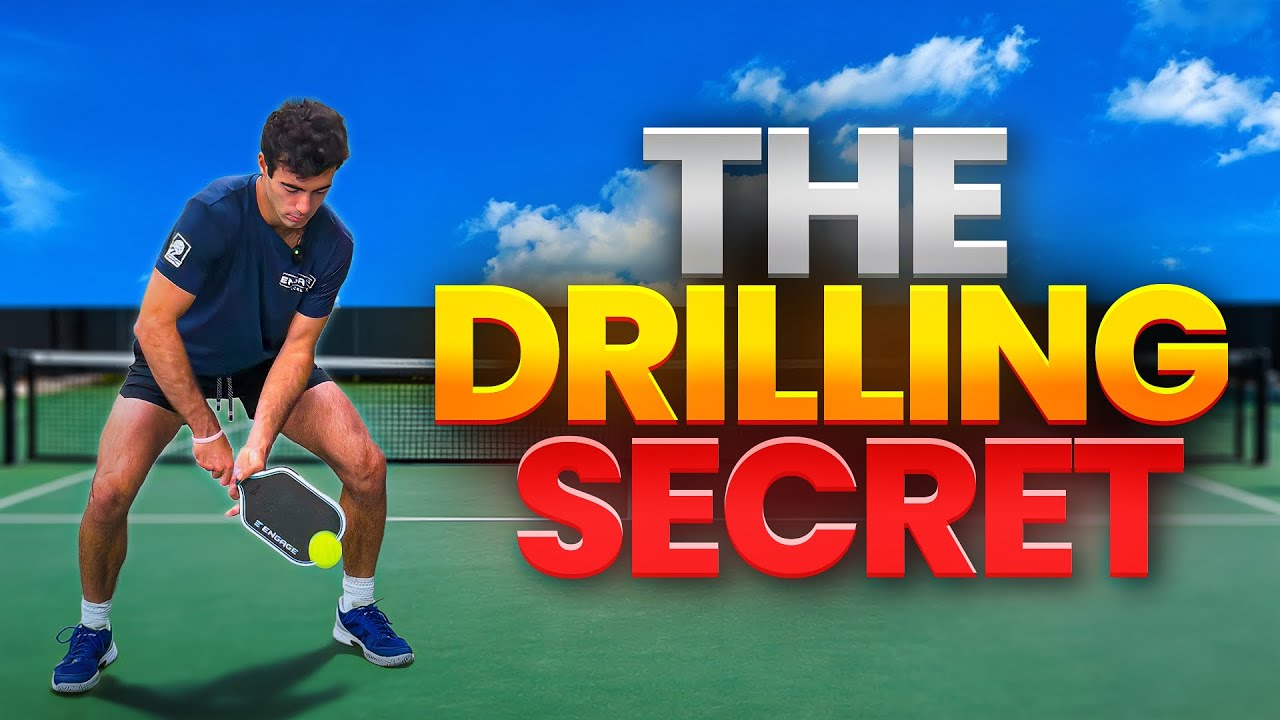
Why Your Pickleball Drilling Isn't Working (And the 2-Step Fix)
Most pickleball drilling sessions don't translate to games because players skip two critical steps. Here's the progression and live ball method that fixes that fast.
Most players treat pickleball drilling like a warm-up ritual.
They stand in one spot, hit the same shot fifty times, and wonder why their game doesn't improve between sessions.
The problem isn't how much you're drilling. It's how you're drilling.
There are two specific things missing from almost every practice session, and once you add them, the gap between practice and real play shrinks fast.
This breakdown comes directly from Richard Livornese on YouTube, who has spent thousands of hours refining his own drilling process alongside his training partner Zach.
These are the exact methods he uses every single day to make practice reps actually count.
Love pickleball? Then you'll love our free newsletter. We send the latest news, tips, and highlights for free each week.
The Core Problem With Stagnant Drilling
Stagnant drilling means you stand in one spot and hit the same ball over and over. It has one legitimate use: learning a brand new shot from scratch.
If you've never hit a two-handed backhand before, yes, drill it stationary until you can make contact consistently.
But once you can make the shot, staying stationary is actually working against you.
Real points don't give you the same ball from the same position twice in a row. Your feet are moving. The ball is coming from different angles.
The bounce is different every time. Stationary drilling trains none of that.
The fix comes in two parts: progression and live ball drilling. Both matter. Neither one alone is enough.
What Is Drill Progression and Why Does It Matter?
Progression means taking a shot you already know and making the drill harder in a structured way, step by step, until you're working on it under near-game conditions.
Here's exactly how to apply it using the reset as an example. This is the same sequence Richard and Zach run through every day.
- Stationary reps at one court position. Start at mid-court. Your partner feeds speed-ups. You reset with one hand, then two hands. This builds the baseline feel for the shot.
- Change your court position. Move up closer to the kitchen, then move back toward the baseline. Balls feel completely different from different depths. Deep balls require more short-hopping. Shallow balls require faster hands.
- Roaming. Now you move forward and backward continuously while resetting. This adds the footwork component that most players skip entirely. You're reading balls off the bounce and out of the air while your feet are active.
- Focused live play. Your partner plays out real points, but intentionally feeds about 70 percent of balls to the zone you're working on. You're not in a controlled drill anymore, but you're also not just playing randomly.
That last step is the one most players never reach. They do step one for thirty minutes and call it practice.
How Do You Apply Progression to Dinking?
The same four-step structure works at the kitchen line. Richard uses the forehand middle ball as his specific example, and it maps perfectly.
- Feed and repeat. Partner feeds from a bucket. You hit the middle ball over and over from a stationary position. Pure repetition to groove the contact.
- Move to create the ball. Partner still targets the middle ball, but now you're moving around the kitchen before each rep. You have to set your feet and create the right position before hitting. The footwork now has to match the shot.
- Partner can attack. Partner is allowed to grab any ball that sits up. Now you immediately know whether your middle ball is actually landing where it should. A ball that gets attacked is a ball that wasn't tight enough.
- Focused live dinking. Full points, but partner keeps directing the majority of balls toward the middle. You're adding speed-ups, working your shot selection, and reading defense, all while staying focused on that one area.
This approach is what consistent dinking practice actually looks like when it's designed to transfer.
It's structured, but it's also honest about how points actually unfold.
 The Dink Media Team
What Makes a Drill "Live"?
Live ball drilling means starting every rep from a realistic game situation rather than a hand-fed setup. The ball you start with should look like a ball you'd actually see in a match.
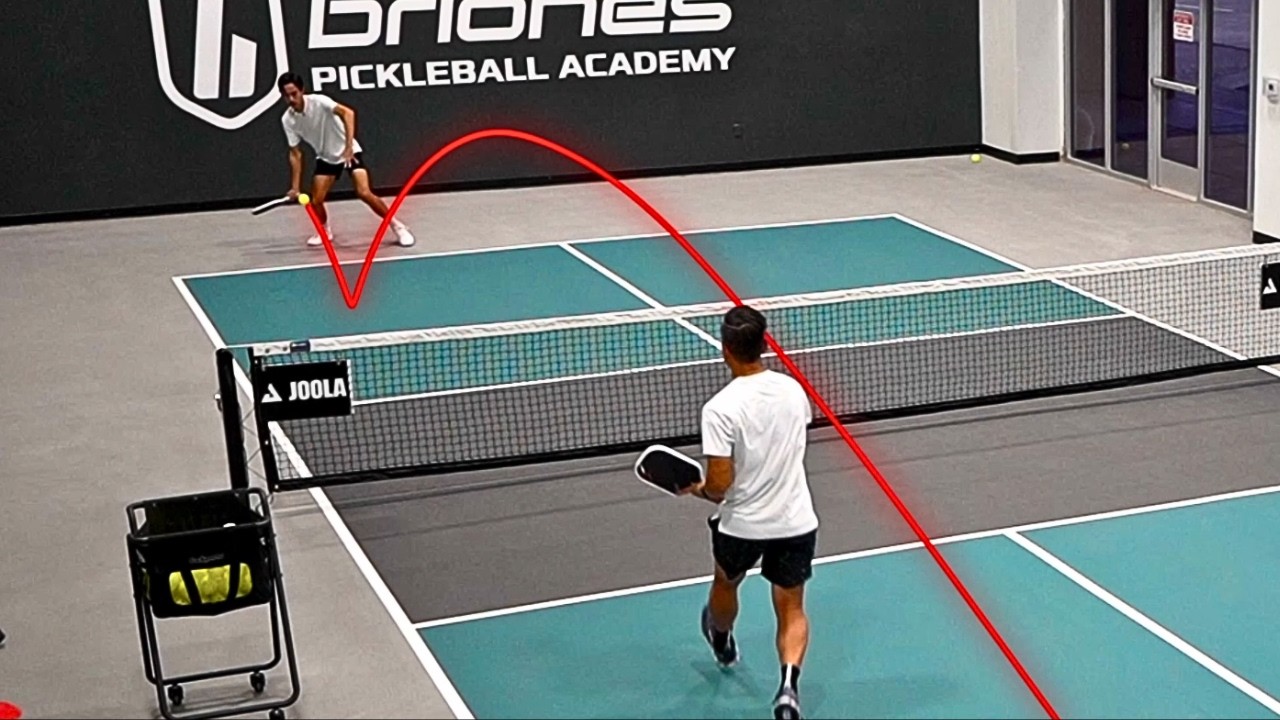
Here's the reset live drill in practice. Your partner drops and feeds a ball. You hit a float that sits up.
Now you have to work your way into the kitchen off a bad ball, just like you would in a real point.
That one simple change teaches you three things stagnant drilling cannot.
- First, ball recognition. You're watching your partner's paddle and feet while you're recovering. You're reading whether the incoming ball will be attackable or neutral before it even crosses the net.
- Second, positioning under pressure. When should you close on the ball and when should you hang back? This is something you can only develop through repetition in realistic situations.
Richard describes closing on a low ball because he knows it won't come back above his waist, while a higher ball tells him to wait and short-hop.
That read only comes from doing it live, repeatedly.
Third, movement efficiency. Getting from the baseline to the kitchen isn't just about speed. It's about knowing exactly where to be based on the ball you just hit.
That kind of court movement is built in practice, not figured out mid-point.
 The Dink Media Team
The Third Shot Drop Drill That Finally Makes Sense
Richard gives one more example that is worth studying closely because it shows just how far most players are from game-realistic pickleball drilling.
- The old version: partner stands at the kitchen and hand-feeds a ball. You hit thirds over and over. That feels productive, but a hand-fed ball from a stationary partner looks nothing like a real return of serve.
- The live version: partner drops a ball, simulates a return, and feeds it in live. You hit a third off a real moving ball, then follow the shot forward. Partner applies pressure immediately.
That one adjustment changes everything about what you're practicing.
You're now working on third shot drop placement while also working on your transition movement, your read of an incoming attack, and your ability to recover to the kitchen under pressure.
All from the same rep.
Richard and Zach also vary where the "return" comes from. Sometimes from the middle, sometimes from wide left, sometimes from the line.
Because in a real match, you're not getting the same return from the same position. Your backhand and forehand both need exposure to different angles.
 The Dink Media Team
How Do You Know When to Move to the Next Step?
Move to the next progression step when you can make the shot consistently and your feet are no longer a problem at the current level.
If you're still shanking the ball or losing your balance, stay where you are.
The goal isn't to rush to live play. The goal is to make sure every rep you take is as close to a real game rep as your current ability allows.
This is also why drill variety matters.
When you rotate through different progressions across different shots, you build a more complete game faster than players who just rally or play points with no specific focus.
 Jason Flamm
What Should a Full Drilling Session Actually Look Like?
Here's a realistic structure you can use right now.
- Pick one or two shots to focus on per session. Don't try to work on everything. Resets and thirds one day. Dinking and counter-attacks another day.
- Start each shot with stationary reps only if you're rusty or working on a recent technique change. Otherwise, skip straight to movement.
- Add the roaming or movement phase for at least half your reps. Stationary drilling should be the minority of your time, not the majority.
- End every session with focused live play. Play out points with your partner intentionally skewing toward the zone or shot you've been working on. Don't just open play. Keep the focus.
- Vary the feed position. Wide, middle, near the line. Your partner should not be giving you the same ball from the same spot every single time.
If you want to go deeper on how advanced players structure their practice, the principles here apply at every level above 3.5.
The players who improve fastest are the ones who are honest about what their drills are actually training.
If your drill wouldn't look anything like a real game situation, it's time to redesign it.
That's the entire framework. Progression gets you from learning a shot to owning it under pressure.
Live ball drilling makes sure every rep looks like something you'd actually face in a match.
Put them together and your practice time starts paying off in a way that playing alone never will.
For more on building a smarter practice week, this breakdown on structuring your training is worth reading alongside what you've learned here.
You don't need more court time. You need better reps. Start with the next session.
Frequently Asked Questions
What is the difference between stagnant drilling and live ball drilling in pickleball?
Stagnant drilling means standing in one spot and hitting the same ball repeatedly, which is useful only when learning a brand new shot. Live ball drilling means starting each rep from a realistic game situation, like a simulated return or a feed you have to recover from, so your footwork, reading, and decision-making are all trained at the same time. Most players spend too much time in stagnant drilling and never make the switch.
How do you progress a pickleball drill from basic to game-like?
Start with stationary reps at one court position, then change your positioning, then add roaming movement, and finally move into focused live play where your partner plays real points but targets your practice zone more often. Each step adds a layer of complexity that builds toward actual game conditions. The key is not rushing to the next step before your technique is stable.
Why doesn't just playing more pickleball improve your game as fast as drilling?
Open play exposes you to every situation randomly, which means you might go a whole session without facing your weakest shot at all. Structured drilling lets you get twenty or thirty quality reps on a specific shot in the time it would take to see it twice in a real game. The combination of focused drilling and play is what produces the fastest improvement.
How can I practice third shot drops without a ball machine?
Have your partner simulate a return by dropping and feeding a live ball from the kitchen side, then play the point out from there. This gives you a realistic ball to drop on rather than a hand-fed setup that looks nothing like a game. Vary which side of the court your partner feeds from so you work both your forehand and backhand third shot drop against realistic angles.
How do I know if my reset is actually good during drilling?
The simplest test is to let your partner attack any ball that sits up during your reset drill. If your partner is grabbing balls frequently, your resets are not landing low enough. If your partner has few opportunities to attack, you're resetting well. This instant feedback is one of the biggest advantages of moving past stationary drilling into live reset practice.

Love Pickleball? Join 100k+ readers for free weekly tips, news & gear deals.
Subscribe to The Dink