
Two-Handed Backhand Volley: Master This Essential Pickleball Shot
The two-handed backhand volley is one of the most versatile shots in pickleball, giving you control and stability at the net. Walker Sisters Pickleball breaks down exactly when and how to use this essential technique.
Here's the thing: most players think the backhand is a weakness. They either avoid it or they hit it with one hand and hope for the best.
But the two-handed backhand volley is actually your secret weapon for controlling the kitchen and keeping your opponent pinned at the baseline.
The reason it works is simple. Your non-dominant hand provides stability and control that you simply can't get with one hand alone.
When you're at the net and the ball is coming at you, that second hand acts like a shock absorber.
It lets you take pace off the ball, adjust your angle, and place it exactly where you want it.
That's the difference between a defensive volley and an offensive one.
Angie Walker explains that the two-handed approach gives you "a lot of control and stability when I'm hitting a backhand."
That's not just technique talk. That's the foundation of everything that follows.
Love pickleball? Then you'll love our free newsletter. We send the latest news, tips, and highlights for free each week.
The Low Position: Your First Two-Handed Opportunity
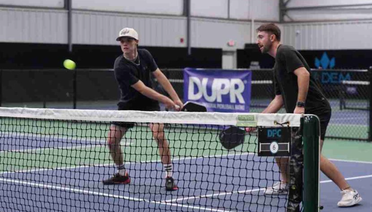
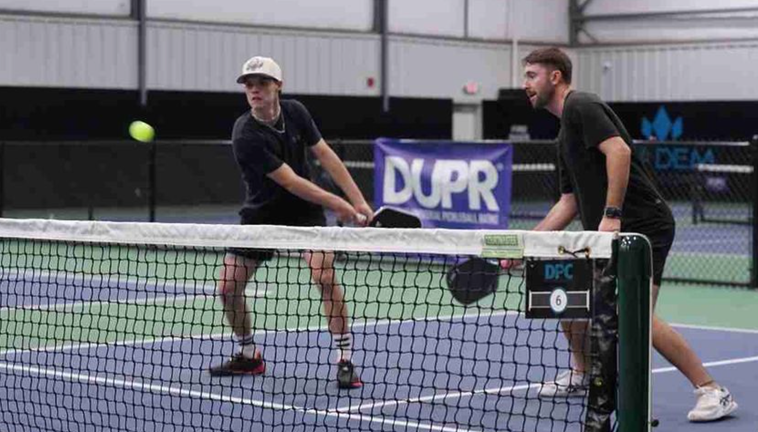
The first situation where you'll use a two-handed backhand volley is when the ball comes low over the net.
This is the most common scenario in actual matches, especially when you're at the baseline trying to keep your opponent deep.
When the ball is low, your job is to lean in and take it out of the air with control.
Here's how Angie Walker breaks it down:
- Square your shoulders
- Set your stance
- Bend your knees
- Look to take the ball out of the air
- brush up the back of the ball
That upward brush is what separates a good low volley from a mediocre one.
It creates topspin, which keeps the ball low and makes it harder for your opponent to attack. You're not trying to hit a winner here.
You're trying to keep the ball in play and force your opponent to hit another shot from the baseline.
The mechanics matter here. Your left hand (if you're right-handed) provides the stability while your right hand does the work. B
ut they're working together, not independently. Think of it like a team effort rather than one hand taking over.
The High Position: When the Ball Comes at Shoulder Height
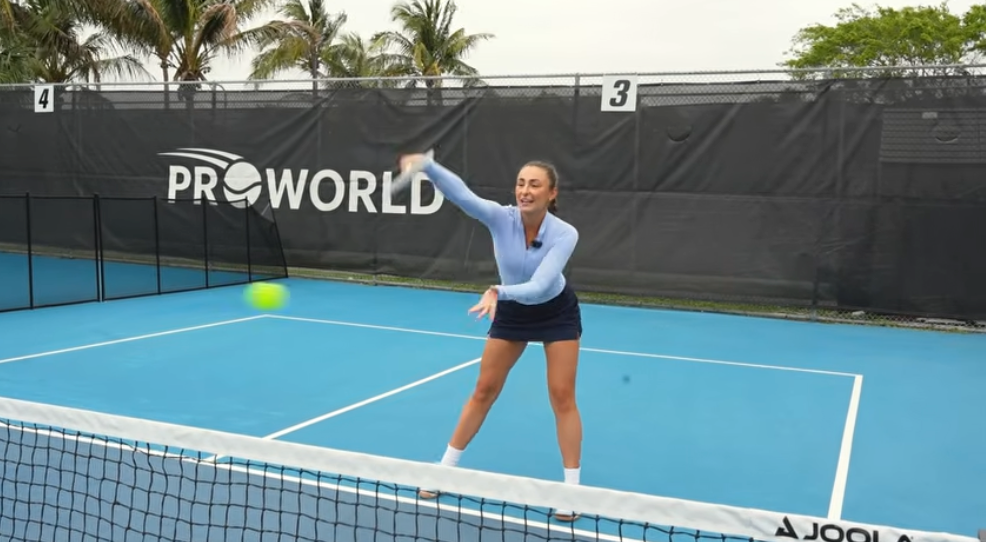
The second situation is when the ball arrives at shoulder height. This is where the two-handed backhand volley becomes more linear and aggressive.
At shoulder height, your motion changes. Instead of brushing up, you're moving from back to front across your body.
The motion is more of a swing than a punch. But here's what stays the same: both hands are still on the paddle, and you're still maintaining control.
Alex Walker demonstrates this by showing how the motion flows through the ball. You're not just blocking it back.
You're actually swinging through it, which means you can add pace and direction.
This is where you start to take the offensive, especially if your opponent is still at the baseline.
The key difference between the low and high positions is the angle of your swing.
- Low means upward brush.
- High means linear swing.
But the principle remains: two hands give you control, and control gives you options.
 Alex E. Weaver
One Hand Versus Two: When to Make the Switch
Now here's where it gets interesting.
You don't always use two hands, and knowing when to switch to one hand is just as important as knowing when to use two.
Angie Walker explains that you use one hand when you're trying to take time away from your opponent and reach farther.
One hand gives you significantly more reach than two hands.
If the ball is coming out of the air and you can lean in a little farther while still maintaining control, that's when you go to one hand.
The trade-off is obvious: more reach, less stability. So you only make that switch when you're confident you can still hit a quality shot.
If there's any doubt, stick with two hands.
This is where court awareness becomes crucial. Are you at the baseline or at the kitchen line? Is your opponent deep or close to the net?
These factors determine whether you have time for a bigger swing or whether you need to stay compact and controlled.
The Dink Media Team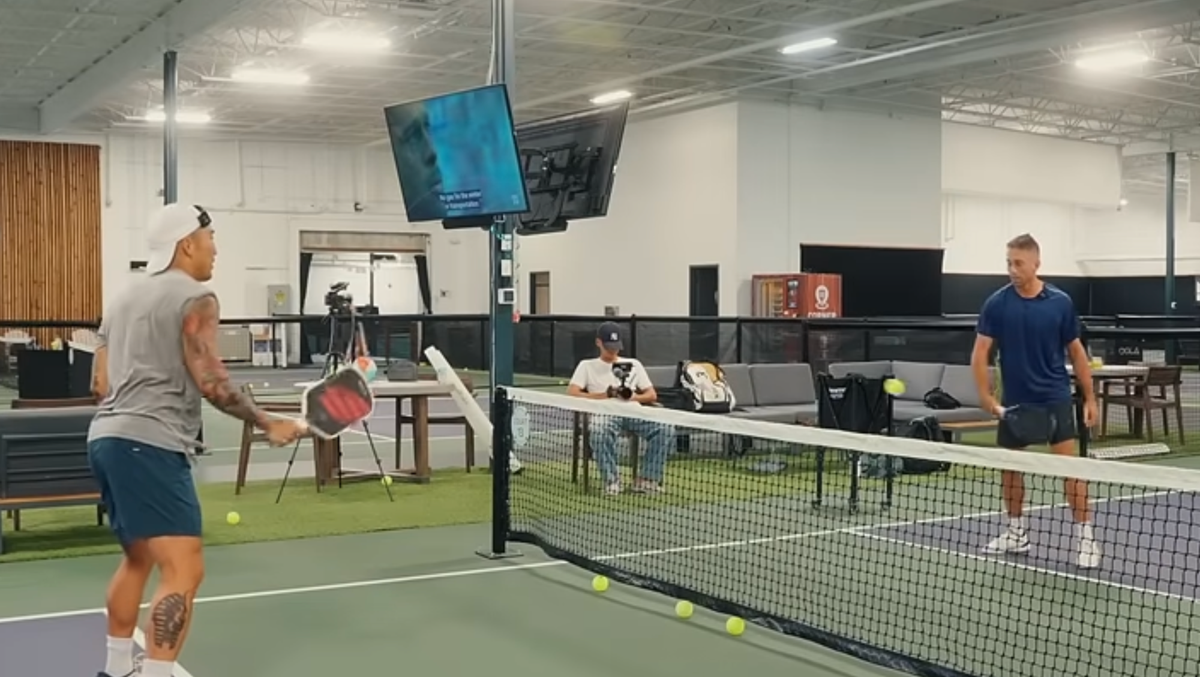
The Baseline Strategy: Roll Volley Tactics
When your opponent is hitting their third shot and you're at the baseline, the two-handed backhand volley becomes your primary tool.
This is called the roll volley, and it's designed to keep your opponent deep and prevent them from advancing to the kitchen line.
The goal is simple: aim at their feet. If you can keep the ball low and force them to hit up, you've won the point or at least set yourself up for an easier next shot.
The roll volley is a bigger swing than a kitchen-line volley, which is why it works better from the baseline.
Angie Walker emphasizes that this is where the one-handed roll volley also comes into play.
The one-handed version has a bigger swing and more reach, which is perfect when you're trying to cover more court from the baseline.
But the two-handed version gives you the control you need to place the ball exactly where you want it.
The Dink Media Team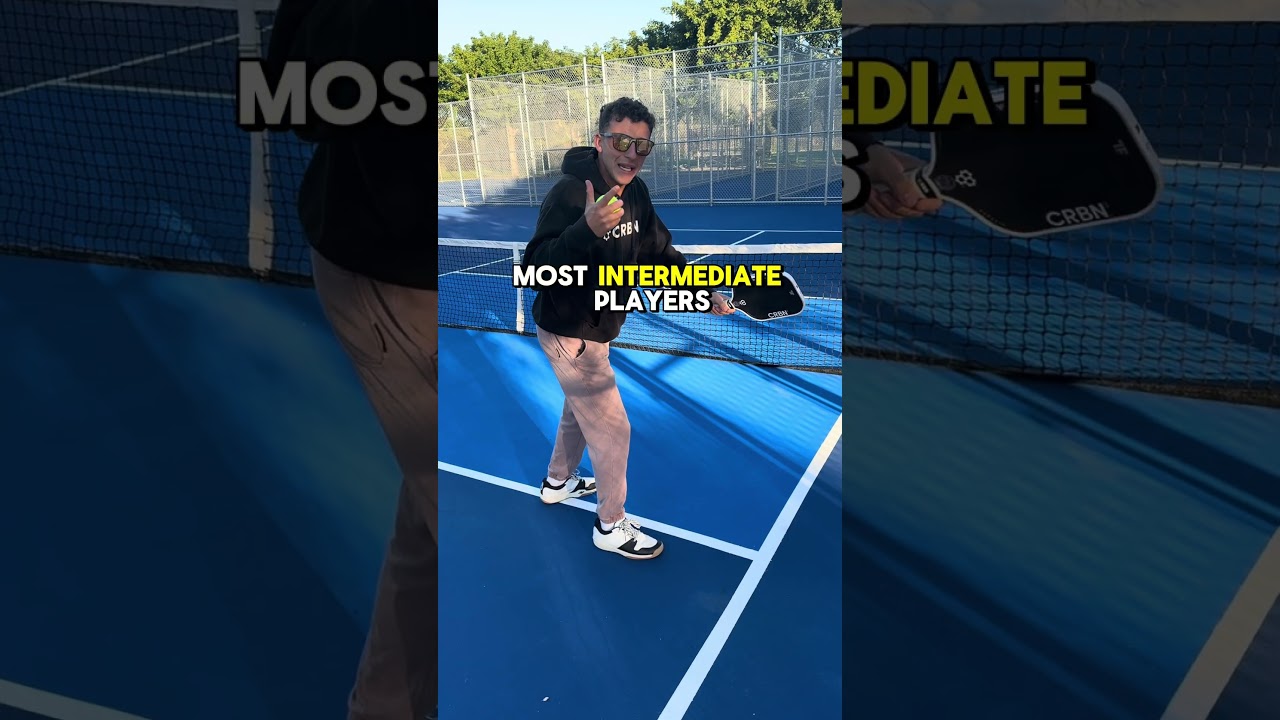
Kitchen Line Adjustments: Why Two Hands Might Not Work
Here's something that surprises a lot of players: when you're up at the kitchen line, the two-handed backhand volley might actually slow you down.
The reason is timing.
At the kitchen line, the ball is coming at you faster, and you have less time to recover between shots.
If you're taking a big swing with a two-handed volley, by the time you finish that swing, the next ball is already coming back at you.
You won't have enough time to reset and prepare for the next shot.
This is where a flick or a poke becomes more valuable. These are shorter, more compact shots that let you stay ready for the next ball.
Angie and Alex Walker mention that they'll cover flicks and pokes in another video, but the principle here is important: shot selection depends on your position on the court.
- At the baseline, you have time for bigger swings.
- At the kitchen line, you need to stay compact and quick.
The two-handed backhand volley is perfect for one situation and not ideal for the other.
The Dink Media Team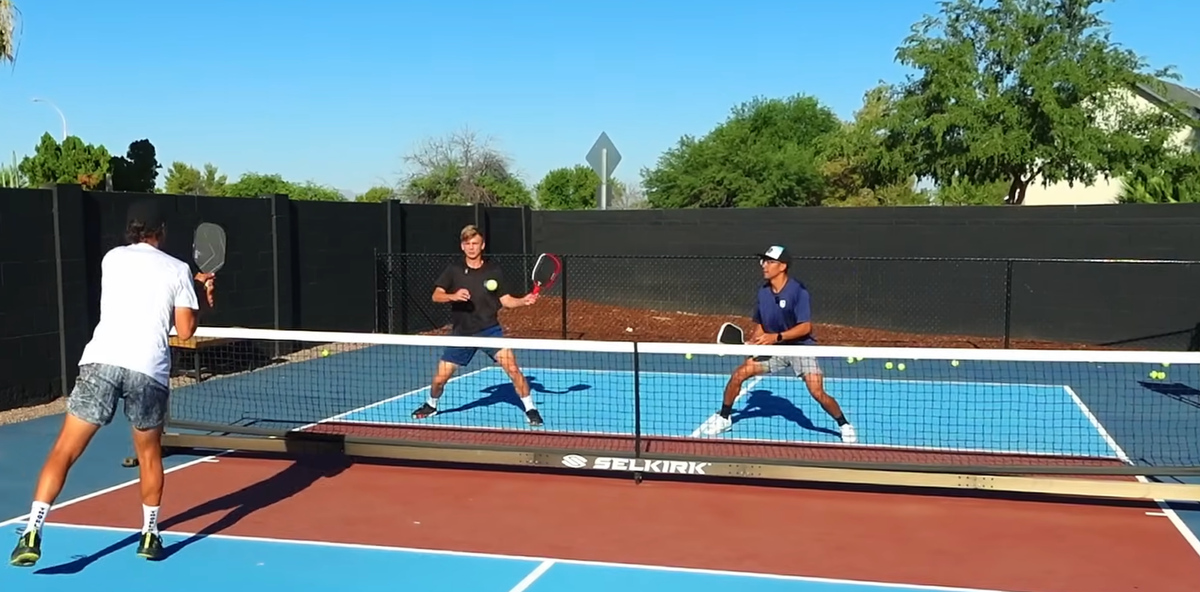
Putting It All Together: A Complete Backhand Strategy
The beauty of understanding the two-handed backhand volley is that it gives you a complete backhand strategy.
You're not just hitting the ball back. You're making strategic decisions based on where you are on the court and what your opponent is doing.
From the baseline, you use the two-handed roll volley to keep your opponent deep. At the kitchen line, you switch to more compact shots.
- When you need extra reach, you go to one hand.
- When you need maximum control, you use two hands.
This isn't complicated stuff, but it requires practice and awareness.
You need to feel comfortable with all three options so that you can switch between them without thinking about it.
That's when your backhand becomes a weapon instead of a weakness.
Frequently Asked Questions
What's the difference between a two-handed backhand volley and a one-handed backhand volley?
A two-handed backhand volley gives you more control and stability because your non-dominant hand provides support. A one-handed backhand volley gives you more reach and a bigger swing, but less stability. Use two hands when you need control; use one hand when you need reach.
When should I use the two-handed backhand volley from the baseline?
Use the two-handed backhand volley from the baseline when your opponent is hitting their third shot and you're trying to keep them deep. The goal is to aim at their feet and prevent them from advancing to the kitchen line. This is called the roll volley.
Why shouldn't I use a two-handed backhand volley at the kitchen line?
At the kitchen line, the ball comes at you faster and you have less time to recover between shots. A two-handed volley requires a bigger swing, which means you won't be ready for the next ball in time. Instead, use a flick or a poke, which are more compact shots.
How do I know when to switch from two hands to one hand?
Switch to one hand when you need extra reach and you're confident you can still hit a quality shot. If you're leaning in and can reach the ball farther with one hand while maintaining control, make the switch. Otherwise, stick with two hands.
What's the key to a good low two-handed backhand volley?
The key is to brush up the back of the ball. This creates topspin, which keeps the ball low and makes it harder for your opponent to attack. Square your shoulders, set your stance, bend your knees, and focus on that upward brush motion.

Love Pickleball? Join 100k+ readers for free weekly tips, news & gear deals.
Subscribe to The Dink