
How to Dink Consistently in Pickleball: Technique Fix for Both Sides
Learning how to dink consistently in pickleball is the single fastest way to stop losing rallies you should be winning. This guide breaks down the exact technique fixes for forehand and backhand that most players overlook.
Learning how to dink consistently in pickleball separates players who win close games from players who keep gifting attackable balls at the worst possible moments.
The dink is not a defensive shot you use when you're out of options. It's a weapon. And most players are using it wrong on at least one side.
The errors aren't random. They're predictable, fixable, and almost always rooted in the same two or three mechanical habits.
Love pickleball? Then you'll love our free newsletter. We send the latest news, tips, and highlights for free each week.
What Is a Dink? (And Why It's Harder Than It Looks)
A dink is a soft shot hit from near the non-volley zone (the kitchen) that arcs just over the net and lands in the opponent's kitchen.
The goal is to keep the ball low, short, and unattackable.
When both teams are dinking well, you get extended soft-game rallies that test patience, placement, and touch.
That sounds simple. It isn't. The kitchen line is only 7 feet from the net on each side.
According to USA Pickleball's official rulebook, the non-volley zone extends 7 feet from the net on both sides, meaning the margin for error on a dink is brutally thin.
Too high, and your opponent attacks. Too low, it clips the net. Too far left or right, and you've opened a crosscourt angle you didn't intend to give away.
The dink is a precision shot masquerading as a gentle one.
That's exactly why it exposes so many players. And it's why knowing the patterns of soft-game exchanges will help you execute it under pressure.
Why Does Pickleball Dink Consistency Matter So Much?
Because the kitchen is where most points are decided. Full stop.
Research on racquet sport biomechanics consistently shows that motor consistency, the ability to repeat a movement pattern with minimal variation, is the primary differentiator between intermediate and advanced players.
A 2021 study published in the Journal of Motor Behavior confirmed that reduced movement variability in repeated stroke patterns directly correlates with performance outcomes in net sports.
In pickleball terms: the player who dinks the same way every time wins the kitchen battle.
If you can't dink consistently in pickleball, you're handing opponents free opportunities to speed the ball up.
You're also making your partner's job much harder, since errant dinks in doubles shift defensive positioning and break court coverage structure.
The path to becoming unattackable runs directly through your dink. There's no shortcut around it.
 Alex E. Weaver
The Two Most Common Dink Mistakes (And What's Actually Causing Them)
Before fixing the forehand and backhand separately, let's name the universal culprits.
Mistake 1: Swinging from the Elbow or Wrist
Most inconsistent dinks trace back to arm mechanics.
Players generate too much movement from the smaller joints, creating unpredictable contact angles and variable speed.
The dink should be driven by a slight rotation of the shoulder with a locked, stable wrist at contact. Think of it less like a swing and more like a controlled push.
100s of thousands of pickleballers read The Dink Newsletter, including pros, business owners, beginners & (probably) your grandma. Click here to subscribe, it's free.
Mistake 2: Standing Too Upright
Your knees should be bent. Your weight should be slightly forward.
If you're reaching down to the ball from a standing position, you've already lost mechanical advantage.
Get low, get under the ball, and let the shot come up naturally from a stable base.
This is why proper kitchen positioning is the foundation of a reliable dink game.
Fix those two things and you'll immediately see improvement on both sides. But the forehand and backhand still need individual attention.
Alex E. Weaver
How to Dink Consistently in Pickleball: The Forehand Fix
The forehand dink feels more natural for most players, which is exactly why its flaws go undiagnosed the longest.
Contact Point Is Everything on the Forehand Dink
On the forehand dink, you want to make contact slightly in front of your lead foot, not at your hip. When you let the ball drift too far back, you're forced to flip the wrist to compensate, and that's where errors come from.
Stay patient. Let the ball come to a point that's out in front of your body, roughly 12 to 18 inches ahead of your front foot.
Grip Pressure Should Be Loose
A firm grip kills touch. Research from the Journal of Sports Sciences has demonstrated that reduced grip tension in racquet sports allows for greater sensory feedback and more precise shot control.
For dinking, you want your grip tight enough to maintain control but relaxed enough that you could feel the ball compressing against the paddle face. Rate your grip on a 1-10 scale. For a dink, you should be at a 4.
The Swing Path Matters More Than You Think
Think low to high, but barely. You're not generating topspin on a dink the way you would on a groundstroke.
You're just brushing slightly upward to ensure the ball clears the net with minimal arc. Over-rotating the shoulder on the follow-through is the most common forehand dink error at the 3.5 to 4.0 level.
Turning mediocre dinks into winners starts with cleaning up that contact point. Gripping down is the fastest fix most players never try.
If you want a pro-level walkthrough of exactly this, your forehand dink needs work has a 5-minute fix straight from a pickleball pro.
Turning mediocre dinks into winners starts with cleaning up that contact point and gripping down.
The Dink Media Team
How to Fix Your Backhand Dink (This Is Where Most Players Break Down)
The backhand dink is where dink consistency goes to die for the majority of recreational and intermediate players.
Here's why: most people use the wrong grip, the wrong contact point, or both.
Continental Grip Is Your Anchor for Backhand Dink Consistency
If you're playing your backhand dink with an Eastern or semi-Western grip, you're fighting the shot. The continental grip gives you a neutral paddle face that naturally produces the soft, slightly upward contact angle a dink requires.
Transitioning to continental for your soft game is uncomfortable for the first few sessions, then it becomes automatic.
Reach Forward, Not Across Your Body
One of the most widespread backhand dink errors is letting the contact point drift in toward the body instead of extending out in front. When you reach the ball too close to your torso, the paddle face closes involuntarily and the ball goes into the net.
Extend your arm. Keep the elbow soft but extended. Contact should happen several inches in front of your hip.
Paddle Face Is the Reset Button
When your backhand dinks are inconsistent, the first thing to check is paddle face angle at contact. A slight tilt too open sends the ball sailing. Too closed, and you're netting it.
A reliable backhand requires a nearly vertical paddle face that contacts the bottom third of the ball. Dial that in and the backhand dink becomes repeatable.
Simone Jardim has long been cited as one of the best backhand soft-game players in the sport, and her mechanics follow this pattern precisely: forward contact, continental grip, controlled shoulder rotation with minimal wrist involvement. For a deeper breakdown on the backhand, perfecting the pro-level backhand dink breaks down slice vs. two-handed roll in detail.
The Dink Media Team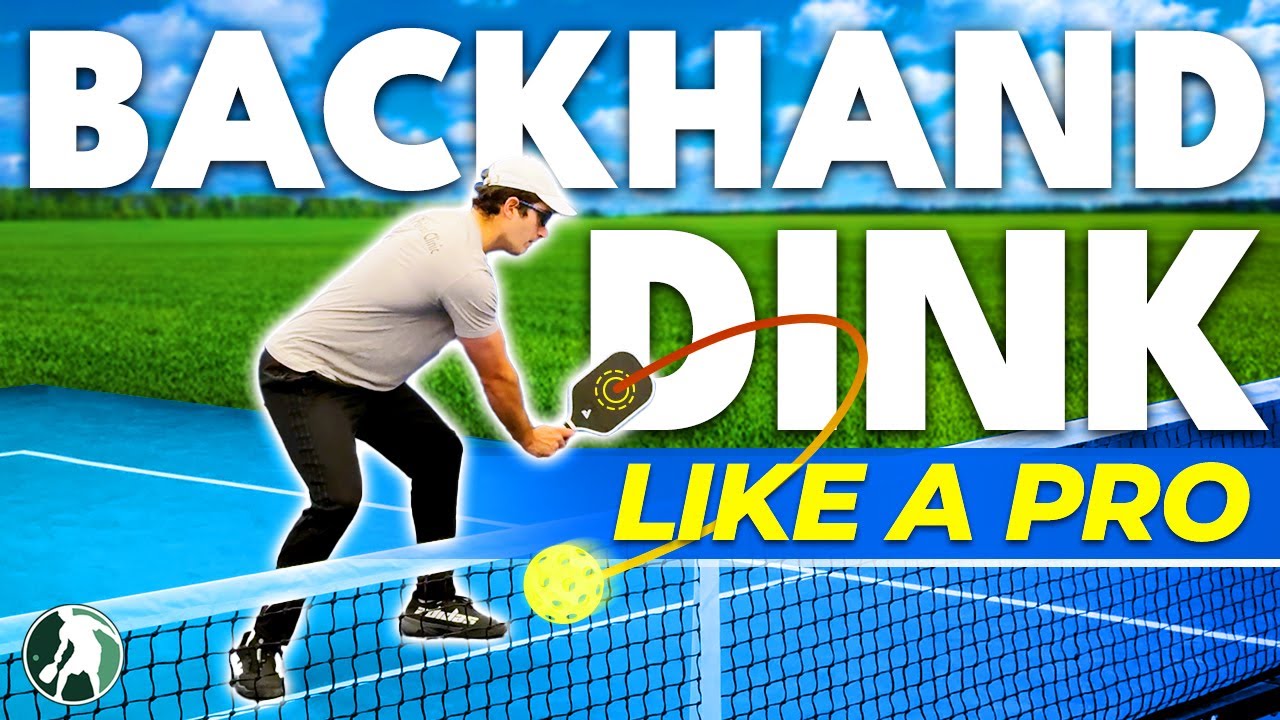
The Crosscourt Dink: Why Your Angles Are Off
Here's the thing about crosscourt dinks. They're not just a tactical choice. They're actually the geometrically safer shot.
A crosscourt dink travels over the lowest part of the net (the center is approximately 34 inches, compared to 36 inches at the posts according to USA Pickleball) and has more court to land in because of the diagonal distance.
Most players know this but still miss crosscourt more than they should.
The reason: they try to redirect the ball rather than redirecting their body. Your hips should face the direction you're hitting.
If you're sending a crosscourt dink to the opponent's left side, your non-paddle hip should be opening toward that target before you make contact.
Players who dink crosscourt with their body still squared up often get the angle wrong or add unintentional pace.
The slice dink is a particularly useful tool crosscourt because the backspin keeps the ball low and makes it skid through the kitchen rather than bouncing up into an attackable position.
Perfecting the backhand slice dink with these 3 essential tips is worth a read if you're not already experimenting with slice. This is the week to start.
The Dink Media Team
How to Achieve Pickleball Dink Consistency Under Pressure
Muscle memory only holds when you've built it under realistic conditions.
Hitting 50 cooperative dinks in a drill and expecting them to transfer to a competitive rally is optimistic at best.
Pickleball's hardest dinking drill works precisely because it simulates the cognitive and physical demands of actual match play.
Three drills that actually build dink consistency:
- Random target dinking. Place two cones in the opponent's kitchen, roughly 18 inches apart in different locations. Alternate between forehand and backhand dinks and aim for each cone, switching target on every third ball. This trains precision rather than just repetition.
- The pressure drill. Play a standard dink rally, but any ball that rises above net height gives the opponent a free speed-up. This immediately incentivizes keeping the ball low and removes the option of lazy height. Your mechanics tighten fast.
- Accelerating contact drill. Start from the transition zone, hitting soft drop shots as you move toward the kitchen, and transition into dinking once you arrive. This builds the habit of maintaining soft-game mechanics while your body is still in motion, not just when you're stationary. The figure-8 drill pairs well with this to train directional control.
Pressure zone play in pickleball is a concept worth understanding here: the best dinks aren't just consistent, they're strategically placed to move opponents out of their comfort zone.
The Dink Media Team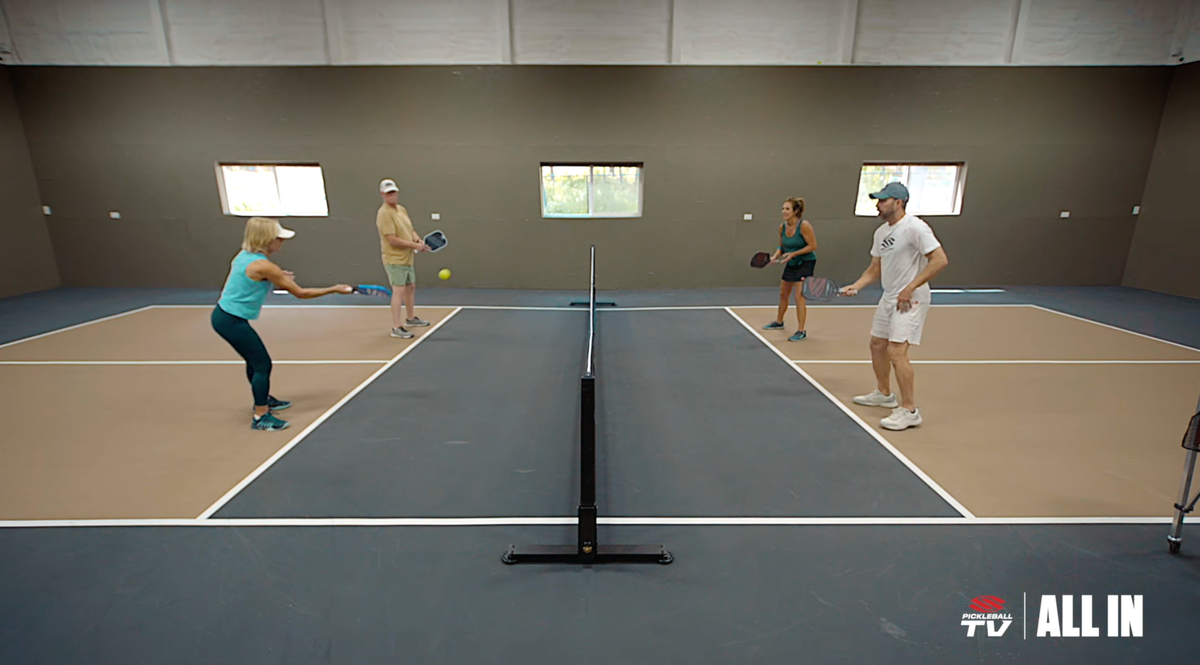
What JW Johnson Gets Right That Most Players Don't
JW Johnson's dinking technique gets discussed a lot because it looks unconventional.
His swing is compact, his grip transitions are seamless, and his unusual dinking mechanics produce a ball that consistently stays low with heavy forward spin.
The takeaway isn't to copy his exact mechanics.
It's to understand why they work: minimal wrist, forward contact point, relaxed grip, and precise paddle face control.
Those principles are universal. The form around them can vary.
What Johnson does better than almost anyone is reset under pressure. When an opponent hits a high-pace ball at him in a dink exchange, his reset dink doesn't float. It dies.
That's the result of years of training the same contact point and the same grip pressure in high-speed scenarios, not just cooperative drilling. The pickleball reset is the skill that takes players from 3.5 to 5.0, and Johnson's soft-game command is exhibit A.
CBS Sports has covered JW Johnson's rise as one of the most technically precise players in professional pickleball, and his dinking mechanics are a big reason analysts take notice. Meanwhile, NBC Sports has highlighted how the soft game is becoming the defining battleground at the pro level, a trend that mirrors what's happening in recreational play nationwide.
The Dink Media Team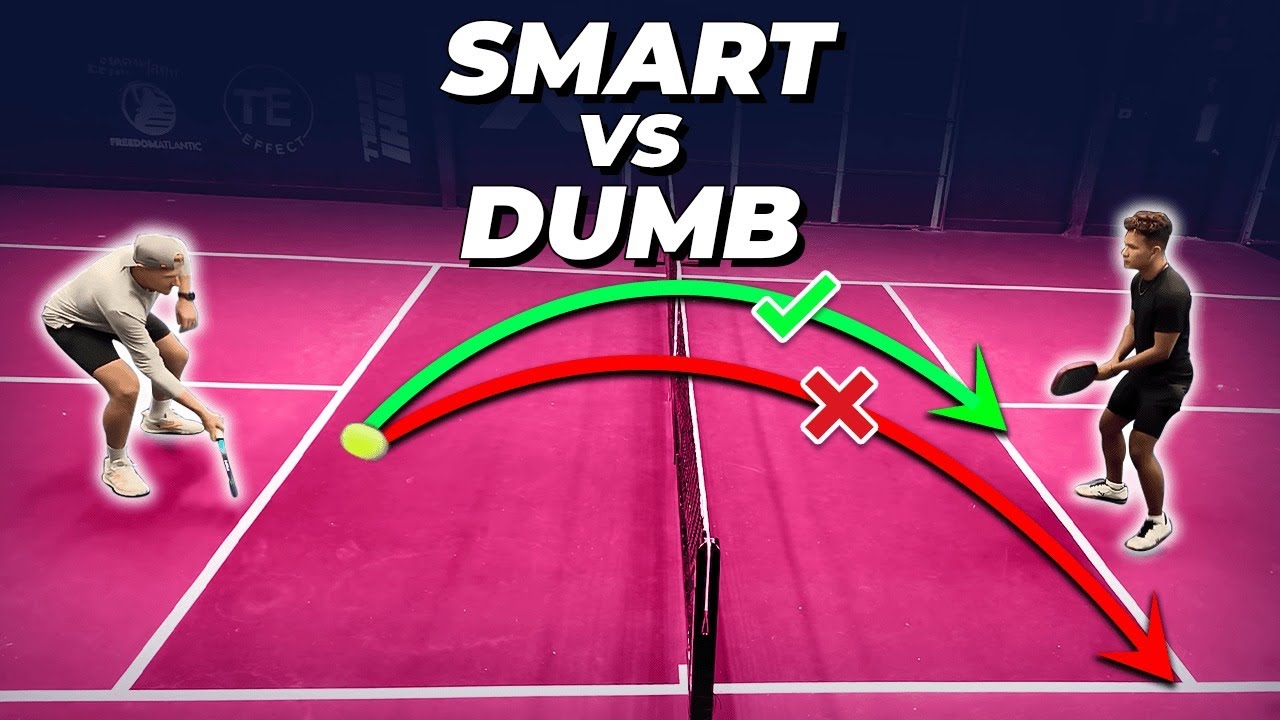
Key Takeaways
- Dink mechanics start with posture: knees bent, weight forward, stable base before any arm mechanics matter.
- Forehand dink errors most often come from a contact point that's too far back and too much grip tension. Fix the contact point first.
- Backhand dink errors most often come from the wrong grip and pulling the contact point into the body. Continental grip and forward extension solve most backhand dink problems.
- Crosscourt is geometrically safer but requires hip rotation toward the target, not just arm redirection.
- Drills under pressure build real match consistency; cooperative drilling alone does not.
- Backspin and slice can be valuable tools in your dink arsenal, but master the flat dink first before adding spin variables.
Frequently Asked Questions
How do I dink consistently in pickleball without floating the ball?
To dink consistently in pickleball without sending the ball too high, focus on your contact point and swing path. Contact the ball in front of your body and use a low-to-high brushing motion rather than a lifting motion. Keeping your wrist firm at contact prevents the involuntary flip that causes floaters. If your dinks are consistently too high, your contact point is probably behind your hip rather than in front of it.
Why is my backhand dink going into the net?
A backhand dink that clips the net is almost always caused by a closed paddle face at contact. This typically happens when you let the ball drift too close to your body before hitting, forcing the elbow to bend inward and tipping the paddle face down. Reach forward with your arm, keep the elbow slightly extended, and aim for a nearly vertical paddle face at the moment of contact.
How to dink consistently pickleball on the forehand side?
Consistent forehand dinks require a relaxed grip (think 4 out of 10 on pressure), a contact point in front of your lead foot, and minimal wrist movement. Drive the shot from the shoulder with a short, controlled swing. Over-rotation of the shoulder on the follow-through is the leading cause of forehand dinks going long. Practice with a specific target in the kitchen and reduce grip pressure until you feel the paddle face making clean contact with the bottom half of the ball.
Should I use topspin on my dinks?
Most recreational and intermediate players should focus on consistent flat dinks before adding topspin. A topspin dink can be effective when properly executed, as it keeps the ball low after the bounce, but it requires a more aggressive brushing motion that increases error rate. Once your flat dink is reliable under pressure, experimenting with light topspin can give your soft game an additional layer of difficulty for opponents.
How often should I practice dinking to see real improvement?
Consistency in dinking requires deliberate practice at least three to four times per week, even if only in short 15-minute sessions. Muscle memory for motor patterns requires repetition over time rather than occasional long sessions. Quality matters more than volume: focused drilling with a target and immediate feedback on contact point and ball height will produce faster gains than hitting a hundred dinks without purpose. Even solo wall practice can reinforce the mechanics when a partner isn't available.

Love Pickleball? Join 100k+ readers for free weekly tips, news & gear deals.
Subscribe to The Dink