7 Reasons Your Pickleball Resets Keep Popping Up (And How to Fix Them)
A popped-up pickleball reset hands your opponent an easy attack every single time. Here are 7 specific reasons it keeps happening and exactly what to do about each one.
Your pickleball reset is popping up, and your opponent is smashing it back at you before you can even get to the kitchen.
It happens over and over, and you know something is wrong, but you can't figure out exactly what.
The reset is one of the most misunderstood shots in the game. Most players think they're doing it right because they're not swinging hard.
But a soft swing and a correct reset are two very different things.
This breakdown comes from Briones Pickleball Academy on YouTube, where coach Jordan Briones walks through the exact fundamentals and most common mistakes that cause players at every level to botch this critical shot.
Here is everything you need to know to fix it.
Love pickleball? Then you'll love our free newsletter. We send the latest news, tips, and highlights for free each week.
What Is a Pickleball Reset (And Why Does It Matter)?
A reset is a defensive shot hit from the transition zone or deep in the court, designed to land softly in the non-volley zone and give you time to move forward.
It is not a counter-attack. It is not a block.
It is a controlled, touch shot that neutralizes your opponent's attack.
If your reset lands too high or sails past the kitchen, you are handing the other team a free attack.
That one mistake can end a rally before you even get set at the net.
Understanding why most pickleball mistakes happen in the transition zone is the first step to fixing them.
The reset is the most important shot in that zone, and most players have several flaws stacked on top of each other.
Mistake 1: Your Stance Is Too Narrow or Too Tall
A stable, wide base is the foundation of every good reset.
If your feet are close together or staggered, you cannot get low enough to handle balls coming to your feet.
When you are standing tall and a hard ball drops to your shoelaces, your only option is to reach.
Reaching destroys your angle control and forces you to flip your wrist just to make contact.
Before anything else, get wide and get low. Both feet should be on the ground every single time you make contact on a pickleball reset.
Mistake 2: You Are Still Moving When You Hit
Setting your feet early is one of the most known tips in pickleball. But knowing it and actually doing it are completely different things.
A lot of players are still moving through the transition zone when the ball arrives. That movement bleeds into the swing, and the result is a pop-up or a mishit.
You need to split step before your opponent contacts the ball and be fully balanced before you swing.
Think of your lower body as locked in place. From that locked base, your upper body does the work.
 The Dink Media Team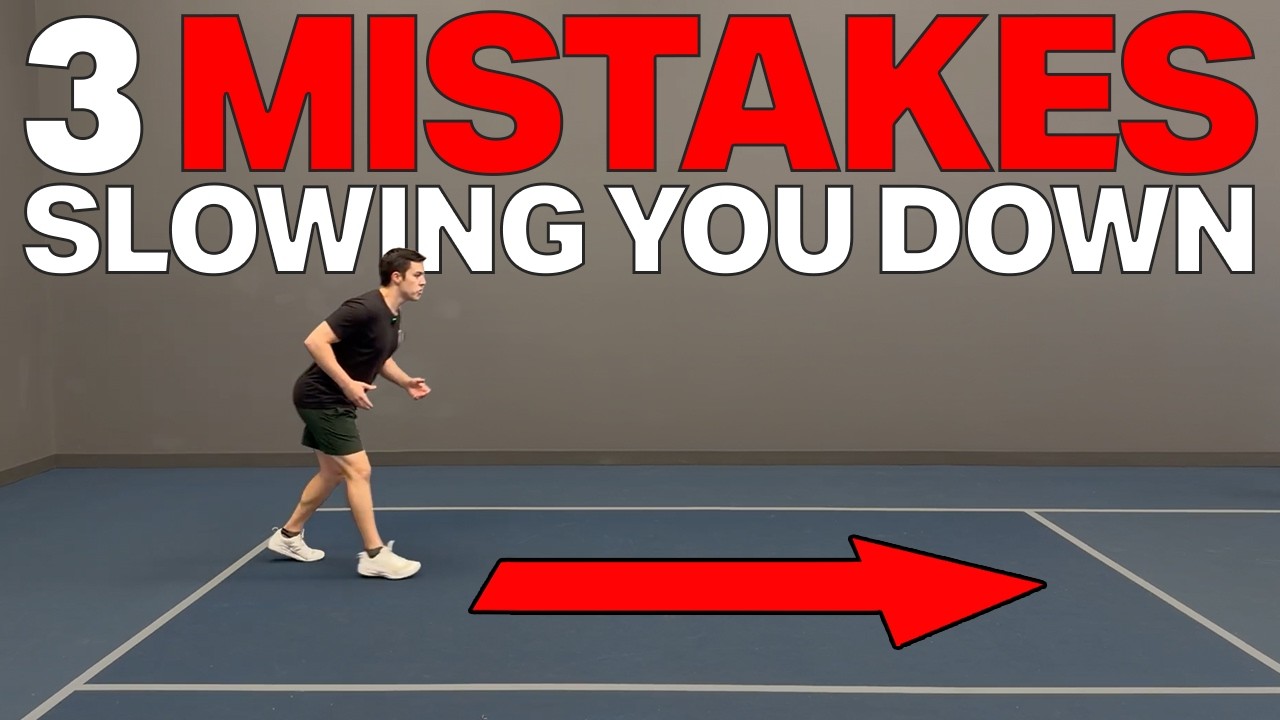
Mistake 3: You Are Punching Instead of Lifting
This one causes more pop-ups than almost any other mistake.
Players get into a decent stance, but then they punch forward through the ball like they are blocking a counter-attack.
Punching forward sends the ball past the kitchen. Your opponent is already there waiting.
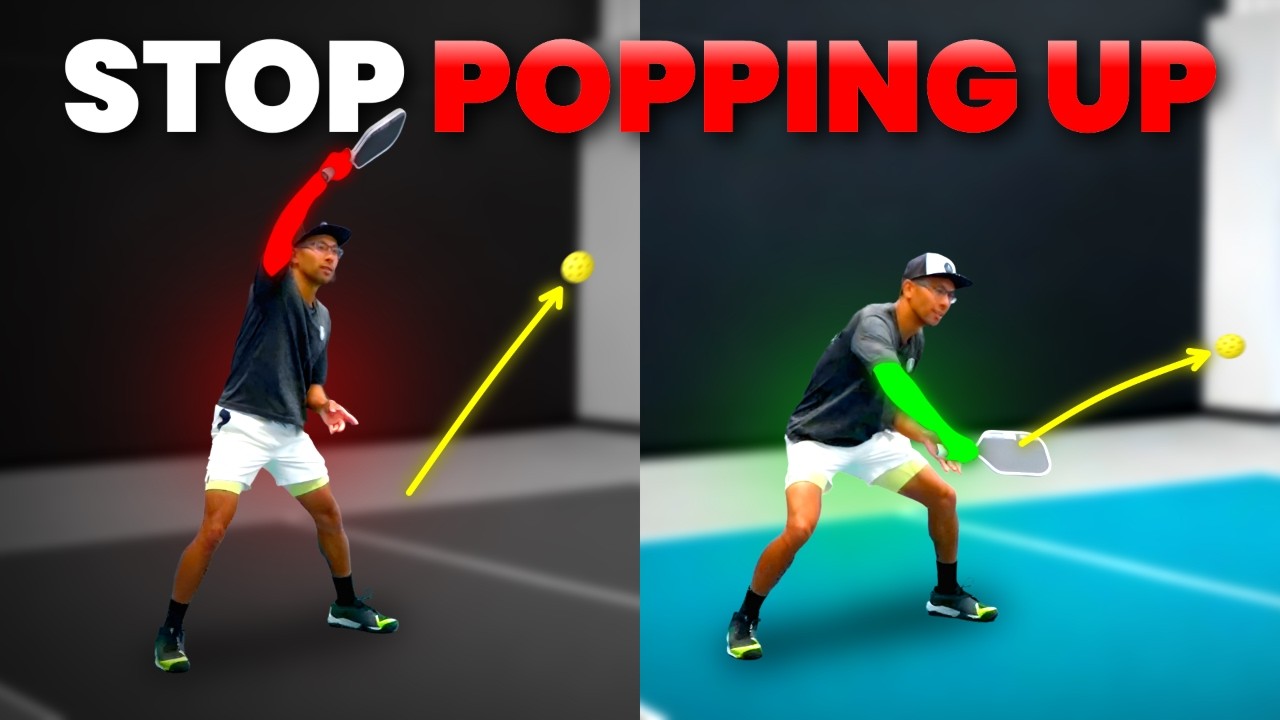
You need a lifting motion from the shoulder, not a push through the ball.
The lift creates the arc that gets the ball over the net and drops it into the non-volley zone.
Without that arc, you are either hitting it into the net or giving your opponent an easy volley.
If you are also working on your forehand third shot drop, you will notice this same lifting principle applies there too. The mechanics are closely related.
 The Dink Media Team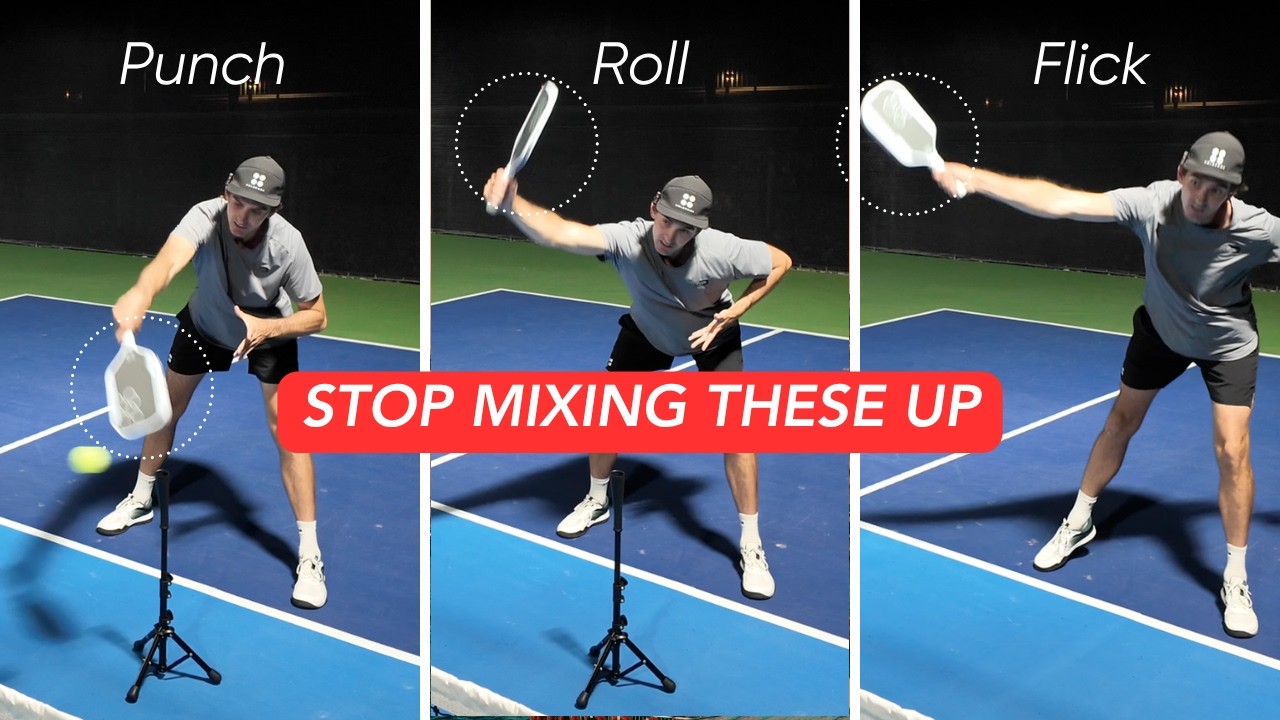
Mistake 4: Your Wrist Is Moving at Contact
Watch any elite player reset the ball. Their wrist is completely locked before, during, and after contact. There is no hinge, no flick, no last-second adjustment.
When you use your wrist on a reset, you introduce a small, fast muscle into a shot that demands precision. Small muscles are hard to control under pressure.
Your shoulder is the hinge. It is the largest and most reliable point of control for this pickleball reset. Swing from there, and lock everything below the elbow.
 The Dink Media Team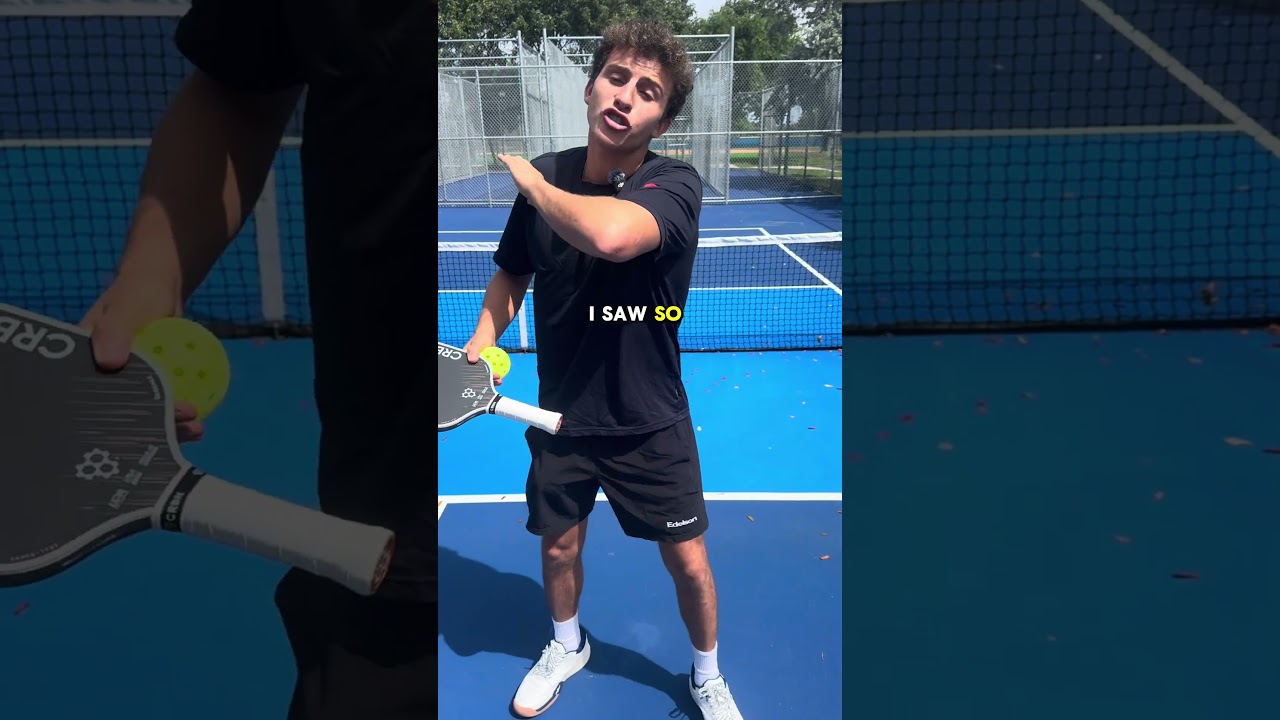
Mistake 5: You Are Chopping or Slicing Down on the Ball
Players who come from tennis, racquetball, or squash often have a habit of slicing or chopping downward on soft shots.
That motion might work in other sports. In pickleball, it kills your reset.
Chopping down makes it extremely hard to find the sweet spot of the paddle. It also drives the ball into the net more often than not, especially on low balls.
Keep your paddle face open at contact.
That open face, combined with the lifting motion from the shoulder, is what gets the ball over the net and into the kitchen with a soft, controlled arc.
If you struggle with shots going into the net consistently, this guide on stopping balls from going into the net covers the exact adjustments you need.
 The Dink Media Team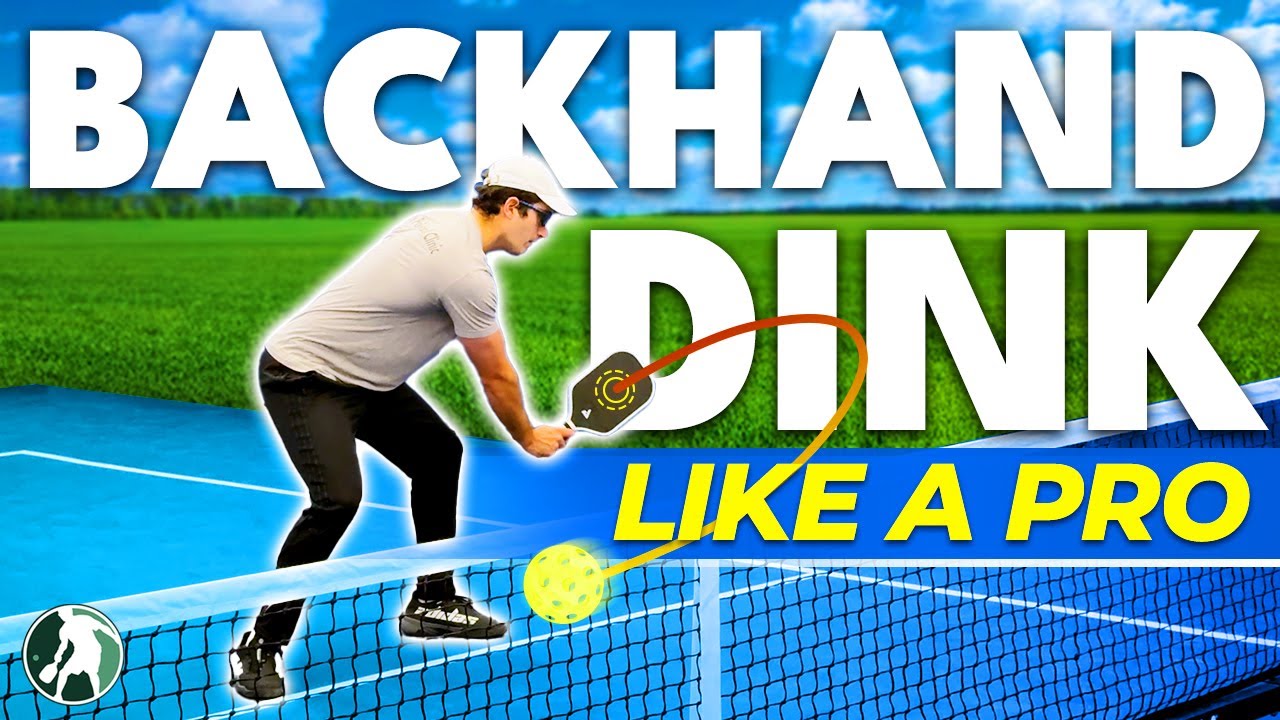
Does Your Paddle Angle Stay Stable Through the Shot?
This is one of the most overlooked pickleball reset fundamentals.
Your paddle angle should stay constant from the moment before contact through the entire follow-through.
Players who chop, slice, or get wristy almost always change their paddle angle at or right after contact.
That change sends the ball somewhere other than where you intended.
Think of it this way: pick your angle before the ball arrives, lock it in, and keep it there through the swing. Do not make any adjustments at contact.
The consistency you gain from this alone will surprise you.
This principle applies directly to controlling your pickleball shots with grip and angle fixes. Stable paddle angle is the single biggest factor in shot consistency.
 The Dink Media Team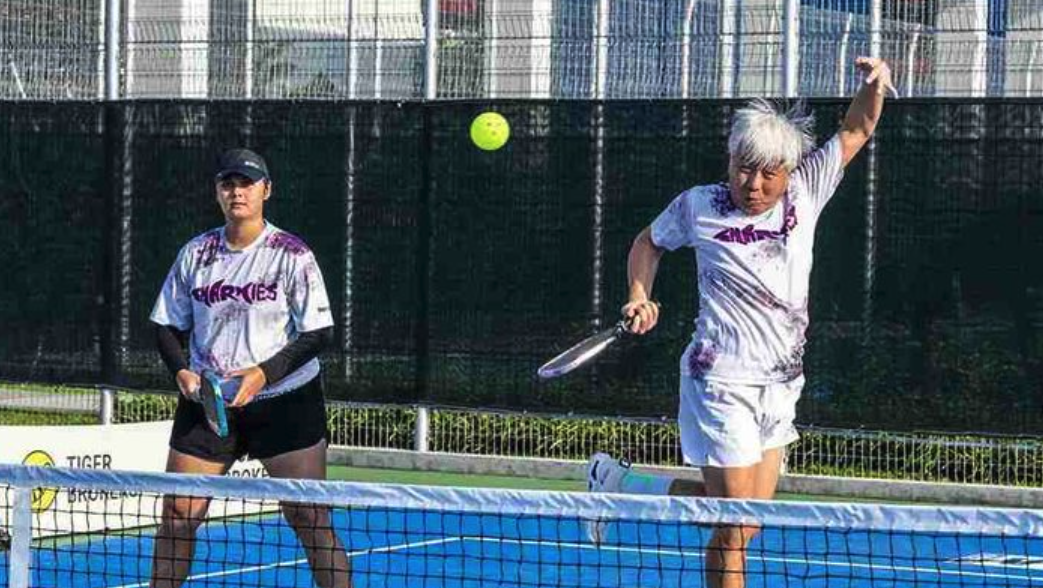
Mistake 6: You Are Swinging Too Fast
The reset shot is a slow, smooth, compact shot. Your follow-through should not be ending up above your head. If it is, you are adding too much energy to the ball.
When a hard ball is coming at you, the instinct is to match that pace.
Resist it. The ball already has pace.
Your job is to absorb it and redirect it softly into the kitchen.
Use a grip pressure of around four out of ten. Loose hands absorb pace. Tight hands send the ball flying.
This is one of the simplest adjustments you can make right now and feel immediately.
 The Dink Media Team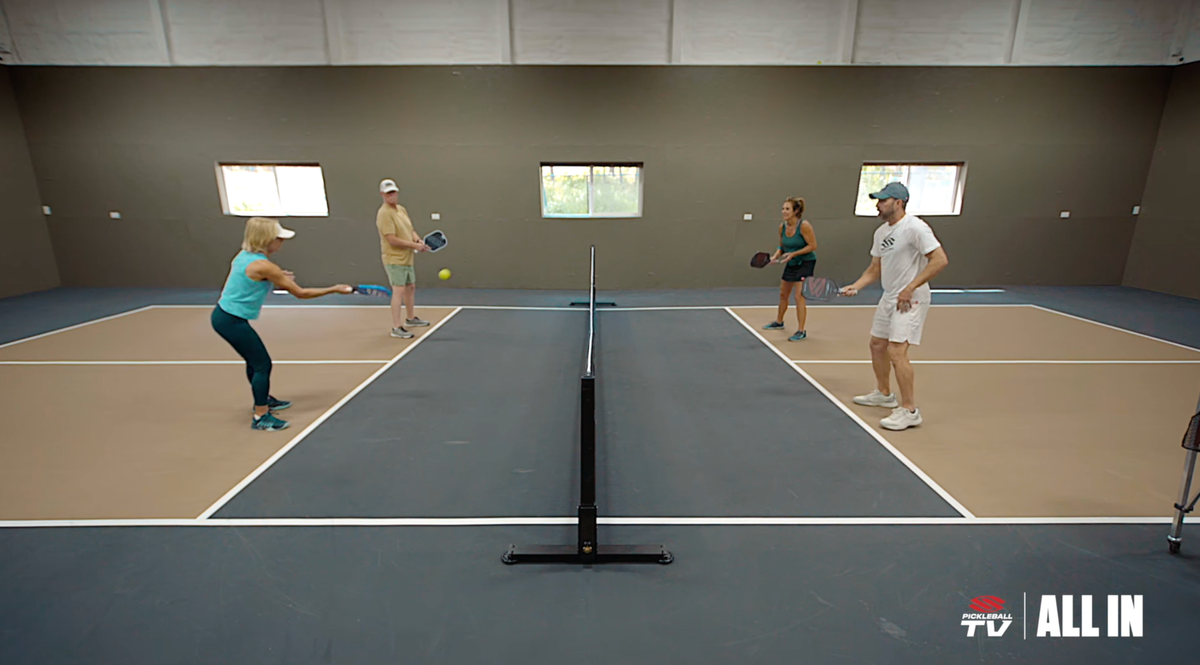
How Do You Actually Practice This?
You have to build this pickleball reset shot in progressions. Trying to practice resets at full pace before you have the mechanics is a waste of time.
Here is the progression Briones Pickleball Academy recommends:
- Start inside the non-volley zone. Have a partner feed slow balls to your backhand and forehand. Focus only on opening the paddle face and keeping the wrist still. Do not swing. Let the ball come to you and redirect it softly.
- Move to the non-volley zone line. Your partner feeds slightly faster. Your job is to block the ball back with an open face and a stable wrist. You should barely be lifting at this stage.
- Move to mid-court. Now add the lifting motion from the shoulder. Keep your lower body completely still. Hit slow, compact reps to both sides. Focus on swing smoothness, not placement.
- Add a drop shot approach. Start at the baseline, hit your third shot drop, move forward, split step, and reset the next ball. This simulates real match conditions and trains your footwork alongside your mechanics.
- Sustain rally drill. Stay in the transition zone on purpose and try to reset everything your partner throws at you. The goal is not to get to the net. The goal is to survive and keep resetting cleanly.
This progression works because it separates the individual skills before combining them.
If you try to do step five before mastering step one, you are just ingraining bad habits faster.
If you want to see how these skills stack up at different rating levels, this breakdown of what separates 4.0 from 5.0 players is worth reading. The reset is one of the clearest dividers.
 The Dink Media Team
What Should Your Pickleball Reset Actually Look Like?
Here is a quick checklist to run through before every reset drill session:
- Wide, low base with both feet planted before contact
- Open paddle face angled toward your target before the ball arrives
- Shoulder as the primary hinge, wrist completely locked
- Slow, lifting motion with a compact follow-through below shoulder height
- Stable paddle angle held constant through the entire swing
- Grip pressure around four out of ten to absorb incoming pace
Every great reset you have ever seen from a high-level player hits every one of these points.
None of it is complicated. All of it requires deliberate repetition before it becomes automatic.
If you want to understand more about the specific fixes that stop the pop-up, that resource goes even deeper on the mechanics.
And if you want to know exactly where your current game stands, find out your pickleball skill level here before deciding what to work on next.
The reset is not a glamorous shot. But it is one of the most important shots you can develop.
Every rally you survive in the transition zone is a rally you have a chance to win.
For more context on avoiding the pitfalls that come with moving through the court, this guide on escaping no man's land pairs directly with what you just learned. And if you want a full framework for avoiding no man's land in the first place, that is worth reading too.
Put in the reps. Start slow. Build up.
The consistent pickleball reset is within reach for any player who is willing to actually practice it the right way.
Frequently Asked Questions
Why does my pickleball reset keep going into the net?
You are most likely chopping down on the ball instead of lifting through it. Open your paddle face before contact and use a slow lifting motion from the shoulder to get the ball over the net with enough arc to land in the kitchen.
What grip pressure should I use when resetting in pickleball?
Use a grip pressure of around four out of ten on a ten-point scale. Loose hands absorb the pace of an incoming ball, which is exactly what a reset requires. Squeezing too tight sends the ball long.
Should I use my wrist when hitting a pickleball reset?
No, your wrist should be completely locked before, during, and after contact on every reset. Your shoulder is the correct hinge for this shot, and using your wrist introduces inconsistency that is one of the primary causes of pop-ups.
Where should my pickleball reset land?
Your reset should land in the non-volley zone, ideally bouncing before your opponent can volley it. A ball that bounces in the kitchen forces your opponent to hit upward, which buys you time to advance to the net.
How do I practice pickleball resets on my own or with one partner?
Start close to the net and work on open paddle face and wrist stability with slow feeds. Gradually move back through the court in stages, adding the shoulder lift and then realistic approach footwork. The sustained rally drill, where you stay in the transition zone on purpose and keep resetting, is one of the best ways to build real-game consistency.

Love Pickleball? Join 100k+ readers for free weekly tips, news & gear deals.
Subscribe to The Dink