
If your DUPR hasn't moved in months, the problem isn't your paddle. These five targeted pickleball drills build the habits that actually beat better players.
If your DUPR rating has flatlined, the real culprit is almost never your paddle or your footwear.
The problem is that you are playing too much recreational pickleball, which just reinforces whatever habits you already have.
Drilling is how you build new habits. Specific, purposeful drills are how you build the habits that beat players who are rated above you.
These five drills come from Troy Akin Pickleball on YouTube, where PPA top 100 pro and 6.0-rated player Troy Aiken breaks down the exact practice structure he recommends for 3.0 to 4.0 players looking to finally move their rating.
Love pickleball? Then you'll love our free newsletter. We send the latest news, tips, and highlights for free each week.
Why Rec Play Alone Will Never Move Your Rating
Recreational play feels productive because you are on the court and hitting balls.
But it is mostly reinforcing your current patterns, including the bad ones.
To beat higher-rated players, you need to hit the ball low and force your opponents to hit up.
That requires habits you can only build through repetition with intention, not random points.
The five drills below target the exact weaknesses that keep 3.0 and 4.0 players stuck.
Do two of them for 15 to 30 minutes before your rec sessions and check your DUPR again in three months.
Drill 1: The Dinking Marathon
The dinking marathon is the most important drill on this list, and it is also the one most players skip because they find it boring. That is a mistake.
At the 3.0 and 4.0 level, players lose points constantly by leaving dinks up. A ball that sits above the net gives your opponent an easy attack.
The goal here is 100 dinks in a row. But just making 100 soft dinks is not enough.
You need to add purpose to every dink.
That means a little extra pace, a more penetrating angle, something that pushes the ball into your opponent's feet rather than floating a hittable ball back to them.
To make the drill competitive, place a cone near the kitchen line. If your partner redirects a dink and knocks the cone out of the air, they win the rally.
This trains both players at once: the dinker works on keeping balls low and purposeful, and the receiver works on taking balls out of the air instead of backing up.
Add variations by working crosscourt backhands and down the line, which are harder because you have less margin.
If you want to fix the most common dink mistakes faster, these two tips for stopping pop-up dinks are worth reading before your next session.
Drill 2: Third Shot Drop With Shot Recognition
Most players have practiced the third shot drop plenty. What they have not practiced is what happens after they hit it.
Too many 3.0 and 4.0 players hit a ball into the air and immediately sprint to the kitchen.
That is wrong. You need to read the quality of your own shot before you move.
Here is how the drill works:
- Hit a third shot drop from the baseline.
- If the drop is good, take two hard steps forward and split step.
- Hit a fifth shot drop, take two more steps, and split again.
- After two quality drops in a row, you have earned your way to the kitchen.
- If a drop is bad, stay back. Do not reward a poor shot by advancing.
The split step before every fifth shot is non-negotiable.
Fixing your split step timing alone will make your transition game noticeably better.
This drill also builds your transition zone game as a byproduct, which leads directly into drill three.
 The Dink Media Team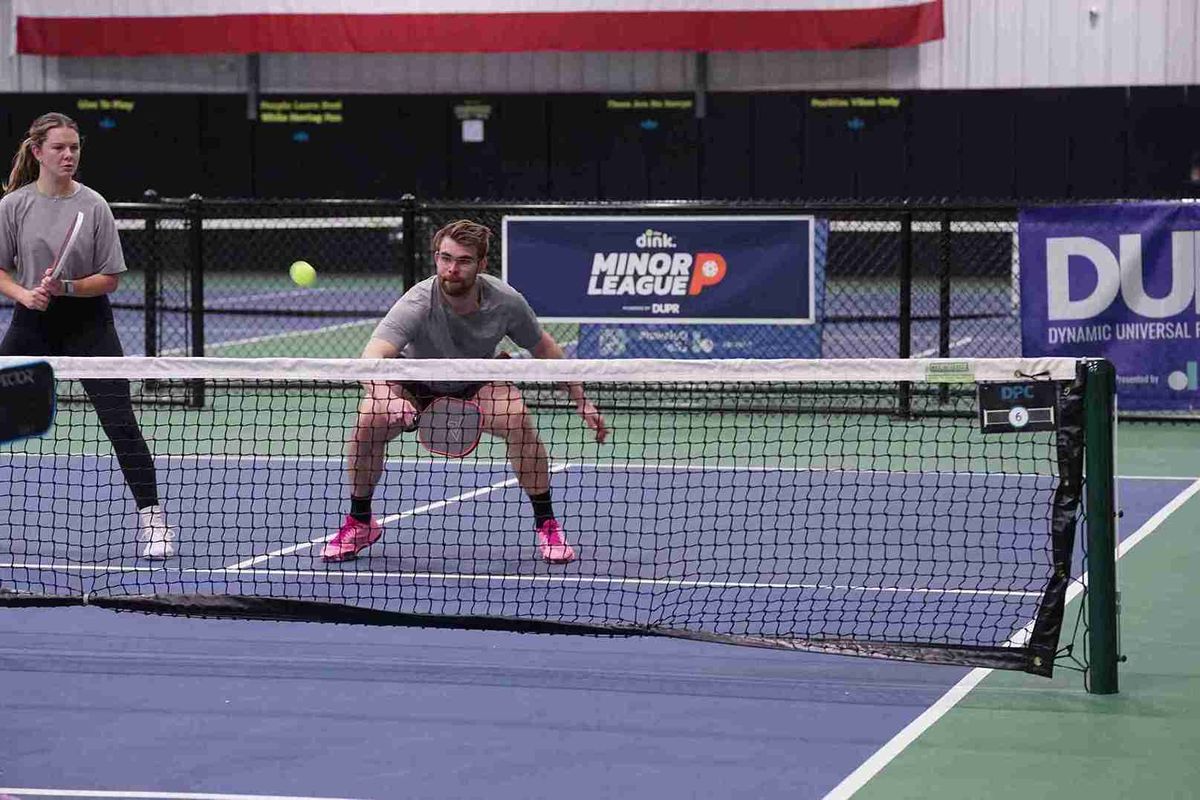
Drill 3: Fire Feet Reset
The ability to reset from the transition zone is what separates 4.0 players from everyone below them.
Fire feet is the drill that builds it.
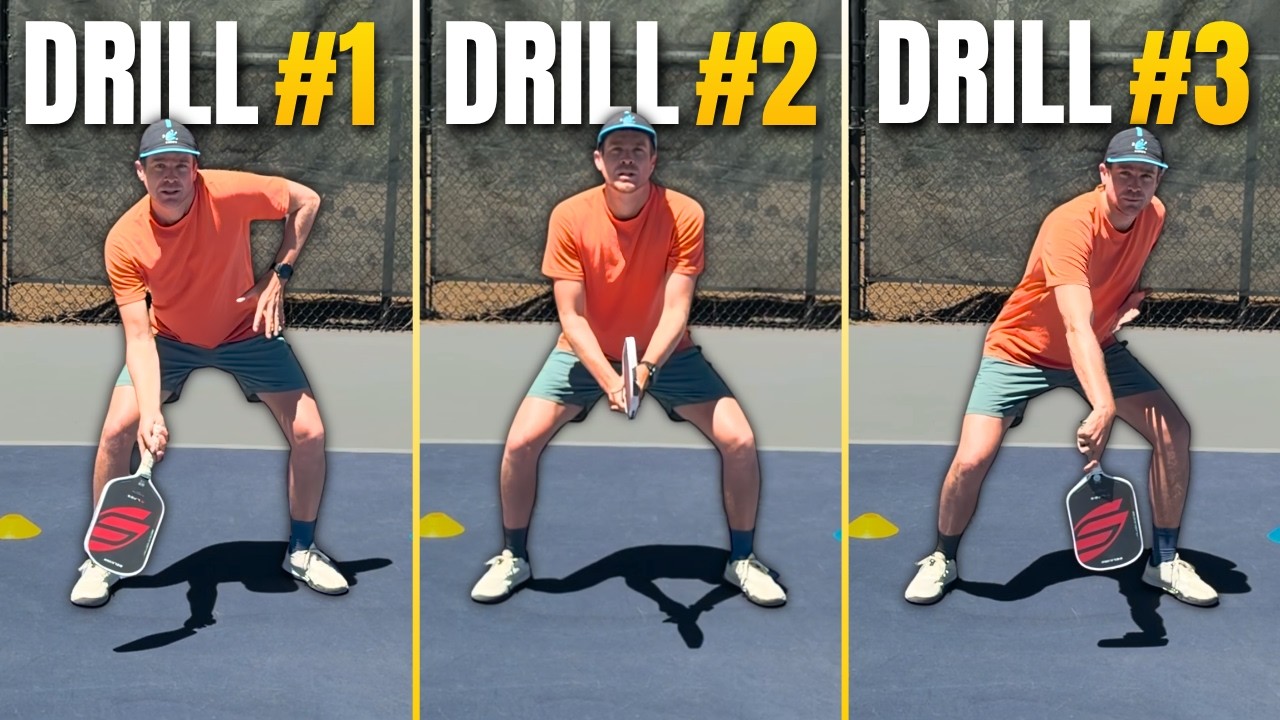
Stand in the transition zone. Your partner feeds balls directly at your feet, shin height and below.
Your job is to absorb the pace and land the ball softly into the kitchen so both players can get set at the net.
Two things matter most here:
- Loose grip: A tight grip fights the ball. A soft grip absorbs it. If your resets keep popping up, grip pressure is usually the problem.
- Low athletic base: Get low before the ball arrives. Split step between every rep to reinforce the habit of being ready, not reacting late.
The most common mistake in this situation is panicking and swinging hard.
A hard swing from the transition zone sends the ball right back to your opponent's shoulder, and they just keep firing at your feet.
If your resets keep failing, this breakdown of why resets fail will help you find the fix fast.
One important caveat: resetting everything is not the goal. At some point you need to turn a reset into a counter. But this drill builds the foundation.
 The Dink Media Team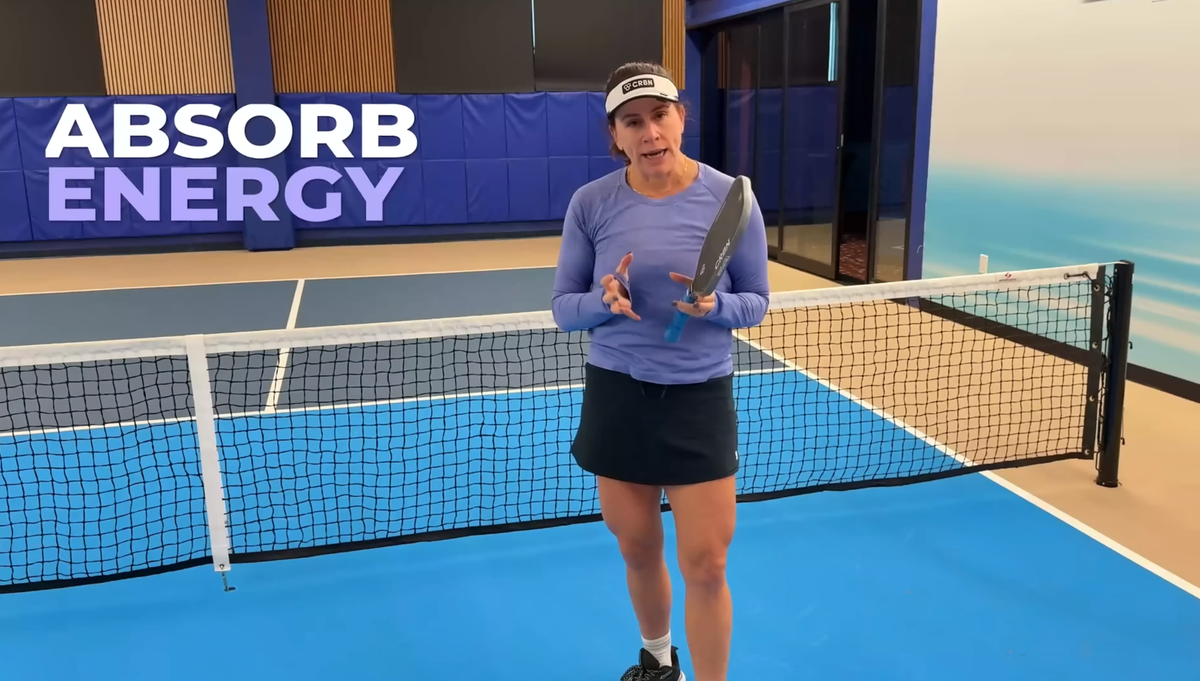
Drill 4: Speed Ups and Block Resets at the Kitchen
Pickleball is moving toward a faster, more speed-up-heavy game.
If you cannot generate offense from the kitchen or handle speed ups when they come at you, your DUPR will reflect it.
This drill works both sides. One player attacks, one player resets or counters.
For the attacker, focus on three things:
- Compact, disguised swing: Make it look like a dink until the last moment. If your opponent can read the speed up coming, they are already in position.
- Target selection: There are three spots to aim. Down the line, at the dominant hip (the right hip for a right-handed player), and down the middle. Middle clears confusion between partners in doubles.
- Keep it low: A speed up to the shoulder is a gift. A speed up to the hip forces your opponent to hit up, which is what you want.
For the defender, cheat toward your backhand side and keep your grip loose. You are not trying to swing through the ball.
You are absorbing the pace and redirecting it back into the kitchen.
A useful add-on: if a net cord goes over during this drill, it counts as a win for the attacker.
This trains you to aim close to the tape rather than giving yourself too much net clearance.
These three fixes for resetting speed ups will sharpen the defensive side of this drill.
Do this drill for five minutes before any rec session. The kitchen fire fights will feel slower, and your hands will feel faster. That is your DUPR moving.
For more on disguising your attacks, this breakdown of the fake dink speed up shows you exactly how to hide your intentions.
 The Dink Media Team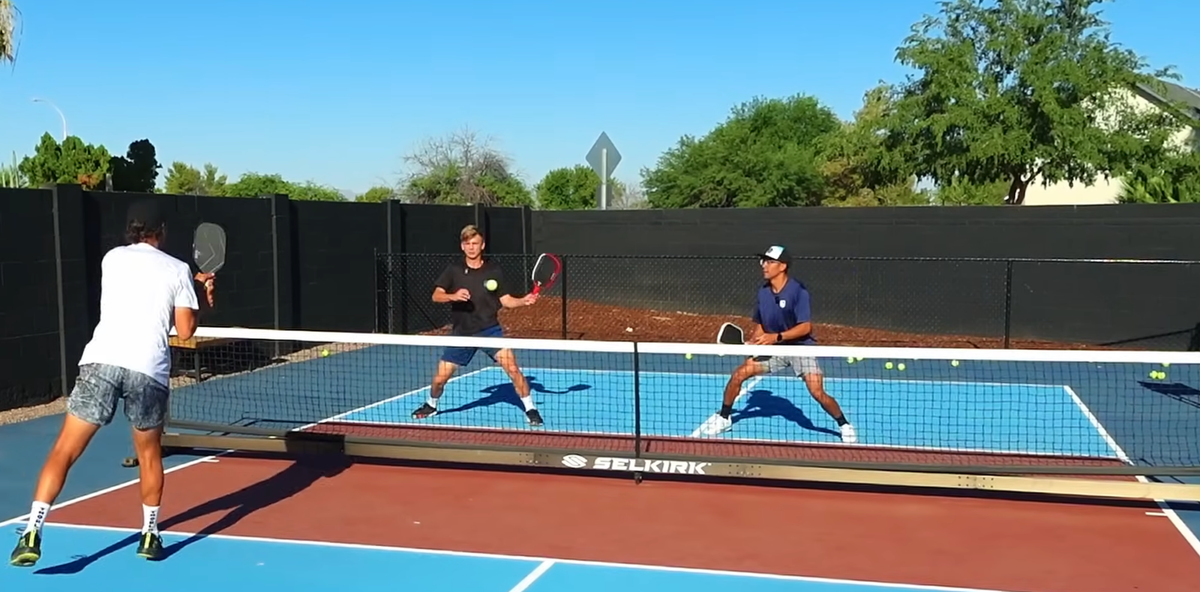
Drill 5: Deep Return of Serve With a Sprint to the Kitchen
The return of serve is one of the most undervalued shots in recreational pickleball. Most players just try to keep it in. That is not good enough.
A deep return does two things.
It gives you more time to reach the kitchen, and it forces your opponent to hit their third shot from behind the baseline instead of inside it.
That is a harder shot, which means a worse third shot, which means an easier fourth shot for your partner.
Here is how to run the drill:
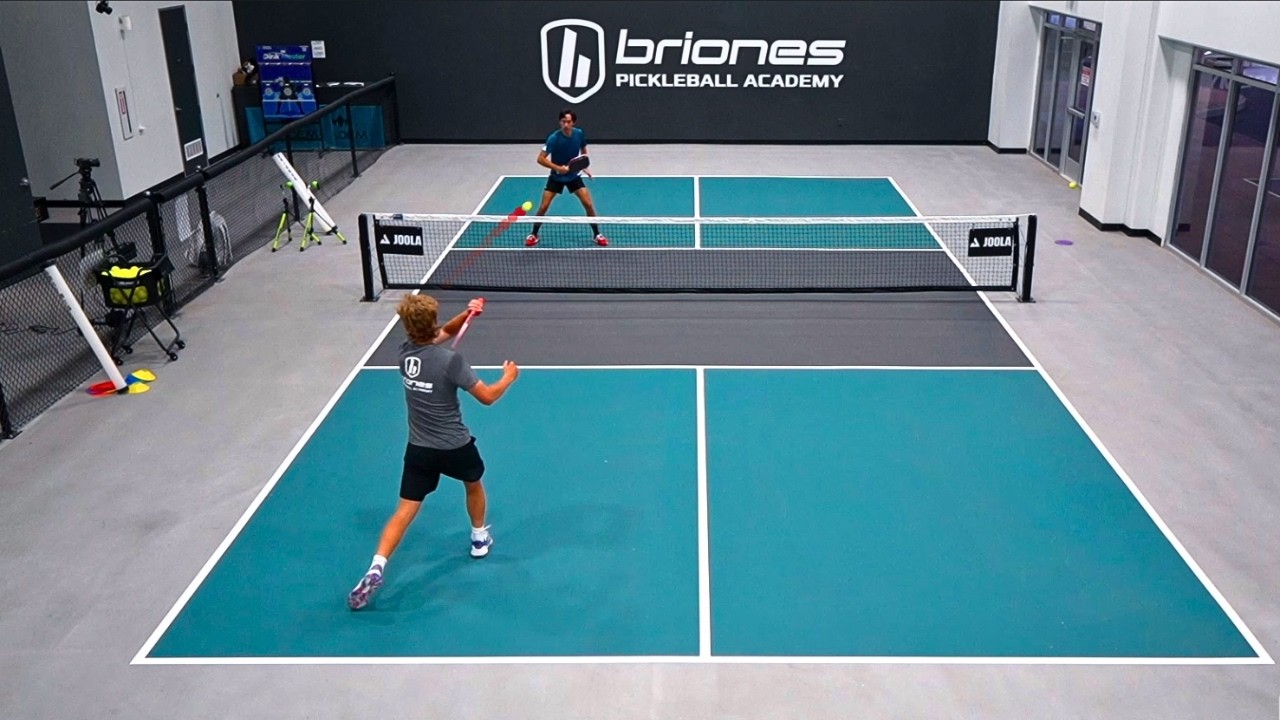
- Place three cones in the back third of the court on your opponent's side.
- Every return should land past those cones or as close to the baseline as possible.
- After every return, sprint to the kitchen and split step before the third shot arrives.
- If you are arriving at the kitchen late, add more arc or topspin to the return to buy yourself time.
Missing long is fine during this drill. The point is to find the back of the court. You can pull it back from there.
A short return leaves your partner as a sitting duck at the net.
Adjust your pace, arc, and spin based on where you end up after sprinting.
A flat fast return works if you are quick.
A higher looping return gives slower players more time to get set. These six fixes for your serve and return cover the mechanics in more detail.
For more on building depth into your return consistently, this three-step system for instant depth is worth bookmarking.
 The Dink Media Team
How to Build This Into Your Weekly Routine
You do not need three two-hour drilling sessions per week. That is not realistic for most players.
Pick two drills from this list. Do them for 15 to 30 minutes before your rec play. Rotate through all five over the course of a few weeks so nothing gets neglected.
If you are not sure whether your skills are ready to move up, these five signs you are ready to move up a skill level give you a clear checklist.
And if your drilling is not producing results yet, this two-step fix explains why drilling sometimes stalls and how to correct it.
Check your DUPR in three to six months. The rating will tell you everything you need to know.
Frequently Asked Questions
How often should I drill to raise my DUPR in pickleball?
Two drilling sessions per week for 15 to 30 minutes each is enough to see progress in three to six months. Consistency matters more than volume. Drilling before rec play is an easy way to make it a habit without adding extra court time.
What is the most important pickleball drill for 3.0 and 4.0 players?
The dinking marathon is the highest-priority drill for players in the 3.0 to 4.0 range. Most points at those levels are lost on unforced dink errors, not won by aggressive attacks. Building the discipline to keep 100 dinks in a row, with purpose and low net clearance, fixes the biggest leak in most recreational games.
What does DUPR measure in pickleball?
DUPR (Dynamic Universal Pickleball Rating) is a global rating system that measures your performance relative to the players you compete against. It updates based on match results and adjusts for the skill level of your opponents. Beating higher-rated players moves your rating up faster than beating lower-rated ones.
Why does my third shot drop keep getting attacked?
Your third shot drop is probably landing too high or too short, which gives your opponent an easy ball to attack. The fix is keeping the drop low over the net and landing it deep in the kitchen, not the middle. These three third shot drop fixes for perfect placement address the most common causes.
How do I stop popping up resets from the transition zone?
Popping up resets is almost always a grip pressure problem. A tight grip fights the pace of the incoming ball instead of absorbing it. Loosen your grip, get low before the ball arrives, and let the ball deflect softly off your paddle rather than swinging through it.

Love Pickleball? Join 100k+ readers for free weekly tips, news & gear deals.
Subscribe to The Dink