How Gabe Tardio's Paddle Grip Technique Is Changing Pro Pickleball
Gabe Tardio's paddle grip technique of choking up on the paddle is revolutionizing how pro pickleball players approach hand speed and spin.
When Gabe Tardio started experimenting with a small adjustment to his paddle grip technique, he didn't realize he was about to influence how some of the sport's best players hold their paddles.
The pro pickleball star discovered that choking up on the grip, a method borrowed from tennis and table tennis but adapted for pickleball's unique demands, could unlock faster hands, more spin, and better overall control.
Now, other elite players are taking notice, and the paddle grip technique is quietly reshaping the professional game.
Gabe talks through it all on an episode of the PicklePod, joined by fellow pro Hayden Patriquin and co-hosts Zane Navratil and Nico the Lefty.
Love pickleball? Then you'll love our free newsletter. We send the latest news, tips, and highlights for free each week.
What Exactly Is the Paddle Grip Technique of Choking Up?
Let's start with the basics. Choking up means moving your hand higher on the paddle grip, positioning your index finger closer to the throat (the narrow section where the grip meets the paddle face) without actually touching the paddle face itself.
It's a subtle shift, but the mechanics matter.
Tardio explains that you're not going full table tennis here.
You still want to maintain reach and keep your wrist flexible enough to rotate the paddle.
If you choke up too aggressively, you lose the ability to move the paddle freely, which defeats the purpose.
The sweet spot, according to Tardio, is having your index finger almost all the way up to the throat while still leaving enough room for two fingers to fit below your grip hand.
This paddle grip technique isn't entirely new to racquet sports. Tennis players have used it for decades, especially on the serve and in net play.
But in pickleball, where the court is smaller and hand speed matters more than raw power, the application is different.
The paddle grip technique works because it changes the leverage and feel of the paddle itself.
If you're already tracking all the new pro paddle deals in 2026, understanding how grip position interacts with paddle design is the next level of that conversation.
 The Dink Media Team
Why Does Choking Up on Your Paddle Actually Work?
Here's where the physics get interesting. When you choke up on your paddle, the paddle feels lighter in your hand.
This isn't just a psychological effect. By moving your grip point closer to the paddle face, you're reducing the effective lever arm, which means less rotational inertia.
In plain English: your paddle becomes easier to whip around.
Tardio discovered this benefit during wall drills, a fundamental training method in pickleball.
He noticed his hands moved faster when he choked up, and the ball came off his paddle with more spin.
The lighter feel allows you to generate more wrist action without sacrificing control.
Alex E. Weaver
You can snap the paddle through the ball more quickly, which translates to faster hands and tighter spin.
The paddle grip technique also gives you better paddle mobility.
Because your hand is positioned higher, you have more freedom to rotate the paddle face, which is crucial for hitting different spins and angles.
This is especially valuable in dinking exchanges, where small adjustments in paddle angle can mean the difference between a winning shot and a pop-up.
If you want to understand the full science of modern pickleball hand speed and paddle positioning, Tardio's choking-up method fits directly into that framework.
Better grip position upstream means better shot outcomes downstream.
Is Every Pro Adopting This Paddle Grip Technique?
Gabe Tardio isn't claiming to have invented the paddle grip technique, but he's definitely one of the first to popularize it at the pro level.
In conversations with fellow pros, he's noticed that Ben Johns and Christian Alshon have started experimenting with choking up as well.
The technique is spreading, though adoption has been slower than you might expect.
Among the 25 biggest stories in pro pickleball from 2025, the quiet revolution in how pros are holding their paddles deserves a spot on that list.
Why the slow uptake? Because it feels unnatural at first. Tardio acknowledges this directly.
If you've been holding your paddle the same way for months or years, moving your hand up the grip requires a genuine commitment to retraining your muscle memory.
Tardio estimates it takes about a month of consistent practice before the paddle grip technique becomes second nature.
That's a significant investment for players who are already competing at a high level. But here's the thing: there's really no downside.
Even when Tardio chokes up, he still has enough room to place two fingers below his grip hand, meaning he can adjust his grip position on the fly depending on the shot.
You can develop faster hands in pickleball without overhauling your entire game. The flexibility is built in.
The Dink Media Team
Does Your Paddle Choice Matter for This Grip Technique?
Yes, and this is a detail that often gets overlooked. Not all paddles are created equal when it comes to the paddle grip technique.
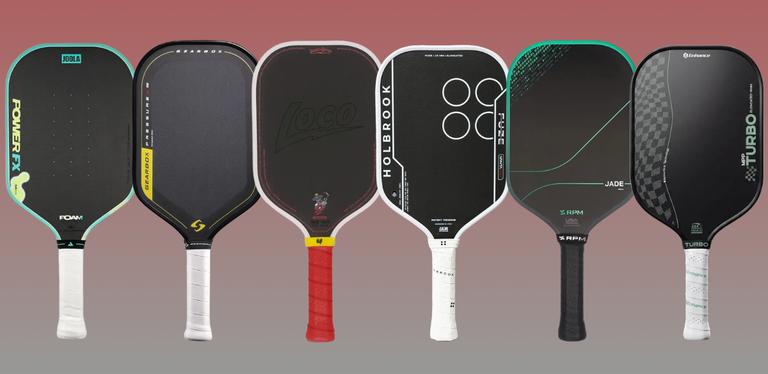
Tardio plays with paddles that have shorter grips, like the Pickle and the Fucklo.
A grip that's too long can actually interfere with your mobility when you choke up, because the bottom of the grip can hit your hand or wrist.
If you're thinking about experimenting with this pickleball grip adjustment, pay attention to your paddle's grip length.
Ideally, you want a grip that allows you to choke up to a point where your index finger is almost on the rubber (the paddle face), without the grip extending so far down that it becomes an obstacle.
This is one reason why many pros gravitate toward paddles with shorter, more compact grips.
Curious what Tardio actually carries with him to every event? Inside Gabe Tardio's pickleball bag gives you the full breakdown. Spoiler: he brings a lot of paddles.
For a broader look at how paddle equipment is evolving alongside technique, the 2026 paddle predictions from top reviewers are worth a read.
Shorter grips are trending for a reason.
The Dink Media Team
The Bigger Picture: How a Small Paddle Grip Change Reshapes the Game
What's fascinating about the paddle grip technique is how it illustrates the evolution of pickleball at the professional level.
The sport is still young enough that fundamental techniques are being refined and reinvented.
A small adjustment to how you hold your paddle can ripple through the entire game, affecting hand speed, spin generation, and shot variety.
Tardio's willingness to experiment and share his findings is part of what makes the pro pickleball community so dynamic.
Players watch each other, try new things, and when something works, word spreads.
This organic evolution is exactly what why professional pickleball players abandoned the slice shot in 2025 documented at the tour level. One technique falls out of favor. Another rises.
The choking-up paddle grip technique is a perfect example.
- It's not a revolutionary new shot or a radical change to the rules.
- It's a subtle tweak that, when executed properly, gives you a measurable advantage.
The question now is whether the paddle grip technique will become standard across the professional circuit, or whether it will remain a tool that some players use situationally.
Given that elite players like Johns and Alshon are already experimenting with it, the trend seems to be moving in one direction.
The 26 pro pickleball predictions for 2026 didn't include this one, but maybe they should have.
The Dink Media Team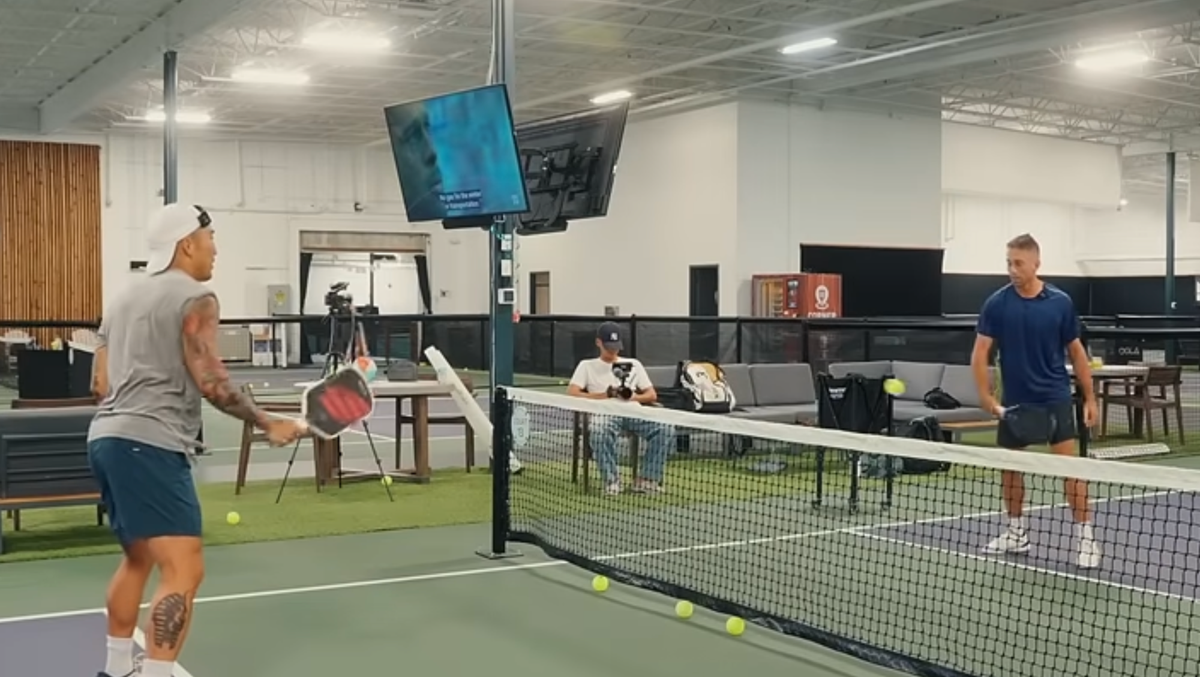
How to Start Experimenting With the Paddle Grip Technique
If you're interested in trying the paddle grip technique yourself, here's what to keep in mind.
- Start with wall drills. This is where Tardio first noticed the benefits, and it's the safest place to experiment. You'll get immediate feedback on hand speed and spin without the pressure of match play. The 12 drills you need to play your best pickleball in 2026 pair well with this kind of grip experimentation.
- Position your index finger close to the throat of the paddle, but not touching the paddle face. Leave room for at least two fingers below your grip hand.
- Expect an adjustment period. Your muscle memory will resist at first. Give yourself at least a week of consistent practice before deciding whether the paddle grip technique works for you.
- Check your paddle's grip length. If your grip is too long, choking up might feel awkward or limit your mobility. This is one reason the how Gabe Tardio's Facolos deal could reshape the paddle market story matters beyond just sponsorship money.
- Don't force it. If the paddle grip technique doesn't feel right after a genuine trial period, that's okay. Not every technique works for every player. Instead, focus on the essential pickleball shots to master for 2026 and build your game from there.
The beauty of pickleball is that there's room for individual style and preference.
But if you're looking to add a tool to your arsenal that could improve your hand speed and spin, the paddle grip technique that Tardio has popularized is worth exploring.
And if you want to layer this grip work into a complete improvement plan, a simple 4-step system to win more pickleball games in 2026 is a natural next read.
Frequently Asked Questions
What is the paddle grip technique of choking up in pickleball?
Choking up means moving your hand higher on the paddle grip, positioning your index finger closer to the throat of the paddle without touching the paddle face. This reduces the effective lever arm of the paddle, making it feel lighter and easier to maneuver at speed.
Does choking up on your paddle actually make your hands faster?
Yes, according to Gabe Tardio and other pros experimenting with the technique. By reducing the rotational inertia of the paddle, you can snap it through the ball more quickly, which generates faster hand speed and more spin on contact.
How long does it take to get used to this pickleball grip adjustment?
Most players need about a month of consistent practice before choking up feels natural. It requires retraining your muscle memory, so patience and commitment are essential before judging whether the change is working.
Can you use this paddle grip technique on any pickleball paddle?
You can choke up on most paddles, but grip length matters significantly. Paddles with shorter grips work better because they don't interfere with your hand position when you choke up. If your paddle's grip is too long, it might limit your mobility and offset the benefits.
Is the paddle grip technique of choking up only for advanced players?
No, players of any skill level can experiment with choking up. However, it's most beneficial if you already have solid fundamentals and are looking to refine your technique and add more spin generation to your shot repertoire.

Love Pickleball? Join 100k+ readers for free weekly tips, news & gear deals.
Subscribe to The Dink