

3 Pickleball Strategies to Exploit 4.0 Players and Level Up Your Game
A 6.0-rated pro reveals the three biggest pickleball strategies that expose weaknesses in 4.0 players. These tactical approaches focus on middle court coverage, deception, and timing to give you a competitive advantage.
There's a significant gap between 4.0 and 6.0 pickleball players, and it's not always about raw athleticism or paddle quality.
According to Tanner Tomassi, the real difference comes down to understanding and executing specific pickleball strategies that expose fundamental weaknesses in mid-level players.
These aren't complicated techniques that require years of practice. They're tactical approaches rooted in court positioning, deception, and timing.
Love pickleball? Then you'll love our free newsletter. We send the latest news, tips, and highlights for free each week.
The Middle Court Is Where 4.0 Players Struggle Most
Here's the thing: most 4.0 players don't cover the middle of the court effectively.
They position themselves too wide, stand passively, and watch the ball instead of anticipating where it's going.
This creates an enormous opening for players who understand how to exploit it.
When you get a wide ball, the instinct for many 4.0 players is to stay in their lane and hope their partner covers the middle.
But that's exactly when you should speed up the ball through the center.
The middle court is the most vulnerable area because it requires both players to communicate and move together, and at the 4.0 level, that coordination often breaks down.
The pickleball strategy here is simple:
Identify when your opponent is out of position, then attack the gap between them.
This works because 4.0 players haven't developed the reflexes or court awareness to react quickly enough to a well-placed speed-up shot down the middle.
Using Deception to Set Up Your Speed-Up Shots
The second pickleball strategy involves creating deception before you strike.
When you get a dead dink (a soft, low ball that lands near the net), most players hit it back the same way it came. But that's predictable, and 4.0 players can adjust.
Instead, drop your paddle tip all the way down before you hit the ball back.
This creates a visual cue that makes your opponent think you're going to hit another soft dink. Then, speed it up.
The deception works because your opponent's brain is already committed to one expectation, and by the time they realize you're attacking, it's too late to react.
This speed-up shot is exceptionally effective because 4.0 players often cheat toward the middle to cover that vulnerability we just discussed.
So when you create the illusion of a soft dink and then accelerate through the middle, you're hitting into the exact space they've abandoned. That's not luck. That's pickleball strategy working exactly as designed.
 The Dink Media Team
Timing and Patience: The Hold Dink Advantage
The third and perhaps most underrated pickleball strategy is the hold dink.
This is where you pause before hitting the ball back, creating a moment of uncertainty for your opponent.
A normal dink happens in rhythm. Your opponent hits it, you hit it back, they hit it back again. It's predictable.
But when you hold the ball for a split second before returning it, something shifts. Your opponent's timing gets thrown off.
They don't know what to expect, so they start jumping or moving prematurely.
That pause before you hit it usually gets the players jumping because they're anticipating something different.
Once you've created that hesitation, you can set up your next shot. A common sequence is:
- Hold
- Dink
- Hit a sharp shot wide
By the time they realize the hold dink was just a setup, you've already moved them out of position.
This works at the 4.0 level because players at that rating haven't yet developed the patience and court sense to stay calm when the rhythm changes.
They react emotionally rather than strategically.
The Dink Media Team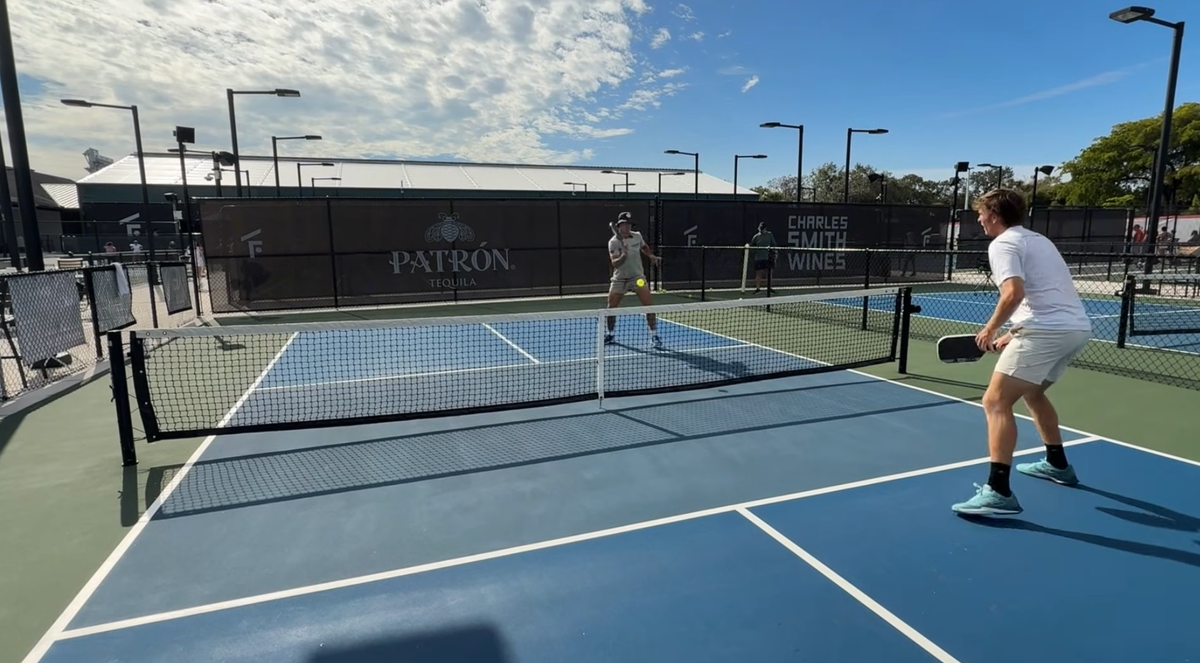
Why These Pickleball Strategies Work Against 4.0 Players
The common thread running through all three pickleball strategies is that they exploit the gap between reactive and proactive play.
4.0 players are still learning to read the court and anticipate shots. They're focused on hitting the ball rather than controlling the point.
When you attack the middle, use deception, and manipulate timing, you're forcing them to make decisions faster than they're comfortable with.
You're not just hitting better shots; you're playing a different game entirely.
How to Practice These Pickleball Strategies
Understanding these pickleball strategies is one thing. Executing them consistently is another.
Start by drilling the middle court attack. Have a partner feed you wide balls, and practice speeding them up through the center.
Focus on placement over power. The goal isn't to hit a winner; it's to force a weak return.
For the deception dink, practice the motion of dropping your paddle tip and then accelerating.
The key is making the initial motion look identical to a normal dink. If your opponent can see the difference, the deception fails.
The hold dink requires patience. Practice holding for different lengths of time and notice how your opponent reacts.
Some players will jump immediately; others will stay calm. Adjust your timing based on what you observe.
The Dink Media Team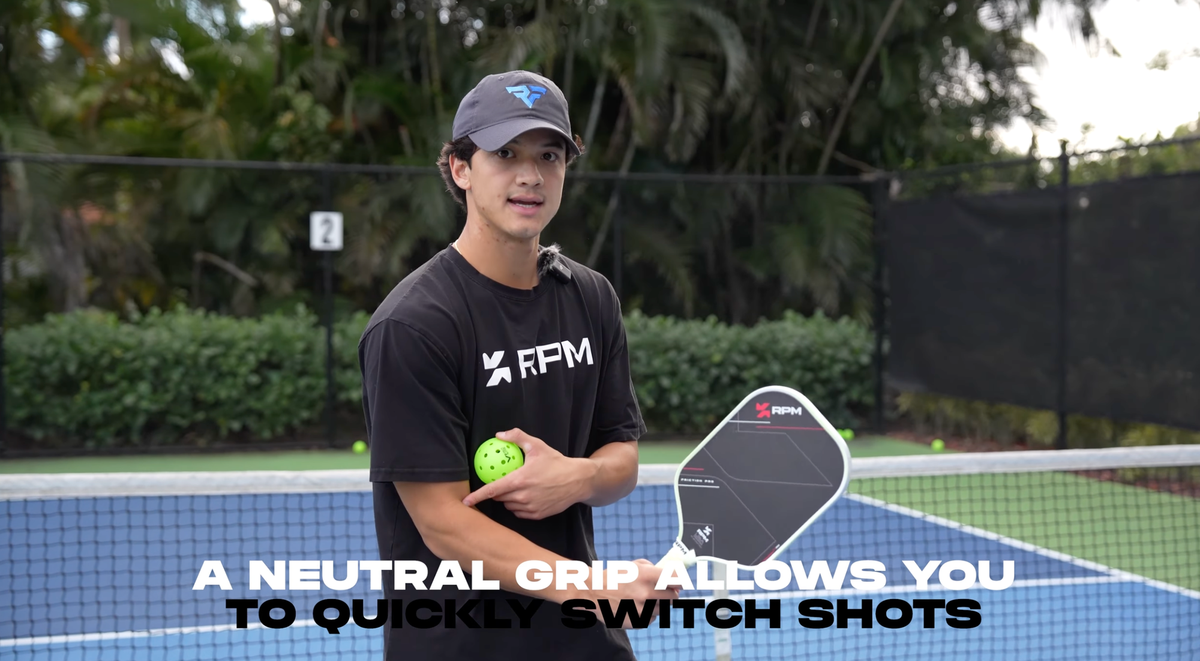
Bringing It All Together on the Court
These three pickleball strategies aren't just theoretical. They're battle-tested approaches that work because they're grounded in how 4.0 players actually play.
They're still developing their court sense, their anticipation, and their ability to stay calm under pressure. CBS Sports has covered the explosive growth of the sport, and with more players entering the 4.0 range than ever, knowing how to exploit mid-level tendencies is one of the fastest ways to separate yourself from the pack.
By mastering the middle court attack, using deception effectively, and controlling the rhythm with the hold dink, you'll find yourself winning more points and climbing the rating ladder faster.
The gap between 4.0 and 6.0 isn't as wide as it seems once you understand what separates the two levels. If you're still working through the habits that stall players at this stage, this breakdown of 5 signs you're still an intermediate pickleball player is worth a read.
If you want to go even deeper on the tactical side, NBC Sports has noted that strategic IQ is the defining trait separating competitive players from casual ones. Smart shot selection, not power, is what moves the needle.
Frequently Asked Questions
What is a dead dink in pickleball?
A dead dink is a soft, low ball that lands near the net with minimal pace. It's called "dead" because it has very little energy and sits up slightly, making it vulnerable to attack. At higher levels, players use dead dinks strategically to set up offensive opportunities.
Why is middle court coverage so important in pickleball strategy?
The middle of the court is the most dangerous area because it's equidistant from both players, creating confusion about who should take the ball. Players who control the middle force their opponents to make quick decisions and often create weak returns that can be attacked.
How do I practice the hold dink effectively?
Start by playing casual games and experimenting with different pause lengths before hitting your dink back. Practice with a partner who can give you feedback on whether your hold dink looks different from your regular dink.
Can these pickleball strategies work against higher-rated players?
These specific strategies are designed to exploit 4.0 weaknesses. Against 5.0 and 6.0 players, you'll need to refine your execution and add more complexity. However, the fundamental principles of middle court control and deception remain valuable at all levels.
What's the difference between a 4.0 and 6.0 pickleball player?
The primary differences are court awareness, anticipation, consistency, and tactical understanding. 6.0 players read the court better, react faster, execute shots more reliably, and understand how to construct points strategically rather than just hitting the ball back.

Love Pickleball? Join 100k+ readers for free weekly tips, news & gear deals.
Subscribe to The Dink