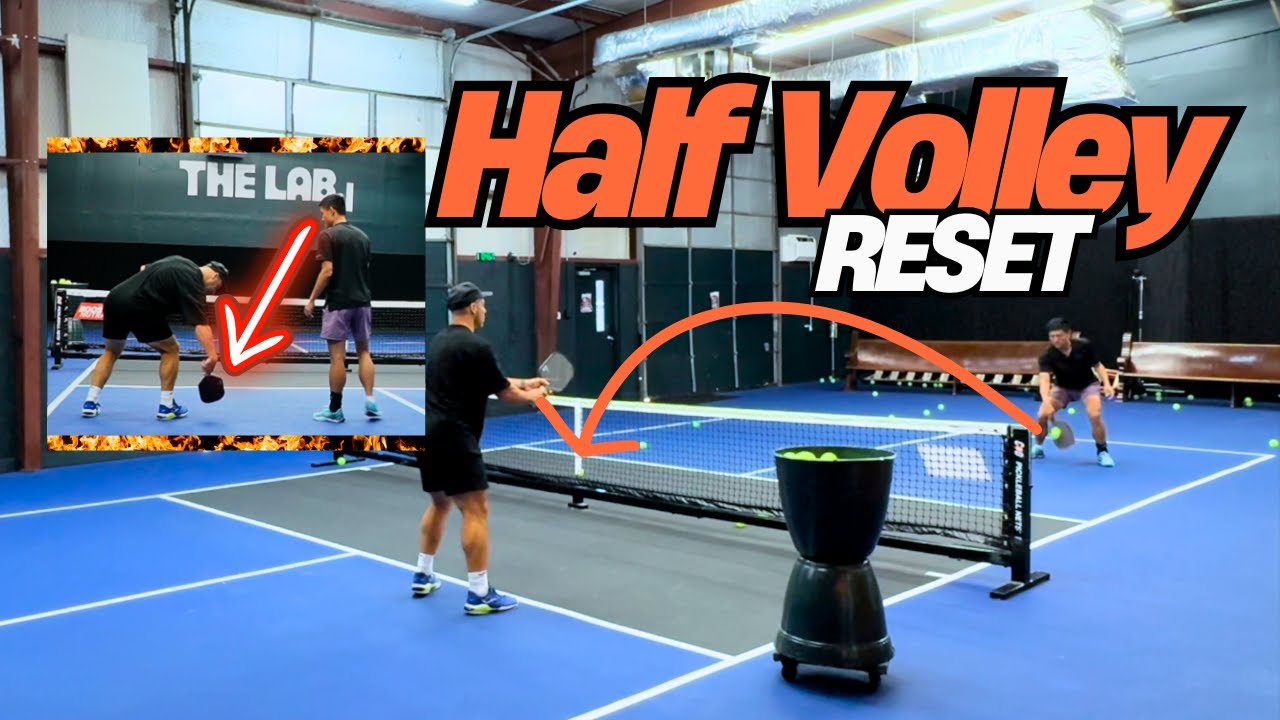
Your pickleball reset is failing for reasons you can actually fix. Here are the technique changes that make the biggest difference in transition.
The pickleball reset is one of those shots that feels impossible until something clicks.
You know the situation: you're caught in transition, the ball is coming at your feet, and whatever you do, it pops up and gets put away.
It's not a talent problem. It's a mechanics problem. Specifically, it's a paddle angle problem, a body motion problem, and an anticipation problem.
The fixes covered here come from a lesson breakdown by Backpaddle Pickleball on YouTube, filmed at The Lab in Austin, a high performance training facility where semi-pro and pro level coaches work with players at every level.
Love pickleball? Then you'll love our free newsletter. We send the latest news, tips, and highlights for free each week.
The Real Reason Your Reset Keeps Popping Up
Most players pop the ball up on their pickleball reset because they're trying to lift the ball rather than push it forward with an open paddle face.
The instinct makes sense. The ball is low, so you think you need to go upward to clear the net.
But that upward motion is exactly what sends the ball floating into your opponent's attack zone.
The fix is simpler than you think. A properly angled open paddle face does the lifting for you. Your job is to push forward, not swing up.
Fix 1: Push Forward, Don't Lift Up
This is the most important pickleball reset fix in the entire breakdown. Stop thinking about height and start thinking about direction.
When your paddle face is already open (tilted back toward you), it naturally redirects the ball upward.
You don't need to add any upward arm motion to clear the net.
Here's what to practice:
- Set your paddle face angle before contact, not at the last second
- Push the ball forward toward your target, as if you're showing the face of your paddle to the person on the other side of the net
- Keep your arm path going forward, not curling up or over
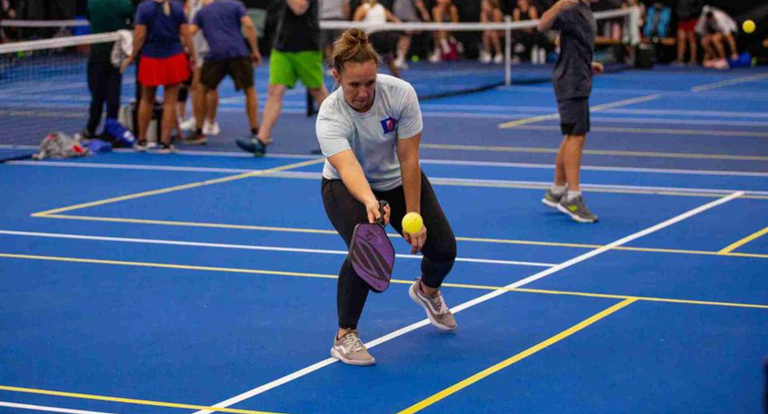
- After contact, stay down. Don't pop up or rush forward
The coach in the video described it as one big lever. The paddle face handles the angle. Your arm just drives forward.
Fix 2: Stop Curling Your Wrist at Contact
Late wrist flips are one of the most common pickleball reset killers.
Players get caught in an awkward spot and try to flip or curl the wrist to adjust at the last moment.
That move creates inconsistency and, according to sports medicine research on repetitive upper-limb load, can actually put stress on your wrist over time.
Pre-setting your paddle angle before the ball arrives is what eliminates the need for any last-second wrist adjustment.
If the ball is catching you at a severe angle, the answer is not to change your wrist.
The answer is to get the paddle face open and stable before the ball gets there.
Think about it this way: if you're here and the ball is coming, you don't want to be lifting through. You want to already be at the right angle so you're just pushing through a stable position.
If you struggle with wrist mechanics on touch shots, this wrist fix for drops covers the same concept applied to third shot drops.
 The Dink Media Team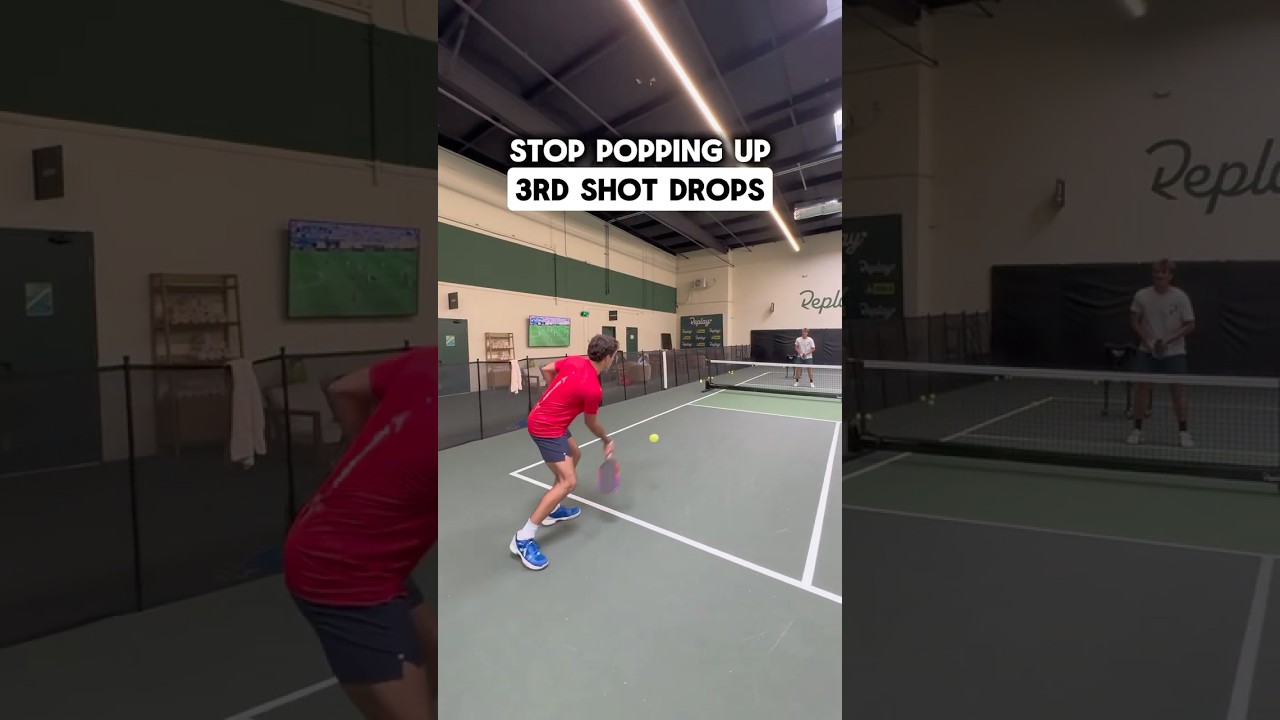
Fix 3: Keep Your Body Quieter Through the Shot
Body movement during and after a reset is underrated as a cause of pop-ups.
When your body lurches forward or pops upright right at contact, it disrupts your paddle path.
Stay low and stay still through the shot.
The pickleball reset is not a fast, explosive movement. It's controlled and deliberate.
Specifically, don't rush to stand up after contact. Keep your body down and through the ball.
The coach in this lesson kept repeating one cue: "be smooth through it, not poppy."
 The Dink Media Team
Does It Matter Whether You Volley or Let It Bounce?
This is a question that came up directly in the lesson, and the answer is worth knowing.
For most players, trapping the ball off the bounce is more reliable than volleying in transition.
Volleys out of the air in transition are harder to control, and they rarely give you an offensive opportunity. Trapping gives you a more stable contact point.
That said, there is a specific trap technique that makes a real difference.
You want to cut off the ball as soon as it bounces, not let it travel up and fall into that awkward middle ground where spin and pace show themselves most.
Players like Ben Johns and Federico Staksrud will actually cross over aggressively to get to the ball faster in transition, taking it right off the bounce rather than waiting.
That's the model to work toward.
For more on handling tough shots at your feet, this breakdown on soft shots at your feet is worth reading alongside this one.
 The Dink Media Team
Fix 4: Get to the Ball Earlier With Your Footwork
A bad pickleball reset often starts with late footwork.
If you're not getting your body close enough to the ball before it bounces, you're left defending from a worse position with more variation in the bounce.
The goal is to snuff the ball out right off the bounce. This requires reading the situation early and moving to the ball, not waiting for it to come to you.
Good lateral movement is a big part of why some players reset easily and others are always scrambling.
The shot mechanics matter, but getting there in time matters just as much.
 The Dink Media Team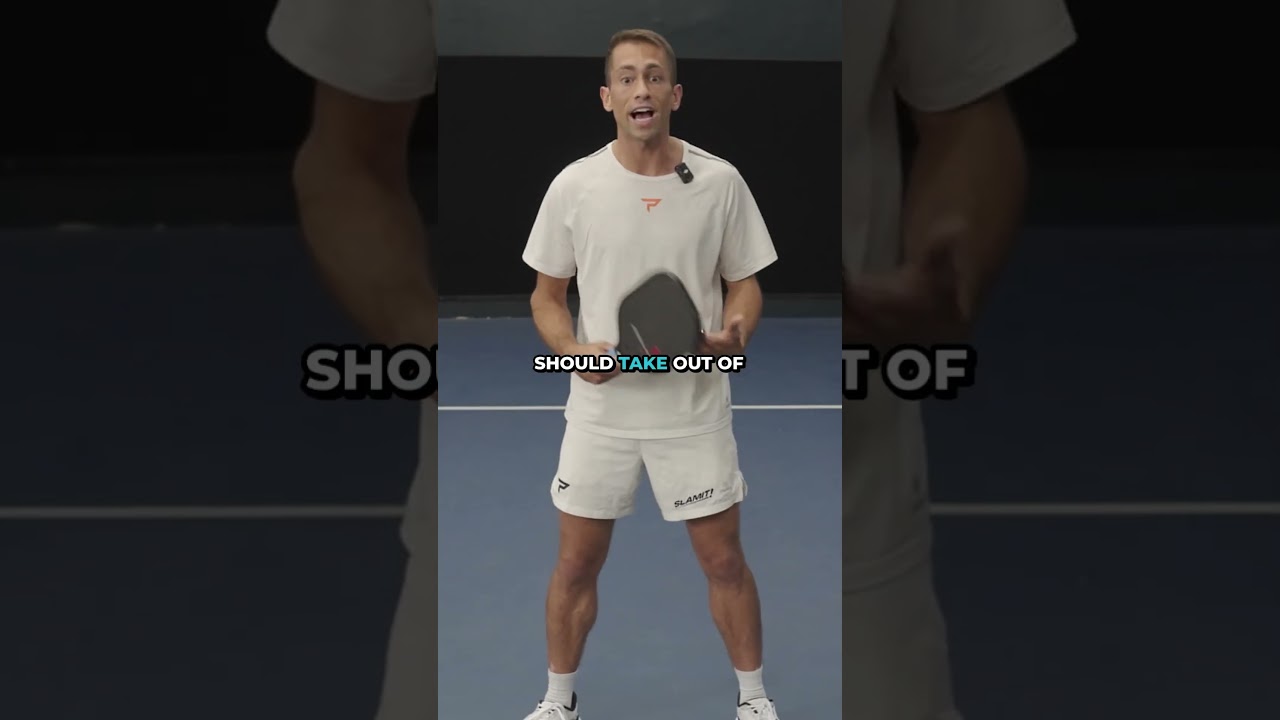
Fix 5: Soften Your Grip
A tight grip is a pickleball reset killer.
When your grip is too firm, the paddle absorbs less of the incoming energy and redirects more of it back out, which means the ball goes faster and higher than you want.
Softening your grip lets the paddle absorb pace.
The player in this lesson noted that loosening their grip noticeably changed the quality of their resets, and the coach confirmed it.
This is one of those adjustments that feels uncomfortable at first because it feels like you're losing control. You're actually gaining control.
A softer grip keeps the ball lower and puts you back in the point.
If you're also fighting pop-ups on your dinks, the same grip principle applies. These two tips for stopping pop-up dinks cover grip and contact in more detail.
 The Dink Media Team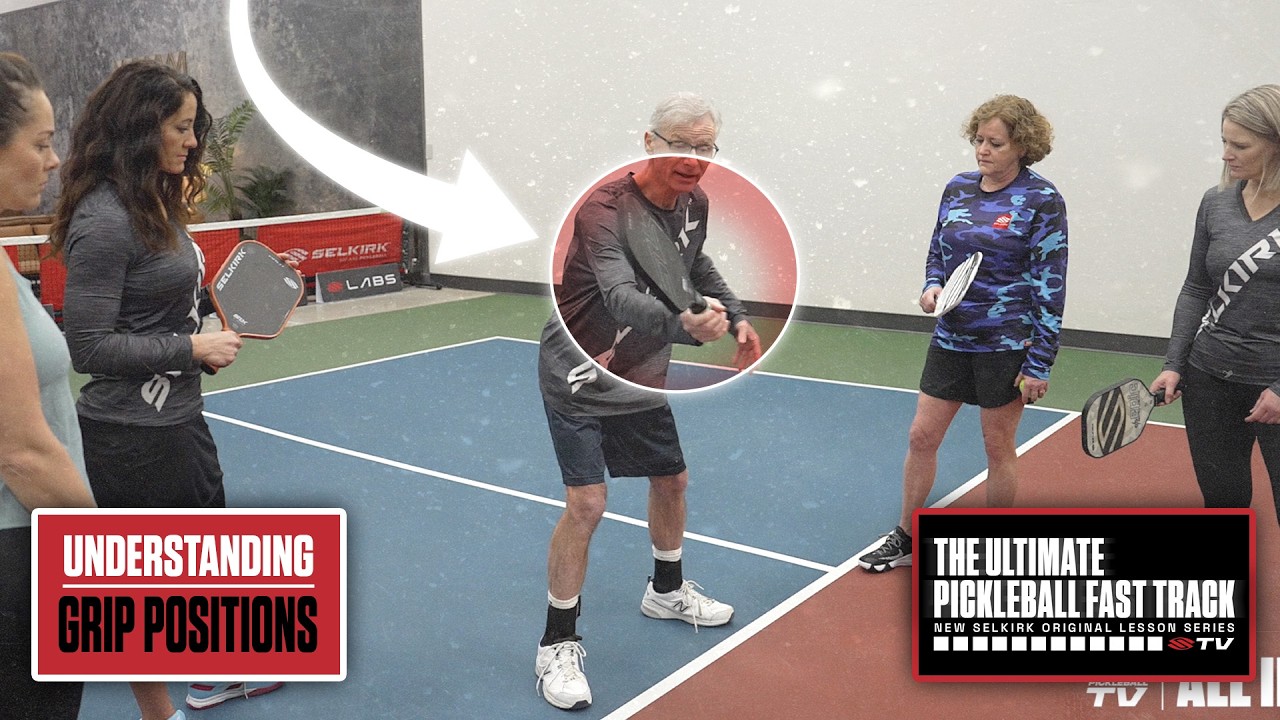
Fix 6: Pre-Read the Situation and Anticipate Defense
One of the most honest moments in the lesson was when the student admitted the real problem: "My anticipation isn't there. I'm always reacting at the last moment."
The coach's response was direct. If your opponent is in an attacking position, you should already be preparing to reset before the ball is hit.
Don't wait to see if it's going to be a hard ball. Get ready for it.
Here's a practical anticipation framework from the lesson:
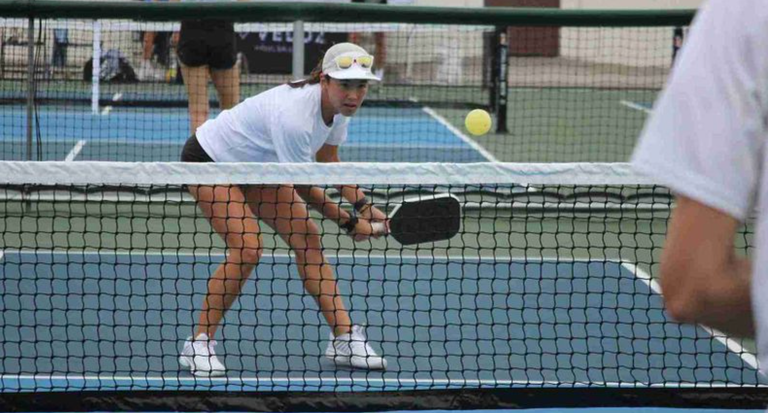
- If your opponent is at the kitchen in an attacking stance, lower your paddle and preset an open face now
- If you or your partner hit a ball that's attackable (high and slow), shift into defensive mode immediately
- If the ball has been aggressive and fast, expect the next one to continue that pattern until you neutralize it
- Read your opponent's paddle position as they wind up, not as they make contact
The mindset the coach described is thinking like a terminator in transition. Whatever they throw at you, you're ready for it.
That readiness comes from anticipation, not reaction speed.
Learning to fix your dink, drop, and reset together as a system is also worth studying, since these shots share a lot of the same mechanical principles.
 The Dink Media Team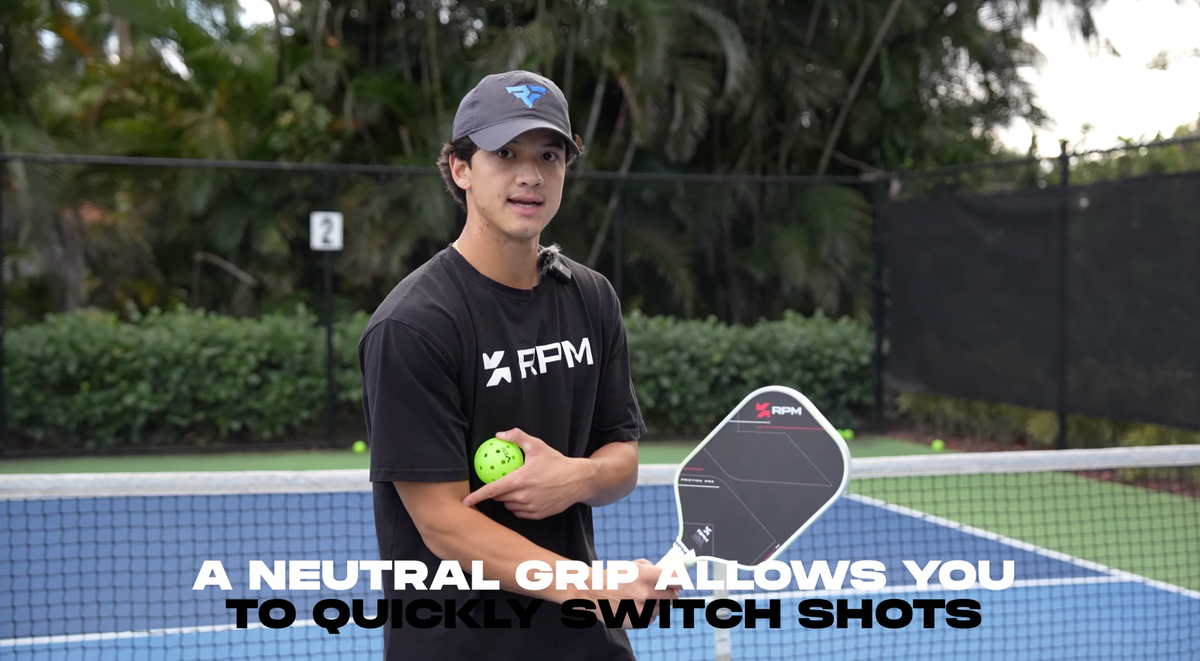
How to Put This Together in a Real Rally
This is a question that came up directly in the lesson, and the answer is worth knowing.
For most players on a pickleball reset, trapping the ball off the bounce is more reliable than volleying in transition.
Volleys out of the air in transition are harder to control, and they rarely give you an offensive opportunity.
Trapping gives you a more stable contact point.
That said, there is a specific trap technique that makes a real difference.
You want to cut off the ball as soon as it bounces, not let it travel up and fall into that awkward middle ground where spin and pace show themselves most.
Players like Ben Johns and Federico Staksrud will actually cross over aggressively to get to the ball faster in transition, taking it right off the bounce rather than waiting.
That's the model to work toward.
For more on handling tough shots at your feet, this breakdown on soft shots at your feet is worth reading alongside this one.
How to Put Your Pickleball Reset Together in a Real Rally
A pickleball reset doesn't happen in isolation. It happens mid-rally, under pressure, when you're out of position and someone is trying to end the point.
The mental framing matters as much as the mechanics.
Think of transition defense not as survival, but as a process of closing distance while staying calm.
Here's a simple sequence to build in practice:
- Read early: Is my opponent in a position to attack? If yes, get ready now
- Preset the paddle face: Open angle, soft grip, before the ball arrives
- Move to the ball: Get to it as it bounces rather than letting it rise into trouble
- Push forward: Drive toward your target, not upward
- Stay down: Keep your body quiet through and after contact
- Repeat: Stay patient. It may take four or five resets to get back to the kitchen
That last point is key. Great resetting is about patience, not perfection.
You're absorbing pressure until you earn your way back to the kitchen line.
Players who understand why their reset keeps popping up and fix the root causes make this transition zone much more manageable over time.
If you want to see what a more complete defense system looks like when it's working, these five keys to defense mastery build directly on the reset fundamentals covered here.
And if you're working on your backhand specifically, these three keys to a better backhand drop share a lot of the same paddle angle and body control concepts that make resets work.
The pickleball reset is a skill, not a reflex. Practice the mechanics deliberately and the confidence follows.
Frequently Asked Questions
Why does my pickleball reset keep popping up?
Your reset pops up because you're adding upward arm motion to clear the net instead of letting an open paddle face do that work. Pre-set the angle before contact and push forward instead of lifting. Softening your grip also reduces the energy that sends the ball too high.
Should I volley or let the ball bounce when resetting in transition?
For most players, trapping the ball off the bounce is more reliable than volleying in transition. Volleys in transition are harder to control and rarely create offensive opportunities. Try to cut off the ball right as it bounces rather than letting it rise into an awkward contact point.
What does "open paddle face" mean on a reset?
An open paddle face means the hitting surface is tilted back toward you rather than facing straight forward or angled downward. This tilt redirects the ball upward naturally without you needing to swing up. Think of it as showing your paddle face to the person across the net.
How do I stop flipping my wrist on reset shots?
Wrist flips happen when you try to adjust your paddle angle at the last moment instead of presetting before the ball arrives. Get your paddle into position early, especially when your opponent is in an attacking stance. One stable angle held through contact is more consistent than any late adjustment.
How can I get better at anticipating when to reset?
Watch your opponent's body and paddle position as they wind up, not as they make contact. If they are at the kitchen with a high ball and an aggressive stance, shift into reset mode before they swing. The earlier you read the situation, the more time you have to preset your paddle and get to the right position.

Love Pickleball? Join 100k+ readers for free weekly tips, news & gear deals.
Subscribe to The Dink