

Why the Pickleball Return of Serve Is Your Most Important Shot
The pickleball return of serve is often overlooked, but it's arguably the most critical shot in the game. PPA pro Kelly Goodnow explains why a deep, controlled return sets up your entire point.
The pickleball return of serve might not get the same attention as the third shot drop or the kitchen volley, but according to PPA pro Kelly Goodnow, it's the single most important shot in the game. Do deep returns win more rallies? The data breaks it down gives you the evidence behind why Goodnow's bold claim holds up.
That's a bold claim in a sport where everyone loves debating which shot matters most.
But here's the thing: if you can't return serve effectively, your opponent gets to dictate the entire point from the start.
Love pickleball? Then you'll love our free newsletter. We send the latest news, tips, and highlights for free each week.
The Case for the Pickleball Return of Serve as Your Foundation
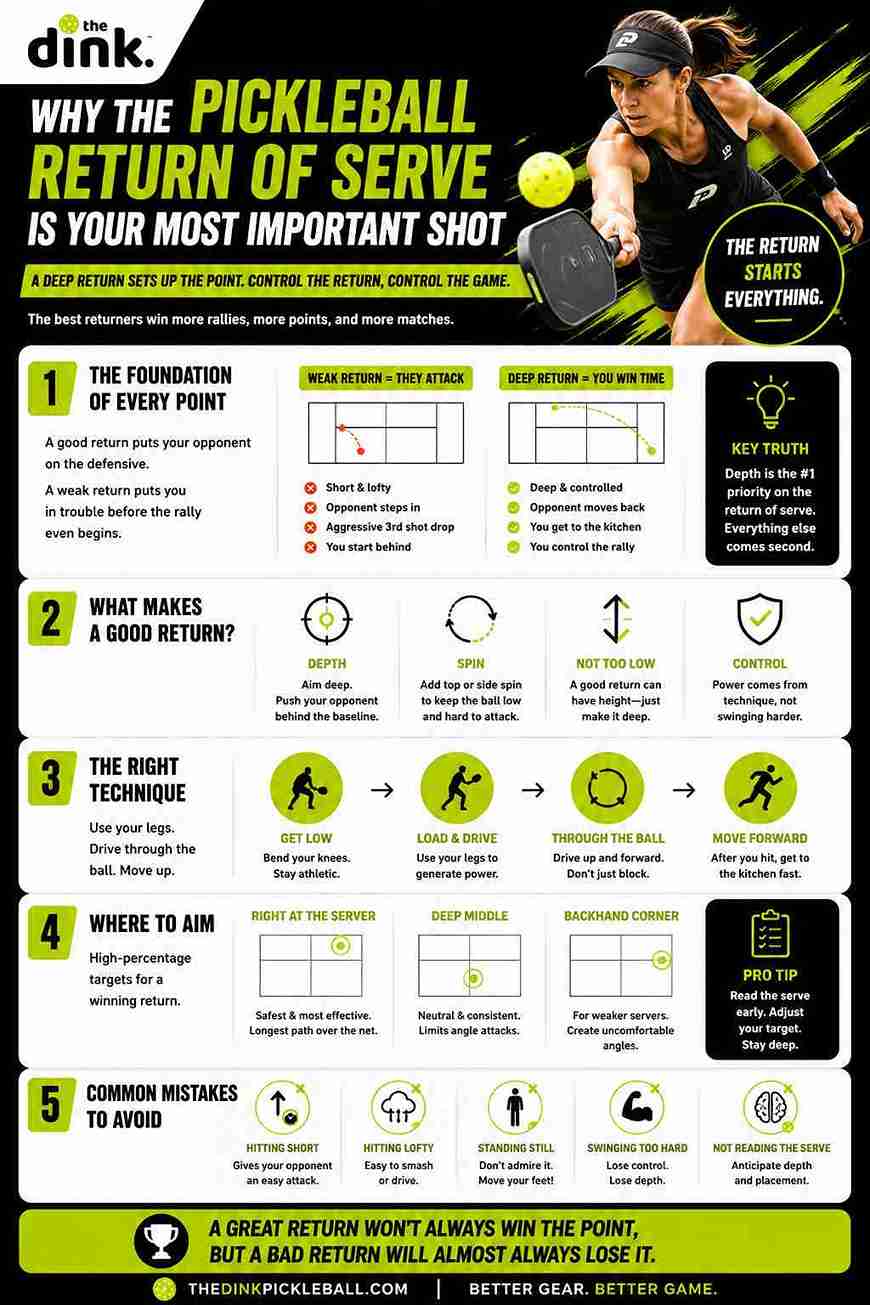
When you hit a weak return, your opponent is already in control.
They can rip a hard drive or throw down an aggressive third shot drop before you've even had a chance to move forward.
But when you hit a deep return, something shifts.
Your opponent moves back. They're on their heels. Suddenly, you're the one with the advantage.
Kelly Goodnow has built her game around this principle, and it shows in her results on the PPA Tour. She's not alone in this thinking.
The best returners in pickleball understand that the return of serve is the foundation of everything that comes next.
A solid pickleball return of serve doesn't win points outright, but it prevents your opponent from winning them immediately. Where to return serve in pickleball shows you exactly which zones give you the biggest positional advantage from the start.
Think about the geometry of the court for a second. The serve comes in from the baseline.
- If your return lands short, your opponent can step inside the baseline and attack.
- If it lands deep, they have to stay back.
That extra step or two of distance changes the entire dynamic of the rally.
What Makes a Pickleball Return of Serve Weak (And Why You're Probably Hitting One)
Let's talk about what Goodnow sees most often on the court: weak returns. These typically have two characteristics.
- First, they're short.
- Second, they're lofty.
A short, lofty pickleball serve return is basically an invitation for your opponent to attack.
It's the pickleball equivalent of serving a beach volleyball to someone at the net.
Deep returns win more rallies than almost any other placement decision you can make, and the data from pro-level play backs that up.
The mistake most players make is trying to hit the return too hard. When you swing aggressively at the serve, you lose control.
Your contact becomes flat. The ball floats.
And suddenly you're in trouble before the point has really started. The return strategy for beating bangers starts with resisting that urge to overpower.
Slow it down. Stay in control.
Another common mistake? Standing still after you hit the return. Goodnow calls this "admiring it."
You hit the shot and watch it go instead of immediately moving forward toward the kitchen.
That hesitation costs you positioning and puts you on your back foot for the third shot.
Three ways to improve your pickleball return of serve start with fixing this habit, as it's the fastest path to immediate gains on the pickleball return of serve.
The Anatomy of a Good Pickleball Return of Serve
So what does a good pickleball return of serve actually look like? Goodnow breaks it down into a few key elements.
First and foremost: depth. She emphasizes this so much it's worth repeating.
Depth is the number one priority on a return.
But here's where it gets interesting. Your return doesn't need to be super low. That's a common misconception.
Depth is the most critical variable in a return, and a high return with spin still qualifies as a great shot because it limits your opponent's attack window.
The only combination you want to avoid is high with no spin. That's a lofty return, and those are easy pickings for your opponent.
The sweet spot is a return that's deep and carries some topspin or sidespin.
The spin gives you control and makes the ball harder to attack. Depth keeps your opponent back.
Together, they create a return that puts you in a position to win the point.
Mastering topspin in pickleball is one of the highest-leverage skills you can build to make your pickleball return of serve consistently land deep with spin.
 The Dink Media Team
Technique: How to Hit a Better Pickleball Return of Serve
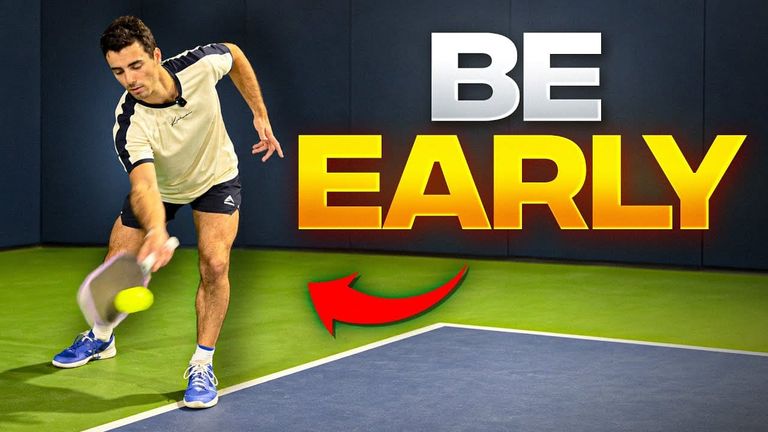
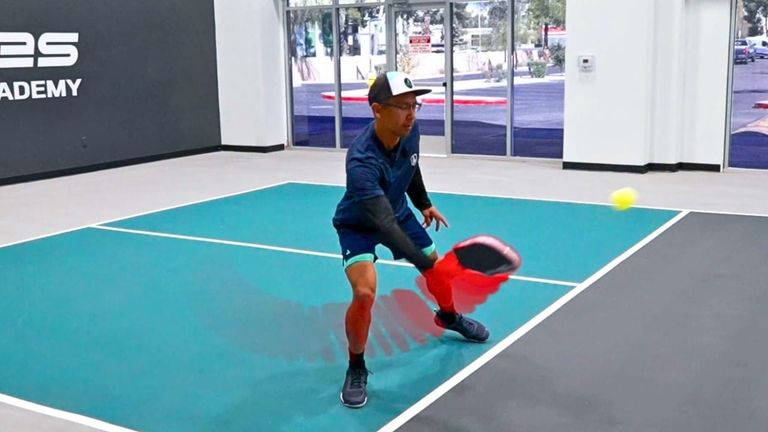
Now let's get into the mechanics. Goodnow emphasizes that the pickleball return of serve starts with your legs, not your arm.
If you're standing straight up when you hit your return, you're already losing power and control.
Get low. Use your legs to generate power through what's called the kinetic chain.
This is a fancy way of saying you're using the ground's power and transferring it up through your body, through your arm, and finally into your paddle.
It's the same principle that makes a good serve or a good drive work.
Here's the sequence:
- Bend your knees
- Load your weight
- Drive upward through the ball.
That momentum from the ground is what gives you power without having to swing hard. And when you're not swinging hard, you maintain control.
- You keep the ball deep.
- You keep it in the court.
Understanding wrist lag and how pros use it for power and spin control adds another layer to this kinetic chain that most recreational players never tap into on the pickleball return of serve.
The other technical element is footwork. After you hit your return, your feet need to move immediately.
Don't admire the shot. Get up to the kitchen as fast as you can.
This is where a lot of recreational players lose points.
They hit a decent return and then get caught in no-man's-land because they didn't move forward aggressively enough.
Mastering the transition from baseline to kitchen line is the piece that locks your deep pickleball return of serve into a real tactical advantage.
The Dink Media Team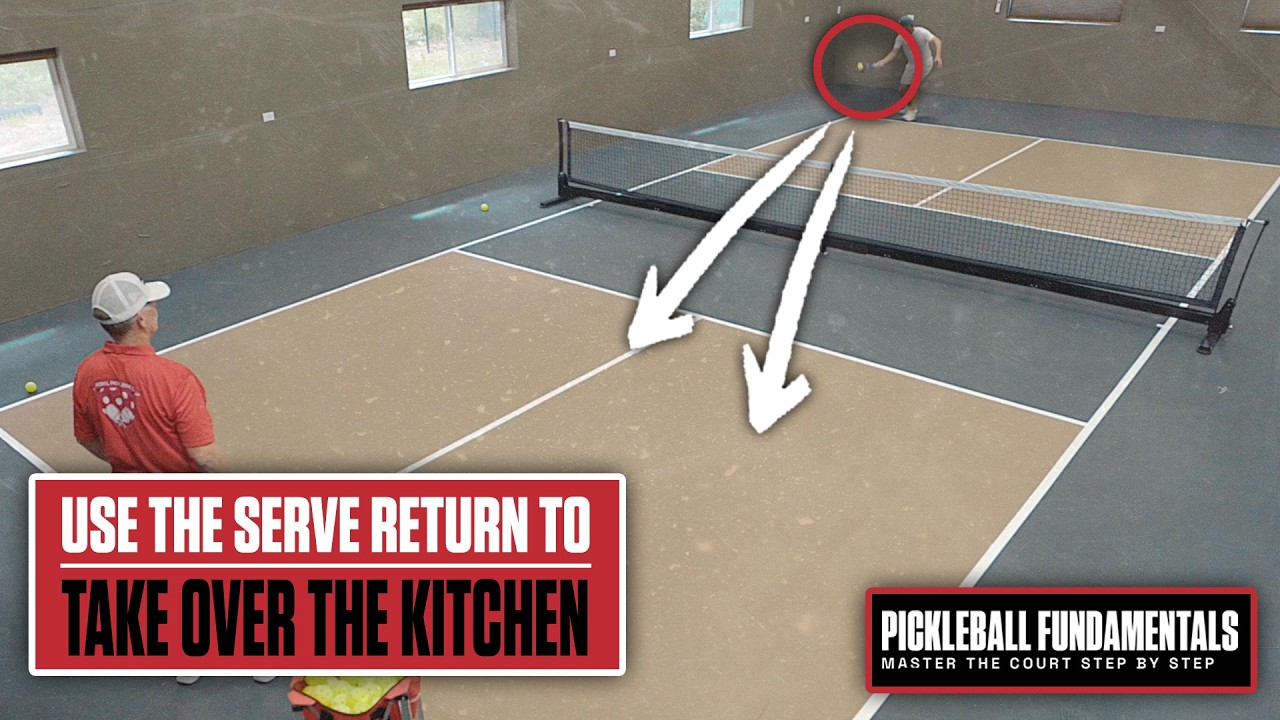
Why Depth Beats Everything Else in Your Pickleball Return Game
If you take nothing else from Goodnow's analysis, remember this: depth is king. Short returns are easy throws for your opponents.
Deep returns, especially ones where your opponent has to move back to hit them, are exponentially harder to attack.
This is where the pickleball return of serve becomes a strategic weapon.
- You're not trying to hit a winner.
- You're not trying to be fancy.
- You're trying to make your opponent uncomfortable by forcing them to hit from further back on the court.
That discomfort translates into mistakes. Think about the best returners you've seen play.
They're not the ones hitting crazy angles or trying to place the ball in the corner.
They're the ones hitting consistent, deep returns that keep their opponents pinned to the baseline. It's not glamorous, but it works. How to be more effective with your pickleball return of serve gives you the placement map that makes depth a repeatable habit.
The Dink Media Team
The Mental Game: Consistency Over Aggression on the Pickleball Return of Serve
There's a mental component to mastering the pickleball return of serve that doesn't get talked about enough.
The return is one of the few shots in pickleball where you're reacting to someone else's shot. You don't get to dictate the pace or the spin.
You have to adapt.
This means the return is as much about consistency as it is about technique.
Elite players think differently during every rally, and the return is no exception.
You need to be able to hit a solid pickleball serve return even when the serve is fast, slow, spinny, or flat.
You need to be able to do it repeatedly, point after point, game after game.
The 6-second mental reset is a technique elite players use to stay locked in after a bad pickleball return of serve, and it applies here as much as anywhere else on the court.
Goodnow emphasizes that if you can focus on just one thing during a return, make it depth.
Don't worry about hitting a perfect shot. Don't worry about being aggressive. Just get the ball deep. Everything else flows from there.
The Dink Media Team
Putting It All Together
The pickleball return of serve is the foundation of your game. It's the shot that determines whether you're playing offense or defense from the start of the point.
A weak return puts you on your heels. A strong, deep return puts your opponent on theirs.
The technique is straightforward: get low, use your legs, generate power through the kinetic chain, and focus on depth.
The mental approach is even simpler: consistency over aggression.
Hit the ball deep, move forward, and let your opponent make the mistake.
If you're serious about improving your pickleball game, start by sharpening your return of serve. It's the one shot that affects every single point you play.
Master it, and you'll see your win rate climb faster than you'd expect. Return of serve tips that work at every level is worth bookmarking as your go-to reference for keeping the pickleball return of serve sharp between sessions.
Frequently Asked Questions
What Is the Most Important Shot in Pickleball?
According to PPA pro Kelly Goodnow, the pickleball return of serve is the most important shot. A deep, controlled return puts your opponent on defense from the start of the point, giving you a strategic advantage before the rally even develops.
How Do I Hit a Deeper Pickleball Return of Serve?
Focus on using your legs to get low and generate power through the kinetic chain. Avoid swinging hard, which causes flat contact and loss of control. Instead, transfer power from the ground up through your body into the paddle, and aim for depth over speed.
Should My Pickleball Serve Return Be Low or High?
Your pickleball return of serve doesn't need to be super low. A high return with spin is still an effective shot. The only combination to avoid is high with no spin, which creates a lofty return that's easy for your opponent to attack.
What Are the Biggest Mistakes Players Make on the Return?
The two biggest mistakes are trying to hit the return too hard and standing still after hitting the shot instead of moving forward immediately toward the kitchen. Both mistakes leave you exposed to a third shot attack before you've had a chance to settle into position.
How Does a Good Return of Serve Improve My Overall Pickleball Game?
A deep return forces your opponent to stay back on the baseline, which limits their attacking options. This gives you time to move forward and take a more aggressive position at the kitchen, improving your shot selection and your overall chances of winning the point.
Love Pickleball? Join 100k+ readers for free weekly tips, news & gear deals.
Subscribe to The Dink