The pickleball speedup is one of the most misunderstood shots in the game, but it's also one of the most powerful when executed correctly. Pro player Ava Ignatowich breaks down exactly how to hit speedups, when to use them, and the triangle concept that separates amateurs from advanced players.
The pickleball speedup is one of the most misunderstood shots in the game.
Most players think it's a finishing shot, a way to end the rally with one aggressive swing. They're wrong. If your pickleball speedups keep getting crushed back at you, here's exactly why they're failing and how to fix them.
According to Ava Ignatowich, a professional pickleball player on the PPA Tour, the speedup isn't designed to win the point outright.
Instead, it's a setup shot, a tactical weapon that initiates a hands battle and creates opportunities for your next shot.
"We don't speed up to win the point," Ignatowich explains. "Your speedup always is going to set up the next shot and that's kind of the goal of it."
This fundamental misunderstanding is why so many recreational players struggle with speedups.
They hit them too hard, miss their targets, and end up in defensive positions. But when you understand the true purpose of a speedup, everything changes.
Love pickleball? Then you'll love our free newsletter. We send the latest news, tips, and highlights for free each week.
What Exactly Is a Pickleball Speedup?
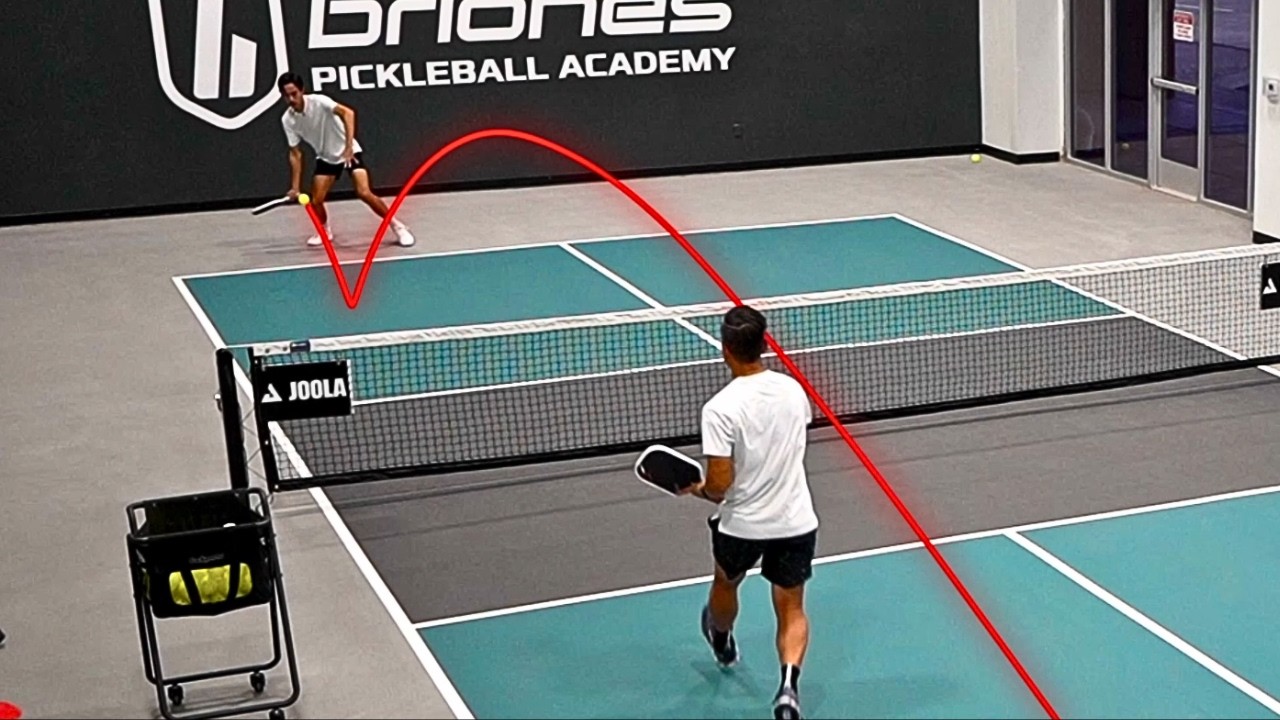
A pickleball speedup takes place during a dink rally. You're exchanging soft, controlled shots with your opponent when you decide to change the pace.
You take a ball and hit it hard, flat, and relatively fast to your opponent's body.
The rally shifts from a slow, methodical exchange into what Ignatowich calls a "hands battle."
The key distinction here is intentionality. A speedup isn't a wild swing.
It's a calculated acceleration designed to put pressure on your opponent before they're ready.
Think of it as a tempo change in music, not a completely different song.
"The person who strikes first is usually the person who wins the point," Ignatowich says. This is why pickleball speedups off the bounce are now encouraged in modern pickleball, even though older coaching wisdom discouraged them entirely. Mastering the kitchen line attack like a 5.0 player gives you the full strategic framework that Ignatowich's teaching builds on.
This is why speedups off the bounce are now encouraged in modern pickleball, even though older coaching wisdom discouraged them entirely.
The Triangle Concept: The Secret Most Players Miss
Here's where most recreational players lose the plot. After you hit a speedup, you need to know where the ball is coming back.
This isn't luck or intuition. It's geometry.
Ignatowich introduces the triangle concept, a pattern-based system for predicting ball trajectory after a speedup.
The rule is simple but powerful:
If you speed up straight, the ball comes back straight. If you speed up crossbody or diagonally, the ball ricochets back in a diagonal line.
Let's say you're on the right side of the court and you speed up from your forehand to your opponent's right hip (crossbody).
That ball is coming back to your backhand. Conversely, if you speed up backhand from the right side to your opponent's left hip, the ball comes back to your forehand.
This isn't random. It's physics. Understanding the triangle means you're never caught off guard after your speedup. You're already positioned for the next shot.
"The most important part when you hit a speedup is to be able to anticipate where the ball is coming back to," Ignatowich emphasizes.
This is the difference between a 3.5 player and a 5.0 player. 3 pro strategies to stop losing pickleball hands battles pairs directly with the triangle concept because winning the exchange after your pickleball speedup is just as important as the shot itself.
 Emily Visnic
Should You Speed Up Off the Bounce or Out of the Air?
This is a question that divides the pickleball community. Older coaching wisdom said never speed up off the bounce. Period.
But Ignatowich disagrees, and modern equipment has changed the equation.
With today's poppy paddles and super bouncy balls, speedups off the bounce are not only acceptable, they're encouraged. The key is timing and ball selection.
You want a dead dink, a ball that bounces relatively high.
If you're hitting a lower dink, you're likely to send the ball into the net because you're hitting up on a low ball.
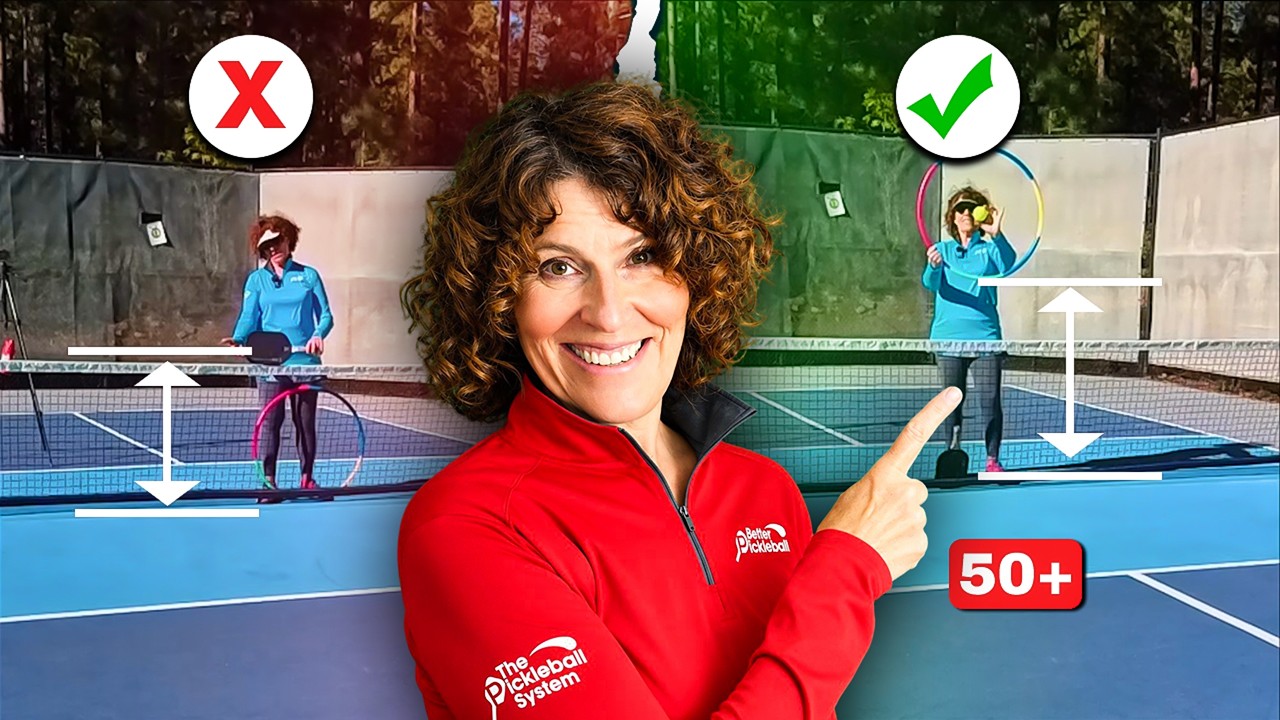
"You never want to speed up a ball that bounces below your knee," Ignatowich advises.
The sweet spot is a ball that bounces around waist level or higher, giving you a clean, flat contact point.
For speedups out of the air, the rules are slightly different. Anything below your hip level in front of you is too low.
If you try to speed up a ball that's below hip level, you'll either hit it into the net or send it on an upward trajectory, which your opponent can attack downward.
The best out-of-the-air speedups happen when you're reaching in front of you at waist level or higher.
This gives you the angle and control you need to execute the shot cleanly.
The Dink Media Team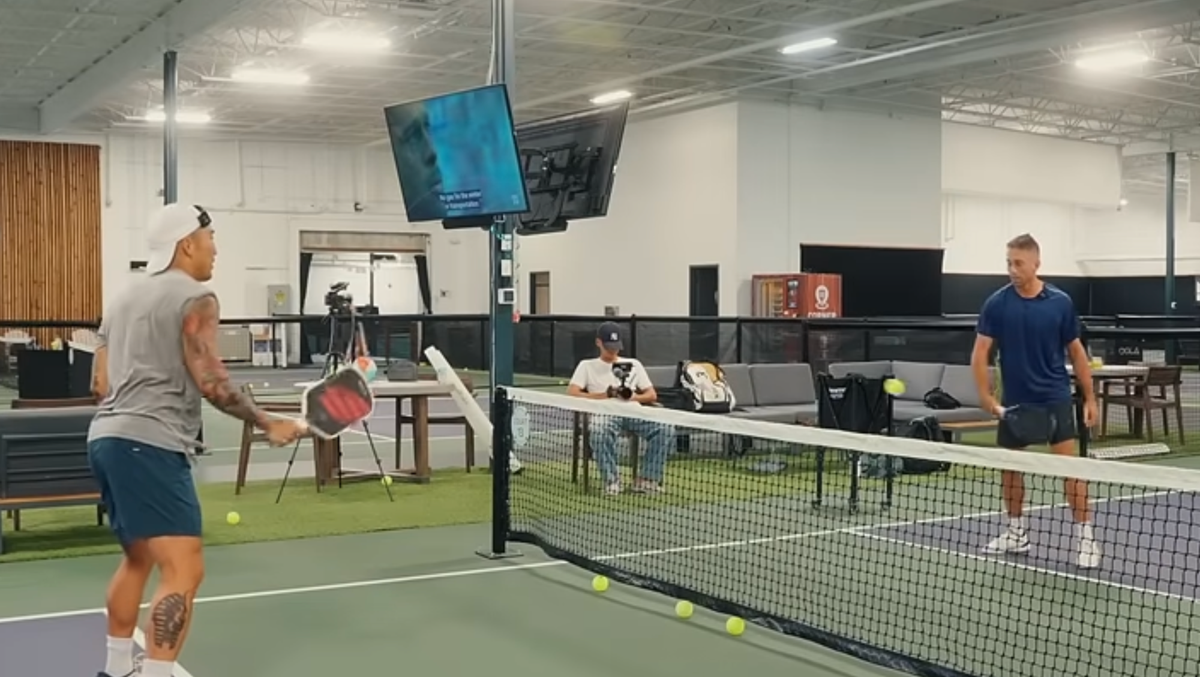
Disguise Over Power: The Technique That Separates Pros From Amateurs
Here's something that might surprise you:
Technique matters less than disguise when hitting a speedup.
"Technique is less important than disguise, I would say," Ignatowich states.
Your opponent should think a dink is coming until the absolute last moment.
This means your takeback, your stance, your initial movement should all look identical to a regular dink.
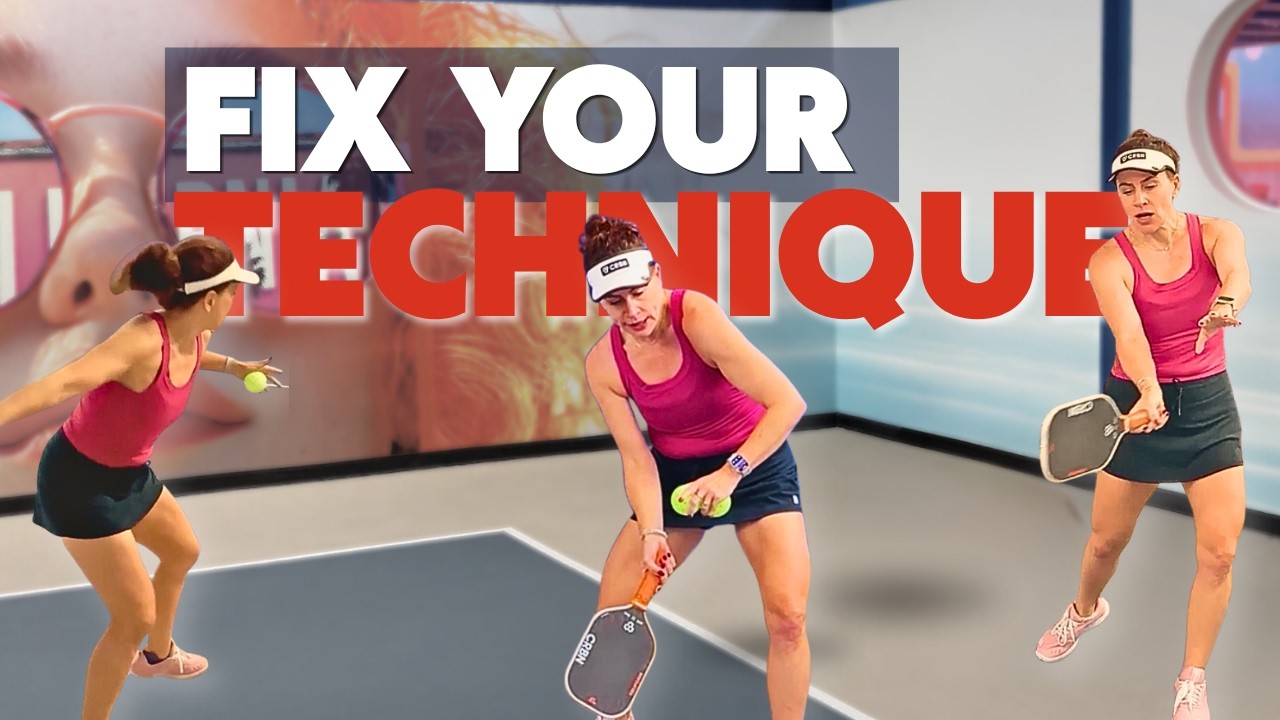
For the forehand speedup off the bounce, your setup should mirror your forehand dink exactly. Then, at the point of contact, you flick your wrist forward.
There's no big arm swing, no wind-up. Just a subtle wrist flick that accelerates the ball.
"There should be no arm involved. There should be no big wind up involved," Ignatowich explains.
The motion is compact, deceptive, and efficient.
You also don't need to hit the pickleball speedup as hard as you might think. As long as you disguise it well and hit your target, the ball will do the work. Hitting it too hard actually puts you at a disadvantage because your opponent can move out of the way and let it go out. The set and snap technique for effortless flicks and speedups is the mechanical companion to Ignatowich's disguise-first philosophy.
The Dink Media Team
Reading Your Opponent's Ready Position
Advanced players adjust their speedup targets based on how their opponent sits in their ready position.
If someone sits really heavy on their backhand side, you want to speed up to their right hip. This forces them to move and creates the opening you need.
Conversely, if an opponent sits heavy on their forehand, speed up to their left hip to make them maneuver their paddle down to their backhand.
The adjustment is subtle but effective. Aim about 5 to 10 percent opposite of where their paddle is sitting.
This small shift in targeting can be the difference between a successful speedup and one that gets crushed back at you. 3 technical tips for winning kitchen line hands battles goes deeper on how to read positioning and exploit it under pressure.
The Dink Media Team
The Backhand Speedup: A Different Animal
The backhand pickleball speedup off the bounce requires a different foundation. Before you work on backhand speedups, you need to master the two-handed backhand dink. Mastering the two-handed backhand dink in a 10-minute lesson is exactly where to start before adding the speedup variation.
If you're hitting one-handed backhand dinks and suddenly add a second hand for the speedup, your opponent will see it coming from a mile away.
Once you've dialed in your two-handed backhand dink, the speedup follows the same principle: disguise it as a dink, then flick your wrist at contact.
Ignatowich uses a continental grip with her right hand over the paddle and one finger on the paddle face for control.
The motion is all left wrist. You get under the ball, and at the last second, you flick your left wrist forward like a wave.
Your right hand stays on the paddle to guide it, but it's not doing the heavy lifting.
For the backhand speedup out of the air, Ignatowich calls it a "flick." It's the same concept as the forehand, but you're using a low-to-high wrist motion.
Think of it like throwing a Frisbee. You're reaching in, and at the last second, you pop your wrist to accelerate the ball over the net.
The key is getting low. The lower you are, the further you can reach in, and the more balls you can speed up out of the air.
This is why footwork and court positioning matter so much in pickleball.
The Dink Media Team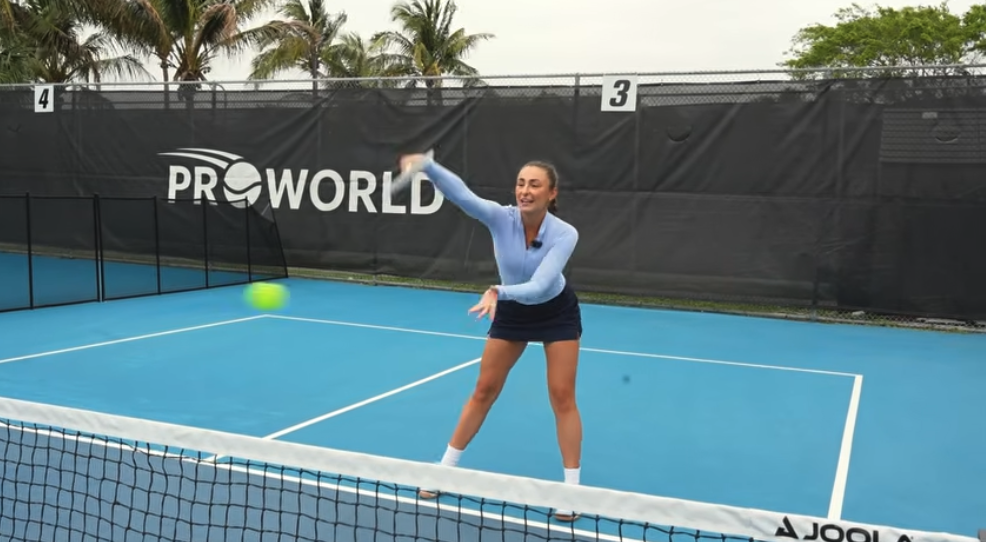
Thinking One Step Ahead: The Chess Mindset
Here's the thing about speedups at the highest level: they're not isolated shots. They're part of a larger strategy.
Before you hit a speedup, you should already know where you want the ball to come back and what shot you're going to hit next.
This is where the triangle concept becomes invaluable. You're not just speeding up randomly. You're setting up a specific counter-attack.
Ignatowich demonstrates this by hitting dinks to her opponent's right foot to move them off the line, then looking for a crossbody speedup to their left hip.
This brings the ball to the middle of the court, where her partner can attack with a forehand putaway.
"Always think one step ahead. Play chess, don't play checkers," Ignatowich says.
This mentality separates recreational players from competitive ones. 3 technical tips for winning kitchen line hands battles is the natural next read once you have the triangle concept and disguise dialed in.
This mentality separates recreational players from competitive ones.
Frequently Asked Questions
What's the difference between a speedup and a drive in pickleball?
A speedup happens during a dink rally and is designed to set up the next shot, not win the point outright. A drive is typically hit from further back on the court with more power and is often used as an attacking shot. Speedups are more tactical and require better disguise, while drives are more straightforward power shots.
Can beginners hit speedups effectively?
Yes, but they should focus on the fundamentals first. Master your dink, understand court positioning, and develop consistent footwork. Once those are solid, you can start working on speedups with proper disguise and target selection. Start slow and focus on accuracy over power.
How do I know when to speed up versus when to keep dinking?
Speed up when you see a dead dink (a ball that bounces high) or when your opponent is out of position. If the rally is going well and you're in control, sometimes it's better to keep dinking and wait for a better opportunity. The goal is to speed up when you have a tactical advantage, not just because you feel like it.
Why do my speedups go into the net?
You're likely hitting up on the ball or trying to speed up a ball that's too low. Make sure you're waiting for a ball that bounces at waist level or higher. Also, check your wrist motion. For out-of-the-air speedups, use a low-to-high motion. For off-the-bounce speedups, keep your contact point flat and level.
How important is the triangle concept really?
It's crucial. Understanding where the ball comes back after your speedup means you're never caught off guard. You can position yourself for the next shot before your opponent even hits it. This is what separates advanced players from intermediate ones. It's not just about hitting the speedup, it's about what comes next.

Love Pickleball? Join 100k+ readers for free weekly tips, news & gear deals.
Subscribe to The Dink