

Intermediate pickleball players often hit a plateau around the 3.0-4.0 level, not because of lack of effort, but because of repeated habits. A new breakdown identifies five specific pickleball mistakes that limit progression and explains exactly how to correct them.
If you've been grinding pickleball for months and can't seem to break through the 3.0-4.0 level, you're not alone.
The frustrating truth is that a pickleball mistake isn't always about raw skill or athleticism.
Most intermediate players stay stuck because they're repeating the same habits over and over, habits that feel natural but actually prevent progression.
According to PADDLIX, a pickleball coaching channel focused on modern strategy and decision-making, there are five specific areas where players sabotage their own improvement.
These aren't flashy technical flaws. They're decision-making errors, positioning lapses, and tactical habits that compound over time.
Love pickleball? Then you'll love our free newsletter. We send the latest news, tips, and highlights for free each week.
1. Hesitating After Your Third Shot
Here's the most common pickleball mistake at the intermediate level: you hit a solid drop shot or drive, then pause before moving forward.
That hesitation costs you everything.
The moment you make contact with the ball, your job isn't to admire the shot.
Your job is to move forward.
PADDLIX explains that players should assume the shot is good and advance immediately toward the kitchen line, rather than waiting to confirm the quality of their contact.
 Emily Visnic
This sounds counterintuitive, but it works.
By moving forward with conviction, you gain ground early and position yourself closer to the net before your opponent even makes contact.
If the shot turns out to be weak, you can always take a quick step back to recover defensive positioning.
The risk of moving forward is far smaller than the cost of hesitating.
The split step becomes critical here. As your opponent prepares to hit, you need to land in a wide, balanced stance.
This creates the readiness to react whether the next shot demands defense or continued advancement.
2. Approaching the Kitchen Without a Clear Mindset
You've moved forward. Now what?
This is where many players make their second major pickleball mistake: they reach the kitchen line without understanding whether they should be in defense mode or offense mode.
These are two completely different approaches, and mixing them up destroys your positioning.
- Defense mode follows a typical drop shot. Since your opponent likely has time to attack, you need to get low and prepare to reset. Your priority is control and stability, not aggression. You're reading the opponent's shot and reacting to it.
- Offense mode happens after a strong drive or a highly effective drop that puts your opponent off balance. Here, you move forward, perform a split step, and then react aggressively. If your opponent pops the ball up, you transition into a pounce, moving even closer to the net to take the ball early and attack from the best angle.
The key insight: offense mode requires awareness. Even after a strong shot, your opponent might still return a difficult ball.
When that happens, you shift back into defense mode and rely on resets to continue progressing. The split step is your foundation in both scenarios.
3. Poor Technique Against Hard Drives
Hard drives are the third area where intermediate players struggle.
Many respond to pace with poor control, resulting in pop-ups that hand your opponent an easy attack.
The fix isn't about reaction speed. It's about technique.
A firm wrist is essential.
By tightening your grip to a moderate level, your paddle becomes more stable, reducing unwanted movement on contact.
This stability expands your effective hitting area and prevents mishits.
The motion itself should be compact and controlled.
Power comes primarily from your elbow, not your wrist.
Think of it as a simple punching action that redirects the ball with control.
Your swing path should remain linear, moving forward toward your target rather than adding excessive vertical motion for spin.
This reduces mistiming and keeps the ball on a controlled trajectory.
Positioning matters too. Moving closer to the kitchen line improves your angle of contact and makes it easier to handle low balls.
Staying too far back allows opponents to target your feet more effectively, creating a much harder defensive situation.
The Dink Media Team
4. Relying Too Heavily on Baseline Drives
The fourth pickleball mistake is one of habit: repeatedly driving the ball from the baseline.
Drives can be effective, but relying on them continuously reduces your control and allows opponents to dictate play.
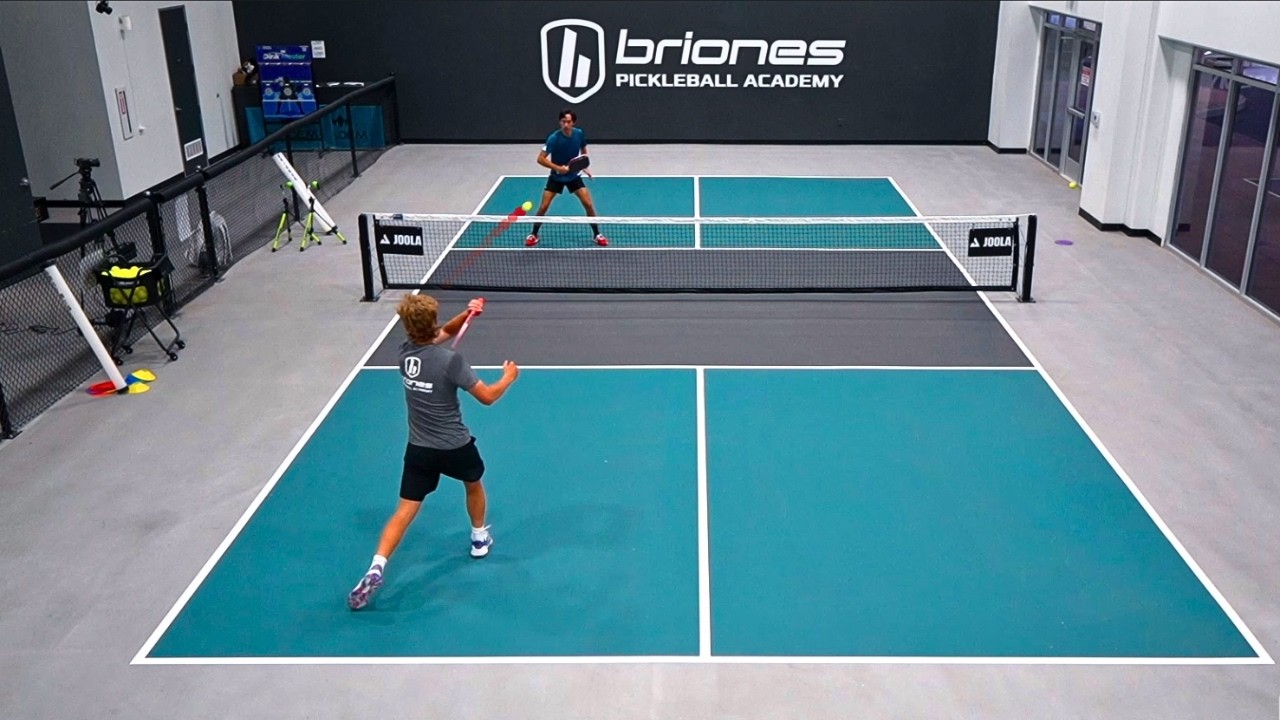
After a good drive, your priority should shift to moving forward and preparing for the next opportunity.
If your opponent returns the drive effectively, transitioning into a drop shot is a better option than continuing to drive.
This combination, often called a drive-and-drop sequence, allows you to move into the kitchen and transition into a more controlled phase of the rally.
It balances aggression with progression.
The most effective outcome of a drive is creating a pop-up. When this happens, move forward quickly and attack. But this requires setting up the drive correctly.
Top spin is critical.
Top spin allows the ball to dip, forcing your opponent to make contact at or below net height. This creates the conditions for a successful pounce.
Without top spin, the ball stays higher, giving your opponent an easier opportunity to counterattack.
Understanding when to transition away from driving is essential.
Continuous drives from the baseline rarely produce consistent results against stronger opponents.
The Dink Media Team
5. Lacking Offensive Options on the Backhand
The fifth and final pickleball mistake is a lack of offensive capability on the backhand side.
When a higher ball arrives to your backhand, you need to be able to attack using a roll shot.
This shot uses your arm to generate controlled top spin and allows you to direct the ball with precision. For lower balls, a flick becomes the appropriate option.
This shot relies more on your wrist to generate power and is often directed toward your opponent's feet or used as a speed-up during dinking exchanges.
Without these options, you become predictable. Your opponents recover from difficult positions because they know exactly what's coming.
Backhand development also extends to dinking. Many players rely on passive or slicing dinks, which limit offensive potential.
More advanced players introduce top spin, often using a two-handed technique to create more aggressive and controlled shots.
This development takes time, but it significantly enhances your ability to generate offense from the backhand side in multiple situations.
Alex E. Weaver
Putting It All Together
Breaking out of the 3.0-4.0 plateau requires eliminating specific habits that limit progress.
Moving forward immediately after the third shot improves your positioning.
Approaching the kitchen with a clear defensive or offensive mindset enhances your decision-making.
Handling hard drives with proper technique increases your control under pressure.
Transitioning away from repeated drives creates more effective rallies. Developing backhand offense adds necessary attacking options.
Together, these adjustments create a more complete and adaptable game, allowing you to compete at a higher level with greater consistency.
The path forward isn't about adding new shots. It's about fixing the decisions and habits that are holding you back.
Frequently Asked Questions
What's the most common pickleball mistake at the 3.0-4.0 level?
Hesitating after hitting your third shot is the most common mistake. Players pause to confirm the quality of their shot instead of moving forward immediately. This delay puts you in a compromised position and prevents you from reaching the kitchen line effectively. The correct approach is to assume the shot is good and advance right away.
Why is the split step so important in pickleball?
The split step is a wide, balanced landing position you perform as your opponent prepares to hit. It creates readiness to react whether the next shot requires defense or continued advancement. Without it, you arrive at the kitchen unprepared and unable to adjust effectively to whatever comes back.
How do I handle hard drives without popping the ball up?
Use a firm wrist and a compact, controlled motion powered primarily by your elbow. Keep your swing path linear, moving forward toward your target rather than adding excessive vertical motion. Positioning closer to the kitchen line also improves your angle of contact and makes it easier to handle low balls.
Should I keep driving from the baseline?
Continuous drives from the baseline rarely produce consistent results against stronger opponents. After a good drive, transition into a drop shot to move into the kitchen and control the rally. The most effective outcome of a drive is creating a pop-up, which requires top spin to force your opponent into a difficult contact point.
What backhand shots do I need to develop?
You need a roll shot for higher balls and a flick for lower balls. The roll uses your arm to generate controlled top spin, while the flick relies more on your wrist for power. Both shots allow you to attack and finish points rather than just reset the ball back over the net.
Love Pickleball? Join 100k+ readers for free weekly tips, news & gear deals.
Subscribe to The Dink