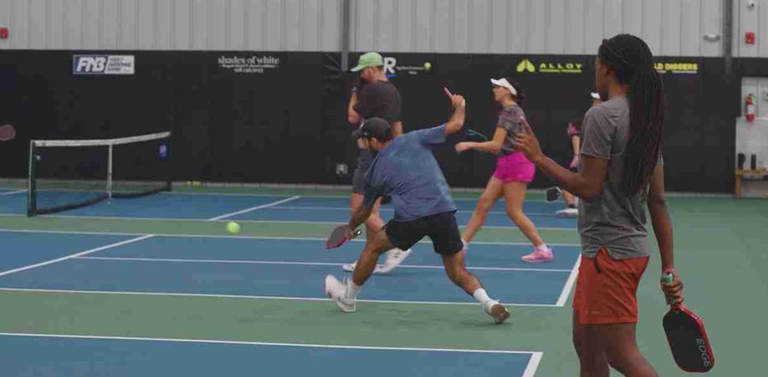


A clean pickleball reset takes pace off the ball and drops it back into the kitchen so nobody can attack it. Here are three habits and three drills that make it repeatable under pressure.
The pickleball reset is the shot that decides whether you survive pressure or hand the point away.
You get caught in the middle of the court, the ball comes at you fast, and you have a fraction of a second to make it disappear.
Most players do one of two things in that moment. They tighten up and dump it in the net, or they block it back too hard and float it up for an easy putaway.
Neither one keeps you in the point.
Coach Austin Hardy of Pickleball Playbook broke this shot all the way down, from the exact technique to the footwork to the drills that groove it.
Here is what actually matters, and how to train it so your reset holds up when the game speeds up.
Love pickleball? Then you'll love our free newsletter. We send the latest news, tips, and highlights for free each week.
What Is a Pickleball Reset, and Why Does It Win Points?
A pickleball reset takes the pace off a fast ball and drops it softly back into your opponent's kitchen so they cannot attack it.
That is the whole job: turn a hard shot into a dead one and buy yourself time to move forward.
The kitchen, officially the non-volley zone, is where you want that ball to die.
If it lands low and soft near their feet, your opponent has nothing to hit down on, and the point neutralizes.
This is the backbone of your soft game. It is also the one skill that lets you climb from the baseline back to the net without getting punished.
Get it right and pressure stops feeling like panic.
3 Things Every Great Reset Has in Common
Before any technique, Hardy points to three habits that show up on every clean reset. Miss these and the mechanics of your soft game will not save you.
- Loose grip pressure. The more relaxed your hand, the more pace you absorb. A firm, tense grip sends the ball short into the net or pops it up. If you fix one thing today, soften your grip pressure.
- Get low. Almost every reset in the midcourt, and plenty at the kitchen line, needs bent knees. Sink into the shot before the ball arrives and you are already ahead.
- Always be ready to reset. You usually reset because you are out of time. If you assume the ball is coming hard and it arrives slow, you can always adjust up. The reverse almost never works.
Notice that none of these are about swing. A great pickleball reset is mostly a state of readiness, not a stroke.
The Technique: Set the Angle and Catch the Ball
The move itself is tiny.
As Hardy puts it, you "set your target and absorb a little bit of that ball's speed and give it a little bit of a cut."
You are not swinging at the ball. You are meeting it.
Set your paddle angle, let the face stay slightly open, and pretend you are catching the ball rather than hitting it.
The slice comes naturally from that soft, open face, so do not try to manufacture it.
His hitting partner Caleb described the feel at the kitchen line: "you really can just set your angle and add a little bit of slice and kind of pretend you're going to catch that ball."
Up close to the net, that is all it takes.
 The Dink Media Team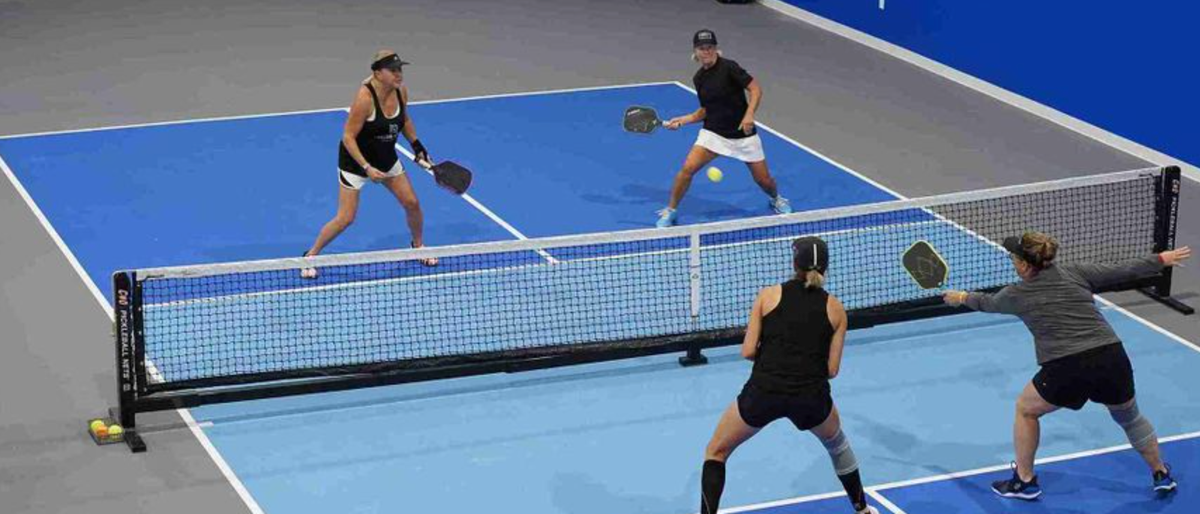
Is a Kitchen Reset Different From a Midcourt Reset?
Yes. At the kitchen line you can simply set the angle and absorb, because you are so close to the net that a soft touch clears it easily.
From the midcourt you have to add a little upward push from a low, loaded position to carry the ball over.
Here is the counterintuitive part: up close, worry less about dumping the ball in the net and more about hitting it too far or popping it up.
The closer you are, the easier it is to over-absorb and leave it high, which is its own skill when you have to reset an attack right at the kitchen.
Watch Ben Johns take a speed-up at his feet and float it back into the kitchen with almost no backswing.
That is the picture to copy: quiet hands, open face, and a ball that lands soft and low.
It is the same idea whether you are defending a drive or a block volley at the line.
 The Dink Media Team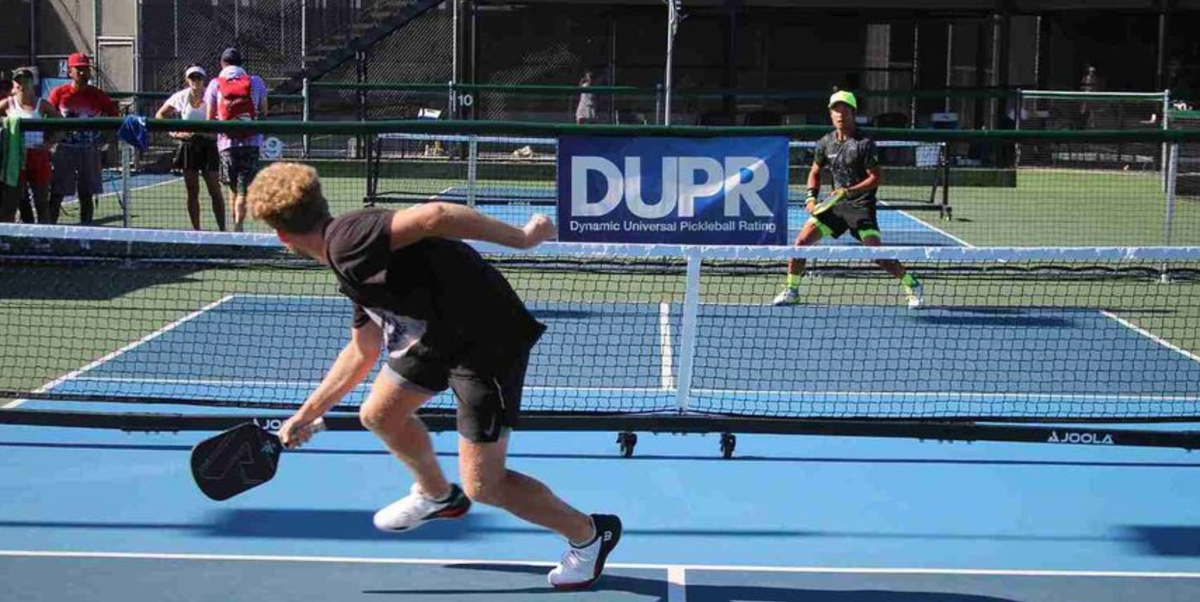
Why Your Feet Decide Your Reset
A pickleball reset falls apart before your paddle ever moves if your feet are wrong.
The fix is the split step, and the timing is exact: you split right before your opponent makes contact.
That little hop stops your momentum so you can react side to side, forward, and back. Skip it and the ball is already past you before you move.
Your feet also need to be apart, not stacked together.
Hardy's demo makes it obvious. Stand with your feet close and a light nudge tips you over. Spread them and you are a wall.
If your resets feel wobbly, the culprit is almost always your base, so clean up these footwork mistakes first.
This is also your best defense when someone targets your body.
When you have popped a ball up and know a hard one is coming, get low, set the paddle in front, and be ready to reset any ball hit at you rather than swinging back.
 The Dink Media Team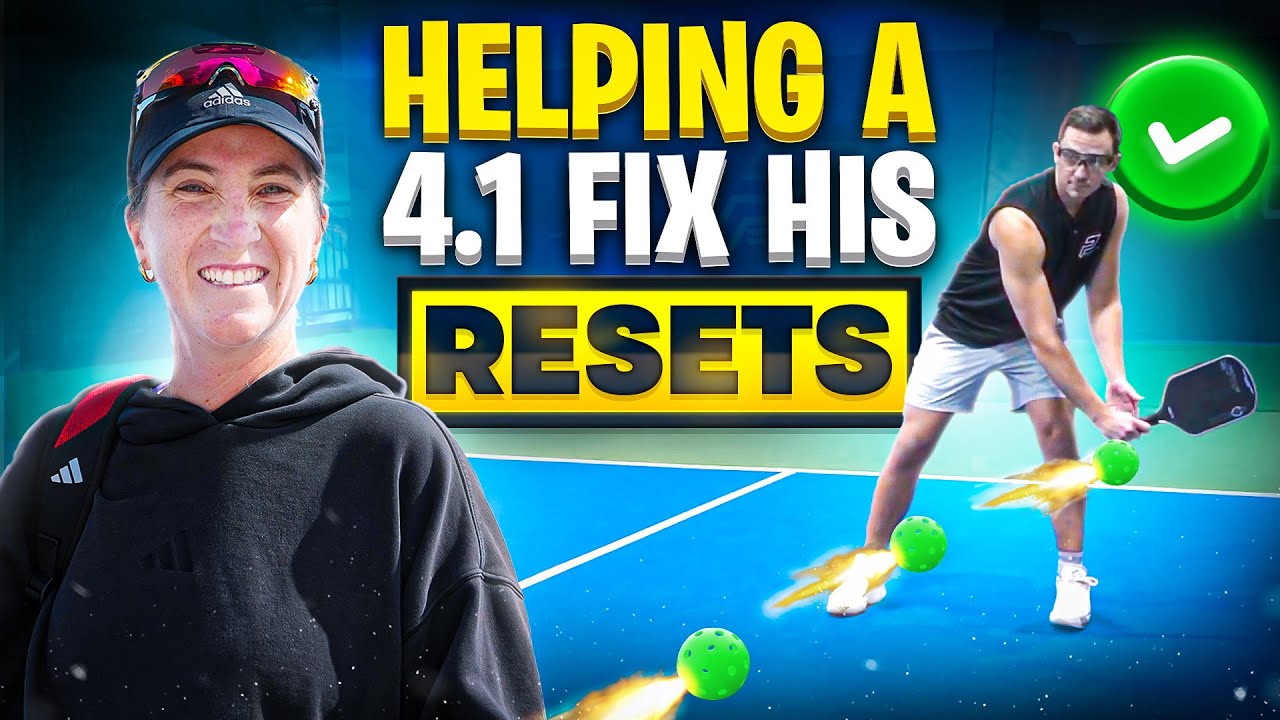
Move Forward One Zone at a Time
The point of a good pickleball reset is not just to survive, it is to advance. You move forward one zone at a time, and only after the ball you hit earns it.
A good drop or reset lets your partner crash forward, because they can read that the shot is low and safe, the same way a well placed third shot drop does.
A bad one, usually the result of being off balance or handcuffed by a great return, leaves you stuck with no real estate to make up.
So the sequence looks like this: reset, read your shot, step up a zone, reset again, step up again, until both of you are back at the kitchen where you have the most angles and the best chance to hit down.
This is exactly how you capitalize on your partner's good drop instead of leaving them stranded.
 The Dink Media Team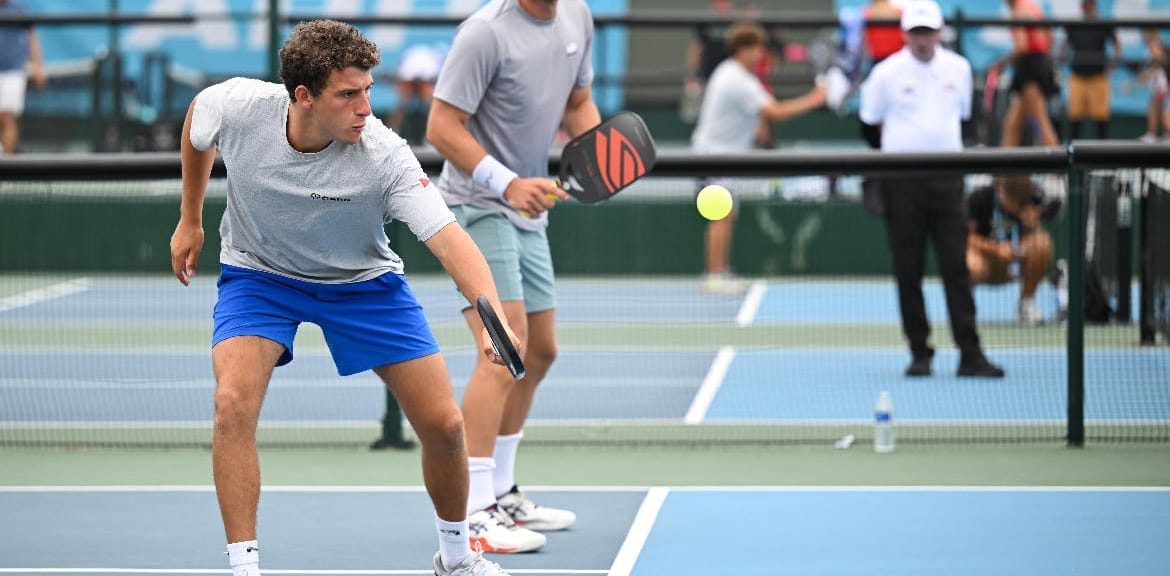
How Do I Stop Getting Stuck in the Transition Zone?
Stop trying to cover the whole court in one shot.
The transition zone punishes players who sprint forward off a mediocre reset, because they arrive off balance and get attacked at the feet.
Reset from where you are, hold your ground, and advance only when your shot is genuinely low.
That's pickleball reset patience, and it's what keeps you out of no man's land, the dead space where most points get lost.
 The Dink Media Team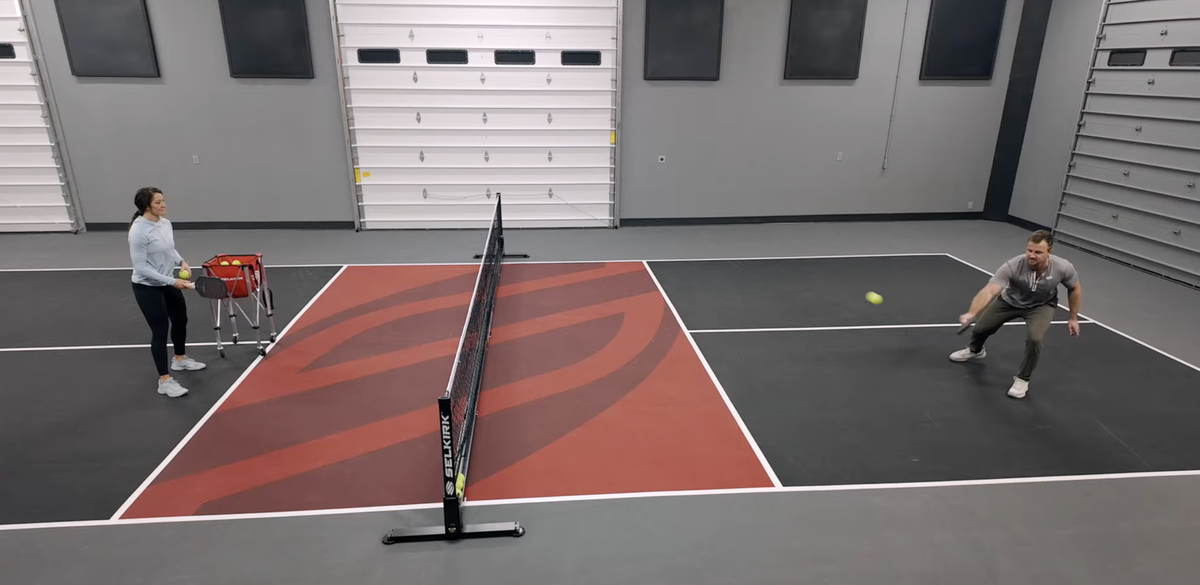
3 Drills to Groove Your Pickleball Reset
Technique means nothing if it disappears under pressure. Hardy builds the pickleball reset in three stages that add game pressure step by step.
- Cooperative reset drill. One player feeds controlled pace, you reset it back into the kitchen. No score, no pressure. This is pure reps on the loose grip, the low base, and the soft catch.
- Cooperative competitive drill. Same feed, but you must land three clean resets before the point goes live and you can move forward. Once it is live, no more speed-ups from the feeder. Run it from each of the four court positions and play to 11. This bridges the gap between drilling and real play.
- The 711 competitive drill. Fully live and scored, built to feel like a tournament. You play to 7, your partner plays to 11 from the attacking side, then you switch roles. The uneven target forces you to reset under real consequences.
If you want more structured reps, layer these on top of your regular reset under pressure work. The pressure is the point.
A pickleball reset that only shows up in a friendly rally will vanish the moment the score matters.
Frequently Asked Questions
Why does my pickleball reset keep popping up?
Almost always because your grip is too tight or your paddle face is too closed at contact. A tense hand rebounds the ball with pace instead of absorbing it. Loosen your grip, open the face slightly, and think about catching the ball rather than blocking it.
Should I reset from the transition zone or keep driving?
If you are off balance or the ball is low and fast, reset. Driving from a bad position usually floats the ball up for an easy attack. Reset, get your feet set, and advance once your shot is low enough to be safe.
How low do I actually need to get?
Low enough that you are hitting up through the ball with your legs, not your arm. Bend your knees before the ball arrives, keep your chest up, and let your lower body do the work. Almost every midcourt reset requires this.
When exactly do I split step?
Right before your opponent makes contact, not after. Splitting early stops your momentum so you can react in any direction. Keep your feet apart for a stable base, because narrow feet get knocked off balance by the first hard ball.
How long until my pickleball reset actually improves?
With focused reps on the three drills above, you can see real change within a few weeks. The key is training under pressure, not just in cooperative rallies, so the shot holds up when the score is on the line.

Love Pickleball? Join 100k+ readers for free weekly tips, news & gear deals.
Subscribe to The Dink