
Why Your Pickleball Reset Keeps Failing (And the 3 Fixes That Work)
Most players think their pickleball reset is failing because of footwork or timing. The real culprits are grip pressure, contact point, and one counterintuitive habit: doing less.
Your pickleball reset is not failing because you lack talent.
It's failing because you're doing too much with your hands, letting the ball get too close, and gripping your paddle like you're trying to crush it.
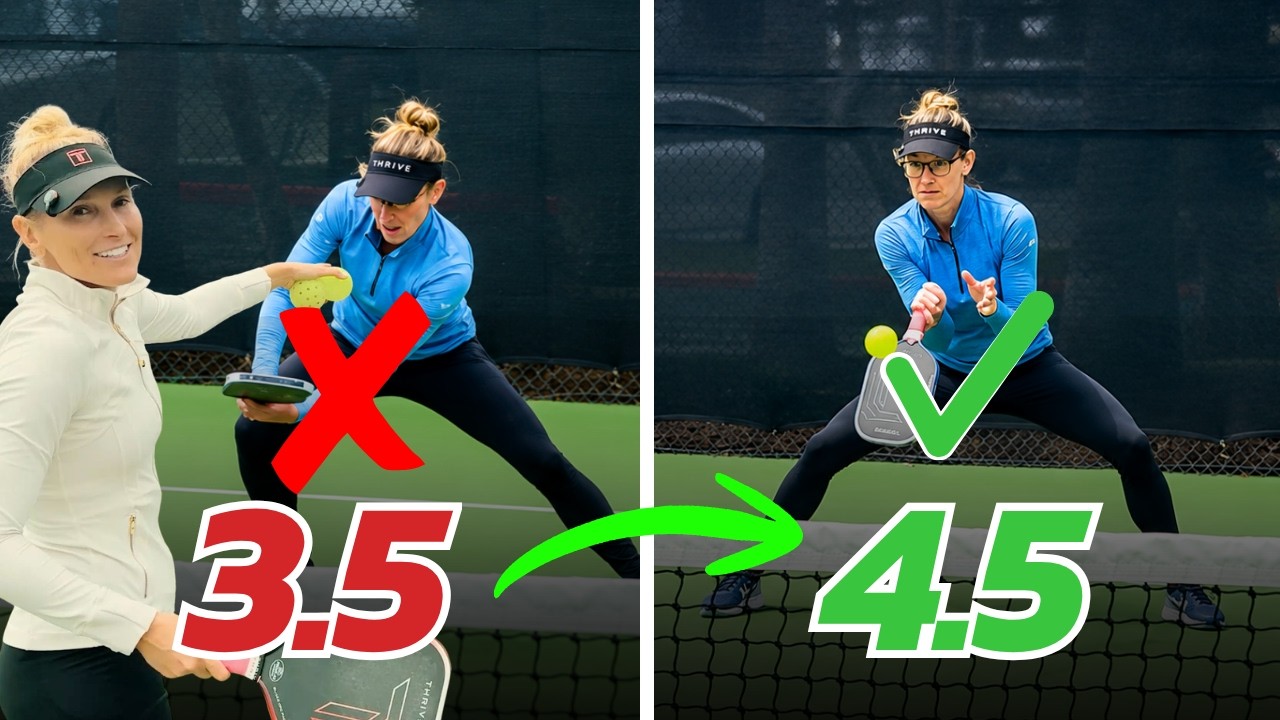
Most players at the 3.5 level have been told to extend, to get low, to move their feet. That advice isn't wrong, but it misses the sequence.
You can't fix your contact point until you fix your grip, and you can't fix either until you understand what "doing nothing" actually means.
This breakdown comes from a live on-court session filmed by Jilly B Pickleball on YouTube, where the coach worked through his wife's transition zone struggles in real time and found three specific fixes that turned her resets from pop-ups into clean, controlled neutralizers.
Love pickleball? Then you'll love our free newsletter. We send the latest news, tips, and highlights for free each week.
The Reset Problem Most Players Don't See
Watch a 3.5 player in the midcourt and you'll notice the same thing every time. The ball gets close, the wrist flips, and it pops up for an easy put-away.
It doesn't feel like a flip in the moment. It feels like helping the ball.
That feeling is exactly the problem. When the ball gets tight to your body and your grip pressure is high, the only option your hand knows is to flip.
The fix isn't in your footwork.
It starts somewhere simpler, and it's the same principle behind the four key strategies to winning in 2026: control the controllables first.
Key 1: Drop Your Grip Pressure to Nearly Zero
Grip pressure is the first fix, and it's not a minor tweak. It's the foundation everything else builds on.
On a scale of 1 to 10, your grip in the transition zone should sit at a 1 or 2. Not a 3. Not a 5 that creeps up to a 7 when you panic.
Think about holding a baby bird: tight enough that it doesn't fall, loose enough that you're not hurting it.
The player in this session thought her grip was at a 3. Under pressure, it jumped to a 7. That gap, from relaxed to reactive, is where the flip lives.
Here's the part most coaches skip. Grip pressure spikes automatically when you feel threatened.
A hard shot comes at you, your hand tightens, and the damage is done before you even swing. You have to train the loose grip until it becomes your default.
Check out this deeper breakdown on pickleball grip pressure and how it adds control, and note that the same soft-hand principle shows up in 6 essential pickleball shots to master for 2026.
The moment her grip pressure dropped, the resets looked completely different. Same player, same balls, same court.
One variable changed, and the results were night and day.
Key 2: Meet the Ball Early Instead of Letting It Arrive
Once your grip is soft, the second fix is your contact point. Most players wait for the ball and then react. That reaction always comes too late.
Think of it like a libero in volleyball. The best defensive players in that sport read the ball early and position themselves before it arrives. They don't chase.
They preset.
In pickleball, the equivalent is getting your paddle to the contact zone before the ball is there.
Not reaching, not flailing outward. Just meeting it in front of you with a paddle that's already positioned.
Here's what waiting actually looks like: the ball drops toward you, you hesitate, it gets into your body, and now the only move left is the wrist flip.
The flip isn't a choice. It's a consequence of late contact.
The fix the coach kept returning to was simple. If you can't reach it, do nothing. Let the ball bounce.
Let it come to you. The answer when you can't reach the ball is not to lunge for it. The answer is stillness.
That stillness is counterintuitive because it feels passive. It isn't.
It's disciplined contact point management, and it's the same restraint that separates safe play from forced play in 2 tactics to escape trouble in the transition zone.
Why your pickleball reset keeps failing often comes down to this exact habit of chasing instead of waiting with purpose.
Pros made a similar tradeoff when they abandoned the slice shot in 2025, choosing repeatable contact over flashy hands.
 The Dink Media Team
What Does "Absorb" Actually Mean?
This is where players get confused when coaches say "absorb the ball." It sounds like a feeling, not a technique. But it's more specific than that.
Absorbing means your paddle moves slightly backward at contact, giving with the ball rather than stopping it hard.
It's the difference between catching a ball with a stiff arm and catching it by letting your arm give a little as the ball arrives.
Think of it as a soft serve cone. The paddle extends out to meet the ball, and then there's a small give inward. Out, then in.
Not a hit. A catch.
When the player in this session started feeling that soft cone shape, her resets immediately became quieter and more controlled.
She stopped hitting the ball and started receiving it.
If you've been told to extend and you keep over-reaching or coming in too hard on contact, this framing might help: extend to absorb, not extend to hit.
The arm goes out, but it gives at the moment of contact. That distinction separates a 3.5 reset from a 4.5 reset.
You can also apply this to resetting speed-ups, where the absorb mechanic becomes even more critical under pressure.
For the full mechanical walkthrough, perfect the midcourt forehand reset in five minutes.
 The Dink Media Team
Key 3: Get Lower Than You Think You Need To
The third fix is posture. Specifically, getting your hips and center of gravity lower than feels comfortable.
The coach's standard for this is getting down on one knee. That's not a drill cue. That's the actual stance he's after.
Once you feel what it's like to be that low, your normal "low" suddenly seems like you've been standing straight up the whole time.
Here's why low matters for resets:
- A lower stance stabilizes your paddle path and removes the arm from doing too much work.
- When your hips drop, your contact point naturally shifts in front of your body instead of beside or behind it.
- Low stance forces your legs to absorb movement, which takes pressure off your wrist and hand.
- It slows your reaction down enough to stop the panic flip from happening in the first place.
In the session, pairing a low stance with loose grip pressure produced the best resets of the entire session.
Ten in a row, clean. The coach had never seen her look like that before.
For more on how to get low without wrecking your back, this breakdown on knee bend mechanics is worth reading first.
Footwear matters here too, which is why the best men's pickleball shoes of 2025 all prioritize lateral stability over cushioning.
 The Dink Media Team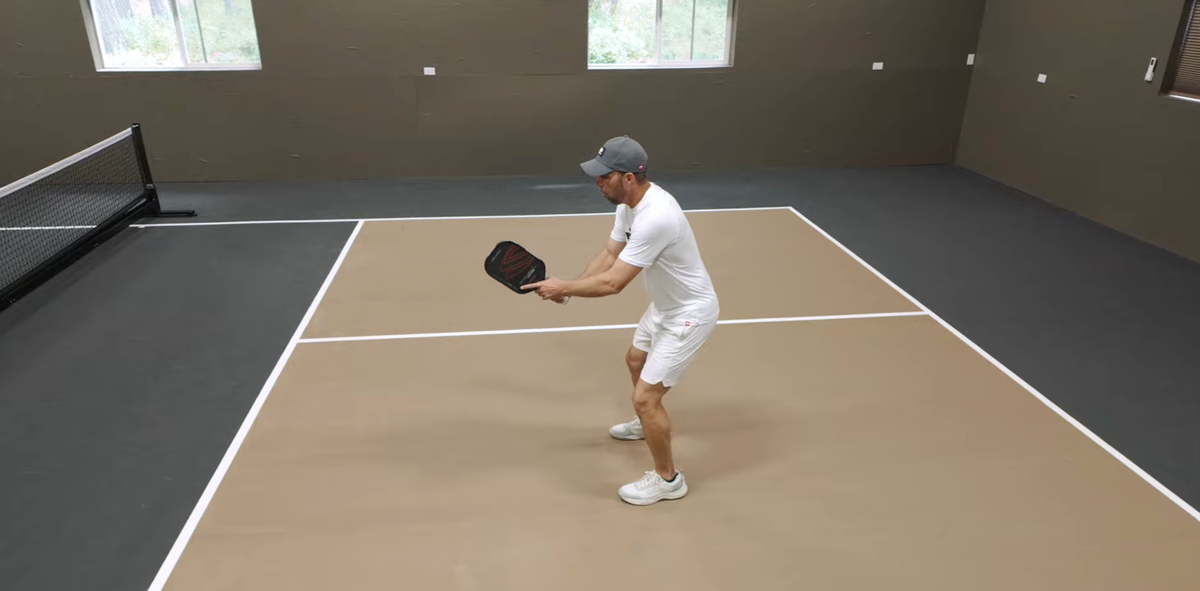
Why the Short Hop Completes the Picture
Once you have the three keys working together, the short hop becomes the natural output.
A true short hop means you're on the ball almost as soon as it bounces, not after it rises and falls toward your body.
Most players think they're short hopping. They're not. What they're actually doing is waiting for the ball to come up to a comfortable height and then swinging.
That's a full hop, and it invites all three mistakes back in.
A real short hop looks like this: the ball touches the court and your paddle is already there to receive it. No wait. No watch.
No hesitation. You're presetting your contact point before the ball arrives.
The bad short hop is the wrist flip. The good short hop is the absorb. Same ball, completely different outcome.
This is one of the shots that shows up in how to break 5.0, and it also plays into the midcourt spacing rules that changed under the 7 new USAP pickleball rules for 2026, which are worth reviewing alongside the official USA Pickleball rulebook.
 The Dink Media Team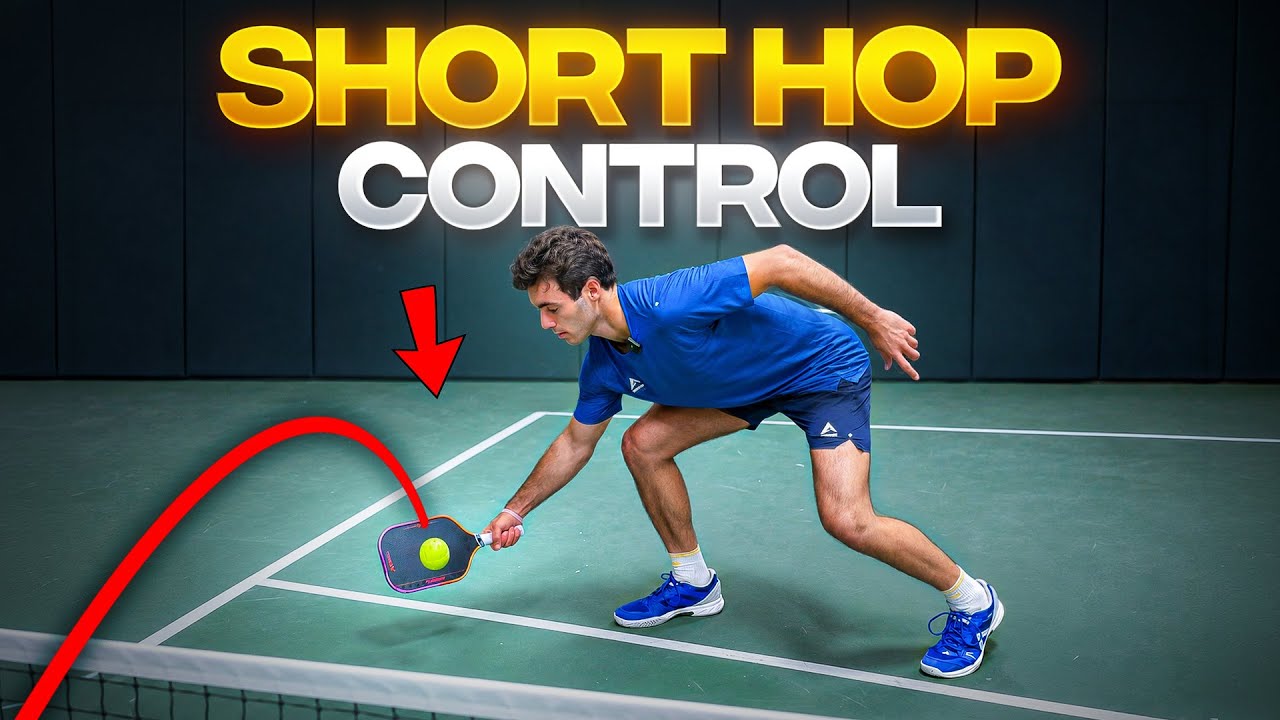
How to Put the Three Keys Together in Practice
The three fixes compound. Grip pressure makes absorbing possible. Absorbing makes early contact possible.
Early contact makes the short hop possible. You can't skip to step three.
Here's the order to practice them:
- Start with grip pressure only. Have someone feed you balls in the transition zone and do nothing except focus on keeping your grip at a 1 or 2. Notice when it spikes. Notice what triggers it.
- Add preset paddle position. Before the ball crosses the net, your paddle should already be in front of your body at contact height. Stop waiting and start positioning.
- Practice the give. At contact, let your paddle move slightly back. Don't stop the ball. Receive it. Feel the difference between a hard block and a soft catch.
- Drop your hips. Do all three of the above while sitting into a genuinely low stance. Spread your feet wider than feels natural. Stay there even if it's uncomfortable.
If you want to pair these fixes with structured drills, these progressive drills that take you from 3.0 to 5.0 are built to reinforce exactly this kind of transition work.
You can also look at the rubber band drill to master resets as a specific training tool that ingrains the soft contact habit faster than most feeding drills.
 The Dink Media Team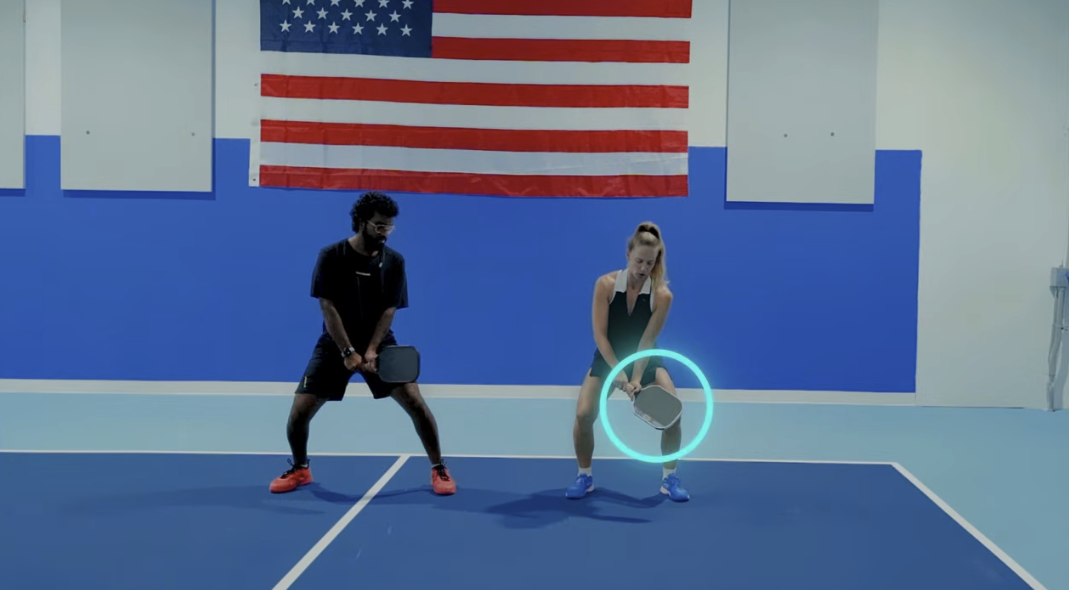
The Mindset Shift That Makes It Click
Here's the honest truth about improving your reset: the players who get better fastest are the ones who commit to doing less, not more.
Every instinct you have when the ball comes hard at you is wrong. Tighten the grip. Reach for it.
Speed up your arm. Fight back. All of it makes the reset worse.
The best resets happen when you panic the least. And the best way to panic less is to train the three keys until they happen automatically, not consciously.
After eight years of playing, doing nothing under pressure becomes automatic. At 3.5, it takes deliberate reps.
That's the gap this session closes, and now you have the map to close it too.
For players working on the bigger picture of going from 4.0 to 4.5, fixing the reset is one of the highest-value improvements you can make.
It also slots cleanly into a simple 4-step system to win more pickleball games in 2026.
And if you want to understand what pickleball defense mastery actually looks like beyond the reset, that framework connects directly to everything covered here.
Frequently Asked Questions
What is the most common reason a pickleball reset fails?
The most common reason a pickleball reset fails is grip pressure that is too high at contact. When your hand tightens, your wrist flips automatically, sending the ball upward instead of soft and low. Loosening your grip to a 1 or 2 out of 10 is the single fastest fix most players can make.
Where should I make contact during a pickleball reset?
You should make contact in front of your body, not beside or behind it. Meeting the ball early, before it gets close to your torso, removes the need to flip your wrist to rescue a late hit. If you cannot reach the ball in time, the correct answer is to do nothing and let it bounce.
How low should I get when resetting in the transition zone?
Lower than you think you need to. A good reference point is getting down close to one knee, which forces your hips to drop and your stance to widen. That level of depth stabilizes your paddle and keeps your contact point in front of you where it belongs.
What does "absorbing" the ball mean in a pickleball reset?
Absorbing means your paddle gives slightly backward at the moment of contact, softening the impact instead of blocking it hard. Think of it as catching the ball with a small give in your arm rather than stopping it with a firm surface. This is the key mechanic that separates a controlled reset from a pop-up.
How do I practice better resets without a hitting partner?
Start by working on grip pressure awareness at home, holding your paddle loosely and noticing when your hand naturally tightens. Then use wall drills focused on soft contact and early paddle positioning before the ball arrives. Pickleball drills you can do at home with no court include options specifically designed to build these reset habits without a full practice setup.

Love Pickleball? Join 100k+ readers for free weekly tips, news & gear deals.
Subscribe to The Dink