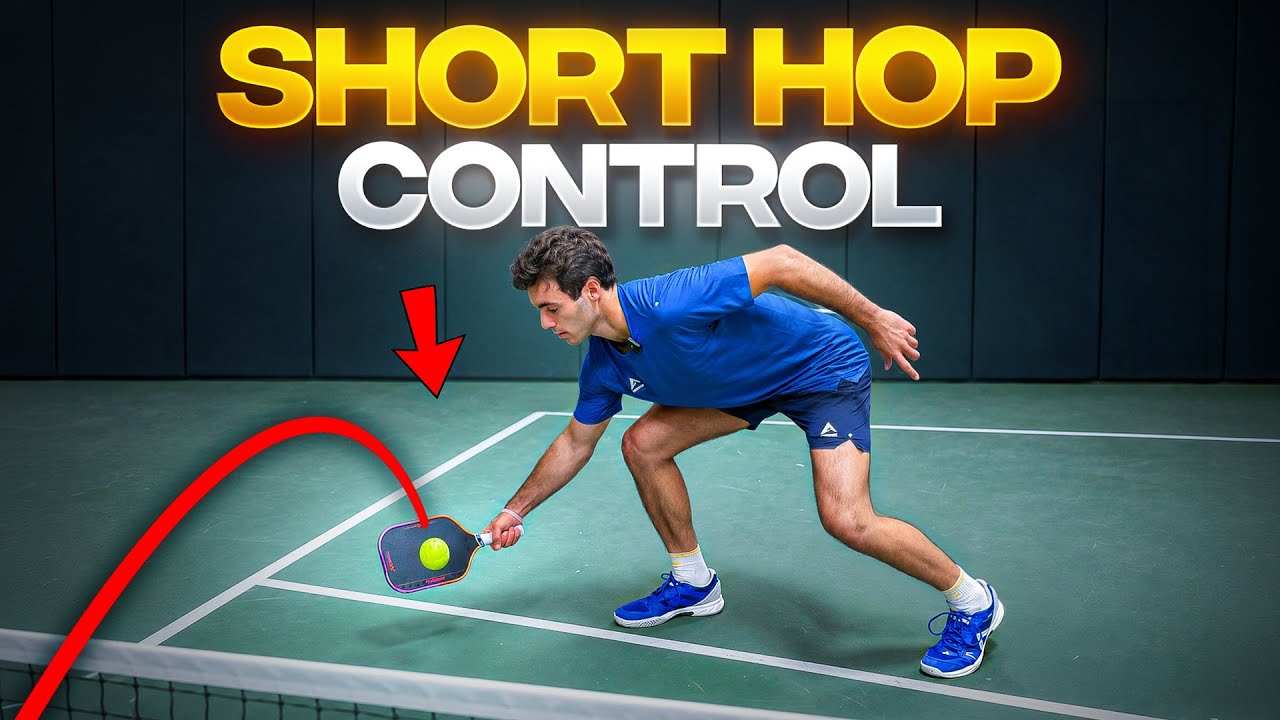
How to Short Hop at the Net Like a Pro: A Step-by-Step Breakdown
The short hop pickleball shot at the kitchen is your last line of defense when you get caught out of position. Learn the wrist preset and swing mechanics that keep the ball unattackable every time.
The short hop pickleball shot at the kitchen is one of the most misunderstood techniques in the game.
Most players panic when they get caught out of position, flip their paddle face open, and send a floater right into the opponent's strike zone.
The fix is simpler than you think, but it requires changing two habits that feel natural in the moment.
This breakdown comes from Richard Pickleball on YouTube, who walks through exactly when to short hop, how to set your wrist before you move, and where to place the ball so your opponents cannot attack it.
Love pickleball? Then you'll love our free newsletter. We send the latest news, tips, and highlights for free each week.
What Is the Short Hop at the Kitchen?
The short hop is not your first choice at the net.
It is your backup plan when a reach falls short or when you misread the shot and have to go down for the ball instead of taking it out of the air.
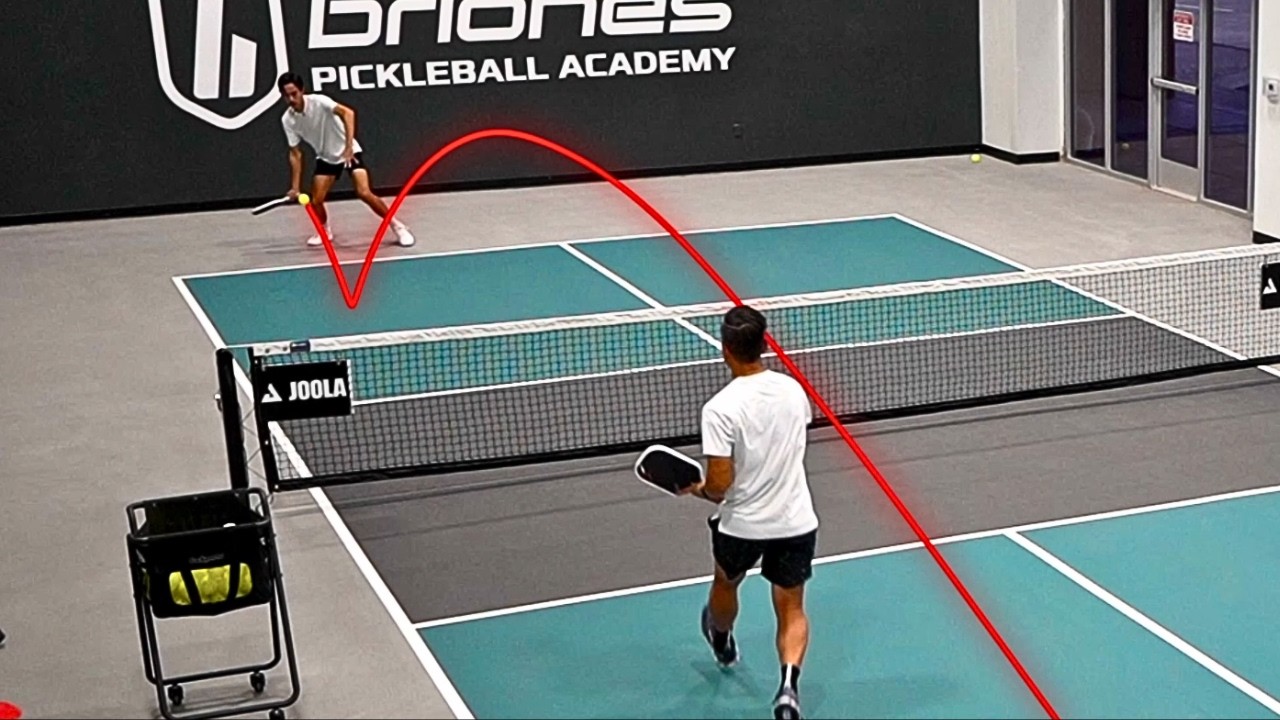
Two situations force you into a short hop at the kitchen line. First, your opponent hits a quality roll that gets past your reach.
Second, you anticipate a speed-up, pull your paddle back slightly, and then they throw a normal dink right at your feet.
In both cases, you cannot volley the ball.
You have to let it bounce just inside the kitchen and take it immediately off the short hop before it rises into an attackable height.
The short hop pickleball shot shows up constantly at the 4.5 and 5.0 level.
Watch any top men's rally and you will see players like Ben Johns using the short hop to survive pressure on the wide ball and then reset the point from a difficult position.
Why Does the Ball Keep Popping Up?
The answer is almost always the same: your paddle face is open at contact.
When you are scrambling, your natural instinct is to swipe at the ball with your wrist flicking outward. That opens the face and sends the ball up.
Even a slight mishit becomes a ball sitting at chest height on the other side of the net.
The fix is getting around the ball. Instead of meeting the ball flat, you angle your paddle so it wraps around the outside of the ball at contact.
This keeps the shot lower and pushes it toward the sideline rather than up toward your opponent's paddle.
If you hit a little too hard with an open face, the ball goes deep. If you hit a little too hard with your paddle wrapped around the ball, the ball drifts wide.
Wide and low is manageable.
Deep and high is a free attack for your opponent.
The Preset Wrist: The Technique Most Players Skip
This is the piece that separates players who hit the short hop pickleball shot consistently from players who just survive it.
Presetting the wrist means you angle your wrist into the correct position before your arm moves toward the ball.
The wrist and the arm are two separate motions.
You set the wrist first, then you push through with your shoulder.
Here is what that looks like for each side:
- Backhand short hop: As you bring your arm back, rotate your wrist so the paddle face is already angled around the outside of the ball before you start your forward swing.
- Forehand short hop: Same concept. The wrist turns early, before the arm drives forward, so your contact point is already correct when you meet the ball.
What you absolutely cannot do is set the wrist and move the arm at the exact same time.
When those two motions happen together, your control falls apart. You cannot aim the ball and you cannot control depth.
Think of it the way you would any dink or reset.
The wrist stays quiet during the swing itself. The angle is already baked in before the arm ever moves.
For a deeper look at how wrist mechanics affect your net game, this wrist fix for the drop covers the same principle from a different angle.
 The Dink Media Team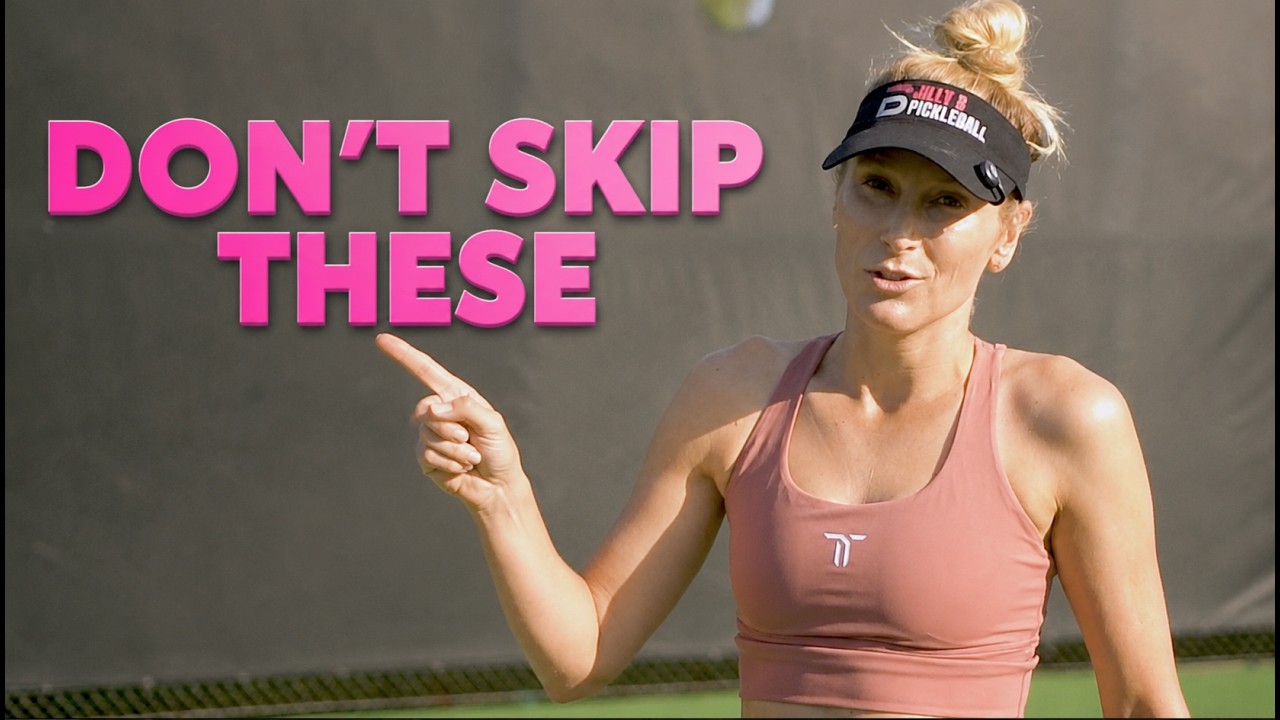
What Stance Works Best on a Short Hop?
Stay in an open stance. When the ball is wide and you are already reaching, you do not have time to square up.
An open stance on the short hop pickleball shot lets you get low and push through with your shoulder without overcommitting to one direction.
Getting low is not optional here.
If you stay upright and try to short hop from height, your swing path changes and you lose the ability to keep the ball short in the kitchen.
Bend your knees and let your shoulder do the work.
If you struggle with getting low efficiently without hurting your knees, this guide on knee bend technique is worth reading before your next session.
 Thomas Shields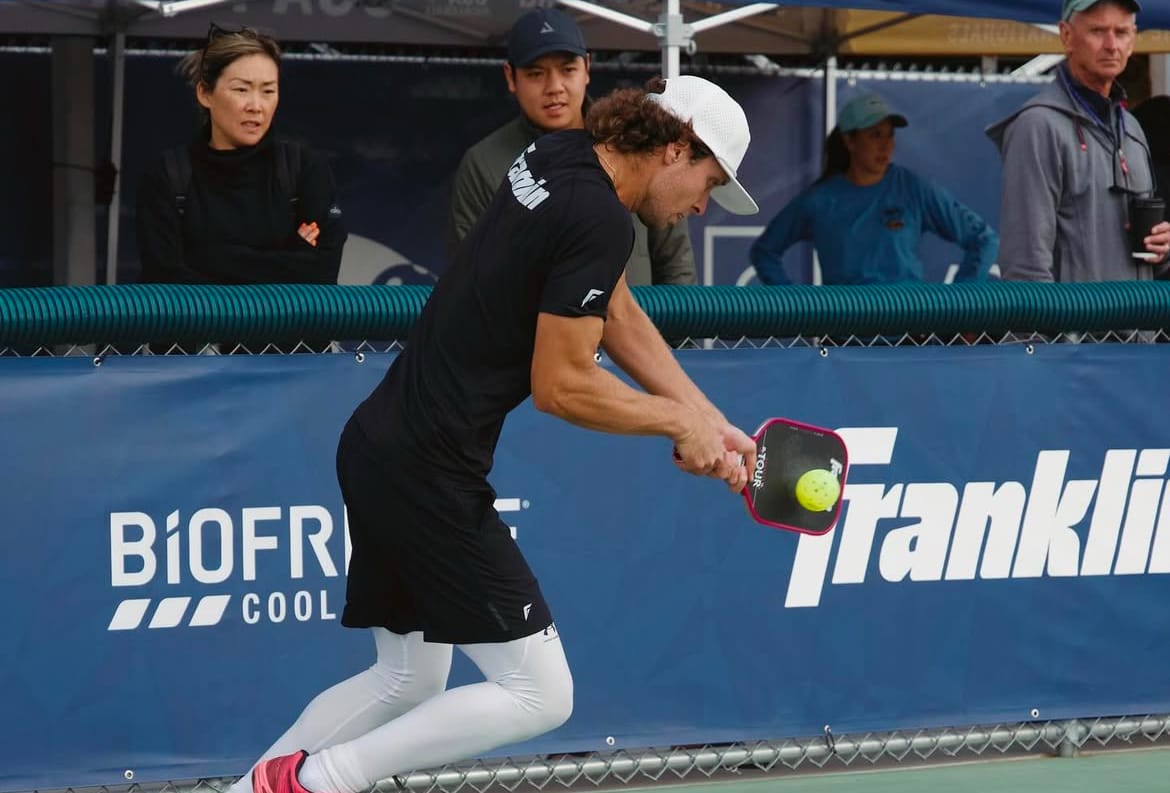
Where Should You Aim the Short Hop?
Short hop pickleball placement depends on which side you are hitting from. The rules are clear and consistent.
- From the left side (backhand): Almost always go wide. The wide ball sits close to the sideline and very short in the kitchen. Your opponent cannot attack it without running a real risk of going out.
Do not try to go middle from the left. There is almost always someone covering that zone, and the ball is more likely to pop up on you.
- From the right side (forehand): You have more options. Wide is still your safest shot, but going middle is a real play from the forehand side. When you go middle from the right, use a slightly more open face and ease off the power.
That middle ball needs to be softer or it will sit up.
Here is a quick summary of shot selection:
- Wide backhand short hop: Push through, get around the ball, keep it close to the sideline and short in the kitchen.
- Wide forehand short hop: Same mechanics, preset the wrist to the forehand side, drive with the shoulder.
- Middle forehand short hop: Less pace, more open face, aim toward the center of your opponent's box.
The goal in every case is a ball that is too short to attack and too wide to poach.
Your opponent's only real answer is a lob, and a lob off a short hop is a trade you will take every time.
 The Dink Media Team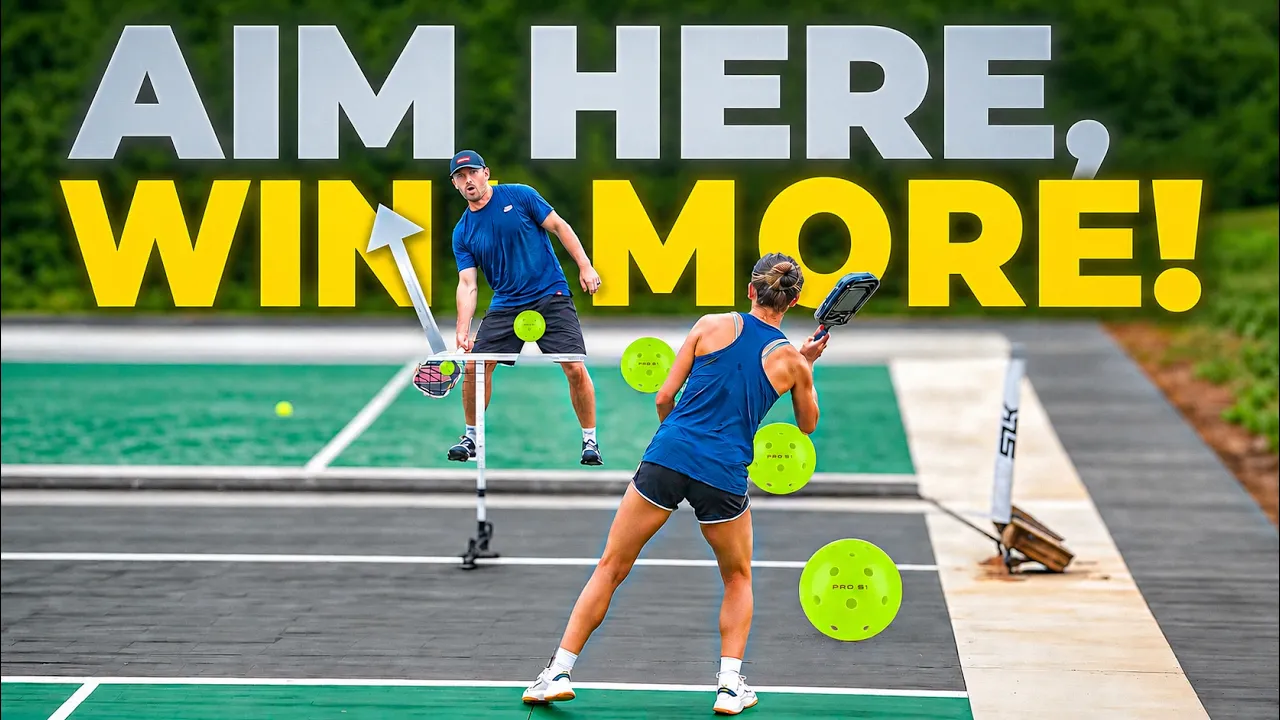
How Does the Short Hop Create Offensive Pressure?
Here is where this shot becomes more than just a survival tool.
When you are consistently hitting the short hop pickleball shot on the wide ball and keeping it unattackable, you are forcing your opponent into a very uncomfortable decision.
They can either attack off the bounce, which is a low-percentage play, or they can lob you, which is a concession that their offense has stalled.
Below the 5.0 level, most offense happens out of the air.
If you can take away your opponent's air attack by keeping the ball wide and low, you are winning the point even if you are not winning it outright.
You are waiting for them to make the mistake.
This is especially effective against players who rely on roll shots. A heavy roller is trying to get the ball low and fast past your reach.
The short hop neutralizes that entire weapon because you are meeting the ball exactly where it lands, not chasing it as it rises.
Against slicers, you mostly will not need it. Slice stays low but does not skid away from you the same way.
You can usually reach a slice and still get your paddle on it cleanly without dropping into a short hop.
Understanding how to handle different shot types at the kitchen line is part of building a complete net game.
This breakdown of roll versus flick strategy gives you the full picture on reading what is coming at you.
For the footwork that makes all of this possible, lateral movement training is worth building into your practice routine.
 The Dink Media Team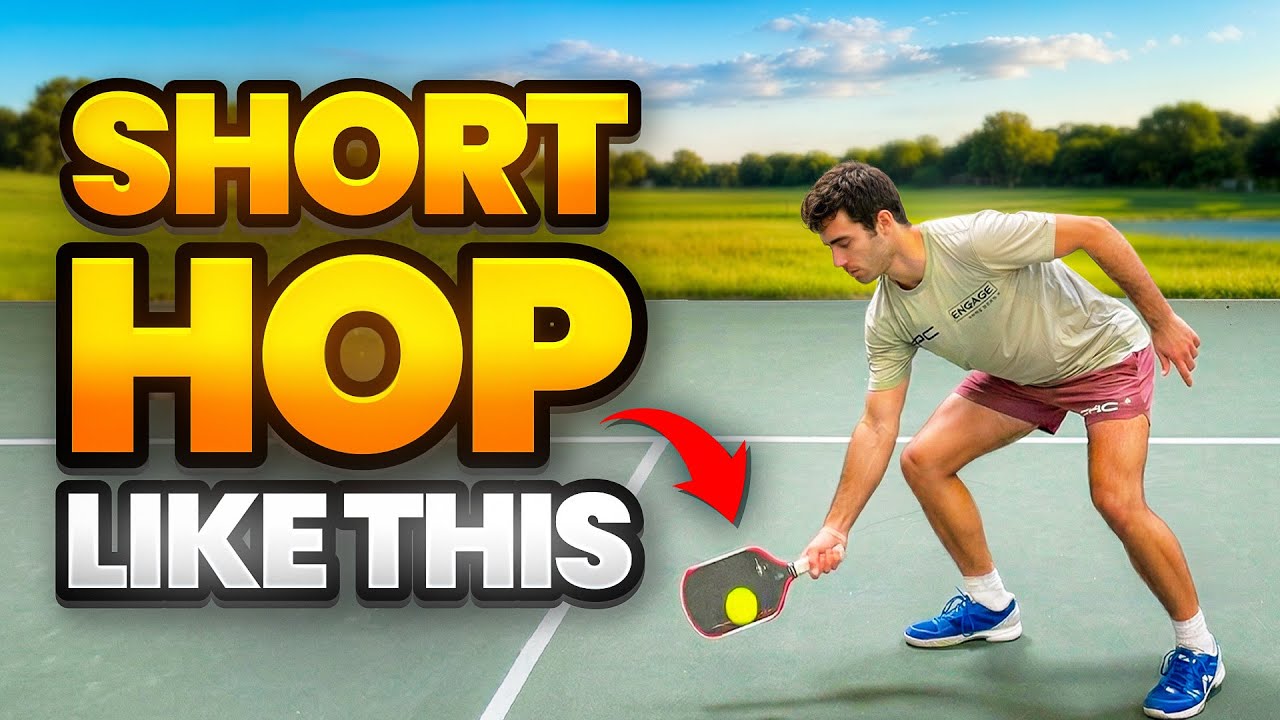
What Should Your Opponent Do When You Short Hop?
The answer is the lob, and smart players know it.
When you are reaching hard and short hopping every wide ball, you are committing your weight forward and to the side.
A well-placed lob over your backhand shoulder puts you in immediate trouble.
You are stretched, you are low, and you are moving in the wrong direction to chase a deep ball.
This is not a reason to stop hitting the short hop pickleball shot. It is a reason to be aware of when you are overcommitting on the reach and stay ready to recover.
Most players at the recreational level will not exploit this consistently.
The ones who do are telling you something about their skill level.
Knowing how opponents will counter your pressure is part of playing smarter, not just harder.
This three-step strategy formula covers how to build pressure and manage the response.
 The Dink Media Team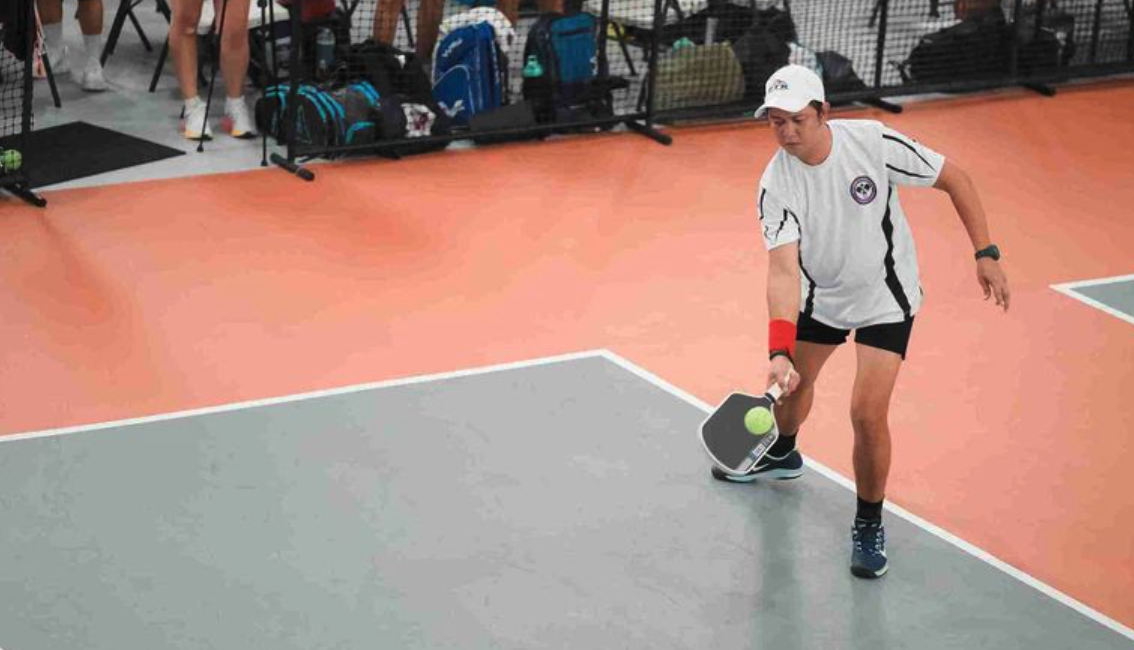
Common Short Hop Mistakes to Fix Right Now
Here are the errors that come up most often when players try to add this shot to their game:
- Opening the paddle face at contact: The result is a floater. Get around the ball instead of meeting it flat.
- Moving the wrist and arm at the same time: This kills your aim. Preset the wrist first, then swing the arm.
- Not getting low enough: Staying upright changes your swing path and pushes the ball deep. Bend your knees before the ball lands.
- Going middle from the backhand side: The middle short hop from the left is a low-percentage play. Wide is almost always safer.
- Using too much pace on the middle forehand: When you go middle off the forehand, the ball needs to be soft or it sits up for an attack.
Every one of these mistakes comes back to the same root cause: trying to do too much in a reactive moment.
The short hop pickleball shot is a controlled, compact shot. Less is more.
If your dinks are still getting attacked even when you are doing everything right, this breakdown on forehand dink errors can help you identify the gap.
For players working on keeping balls low out of difficult positions, these two tips for stopping pop-up dinks apply directly to the short hop as well.
 The Dink Media Team
When Should You Practice the Short Hop?
The short hop pickleball shot is not a shot you plan to use.
You train it so it is available when you need it, not because you are going looking for it.
The best way to train it is to have a partner feed you wide dinks deliberately at different speeds.
Practice letting the ball land and taking it immediately off the short bounce.
Focus on presetting the wrist before you move your arm and keeping the shot inside the kitchen.
You can also work on it by exaggerating your reach during dink rallies. Stretch as wide as you can on purpose, then short hop the ball back.
This builds the muscle memory so that when the real situation arrives in a match, your body already knows what to do.
Drilling with purpose is what separates players who improve fast from players who play the same way for years.
These backhand dink drills pair well with short hop practice since the mechanics overlap significantly.
And if you want to understand the broader skill framework around what it takes to move up in rating, these five signs you are ready for the next level give you an honest benchmark to work toward.
The short hop pickleball shot is a high-level shot that does not require a high level of athleticism to execute. It requires discipline.
Set the wrist early, get low, push through with the shoulder, and keep the ball around the ball.
Do that, and you will turn a defensive moment into a point you can actually win.
Frequently Asked Questions
What is a short hop in pickleball?
A short hop in pickleball is when you let the ball bounce just inside the kitchen and take it immediately off the bounce at the lowest possible point, before it rises into an attackable height. It is a reactive shot used when you cannot reach the ball cleanly out of the air. Most players use it when they get caught out of position or misread the incoming shot.
When should you use a short hop at the kitchen line?
Use the short hop when you are wrong-footed and cannot volley the ball, or when you pull your paddle back anticipating a speed-up and the opponent dinks instead. It is your backup option, not your primary plan. The moment you realize you cannot reach the ball out of the air, commit to the short hop immediately so you have time to get low and set your wrist.
Why does my short hop keep popping up?
Your paddle face is almost certainly open at contact. When you open the face and mishit even slightly, the ball goes up instead of staying low. Fix this by getting around the outside of the ball with your paddle and presetting your wrist before your arm moves forward.
Should you short hop against a slicer or only against rollers?
Mostly against rollers. A slice shot stays low but does not skid away from you as aggressively, so you can usually reach a slice and take it out of the air. Against a heavy roller, the ball dips fast and then skids wide, which is exactly when the short hop becomes your best option.
What is the safest placement for a short hop?
Wide and short is almost always the safest placement on both sides. From the backhand side, go wide nearly every time. From the forehand side, wide is your safest option but middle is a viable secondary choice if you reduce your pace.
A ball that lands short and near the sideline is very difficult to attack without running a real risk of going out of bounds.

Love Pickleball? Join 100k+ readers for free weekly tips, news & gear deals.
Subscribe to The Dink