
The 6 Shots Pros Warm Up Every Time (Most Players Skip All of Them)
Most players walk onto the court and just start hitting. These 6 pickleball warm-up drills are what separates 6.0 players from everyone else.
Your pickleball warm-up is not just about loosening your shoulder.
It is about programming your eyes, your hands, and your decision-making before the first real point is ever played.
Most players walk on the court and start trading groundstrokes. That is not a warm-up. That is just hitting balls until the game starts.
These six drills come from Jilly B Pickleball on YouTube, where she breaks down exactly what 6.0-level players are doing before every session that most recreational players never think to practice intentionally.
Love pickleball? Then you'll love our free newsletter. We send the latest news, tips, and highlights for free each week.
Why Your Warm-Up Is Failing You
The problem is not that you warm up wrong. The problem is that you warm up the shots you are already comfortable with.
Pros warm up the shots they need to execute under pressure. That means ATPs, lobs, Ernies, drop shots, and combos.
Not just cross-court dinks until someone says "ready to play?"
Here is the full list of what a real 6.0 warm-up looks like, and why each piece of the pickleball warm-up drill sequence matters.
Drill 1: The Controlled Volley
This is the single most important shot you can warm up, and almost nobody does it with intention.
The controlled volley means feathering a volley softly, keeping it out of attack range, with your paddle head under the ball.
Jilly B says one of the biggest leaps in her game came when she mastered the controlled volley on her forehand.
The reason is simple: once you can control a ball at any speed, you can decide at the last second whether to attack it or dink it.
That decision-making window is everything at higher levels. Without the controlled volley in your hands, you are forced to commit early.
With it, you keep your opponent guessing until the last possible moment.
The slower you go, the harder it is. That is not a paradox. That is proof of how much skill this shot actually requires.
If you want to build the foundation that makes your kitchen attack strategy work, start your pickleball warm-up drill block right here.
Drill 2: The ATP
The Around the Post shot is almost never warmed up intentionally.
Jilly B is direct about this: she almost never sees her students warm up ATPs before a match.
The ATP is not a physical problem for most players.
It is a recognition problem. Your eyes need to learn to read whether the ball is actually going wide enough to make the shot available.
The ATP Pickleball Warm-Up Drill Protocol
Here is the warm-up protocol she uses:
- Ask your partner to intentionally feed you balls that go wide near the sideline
- As soon as the ball leaves their paddle, say out loud: "It's there" or "It's not there"
- Be willing to commit and miss. That is the point of warm-up
- Focus on getting the ball around the post first. Aim for the sideline, not the target
- If you can get it around, you can get it in
Missing an ATP in warm-up costs you nothing.
Missing it at 5-all in a tournament because you have not hit one successfully in two months costs you the match.
The willingness to fail in warm-up is what separates players who grow from players who stay stuck.
If you want to understand how a structured warm-up changes your entire game, that connection starts with intentional ATP reps.
 The Dink Media Team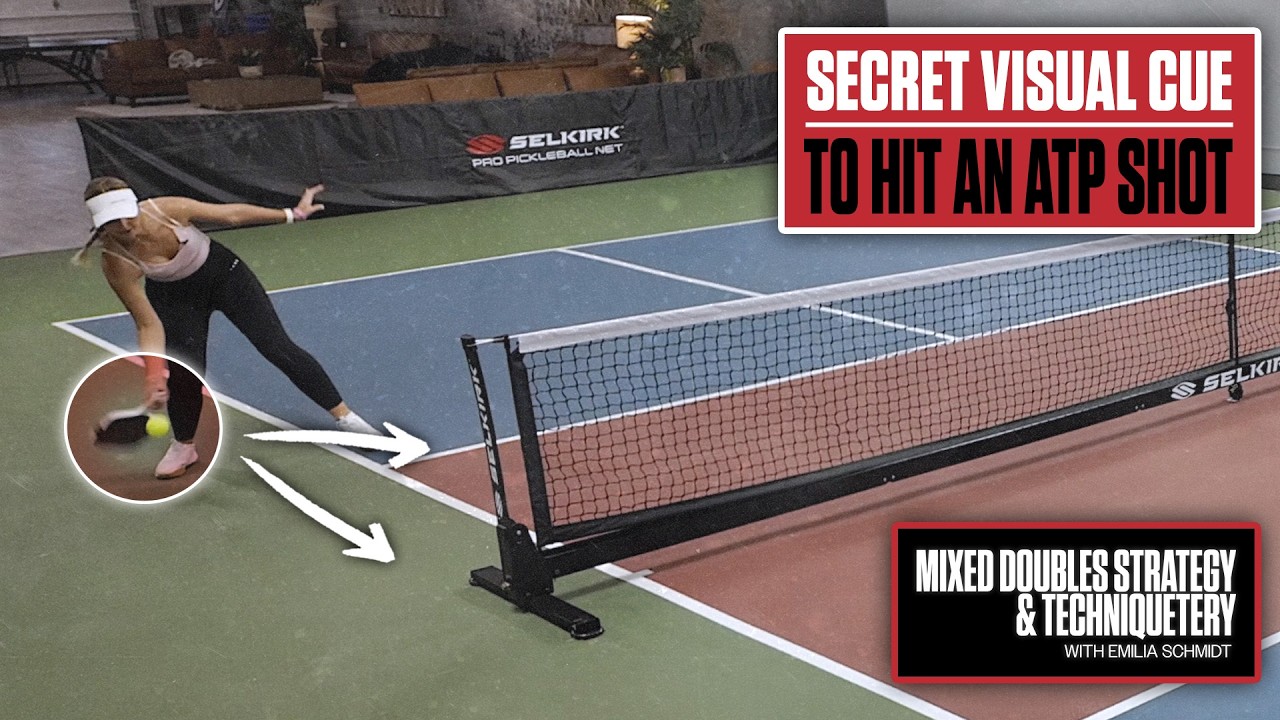
Drill 3: The Lob
The lob is the most under-warmed shot in recreational pickleball.
Not because players do not know it exists, but because they only attempt it when they think they have a perfect ball to work with.
Jilly B's lob warm-up covers two variations: the volley lob and the bounce lob.
She focuses specifically on hitting corners and on making the shot look identical to a dink until the last moment.
One detail most players miss: from the left side, she targets the right side player's shoulder with a one-handed lob.
It is a precise, practiced shot. Not a desperation heave.
She also points out something that will change how you think about the lob entirely. The mistake is not hitting a bad lob.
The mistake is trying to hit a perfect lob instead of picking the perfect moment to use it.
Track your pickleball warm-up drill progress on the lob like this: if you start missing by three feet and end up just past the baseline, you are calibrated.
Now you know where your range is before the match starts.
For more on disguising your lob and making it a real weapon, these five keys break it down from the setup through contact.
 The Dink Media Team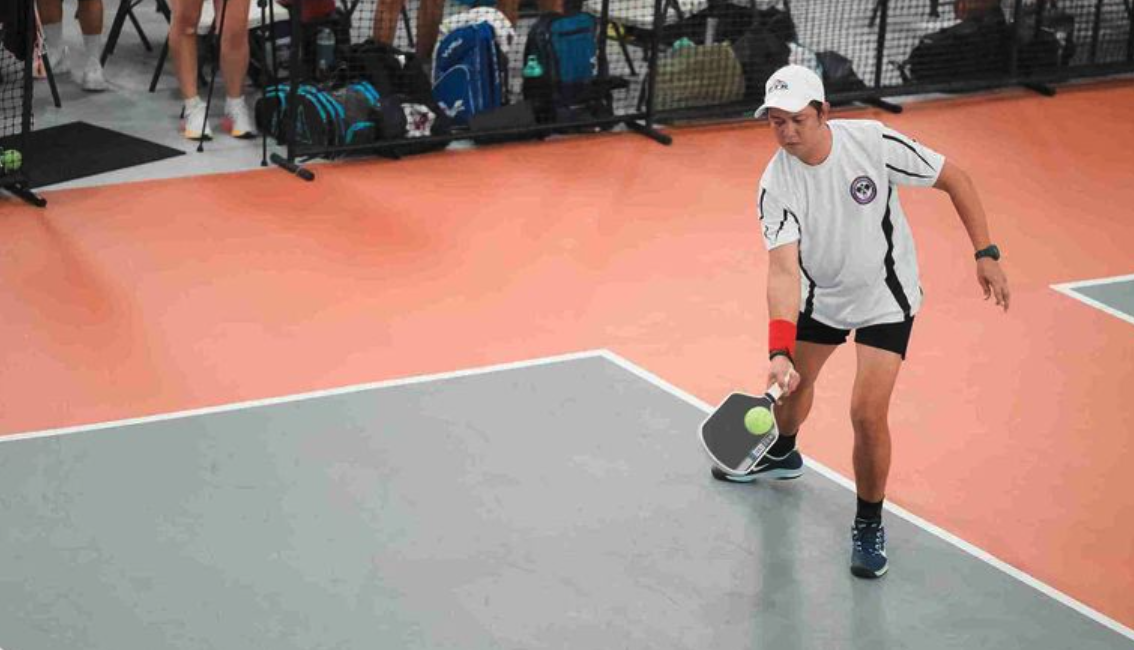
Drill 4: The One-Two Combo
This is a cooperative drill, and the cooperation part is what most players get wrong.
One player warms up their speed-up and put-away combo. The other player's job is to block or reset, not to counter hard.
The One-Two Combo Pickleball Warm-Up Drill Structure
The structure looks like this:
- Player A hits a slow, baited speed-up
- Player A follows immediately with a harder put-away on ball two
- Player B absorbs and resets without going for a winner
- After several reps, switch: Player B counters hard, Player A practices reading the counter
The key detail Jilly B hammers: your first ball in the combo should be almost embarrassingly slow.
You want to bait the reset so your second ball has a clean, predictable target.
There is no worse feeling than trying to warm up your combos and your partner keeps blasting your first ball for a winner.
Communicate before the drill starts. Agree on what you are each working on.
If your speed-up keeps getting attacked, this drill will show you exactly why. Your first ball is not slow enough and your second ball is not following the right pattern.
 The Dink Media Team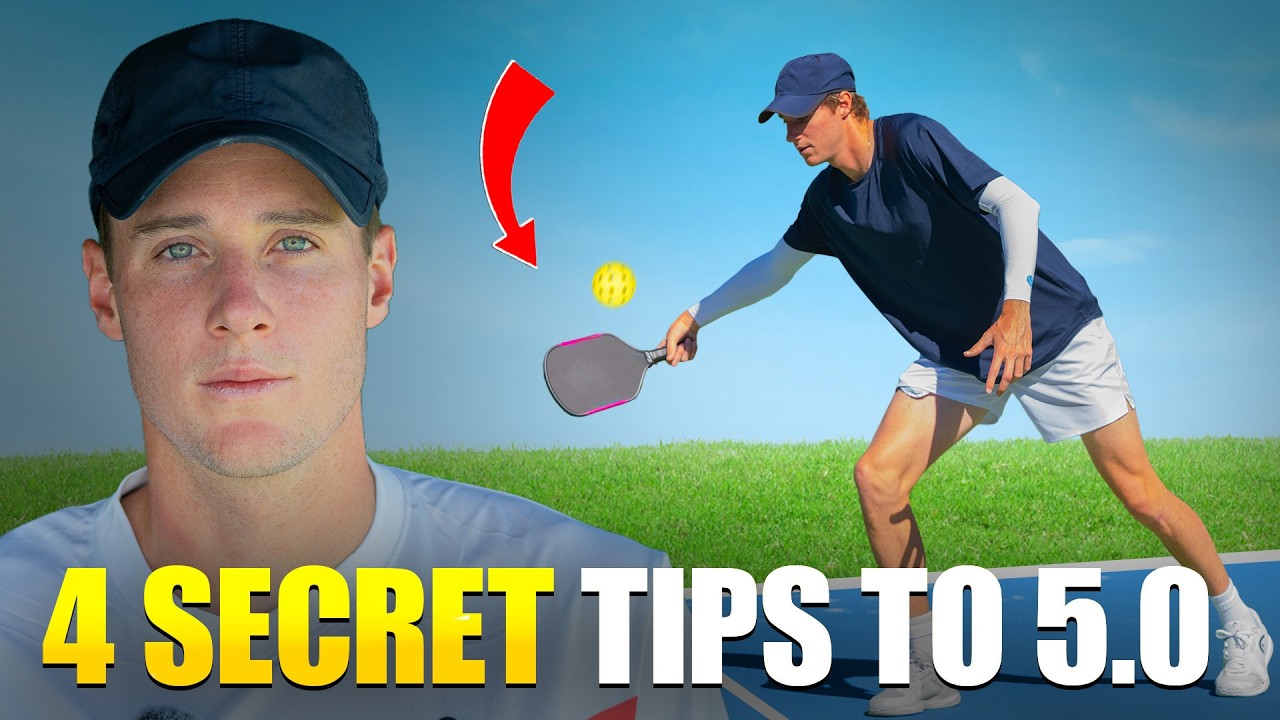
Why Recognition Beats Athleticism in Warm-Up
Shots like the ATP and the Erne are not about explosive movement.
They are about seeing the ball correctly and making a fast binary decision: is it there or is it not.
Jilly B's approach to both shots in warm-up is identical: call it out loud the moment the ball leaves your partner's paddle.
You will be wrong sometimes. That is exactly the point.
Your eyes have to get calibrated to real ball flight before you face it in a competitive point.
You cannot train recognition by thinking about it. You have to experience the rep and call it wrong a few times until your read sharpens.
This is also why impulse control in pickleball matters so much.
Knowing when NOT to go for an ATP is just as valuable as knowing when to pull it off.
 The Dink Media Team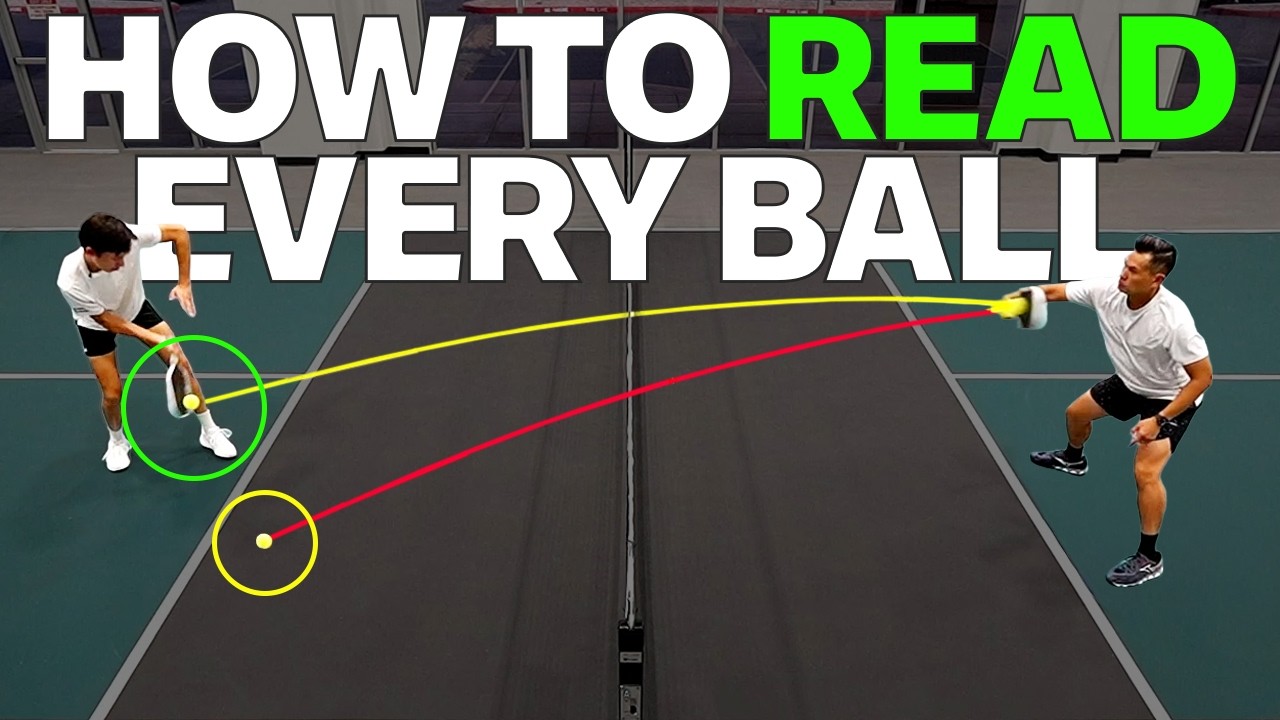
Drill 5: The Drop Shot
The drop shot is Jilly B's personal favorite warm-up shot. She points out that Anna Leigh Waters has been hitting fourth shot drop shots more frequently at the pro level, and it signals something important about where the game is going.
As defense gets better and paddle technology improves, you need a way to end points without always trying to keep opponents pinned at the baseline.
The drop shot is that answer.
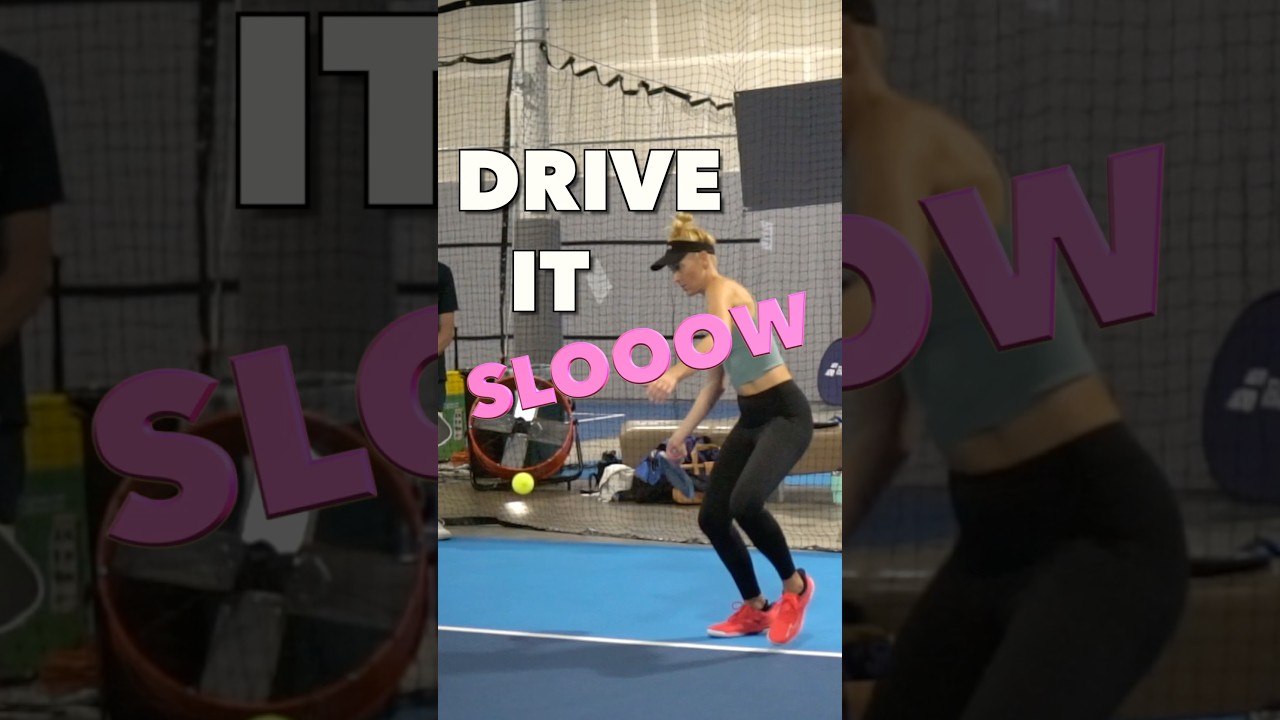
Here is the key mechanical detail: when she runs this pickleball warm-up drill, her first move is to get her head under the ball.
Nothing about her setup changes between a drive and a drop. That is the entire point.
She uses the drop shot as a diagnostic tool for her own body position.
If she finishes a session without hitting a single drop shot, she knows she was not getting low enough throughout the day.
The drop should feel like nothing changes. Same setup, same contact, same follow-through. Only the intention is different.
If your opponent can read when a drop is coming, you are telegraphing it with your body. These third shot drop fixes address exactly that problem.nie
Just like the ATP, the Ernie is almost entirely about recognition.
You are training your eyes to read the ball flight and your brain to commit before your body has to move.
Jilly B's warm-up protocol for the Erne mirrors the ATP drill: call yes or no the moment the ball leaves your partner's paddle.
Accept that you will get it wrong. Stay committed to the process.
She makes one thing very clear. She does not care if she faults. She does not care if she misses.
The warm-up is where failure is supposed to happen. If you are afraid to fail in warm-up, you will be afraid to attempt the shot when it actually matters.
Being scared of failure in warm-up is one of the core reasons 3.5 players stay stuck. The warm-up is literally the safest place to get it wrong. Use it that way.
 The Dink Media Team
How to Structure Your Full Warm-Up Routine
Do not try to cram all six into three minutes before a casual rec game. But if you are playing seriously, here is a realistic sequence:
- Start with controlled volleys: backhand to forehand, focusing on keeping balls soft and low
- Move to ATPs: ask your partner to feed wide balls, call it out loud each rep
- Work lobs: mix volley lobs and bounce lobs, aim for corners not middle
- Run one-two combos: slow first ball, hard second ball, switch roles after several reps
- Hit drop shots: feel your body position, confirm you are staying low through contact
- Finish with Ernies: same recognition drill as ATPs, call it out loud, commit to the attempt
The goal is not to make every shot. The goal is to have attempted every shot at least once before the first competitive point forces you to attempt it cold.
If you want to build a smarter overall practice structure around these drills, this guide for advanced players gives you a full framework to work with.
And if you are serious about fixing the shots that come up most in real matches, these tips for dinks, drops, and resets pair perfectly with the warm-up routine above.
The players who show up and immediately start competing without warming up specific shots are leaving real performance on the table.
You do not get a second chance to make your first few points feel natural. Warm up the right shots and you will feel the difference from point one.
Frequently Asked Questions
What is the most important pickleball warm-up drill for intermediate players?
The controlled volley is the most important warm-up drill for intermediate players because it trains ball control and decision-making at the same time. When you can feather a volley softly and hold off on attacking until the last second, your entire offense becomes harder to read. Everything else, speed-ups, drops, and lobs, builds on top of this skill.
How do I warm up an ATP before a match?
Ask your partner to intentionally feed you balls that drift wide near the sideline. As soon as the ball leaves their paddle, say out loud whether you think the ATP is there or not. Focus on getting the ball around the post before worrying about whether it lands in bounds.
Should I practice lobs during warm-up?
Yes, and most players never do. Warming up your lob tells you where your range is before the match starts, so you are not guessing mid-point. Aim for corners, mix volley lobs and bounce lobs, and track how your depth improves across several reps.
What is a one-two combo drill in pickleball?
A one-two combo drill is when one player hits a slow, deliberate speed-up as bait, then immediately follows with a harder put-away on the second ball. The partner practices blocking or resetting, not countering hard, so both players get quality reps. After several rounds, switch roles so both players train both sides of the exchange.
How do I know if I am getting low enough during a match?
Jilly B uses the drop shot as her personal diagnostic: if she finishes a session without hitting a single drop shot, she knows she was not staying low enough. Getting your head under the ball on a drop shot requires genuine body position, not just a wrist adjustment. If the drop shot feels unavailable, your base is too high.

Love Pickleball? Join 100k+ readers for free weekly tips, news & gear deals.
Subscribe to The Dink