
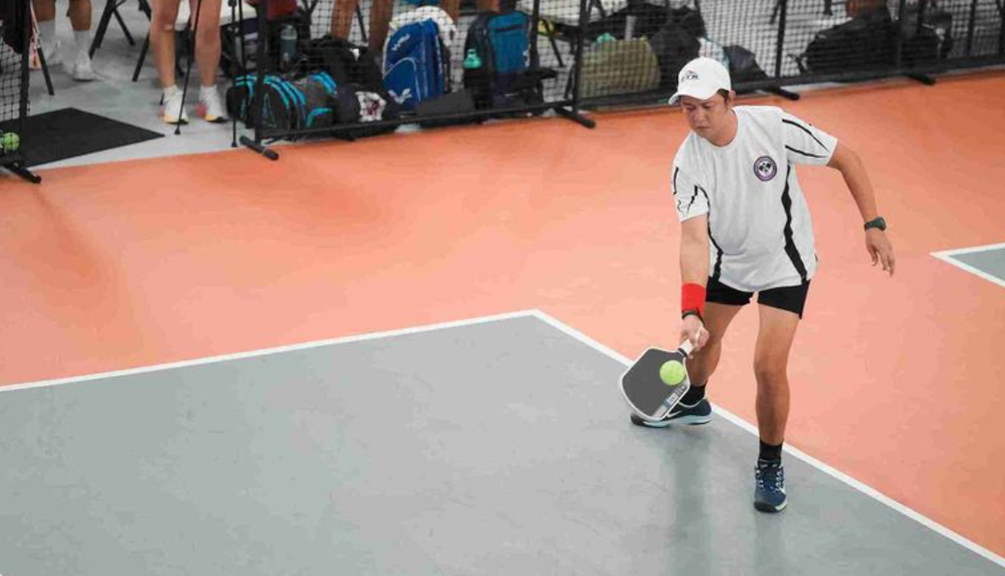
The lob pickleball technique is one of the most misused shots in the game, beautiful when it works, catastrophic when it doesn't. Learn the exact mechanics, timing, and placement that separate a point-winning lob from a free overhead for your opponent.
The lob pickleball technique is either a weapon or a liability, there is no middle ground.
Hit it right, and you're watching your opponent scramble back while you take control of the kitchen.
Hit it wrong, and you've just served up a chest-high overhead to someone who's been waiting for exactly that ball.
Most players treat the lob as a panic button. That's the problem.
The best lobbers in the game treat it as a chess piece, deployed with precision, disguised until the last second, and followed up with smart repositioning.
This guide breaks down how to actually execute the lob pickleball technique so it wins you points instead of handing them away.
Love pickleball? Then you'll love our free newsletter. We send the latest news, tips, and highlights for free each week.
What Is a Lob in Pickleball?
A lob in pickleball is a high, arcing shot designed to travel over your opponents' heads and land deep in their court, forcing them to retreat from the non-volley zone (the kitchen).
According to USA Pickleball's official rulebook, any shot that clears the net legally and lands in bounds is a legal play, including the lob.
There is no rule against lobbing; the challenge is purely tactical and mechanical.
The lob is most effective when your opponents are crowded at the kitchen line, leaning forward, or caught flat-footed.
A well-executed lob forces them to turn, retreat, and hit an overhead from deep in the court, a shot that even pros don't love.
A poorly executed lob sits up at head height and invites a put-away overhead that ends the point immediately.
Understanding the difference between a defensive lob (buying time when you're in trouble) and an offensive lob (deliberately creating a scoring opportunity) is the first step to making your opponents hit the more difficult shots.
When Should You Actually Use the Lob Pickleball Technique?
The lob works best in very specific situations. Use it wrong and you're giving away free points. Use it right and you're forcing chaos.
The green-light scenarios:
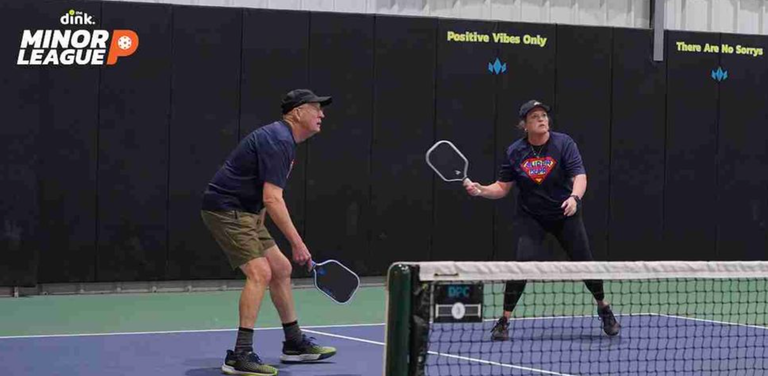
- Both opponents are pinched at the kitchen line, feet close together, weight forward. They physically cannot back-pedal fast enough to crush a lob if it clears them.
- The wind is at your back, outdoor pickleball with a tailwind is an ideal lob environment. The ball carries naturally.
- Your opponent has a weak overhead, scout this early. If they've shanked an overhead once, they'll do it again under pressure.
- You've been dinking cross-court repeatedly, a lob down the line after a cross-court dink pattern catches opponents mid-shift.
- Your partner in doubles needs time to reset, a defensive lob from a mid-court scramble can buy you both time to reorganize.
The red-light scenario: when you're in trouble at the kitchen and just want out.
A panic lob from below net height, hit without disguise, lands mid-court and gets punished.
Check the most common mistakes amateur players make, the panic lob consistently appears.
The Mechanics Behind a Clean Lob Pickleball Technique
This is where most guides fall short. They tell you when to lob but skip the how. The mechanics are specific and non-negotiable.
What's the Correct Grip and Swing Path for a Pickleball Lob?
Use a continental or eastern grip, the same grip you'd use for a dink. Do not change your grip when you decide to lob.
Grip changes telegraph your intention to any opponent watching your paddle hand.
The swing path is low-to-high with a scooping motion. Think of lifting the ball rather than pushing it.
Your paddle face should be open (angled slightly skyward) at contact, and your follow-through should finish above your shoulder.
The key contact point: make contact in front of your body, not beside it.
Contact beside your hip produces a flat shot that doesn't clear your opponents; contact in front lets you generate the upward trajectory you need.
A biomechanics study published in the Journal of Sports Sciences (2024) found that in racquet sports, shots requiring upward trajectory depend significantly on racket/paddle face angle at contact, not swing speed, meaning you can lob effectively without hammering the ball.
Soft, controlled, and directional is the formula.
 The Dink Media Team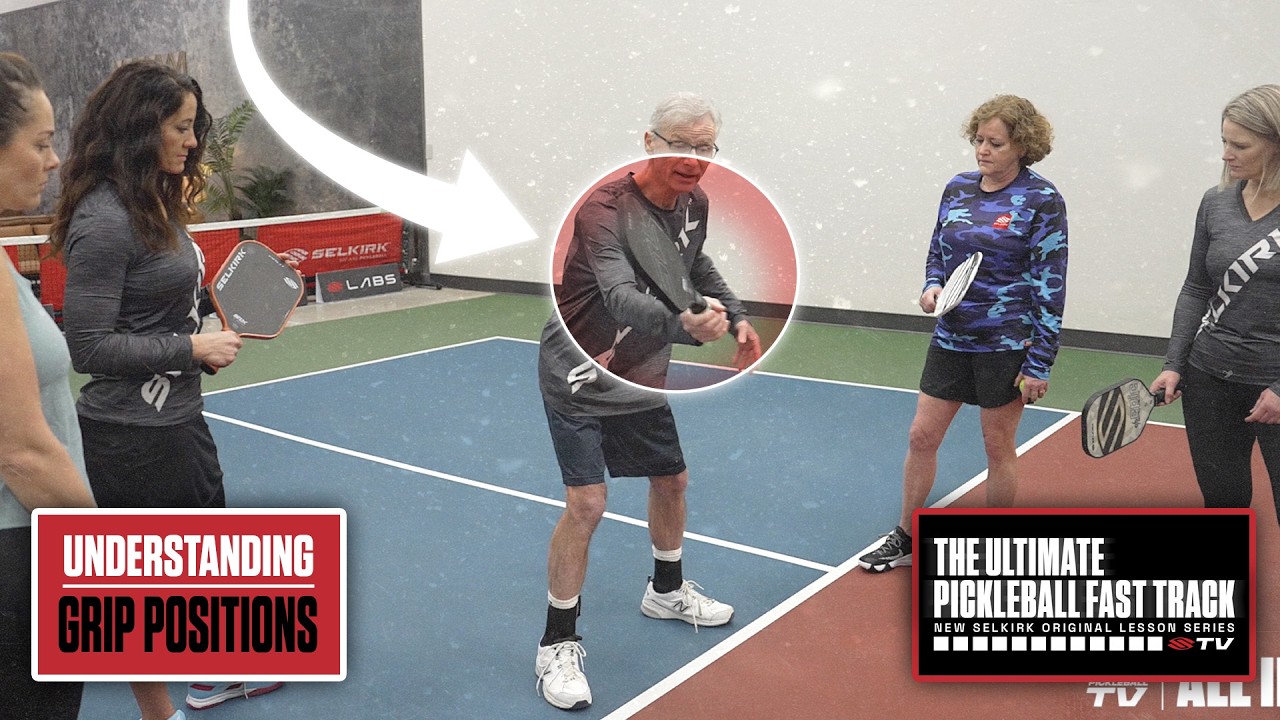
What's the Difference Between a Flat Lob and a Topspin Lob?
This distinction is something advanced players keep to themselves, but it's worth knowing.
The flat lob is the standard: open paddle face, smooth arc, relies entirely on placement and height. It's easier to execute and works well against opponents with poor overhead footwork.
The topspin lob is the advanced version: you brush up the back of the ball with a faster swing, adding topspin that causes the ball to dip quickly after clearing your opponents.
The topspin lob is harder to execute but significantly harder to retrieve. It drops faster, bounces higher, and pushes opponents further back.
To hit it, accelerate the paddle face from low-to-high while brushing across the back of the ball, think of the same motion as a topspin groundstroke in tennis, scaled down.
The swing volley and the topspin lob actually share a similar hip-and-shoulder rotation pattern. If you've worked on one, the muscle memory transfers.
The Dink Media Team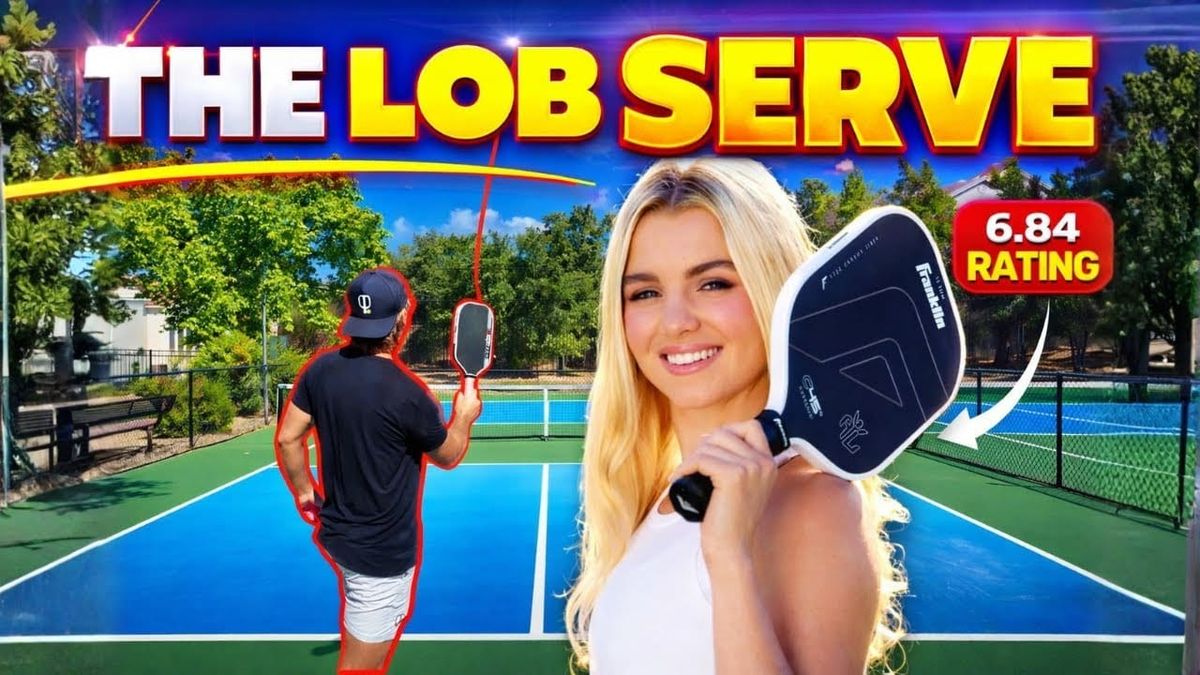
How High Should Your Lob Be?
The target height for a lob pickleball technique is 1 to 2 feet above your opponents' outstretched reach.
That's typically 10 to 13 feet off the ground at its apex, depending on your opponents' height.
Here's the math: a player standing at the kitchen line with a paddle extended overhead can reach roughly 9 feet.
Your lob needs to clear that and still have enough distance to land deep, ideally within 3 feet of the baseline.
Too high and it floats, giving a running opponent time to get under it. Too low and it gets picked off.
The safest placement target is the backhand shoulder side of the deeper opponent.
Most players hit overheads better on their forehand, and fewer have the footwork to run around a wide backhand overhead.
Targeting the backhand side is a strategic choice, not just a safety play.
Aim cross-court in doubles for two reasons: the diagonal gives you more court distance to work with (longer trajectory = more margin for error), and cross-court lobs make it harder for both opponents to cover simultaneously.
Doubles court positioning and placement are almost always dictated by angles.
The Dink Media Team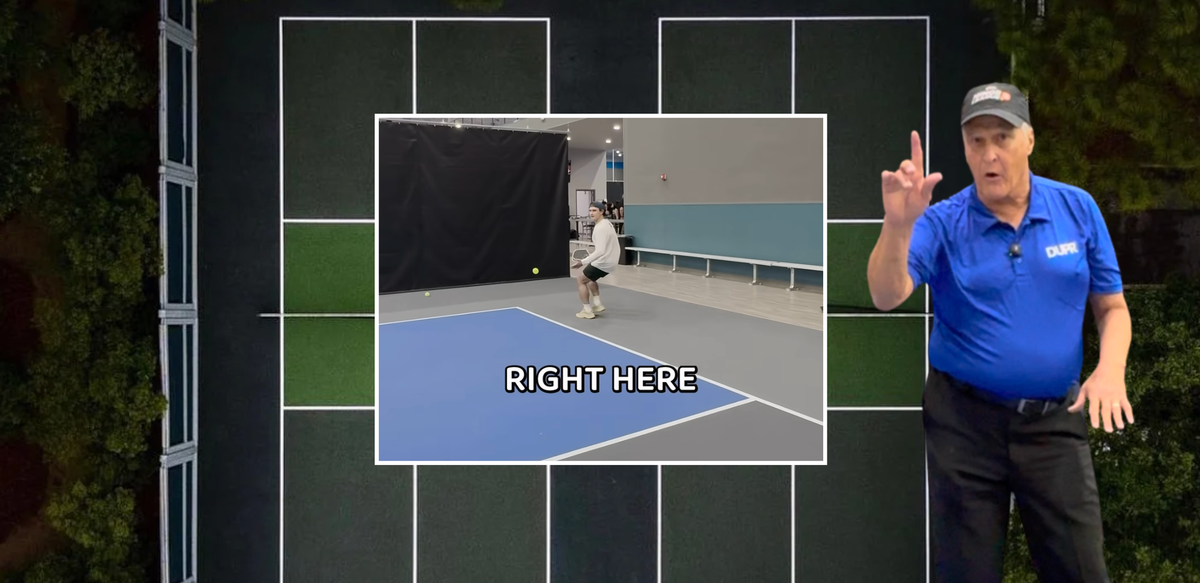
The One Thing Most Players Skip: Disguise
A lob without disguise is a lob that gets smashed. Full stop.
Disguise is the reason great lobbers are dangerous and average lobbers are predictable. The setup should look identical to a dink. Same stance.
Same paddle position. Same weight distribution. The only thing that changes is the swing path at the last possible moment.
Here are the disguise cues that work:
- Soft hands early, accelerate late, keep your grip pressure low through the backswing, then commit to the lift at contact. Opponents read grip tension; don't give them anything.
- Neutral body position, don't lean back before you lob. Leaning back telegraphs the shot. Stay upright and use your wrist and forearm to generate the upward angle.
- Same eye contact point, look at the ball in front of you, not toward where you're trying to send it. Players often glance deep or up right before lobbing. Train yourself out of this habit.
Pickleball deception at the kitchen applies the same principles, soft hands, neutral stance, last-second commitment, whether you're dinking, speeding up, or lobbing.
The Dink Media Team
What Do You Do After You Lob?
Most players stand and watch. That is exactly wrong.
The moment you release the lob, your job is to move forward. If the lob is good, your opponents are retreating.
You should be advancing toward the kitchen line to put away anything they can scrape back.
Good positioning at the kitchen after a successful lob is the difference between winning the point and losing the reset.
If the lob is short or your opponents read it, move laterally to cover the overhead angle.
A down-the-middle overhead after a lob is the most common response, position yourself to absorb or redirect it rather than getting pinned on your heels.
In doubles: communicate immediately after a lob. The player who lobbed takes the next ball if it comes back short.
Their partner holds the kitchen. No one scrambles into the same space. Teamwork and simple tip execution is what separates good doubles teams from reactive ones.
The Dink Media Team
Lob Pickleball Technique Drills to Build Confidence
Knowing the theory is step one. Reps are step two.
Drill 1: The Mirror Drill Have a partner feed you dink-height balls at the kitchen. Hit 10 dinks, then lob on the 11th without changing your setup.
Your partner's job is to call out any change in stance before you lob. Repeat until they can't predict it.
Drill 2: Depth Targeting Place a cone or bag 3 feet from the baseline on the backhand side. Hit 20 lobs and count how many land within the target zone.
Solo drills help you groove the motion before adding the pressure of a live point.
Drill 3: Lob-and-Advance Hit a lob from the kitchen, then immediately sprint forward to reach the kitchen line before the ball lands.
If you can't get there in time, your lob is too short, adjust depth and work backward from there.
The Dink Media Team
Key Takeaways
- The lob pickleball technique works when both opponents are crowded at the kitchen, when you've set up the pattern with dinks, or when you've identified a weak overhead.
- Mechanics: open paddle face, low-to-high swing, contact in front of the body, finish above the shoulder.
- The topspin lob drops faster and is harder to retrieve than a flat lob, worth adding to your game.
- Target height: 1 to 2 feet above your opponents' maximum reach, landing within 3 feet of the baseline.
- Disguise is non-negotiable. Soft hands, neutral stance, last-second acceleration.
- After you lob, move forward, don't stand and watch.
Frequently Asked Questions
What is the lob pickleball technique and when should you use it?
The lob pickleball technique is a high, arcing shot hit over your opponents' heads to force them back from the kitchen line. Use it when opponents are crowded at the kitchen, leaning forward, or when you've identified a weak overhead on either side. It's most effective as a tactical tool, not a panic shot.
How high should a lob be in pickleball?
A lob should peak at roughly 10 to 13 feet, clearing your opponents' maximum outstretched reach by 1 to 2 feet. It should land within 3 feet of your opponents' baseline. Too high and it floats, giving them time to recover. Too low and it sits up for an easy overhead.
What is the difference between a flat lob and a topspin lob in pickleball?
A flat lob uses an open paddle face with a smooth arc, relying on placement and height. A topspin lob brushes up the back of the ball, generating topspin that causes the ball to dip quickly after clearing the opponent. The topspin lob is harder to execute but drops faster, bounces higher, and is significantly harder to retrieve.
How do you disguise a lob in pickleball so opponents can't read it?
Keep your grip pressure soft, maintain a neutral body position (don't lean back), and use the same setup as a dink. Only change your swing path at the last possible second. Avoid glancing deep or upward before contact, opponents read body cues more than paddle position.
What should you do immediately after hitting a lob in pickleball?
Move forward toward the kitchen line the moment you hit the lob. If the lob is good, your opponents are retreating and you want to be at the net ready to finish. If the lob is short, move laterally to cover the overhead angle. In doubles, communicate roles immediately so both players don't converge on the same space.
Love Pickleball? Join 100k+ readers for free weekly tips, news & gear deals.
Subscribe to The Dink