How to Cover a Pickleball Lob: The 'Open the Door' Footwork That Keeps You Safe
Covering a pickleball lob doesn't have to be dangerous. Learn the "open the door" footwork technique that keeps you safe while improving your game, plus four other essential tips for 50+ recreational players.
The pickleball lob is becoming increasingly common in recreational play. What makes it so dangerous isn't the lob itself, but how most players try to cover it.
Backpedaling while looking up is the most dangerous thing you can do on a pickleball court, according to Tony Roig of In2Pickle.
It results in broken wrists, broken arms, and head trauma from hitting the court.
But here's the good news:
You don't have to backpedal. There's a better way.
Love pickleball? Then you'll love our free newsletter. We send the latest news, tips, and highlights for free each week.
1. The "Open the Door" Footwork: Your Safest Move Against a Pickleball Lob
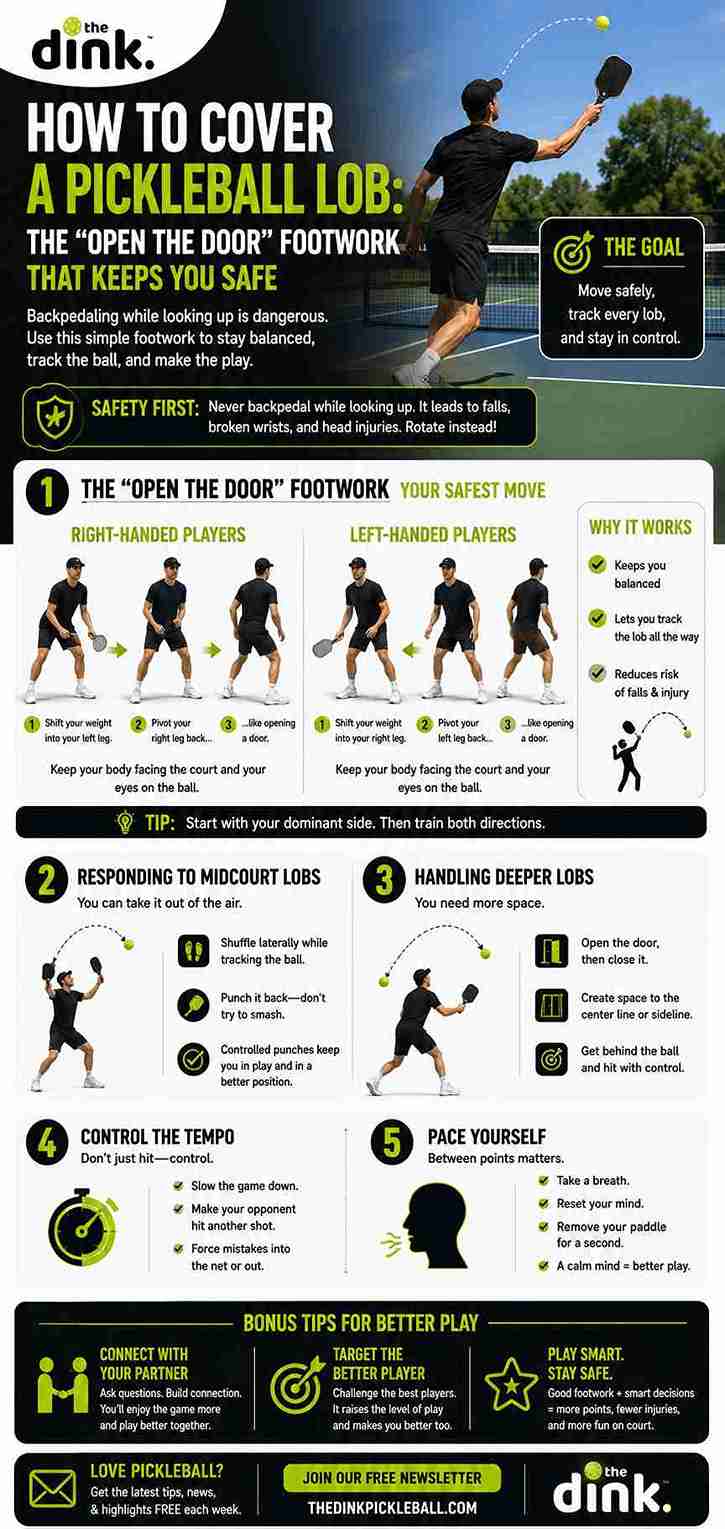
The foundation of safe pickleball lob coverage is what Roig calls the "open the door" footwork.
This technique completely changes how your body moves when you need to retreat and track a lob overhead.
Right-Handed vs. Left-Handed: How to Execute the Pivot
Here's how it works for right-handed players:
- Shift your weight into your left leg,
- Then pivot your right leg back like you're opening a door.
You're not backpedaling. You're rotating.
This subtle shift in mechanics keeps your body facing the court and your eyes on the ball.
Left-handed players do the opposite: shift weight into your right leg and pivot your left leg back. The principle remains the same regardless of your dominant hand.
Building Confidence with the Pickleball Lob Pivot
When you're first learning this technique, focus on your dominant side going back.
Right-handed players should practice bringing the right arm and paddle back with the pivot. Left-handed players should master the opposite direction.
Eventually, you'll want to move both ways, but start with what feels natural.
Improving your pickleball footwork starts with committing to one direction at a time before you try to make the movement bilateral.
2. Responding to Midcourt Lobs
Once you've mastered the pivot, your next move depends entirely on the type of pickleball lob you're facing.
Not all lobs are created equal, and your response should reflect that.
Why a Controlled Punch Beats a Big Smash Every Time
For a midcourt lob that you can take out of the air, shuffle laterally while tracking the ball.
From there, the recommendation is simple: punch it back. Avoid big smashes from this position.
They look great, but they don't actually accomplish much once you're off the line. A controlled punch keeps the ball in play and gives you better court positioning.
If you want to master overhead smashes for when you're set up and ready, that's a separate skill worth building in parallel.
 The Dink Media Team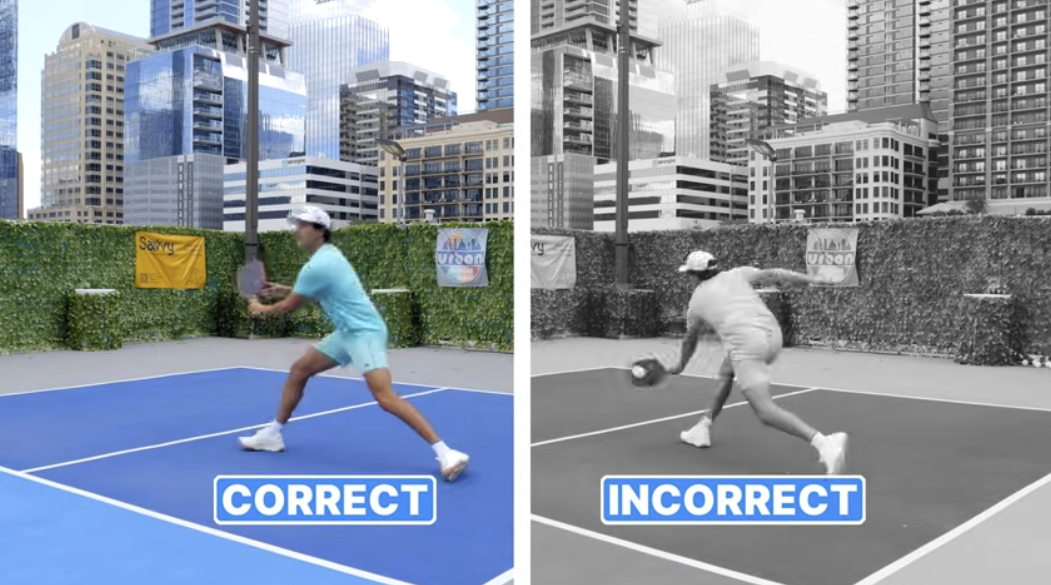
3. Handling Deeper Pickleball Lobs
For a deeper pickleball lob, open the door and then close it so you can move forward toward the back of the court.
You need to open up space either toward the center line or the sideline so you can get around the ball and hit it from behind.
How to Create Space and Track the Pickleball Lob Effectively
Running straight with the ball going over your head makes it nearly impossible to track. Opening up space lets you see the ball the entire way.
Learning to recognize your court position while moving is what separates players who scramble from players who stay composed.
And composure under a lob is exactly what you're training for.
 Alex E. Weaver
4. Controlling the Tempo of the Rally
While covering a pickleball lob is crucial, it's just one piece of the puzzle for recreational players.
Controlling the tempo of the rally is equally important.
Instead of just flicking the ball around in a firefight, slow it down.
Take control with tempo and force your opponent to make a mistake into the net or out of bounds.
This is especially valuable in recreational play where consistency matters more than power.
 The Dink Media Team
5. Pacing Yourself Between Points
If you're rushing around, trying to figure out who's serving, and worrying about the score constantly, you're probably not playing your best.
Take a moment for yourself between rallies. Allow your mind to reset.
Remove your paddle from your dominant hand for a second, take a breath, and slow yourself down.
The better you control your pace, the better you control your mental state.
A proper 6-second mental reset between points can flip a whole session from frustrating to locked-in.
 The Dink Media Team
Bonus Tips: Connection and Smart Targeting
Connecting with your partner is surprisingly powerful. Ask them a question. Get to know them a little bit.
Your experience that day will be richer, you'll establish better bonds with other players, and you'll have a better pickleball day overall.
Finally, don't target the weaker player. Resist that temptation. Instead, target the better player.
This ensures they come back stronger, upping the level of play in your community. A better player challenges you more and makes you improve faster.
For a complete breakdown of how to target opponents at the right spots, that's a natural next read.
Why 50+ Players Need a Different Approach to Pickleball Lob Defense
Recreational pickleball after 50 isn't about grinding.
It's about enjoying the game, staying safe, and improving.
This mindset shift changes everything about how you approach pickleball lob coverage and playing in general.
The "open the door" footwork exists specifically because 50+ players need to protect their bodies.
Backpedaling puts you at risk. Rotating keeps you stable.
The difference between these two movements could mean the difference between a fun afternoon and a trip to the emergency room.
For more on staying mobile without putting your body at risk, the essential tips for senior pickleball players to move safely and play better is worth bookmarking.
And if you're specifically looking for lob strategies from the offensive side, two offensive lob strategies every senior pickleball player should know rounds out your complete lob game on both ends.
Understanding pickleball mechanics for seniors — including grip, footwork, and net play — is the logical next read once you've nailed the lob defense fundamentals.
Putting It All Together on the Court
The real magic happens when you combine all five tips into your actual play.
Covering a pickleball lob safely using the "open the door" footwork is just the beginning.
Add tempo control, mental pacing, partner connection, and smart targeting, and you've got a complete recreational pickleball game.
Start with the footwork. Practice the pivot in both directions until it becomes automatic. Then layer in the other elements as you play.
Don't try to master everything at once. Let each tip build on the previous one.
The ultimate guide to lobbing in pickleball is also worth a read once you're comfortable on defense, because understanding how lobs are constructed makes you significantly better at reading and covering them.
The goal isn't to become a professional player. The goal is to have more fun, stay healthy, and keep improving. That's what recreational pickleball is really about.
Frequently Asked Questions
What Is the Safest Way to Cover a Pickleball Lob?
The safest way to cover a pickleball lob is with the "open the door" footwork technique. Instead of backpedaling, you rotate your back leg like you're opening a door, which keeps your body stable and your eyes on the ball throughout the entire movement.
What's the Most Dangerous Mistake When Covering a Pickleball Lob?
Backpedaling while looking up is the most dangerous thing you can do on a pickleball court. It puts you at risk for broken wrists, broken arms, and head trauma from hitting the court. The "open the door" footwork eliminates this risk entirely by having you rotate instead of backpedal.
How Long Does It Take to Master the "Open the Door" Pickleball Footwork?
Most players can grasp the basic concept in a few practice sessions. Making it automatic takes consistent practice over several weeks. Start by focusing on your dominant side going back, then gradually add the opposite direction once you feel comfortable.
Should I Always Try to Cover a Lob in Recreational Play?
No. You always have the option of letting the pickleball lob go. If you don't feel confident covering it safely, let it bounce and reset. As you build your footwork confidence, you can start covering more lobs. Safety always comes first.
How Does Controlling Tempo Help in Recreational Pickleball?
Slowing down the rally and controlling tempo forces your opponent to make mistakes. In recreational play, consistency matters more than power, and by dictating pace, you're more likely to win points through your opponent's errors rather than your own aggressive shots.

Love Pickleball? Join 100k+ readers for free weekly tips, news & gear deals.
Subscribe to The Dink