Kitchen Reestablishment After Great Defense: Pro Jack Sock's Strategy
After an incredible defensive sequence, the temptation to finish the point with a hero shot is real. But kitchen reestablishment is the smarter play, according to pro player Jack Sock, who breaks down exactly why discipline beats aggression in transition.
You just pulled off an incredible defensive sequence. Your opponents threw everything at you, and somehow, you're still in the point.
Now comes the moment that separates good players from great ones: what do you do next?
Kitchen reestablishment is the answer, and it's not as flashy as a winner.
In a recent point analysis from Selkirk TV, pro player Jack Sock walks through exactly why dropping to the middle and resetting the point is often smarter than going for a low-percentage speed-up when you're off-balance.
Love pickleball? Then you'll love our free newsletter. We send the latest news, tips, and highlights for free each week.
The Point That Started It All
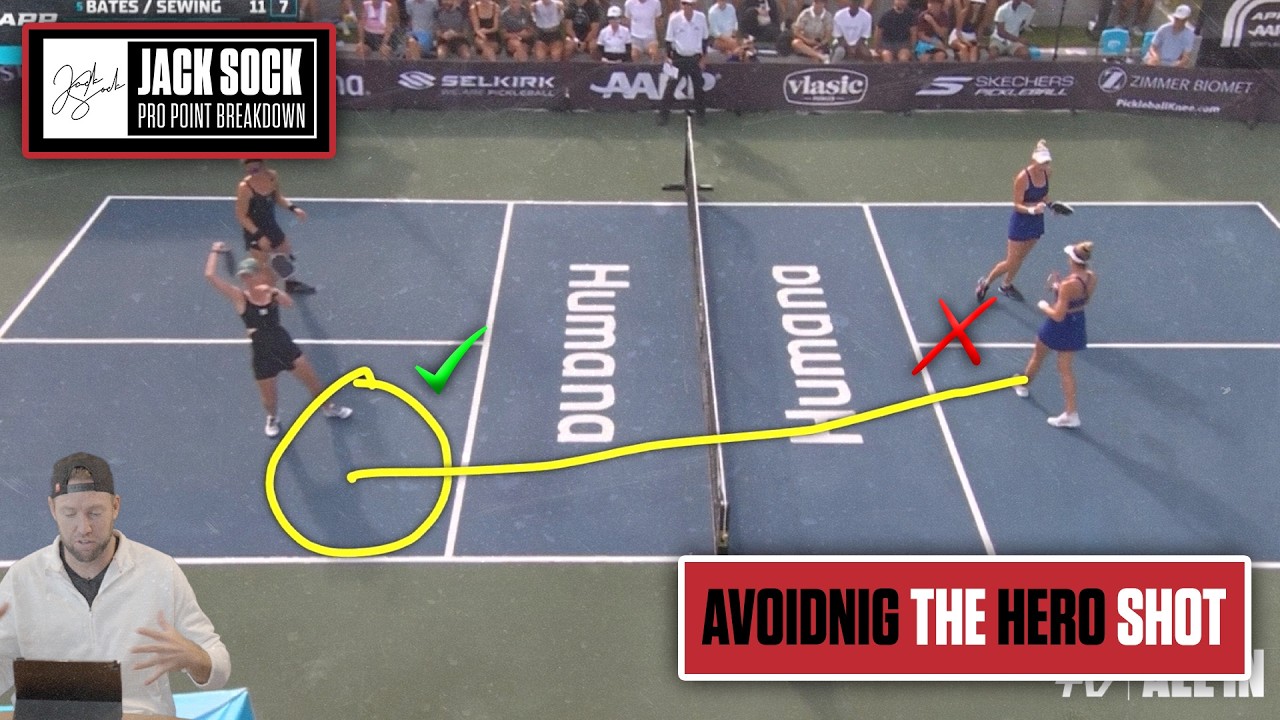
In the women's doubles match Sock analyzed, Harris and Maddox faced off against Shelby Bates in a rally that showcased both elite defense and a critical decision-making moment.
The point began with a hybrid drive serve, followed by a high drop. The ladies in black went straight to defense, scrambling to get the ball up from a tough position.
What happened next was textbook defensive pickleball: a great read on the overhead, a solid angle, and a good roll.
The point was still alive, but one player found herself in a precarious spot. She was off-balance, out of position, and facing an opponent sitting on the ball at the net.
Why the Hero Shot Fails (And Why Kitchen Reestablishment Wins Instead)
Here's the thing about being off-balance in the transition zone: your options are limited, but not in the way you think.
When Sock broke down this moment, he identified the exact mistake that costs players points at every level.
The player in question went for what Sock calls a "hero shot" — a low-percentage speed-up attempt from an awkward position.
On paper, it makes sense. You've defended well, you're still in the point, so why not finish it?
The problem is that your opponent is already positioned at the net, waiting for exactly this kind of aggressive response.
"It's hard to take this ball from over here and try to reach and speed up straight ahead of you when they're kind of sitting on it," Sock explains in the video.
When you're off-balance and your opponent controls the net, the math doesn't work in your favor. You're reaching, you're stretched, and they're ready.
Why Your Pickleball Speed-Ups Fail in the Transition Zone
According to research into why pickleball speed-ups fail, the issue almost always comes down to position. Attacking from weakness is the fastest way to hand your opponent the point.
Understanding the pickleball transition zone and when to play safe vs. when to attack is the foundation of sound defensive strategy. Knowing when not to attack is just as important as knowing how to attack.
 The Dink Media Team
Kitchen Reestablishment: The Smarter Play After Great Defense
So what should you do instead? Kitchen reestablishment is the answer, and it requires something that doesn't always feel natural in the moment: patience.
Rather than trying to end the point from a bad position, Sock advocates for dropping the ball to the middle of the court and resetting.
This accomplishes several things at once.
- First, it gets you back into the kitchen, where you're supposed to be.
- Second, it neutralizes your opponent's net advantage by forcing them to react to a soft shot instead of punishing your aggression.
- Third, and most importantly, it gives you a chance to start the point over from a position of strength.
"I like to see you get reestablished in the kitchen," Sock says. "Maybe drop middle instead of trying to speed up from the transition zone when the girl in front of you is sitting on it."
This isn't just about one point. It's about understanding the geometry of pickleball.
When you're in the transition zone and your opponent controls the net, you're playing their game. By dropping to the middle and resetting, you're playing your game:
- A game where both players are at the kitchen line.
- A game where the point is truly neutral.
- A game where your next shot can be aggressive from a position of balance.
How to Perfect the Midcourt Forehand Reset for Kitchen Reestablishment
The reset shot is the engine behind successful kitchen reestablishment. Perfecting the midcourt forehand reset in five minutes gives you a concrete drill to build the muscle memory you need.
It's not the flashiest shot in pickleball, but it might be the most valuable.
The pickleball reset is widely considered the single skill that takes players from 3.5 to 5.0. That's not an accident. It's the direct result of learning when to drop and reset rather than attack.
Alex E. Weaver
The Discipline Required to Win Long Rallies Through Kitchen Reestablishment
What makes this strategy so difficult to execute is that it requires discipline. After defending brilliantly, your instinct is to finish.
Your adrenaline is up. You've earned the right to attack, or so it feels.
But pickleball strategy at the highest level isn't about earning the right to attack. It's about recognizing when the odds are in your favor and when they're not.
Sock's analysis reveals that the best players understand this distinction.
"After a great defensive point there, I like to see you get reestablished one more time up there, start the point over," Sock says.
This isn't settling. It's not playing scared. It's playing smart.
The long game in pickleball is won by players who can control their emotions and stick to fundamentals. As NBC Sports has covered in its pickleball pro breakdowns, the mental discipline to reset instead of attack is a defining trait of elite players.
A hero shot might win you one point. Kitchen reestablishment wins you matches, because it's a repeatable, high-percentage strategy that works over time.
Smart Shot Decisions Beat Power in Advanced Pickleball
The principle Sock is teaching here goes beyond this one point. Smart shot decisions beat power in advanced pickleball — and nowhere is that more true than in the transition zone, where shot selection determines whether you survive or give the point away.
Recognizing your court position to hit the right shot every time is the companion skill to kitchen reestablishment. Position and shot selection are inseparable.
Heads up: hundreds of thousands of pickleballers read our free newsletter. Subscribe here for cutting edge strategy, insider news, pro analysis, the latest product innovations and more.
What This Means for Your Game
If you're working on your transition zone play, this lesson from Sock is gold.
The next time you find yourself off-balance in the middle of the court with an opponent waiting at the net, remember: you don't have to finish the point right now.
- Drop to the middle.
- Get back to the kitchen.
- Reset the point.
- Then attack from a position where you actually have the advantage.
This is the kind of defensive pickleball strategy that separates players who win occasionally from players who win consistently. It's not flashy, but it works.
As CBS Sports has reported on the mental side of competitive pickleball, the players who rise to the top are almost always the ones who master the reset before they master the attack.
Intermediate players often fall into transition zone traps that kitchen reestablishment directly solves. Learning to drop middle from a compromised position is one of the fastest ways to level up your game.
Frequently Asked Questions
What is kitchen reestablishment in pickleball?
Kitchen reestablishment is the process of returning to the kitchen line (the no-volley zone) after being pushed back into the transition zone during a rally. It typically involves hitting a soft, neutral shot like a drop to the middle that allows you to move forward and regain your position at the net, resetting the point to a neutral state.
When should you drop to the middle instead of speeding up?
You should drop to the middle when you're off-balance, out of position, or when your opponent already controls the net. If you're in the transition zone and stretched, a speed-up attempt is low-percentage because a middle drop is softer, harder to attack, and gives you time to recover your position and complete kitchen reestablishment.
Why is patience important in pickleball strategy?
Patience allows you to avoid low-percentage shots and stick to high-percentage plays. In pickleball, the player who makes fewer mistakes often wins. By resetting points and playing from positions of strength through kitchen reestablishment, you increase your odds of winning long-term, even if it means sacrificing the occasional flashy finish.
How do you practice kitchen reestablishment?
Practice by working on soft shot placement from the transition zone, focusing on drops to the middle of the court. Drill scenarios where you're pushed back and must recover, and play points where you intentionally reset rather than attack, building the habit and confidence to execute this strategy in matches.
What's the difference between a hero shot and a smart aggressive shot in pickleball?
A hero shot is low-percentage and taken from a position of weakness (off-balance, opponent at net). A smart aggressive shot is high-percentage and taken from a position of strength where you control the net or have a clear opening. The difference is positioning and odds, not aggression itself.

Love Pickleball? Join 100k+ readers for free weekly tips, news & gear deals.
Subscribe to The Dink