Why Your Pickleball Dinks Fall Apart in Games (And the One Fix That Works)
Your pickleball dink works perfectly in warm-ups but falls apart the moment a game starts. This article breaks down the real cause and gives you a simple fix you can train at home today.
You step up to the kitchen line in warm-ups and your pickleball dink is dialed in. Ball after ball clears the net cleanly, drops softly, lands exactly where you want it.
Then the game starts.
Thirty seconds later you are hitting them into the net, popping them up, and wondering what just happened to the stroke that felt so natural moments ago.
This breakdown is one of the most common and frustrating problems in recreational pickleball, and the fix is simpler than you think.
The coaching breakdown below comes from Still Got Game on YouTube, and it cuts straight to the root cause most players never identify.
Love pickleball? Then you'll love our free newsletter. We send the latest news, tips, and highlights for free each week.
Your Swing Is Not the Problem
Stop blaming your technique first. The swing itself is rarely what falls apart when you move from warm-ups to live play.
Think about throwing a ball underhand into a bucket across the room. You do not need to think about grip pressure, wrist position, or follow-through.
You just throw it and it goes in. That same instinct is alive in your pickleball dink when the ball comes straight back to you.
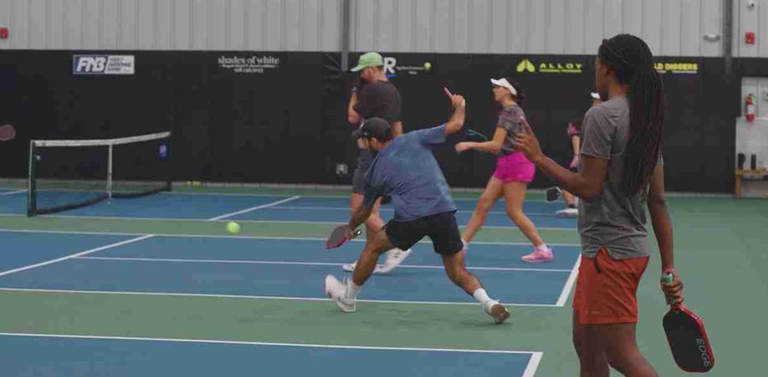
The reason warm-ups feel so easy is that the ball keeps returning directly to your body. You are balanced, your eye line is set, and your swing path is consistent.
Now think about what changes the moment a real rally starts.
Balls arrive at different heights, angles, and speeds, and they come to your left, your right, short, and wide.
That is where everything falls apart, and it has nothing to do with your swing mechanics.
What Actually Goes Wrong When the Game Starts?
The moment you reach for a ball instead of moving to it, your body has to compensate in ways it has never practiced.
When you extend your paddle away from your body to chase a ball, the paddle angle changes.
Your weight shifts forward or sideways in a way that kills your ability to produce a consistent pickleball dink.
Your muscles do not have the memory for that position, so they improvise. The improvisation produces a pop-up or a net ball.
Even if you get the ball over from a reaching position, you are now off balance and out of place for the next shot.
Your opponent can put the very next ball past you before you recover.
This is why you see wide dink mistakes show up so consistently at the recreational level.
Players are reaching constantly and never building the footwork habit that solves the problem at its source.
The Real Fix: Body Behind the Ball, Every Time
When the ball moves, your body moves. That is the entire principle.
It sounds obvious, but almost no recreational player actually does it consistently.
Watch any professional at the kitchen and you will notice they are always moving their feet before they swing. Feet first, paddle second.
They seem to have all the time in the world because they have already arrived at the ball before they need to hit it.
Their body is behind the shot, not chasing it.
Compare that to the average 3.5 player who spots the ball moving wide and immediately extends the paddle arm to reach it.
The feet barely move, and the body stays planted while the arm does all the work.
That is the habit killing your pickleball dink consistency.
If you want to understand why pros at the kitchen look so unhurried, this is the answer.
It is not better hands. It is better footwork fundamentals that put them in position before contact every single time.
 The Dink Media Team
How Do You Actually Move to the Ball?
Here is the movement system broken down by direction. Keep it simple and you will start building the right habits fast.
Forehand Side Pickleball Dink Movement
- Ball comes forward: step forward with your front foot
- Ball goes wide: step out to the side to get your body behind it
- Ball goes back: step back before swinging
- Ball is very wide or fast: use a shuffle step first, then step into the ball
Backhand Side Pickleball Dink Movement
- Ball comes forward: step in toward the ball
- Ball goes wide: step out to bring your body square to the contact point
- Ball drops short: step in and stay low rather than bending at the waist
- Ball is far wide: shuffle step to close ground, then step into the shot
The goal in every case is the same.
Get your body positioned so that the contact point sits roughly at your lead knee and your weight is balanced behind the shot.
That is the position your warm-up dinks come from naturally. That is the position you need to recreate in live play.
You do not need a complicated footwork pattern, and you do not need small rapid steps like a tennis player scrambling for a passing shot.
You need economical, decisive movement to one spot where the ball meets your body rather than your body reaching for the ball.
This connects directly to what makes split step timing so important.
The split step is what loads you to move in any direction the moment you read where the ball is going.
 The Dink Media Team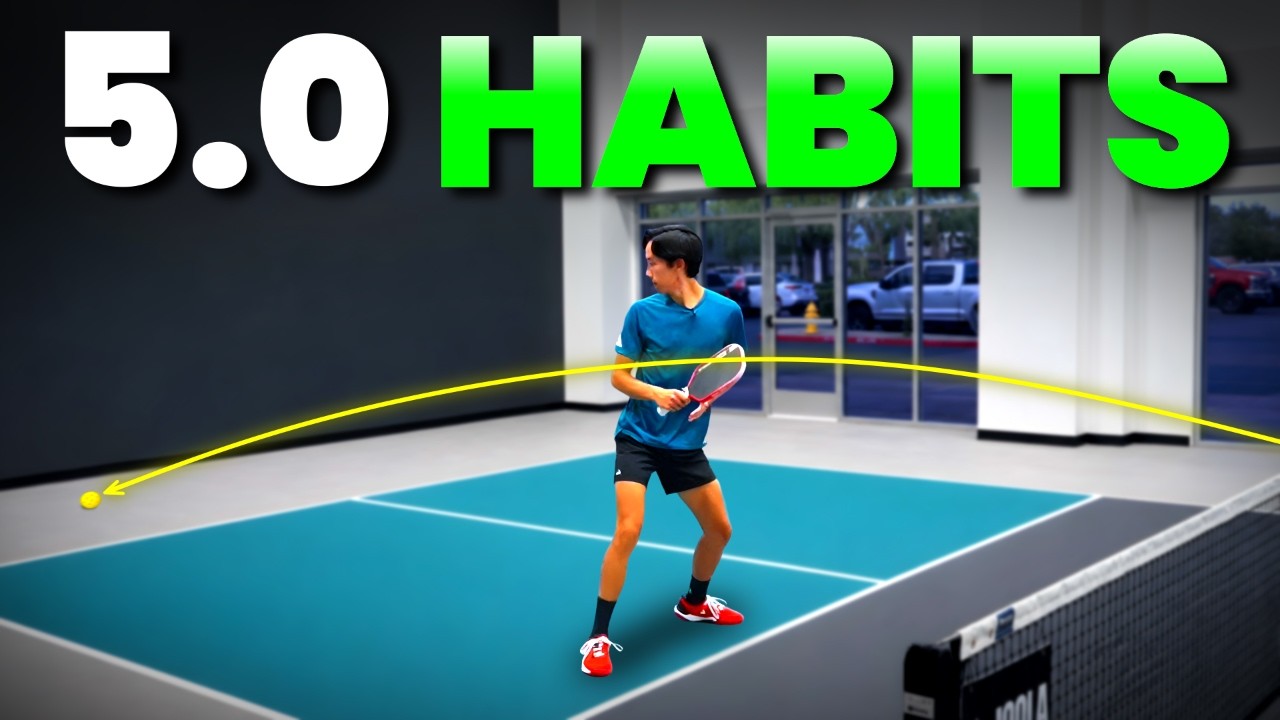
Why Pressure Is Not the Main Culprit
A lot of players blame nerves for the warm-up versus game gap. It makes intuitive sense: no pressure in warm-ups, pressure in a real game.
But here is the problem with that theory. You have probably popped up a dink while leading 10-0 with the game completely stress-free.
Pressure explains a small fraction of the breakdown. The body position problem explains the rest.
When you are relaxed and the ball comes straight to you, your natural underhand throwing instinct takes over and you execute beautifully.
The moment you have to move and you choose reaching over stepping, that instinct gets overridden by mechanics your body has never properly trained.
Fixing this starts with accepting that your footwork is the priority, not your swing. Once your body is in position, the swing takes care of itself.
This is consistent with what coaches teach when working on forehand dink consistency at any level.
 Eric Roddy
The At-Home Drill That Builds This Fast
You do not need a court or a partner to start fixing this today. Here is the drill that builds the muscle memory for body-behind-the-ball positioning.
- Step 1: Bare hands, no paddle. Grab a ball and stand facing a wall. Throw the ball against the wall at different angles so it bounces back to your left, then your right, sometimes short. Move your feet to get your body behind each catch. Catch with your left hand when the ball goes left, right hand when it goes right. Your catching hand should be roughly at knee height, which mirrors where your paddle contact should happen.
- Step 2: Throw faster and wider. Once the movement feels natural, throw the ball harder so it comes back at sharper angles and faster speeds. Keep moving your feet first every single time. The goal is to make footwork your automatic first response, not an afterthought.
- Step 3: Add the paddle. Now do the same drill with your paddle. Hit the ball into the wall at angles, move your feet to get behind the bounce, and hit it again from a balanced position. Focus entirely on getting your body squared up before contact, not on the quality of the hit.
This is exactly the kind of solo practice that at-home training is built for. No court required, and you can do it in fifteen minutes.
 The Dink Media Team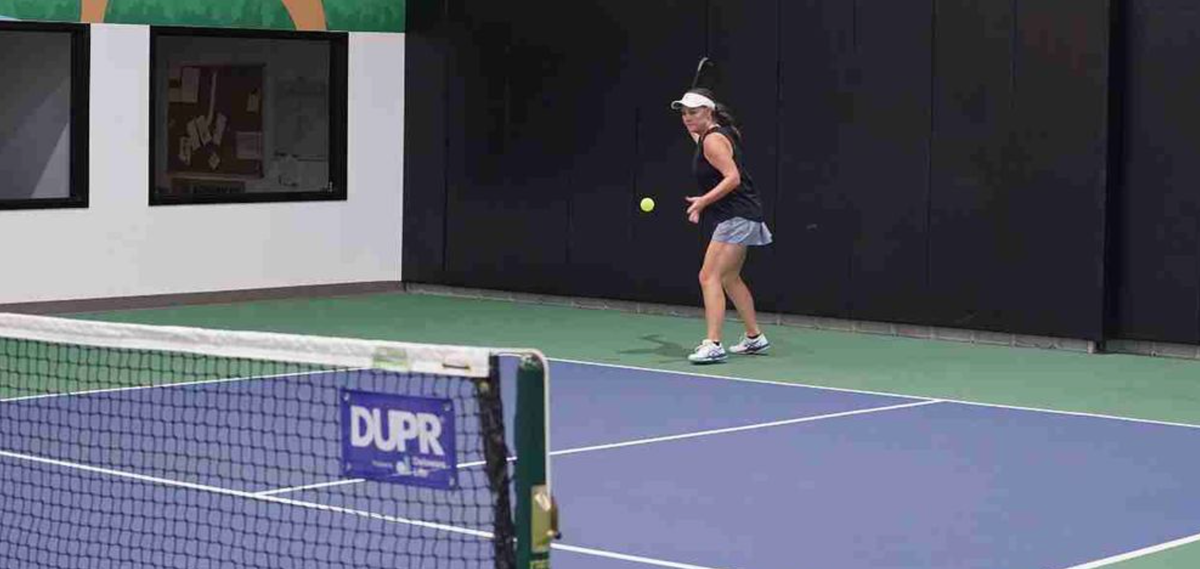
Take These Habits Into Warm-Ups Too
Here is the mistake most players make even after learning this concept.
They build good movement patterns at home, then walk into warm-ups and immediately fall back into standing still and letting the ball come to them.
Warm-ups should reinforce the same habits you want in a game.
Even when the ball comes straight back to you, practice taking a small step toward it and establishing your position before you swing.
The first ball that goes slightly wide in warm-ups is your chance to practice the footwork. Move your feet, get behind it, and hit it from a balanced position.
That repetition is what carries the habit into live play.
You can find a structured approach to this in a guide covering warm-up drills pros use to make sure every session builds real game skills.
 The Dink Media Team
What to Work On After You Fix Your Footwork
Once you start moving your feet consistently, you will notice your dinks becoming more reliable almost immediately.
But there are other layers worth addressing once the foundation is solid.
Common secondary issues include watching the ball all the way to contact, grip pressure that is too tight when moving fast, and follow-through that is too long or too short.
These matter, but none of them matter if your body is out of position when you hit the ball.
Fix the footwork first. Then address the finer details.
This is the same sequence a coach would use with a student, and it is why players who make this one adjustment often feel like they improved dramatically overnight.
If you want to go deeper on what creates consistent dinking at a higher level, the breakdown of stopping pop-up dinks is worth your time.
And if your dink drops are the issue rather than your crosscourt exchanges, the dink, drop, and reset fixes will give you the next layer of work to do.
You already know how to dink. Your warm-up proves it every time you step on the court.
The only thing standing between your warm-up dinks and your game dinks is where your feet are when you hit the ball.
Move first. Hit second. Everything else follows from there.
For a broader look at how footwork and positioning connect to your overall kitchen game, the piece on positioning mistakes hurting your game adds useful context.
And if you want to see how this connects to building smarter habits across every part of your game, the progressive drill progressions from 3.0 to 5.0 lay out exactly where to go next.
Frequently Asked Questions
Why do my pickleball dinks work in warm-ups but break down in games?
In warm-ups, the ball comes straight back to your body so your natural throwing instinct takes over and produces a clean stroke. In games, balls arrive from different angles and directions, and most players reach for them instead of moving their feet, which changes paddle angles and kills consistency. The fix is learning to move your body behind the ball before every single contact.
What does "body behind the ball" mean in pickleball dinking?
"Body behind the ball" means positioning your feet so that your body is square to the contact point before you swing, with the ball meeting your paddle roughly at knee height near your lead leg. It is the same position your body naturally takes when you throw something underhand accurately. When you reach instead of moving, you lose that alignment and the stroke breaks down.
How do I practice pickleball footwork for dinking at home?
Throw a ball against a wall at different angles and use your feet to get your body behind each bounce before catching it at knee height. Once that feels natural, add your paddle and hit the ball into the wall at angles, always moving your feet first. Even fifteen minutes of this daily will build the muscle memory that transfers directly into game play.
Is nerves or pressure why dinks fall apart in a real game?
Pressure is only a small factor because most players also miss dinks when leading 10-0 with no stress involved. The real cause is a footwork habit that works fine when the ball comes straight at you but collapses the moment you have to move laterally or forward and choose to reach instead of step. Fix the footwork and the pressure issue largely takes care of itself.
Should I practice good footwork even in warm-ups?
Yes, and this is a mistake most players make even after they understand the concept. Warm-ups tend to reinforce standing still because the ball keeps coming back to the same spot, but that trains a habit that does not survive a real game. Practice stepping into position on every ball during warm-ups, especially the first one that goes even slightly wide, so the movement becomes automatic before the game starts.

Love Pickleball? Join 100k+ readers for free weekly tips, news & gear deals.
Subscribe to The Dink