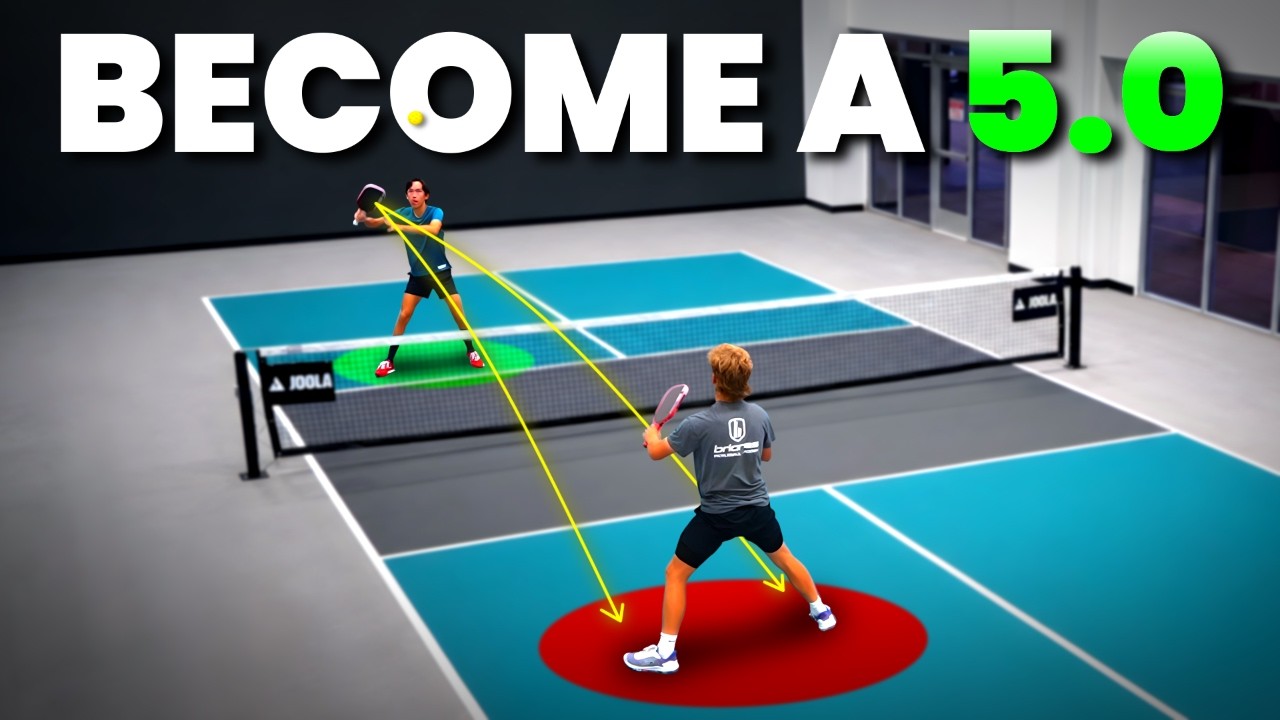
7 Habits That Separate 5.0 Pickleball Players From Everyone Else
Becoming a 5.0 pickleball player is less about hitting harder and more about playing smarter. These 7 habits will change the way you approach every single rally.
Becoming a 5.0 pickleball player is not about swinging harder or finding one magic shot.
It is about the habits you build on every single point, especially the ones where you are not even touching the ball.
Most players focus almost entirely on fixing their own weaknesses. That is a reasonable instinct, but it misses half the picture.
The habits below cover both sides of that equation, what to do when you have the ball and, just as importantly, what to do when you do not.
These seven habits come straight from Briones Pickleball Academy on YouTube, a coaching resource packed with practical breakdowns for competitive players who want to stop guessing and start improving.
Love pickleball? Then you'll love our free newsletter. We send the latest news, tips, and highlights for free each week.
Habit 1: Be Active as the Off-Ball Player
This is the habit almost nobody talks about, and it is one of the biggest separators between good players and great ones.
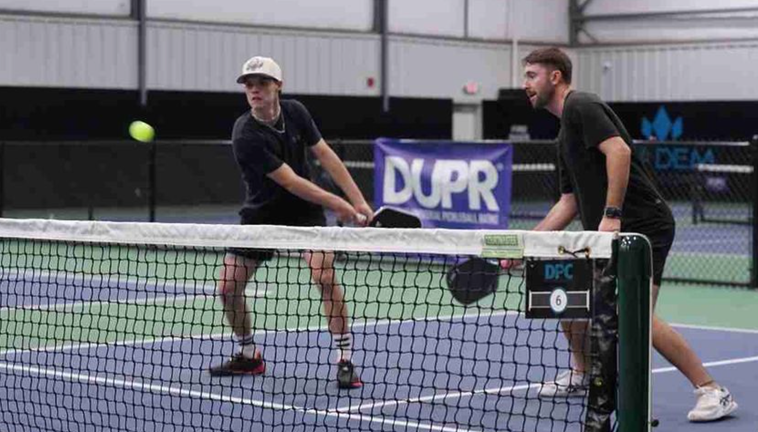
When your partner is hitting the ball, you still have a job to do.
There are three specific things to focus on as the off-ball player:
- Claim the middle when the ball is cross-court. Whenever the ball is on the far side of the court from you, you have priority in the middle. Step in, shut that lane down, and make your opponents think twice about speeding it there.
- Stay active during cross-court dinking exchanges. Do not stand and watch. Keep reaching in, threatening the poach, and making the opponent's cross-court dink harder to execute under pressure.
- Creep forward smartly during your partner's transition. When your partner is hitting a third shot and working toward the kitchen, you should be moving with them. If their shot is low and clean, advance. If it floats up, pause and get ready to defend.
This kind of off-ball awareness compresses the opponent's available court and takes pressure off your partner at the same time.
If you want to understand how this fits into broader doubles positioning, that breakdown is worth reading.
Habit 2: Stop Trying to Hit Through People, Hit Down Instead
You earn a high ball. Your brain says hit it as hard as you can. That instinct is costing you points.
Players at the top level are extremely good at defending hard, flat shots. When you wind up and blast a ball at shoulder height, you are doing their job for them.
The smarter play is to take that high ball and put it at their feet, forcing them to hit up.
This is a discipline issue more than a skill issue. The ball at your shoulder is already an offensive position. You do not need to over-swing to win the point.
You just need to get the ball down and make them hit one more difficult shot.
Chances are you will get an even better ball on the next shot, maybe a true overhead, where you can be more aggressive.
Patience at the right moment is a weapon. Learn more about how to stop overhitting and what it does to your consistency.
Are You Hitting Out Balls Without Knowing It?
This one stings because the mistake is invisible until you start watching for it.
Players wind up on a ball that was going long and hit it straight into the net, giving away a free point they already had.
The court from the net to your baseline is only 22 feet. A ball crossing you at hip height from a hard hitter could very easily be sailing out.
You have to learn to read it before you commit to swinging.
The best cue is your ready position.
At the kitchen line, your paddle stays up near net height. As you move back toward the baseline, your paddle should gradually lower.
That lower ready position naturally reflects the lower strike zone you need to worry about and keeps you from attacking balls that are already heading out.
If hitting the ball out of bounds keeps happening to you, this article on why it keeps happening breaks down the mechanics behind it.
 The Dink Media Team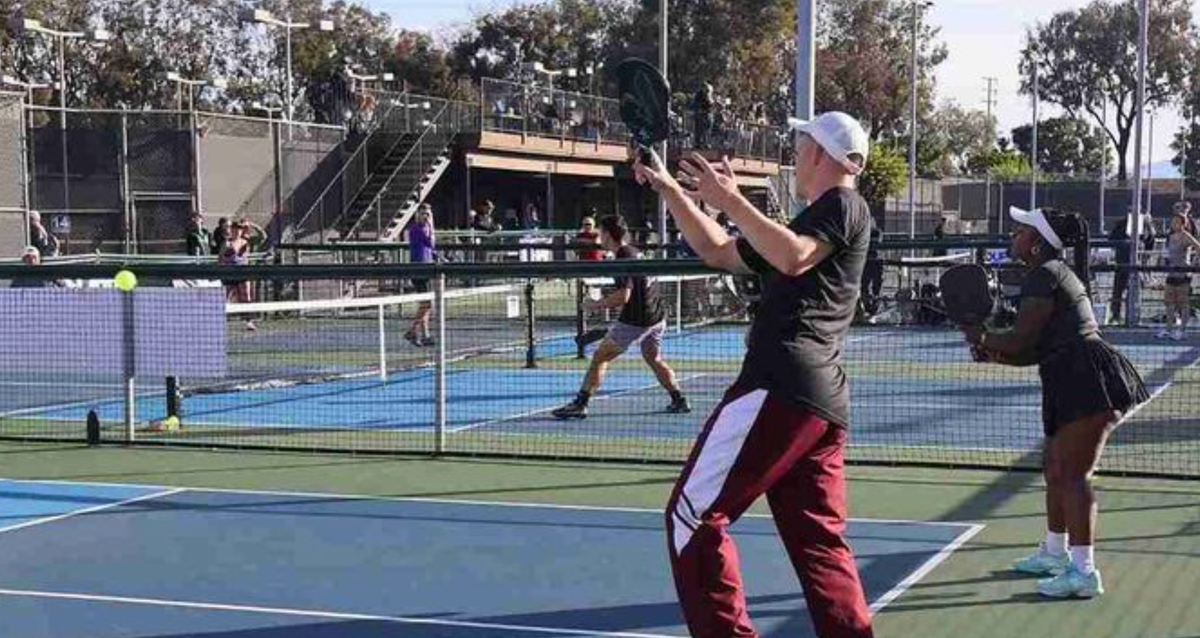
Habit 4: Eliminate the Net, Not Your Opponent
Here is a mindset shift that makes an immediate difference.
The net is not a neutral obstacle. It is an opponent that beats you the moment you test it on a low-percentage shot.
It does not matter who is standing across from you.
You have a better chance of winning any rally by making your opponent hit one more ball than by going for a perfect, tight shot over the net when you are in trouble.
The net always wins when you give it the chance.
This is especially true when you are on defense.
If your opponent is pushing you back, or you are reaching wide for a ball, that is not the moment to go for a low, skinny shot. Just get the ball back, keep it in play, and reset from there.
For more on cutting unforced errors, these fixes are directly applicable here.
 The Dink Media Team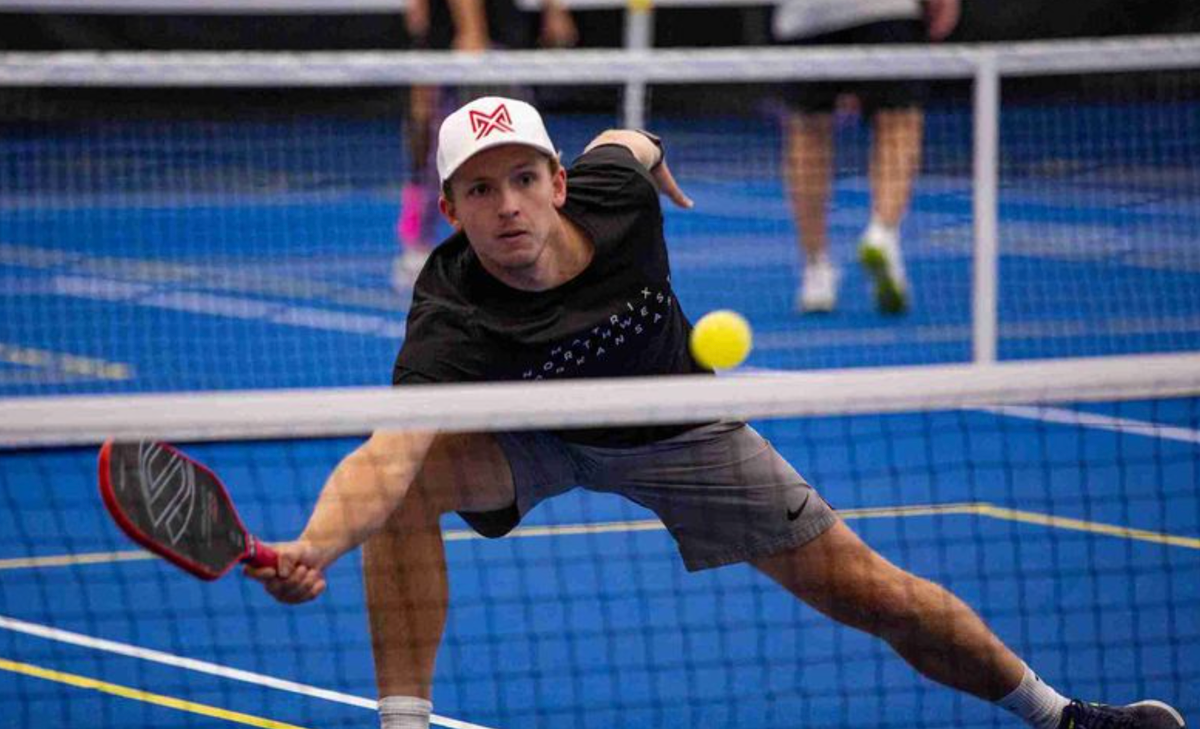
Habit 5: Know What You Are Actually Good At
Most players can list their weaknesses without pausing. Very few can name their actual strengths with specifics.
Finding your strengths is not just a confidence exercise. It is a tactical decision. If you have a strong backhand roll, you should be positioning yourself to use it.
If your serve consistently puts opponents on their heels, you need to be going for that serve in big moments instead of backing off under pressure.
This does not mean you ignore the parts of your game that need work. You still put time into those in practice.
But in competition, playing to your strengths is how you win tight matches.
The backhand roll shot in particular is one of the most effective weapons you can develop at the advanced level, and it is a signature move for any advanced pickleball player looking to close out games.
A strong serve is another area where players leave easy advantages on the table. If yours is already a weapon, use it.
Here is a look at serve techniques that force weak returns so you can make it even sharper.
 The Dink Media Team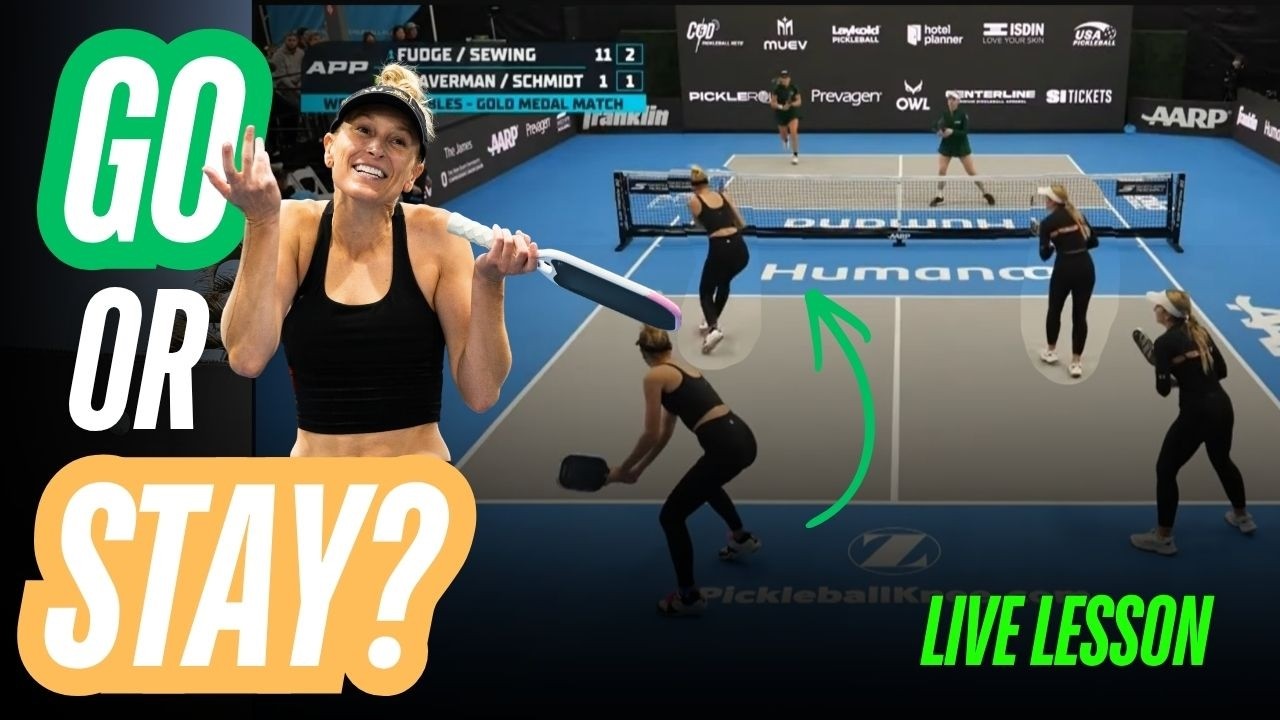
What Does It Actually Take to Win Hands Battles?
Counterattacking is the skill most players avoid because it requires standing in and taking pace back at opponents who are already attacking.
That is uncomfortable, but it is necessary.
Bangers will keep attacking until you show them there is a consequence.
The only way to show them that is to send the ball back at their feet just as hard as they sent it at you.
Once they see that attacking you does not work, they will adjust.
The mindset cue here is simple but effective.
Every time you hit a ball to your opponent, your ready position should be saying: I dare you to speed that up. Paddle up, eyes forward, weight forward.
The moment your paddle drops, you are inviting the attack. For more on building that kind of edge, check out these counterattack fixes.
Also worth reviewing: backhand counter fixes specifically, since that is usually the weaker side under pressure for most players.
 The Dink Media Team
Habit 7: Get to the Kitchen Line Efficiently, Not Fast
The biggest misconception about transition is that you need to sprint to the kitchen line as fast as possible. That thinking gets you into trouble constantly.
The goal is to get there smartly, not quickly. If you pop a shot up during your transition, you do not charge forward.
You hold your position, defend, and wait for a better ball before advancing.
Moving up on a high shot you just hit is asking to get the ball driven at your feet.
The second part of this habit is your attitude in the transition zone itself. Most players panic the moment they are stuck there.
That panic leads to rushed shots and unforced errors. You have to be comfortable in transition.
If a ball comes at your feet while you are moving through, stay soft, lift it over, and keep working.
It does not matter if it takes one shot or nine shots to reach the kitchen line. Getting there is a win.
If you want a full breakdown on why most mistakes happen in the transition zone, that article is essential reading.
For a look at exactly what to do when you cannot get to the kitchen in time, this guide covers the specific situations and what your response should be.
 The Dink Media Team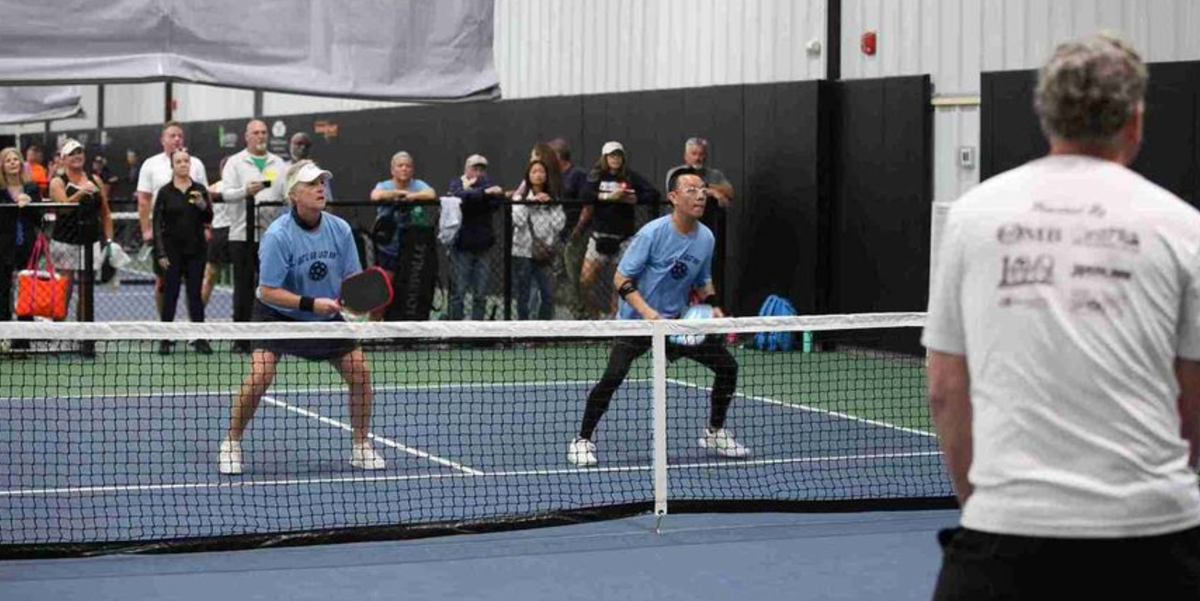
The Thread Running Through All 7 Habits
Every one of these habits comes back to the same thing: discipline over impulse. Hitting a high ball at the feet instead of blasting it. Letting an out ball go.
Staying calm in transition instead of rushing. These are all decisions that require you to override your first instinct.
The players who reach 5.0 are not always the most athletically gifted. They are the ones who have trained their decisions as much as their shots.
That is the real difference. And if you want a broader look at what separates 4.0 from 5.0 players, that breakdown will reinforce everything covered here.
Frequently Asked Questions
What does it take to become a 5.0 pickleball player?
Becoming a 5.0 pickleball player requires consistent execution of high-percentage decisions, not just athletic ability. You need strong positioning, disciplined shot selection, and the ability to counterattack under pressure. Most players get stuck below 5.0 because they play on impulse instead of strategy.
What should I do as the off-ball player in pickleball?
As the off-ball player, your job is to apply pressure and protect the middle of the court. When the ball is cross-court from you, step toward the middle and threaten the poach. Stay active in dinking exchanges so your presence makes your opponent's shot harder to execute.
Why do I keep hitting out balls in pickleball?
You are likely starting your swing before reading whether the ball will land in or out. The pickleball court is only 22 feet from net to baseline, so many balls that cross at hip level are already going long. Lowering your ready position as you move back toward the baseline helps you avoid swinging at balls you should let go.
How do I stop panicking in the pickleball transition zone?
The transition zone becomes dangerous when you rush through it instead of playing through it. If you pop a ball up, hold your position and defend before advancing. Staying soft and controlled under pressure is more important than reaching the kitchen line quickly.
How do I get better at counterattacking in pickleball?
Start with your ready position and your mindset. Every time you hit a ball to your opponent, your paddle should be up and your body should be set, sending a clear signal that you are ready for pace. Players will stop attacking you once you consistently put the ball back at their feet with equal or greater pace.

Love Pickleball? Join 100k+ readers for free weekly tips, news & gear deals.
Subscribe to The Dink