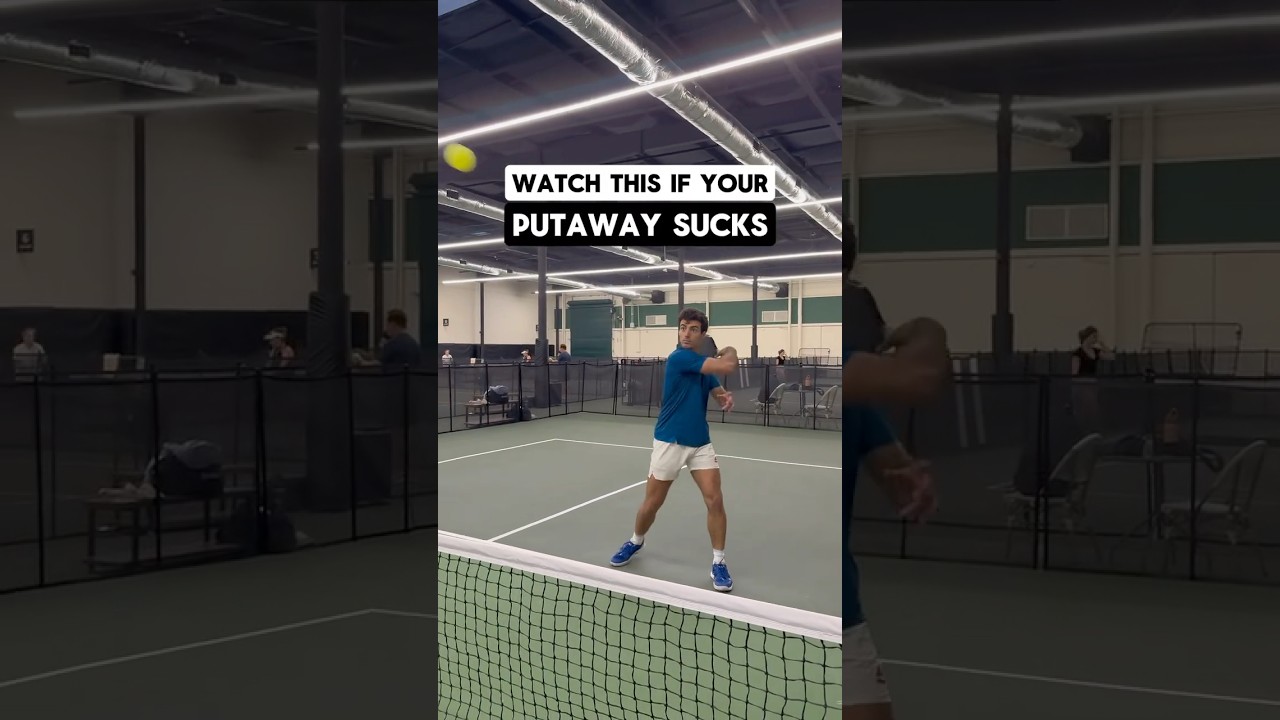
5 Steps to a Crushing High Backhand Putaway in Pickleball
The high backhand putaway is one of the most missed shots in recreational pickleball. Here is the exact kinetic chain sequence that fixes it fast.
The high backhand putaway should be a free point. The ball is up, you have time, and your opponent is waiting for the damage.
But most players miss it long, pop it into the tape, or hit it with zero pace.
The problem is not your athleticism or your paddle. It is that you are swinging without a system.
This breakdown comes straight from Richard Pickleball on YouTube, who laid out the exact kinetic chain sequence that turns this shot from a liability into a weapon.
Here is how to build it from the ground up.
Love pickleball? Then you'll love our free newsletter. We send the latest news, tips, and highlights for free each week.
Why You Keep Missing This Shot
Most players treat the high backhand like a simple punch.
They swing from the arm alone, the paddle face opens up at contact, and the ball sails long every single time.
That is the core mistake. Arm-only swings have no stability and no consistent paddle angle. You need the whole body working together.
The fix is the kinetic chain, a sequence where each body part activates in order to build and transfer energy through the shot.
Miss one link and the whole chain breaks down.
What Is the Kinetic Chain, Exactly?
The kinetic chain is the coordinated sequence of body segments that generates power and control in a stroke.
Think of it like a whip: the handle moves first, then the middle, then the tip cracks at the end.
In pickleball, your wrist and forearm start the chain. Your arm follows. Your core fires last and drives everything through contact.
When you skip steps or fire them out of order, you lose both power and accuracy. That is why the high backhand feels so unreliable when you just slap at it.
The 5-Step Sequence for a Lethal High Backhand
Here is the exact order of operations. Each step sets up the next, so do not skip ahead.
- Pronate your wrist down. Before you do anything else, rotate your wrist so the paddle face points toward the ground. This is the foundation of the whole shot. If your paddle face is neutral or open here, you are already setting up a miss.
- Coil your arm. Load your arm back toward your body. Think of this as storing energy, not just positioning. You are creating tension that will release through the swing.
- Turn your arm into your body. Drive your elbow and forearm inward as you begin the forward motion. This is where most recreational players stop and just push outward. Turning in keeps the chain tight.
- Rotate your core. Your hips and torso fire next. This is the biggest power source in the shot. If your core does not turn, your arm is doing all the work alone and you lose both pace and consistency.
- Extend through contact with the paddle face down. As you extend your arm and follow through, the paddle face must stay angled downward. This is what keeps the ball in the court. The downward angle creates topspin and kills the trajectory before the ball can sail long.
That last step is the one that separates a clean putaway from a long miss.
Players who keep sending this shot out of bounds are almost always letting the paddle face open up on extension.
 The Dink Media Team
Why Does the Paddle Face Have to Stay Down?
When you extend on a high backhand and let the paddle face go neutral or open, the ball launches upward off the strings and travels in a flatter arc.
At that height, a flat arc goes long.
Keeping the paddle face angled down through contact imparts topspin.
Topspin curves the ball downward mid-flight, which means you can swing with real pace and still land the ball in the court.
This is the same physics that makes a topspin forehand drive so effective. You are not just hitting the ball hard. You are hitting it with shape.
If you want to understand how wrist position affects your entire game, this wrist fix for better drops covers the mechanics in useful detail.
 The Dink Media Team
How Do You Actually Practice This?
The biggest mistake players make when learning a new motion is trying to put it all together at full speed immediately. That almost never works.
Build the chain in slow motion first. Stand at the kitchen line with no ball and run through the five steps deliberately: pronate, coil, turn in, rotate core, extend down.
Do it ten times before you ever hit a ball.
Then have a partner feed you high balls to your backhand side at half pace. Your only job is to keep the paddle face down at contact. Pace comes later.
For a look at how elite players structure their practice sessions, these drills from a PPA pro show exactly how to make repetition count.
 The Dink Media Team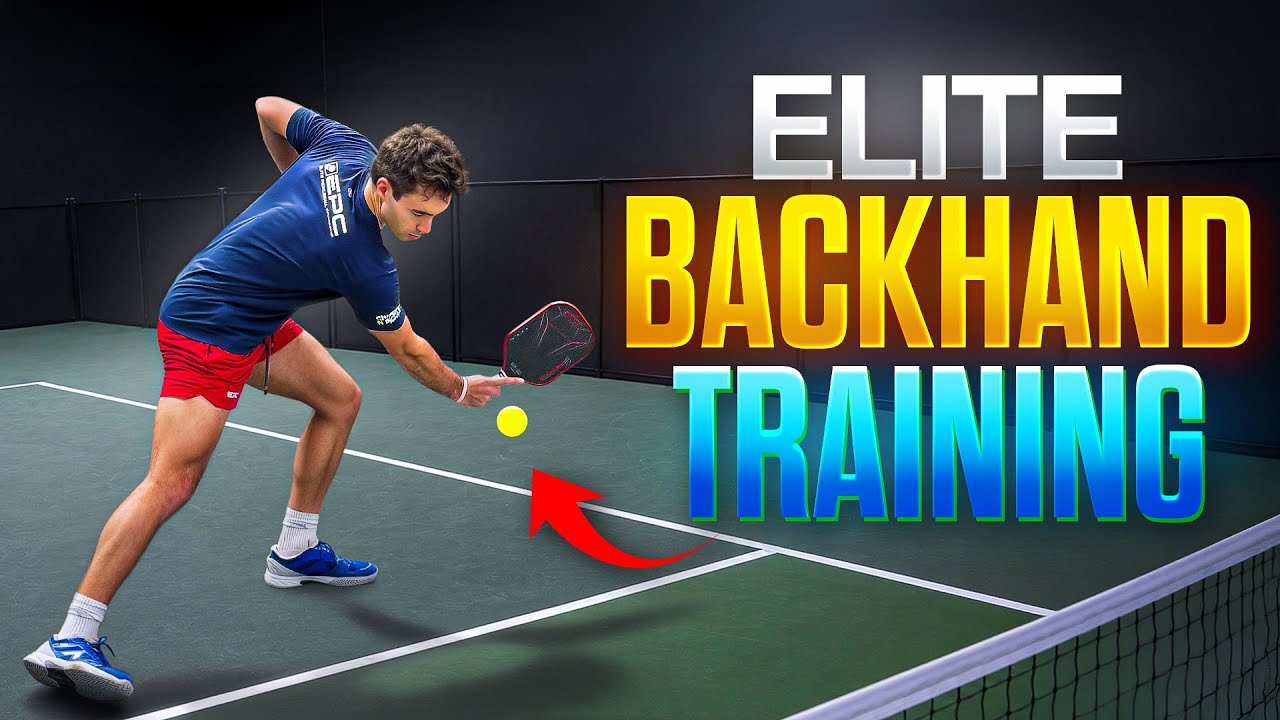
Is This Different for Two-Handed Backhand Players?
The kinetic chain still applies if you play a two-handed backhand, but the wrist pronation step changes slightly.
Your non-dominant hand takes on more of the rotational work, which can actually make it easier to keep the paddle face down.
The core rotation step becomes even more important with two hands on the paddle because your range of motion is shorter.
You have to get your hips involved or the shot has no power.
For two-handed players specifically, Connor Garnett's two-handed backhand tips are worth studying alongside this sequence.
 Eric Roddy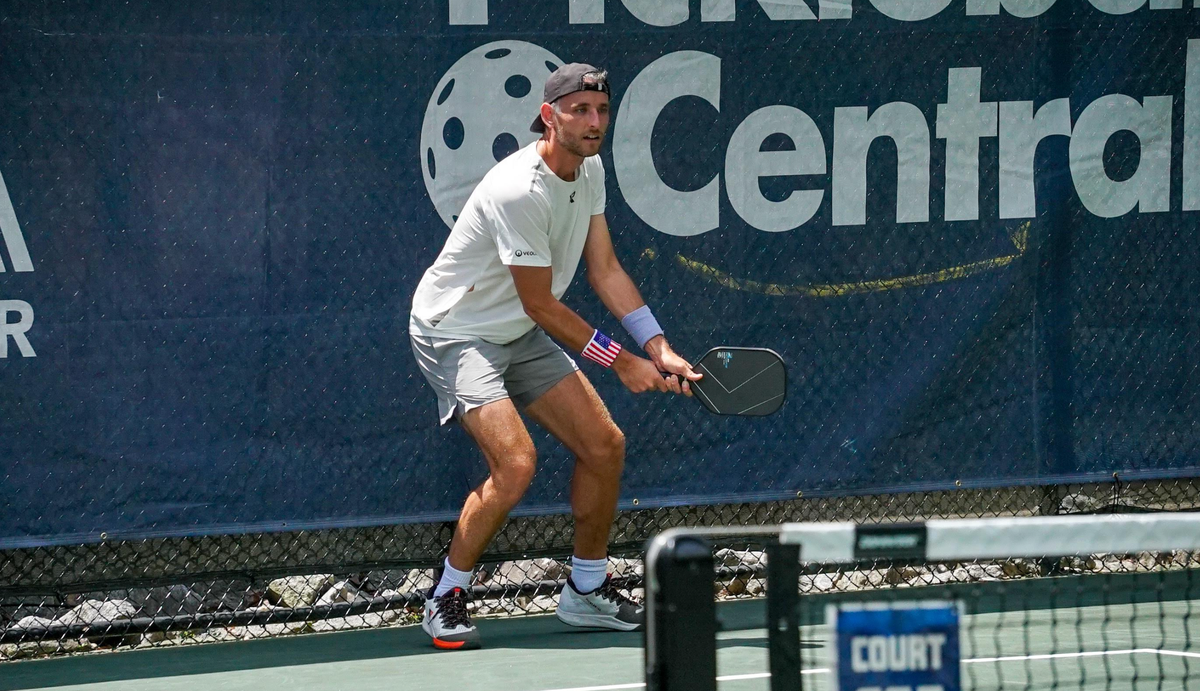
What Happens When Your Timing Is Off?
If you hit this shot late, you lose the ability to pronate your wrist properly. The ball gets past you and you end up slapping at it with an open face.
That is how the ball goes long or into the net.
The solution is simple in concept and hard in execution: prepare earlier than you think you need to.
The moment you see a high ball coming to your backhand, your wrist should already be pronating.
Most players wait until the ball is on them to start the sequence. By then, it is too late to complete the chain in order.
 The Dink Media Team
Common Mistakes to Cut Out Right Now
Here are the most common errors that wreck this shot, listed so you can self-diagnose on the court:
- Starting with the arm instead of the wrist. If your wrist is not pronated first, nothing else in the chain works correctly.
- Skipping the coil. Swinging directly from a neutral position means no stored energy and no power.
- Failing to rotate the core. Arm-only swings are weak and inconsistent. Your core is the engine.
- Opening the paddle face on extension. This is the most common cause of balls going long on this shot. The face has to stay down.
- Swinging too early at full speed. You rush, the chain falls apart, and you miss. Slow it down in practice until the sequence feels automatic.
If you are making multiple mistakes from this list, start with the paddle face.
Fixing that one thing alone will immediately cut down your errors on high backhands.
For a broader look at how shot selection affects your results, this guide on the low forehand high backhand rule is a useful read.
 The Dink Media Team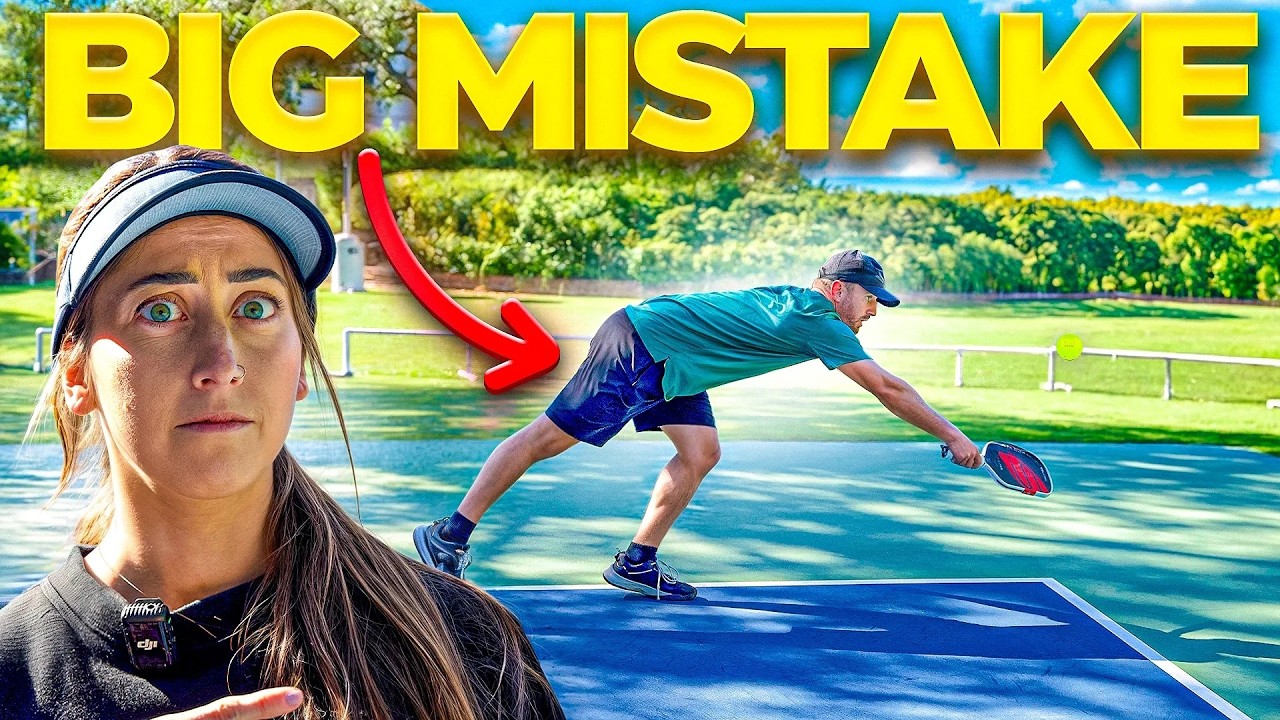
How Does This Fit Into Real Match Play?
You are not going to have time in a match to think through all five steps consciously. That is fine.
The goal of drilling the sequence is to make it automatic so your body runs it without your brain managing every step.
What you can cue yourself on during a match is the paddle face.
One thought: face down at contact. That single cue will trigger the rest of the chain if you have drilled it enough.
Think about how players like Anna Leigh Waters handle high balls at the kitchen.
The contact point is always aggressive, the face is always controlled, and the ball lands in the court with pace.
That control comes from a trained kinetic chain, not raw power.
If you want to understand how top players generate that kind of consistent attack, decoding Anna Leigh's rhythm breaks down the patterns worth copying.
 The Dink Media Team
Building the Shot Into Your Practice Routine
Set aside ten minutes of every practice session specifically for high backhand feeds. This is not a lot of time, but focused repetition on one pattern compounds fast.
Ask your partner to feed from the kitchen line, tossing the ball up to your backhand side at shoulder height or above.
Your only goal is to complete the kinetic chain in order and keep the ball in the court with pace.
Track how many you land in bounds versus how many go long or into the net. You will see the number improve quickly once the chain becomes muscle memory.
For structured ways to build this kind of focused practice, this two-step fix for drilling that actually works gives you a solid framework.
Also pay attention to where your misses go. Long misses mean the paddle face opened. Net misses mean you stopped the chain early and lost pace.
Both tell you exactly which link in the chain to fix.
For players who want to take their attacking game further, finding your backhand on high balls every time gives you the positioning piece that sets up this shot in the first place.
And if you want to understand how to handle the balls coming at you before you get the chance to attack, these four counters for returning topspin will round out your game at the net.
The high backhand putaway is not a hard shot once the kinetic chain is trained.
It is a sequence. Learn the sequence, drill the sequence, and this shot becomes one of the most reliable weapons in your game.
Frequently Asked Questions
What is a high backhand putaway in pickleball?
A high backhand putaway is an attacking shot hit above shoulder height on the backhand side, intended to end the rally with pace and spin. It requires a controlled downward paddle face at contact to keep the ball in the court. Most missed putaways fail because the paddle face opens on extension.
Why does my high backhand keep going long?
The ball goes long when your paddle face is open or neutral at contact, which sends the ball on a flat arc that overshoots the court. Pronating your wrist before the swing and keeping the face angled down through extension fixes this immediately. Drill the contact point slowly before adding pace.
How does core rotation help the high backhand putaway?
Core rotation is the primary power source in the shot. Without it, your arm does all the work, which produces weak and inconsistent contact. Turning your hips and torso through the ball transfers far more energy than an arm swing alone.
When should I use a high backhand putaway instead of letting the ball go out?
If the ball is clearly going to land in bounds and is at a height you can attack, take the putaway. If the ball is sailing high and looks like it may carry long, let it go. This mindset shift for avoiding out balls helps you make that read faster in real rallies.
How long does it take to make the kinetic chain automatic?
Most players see meaningful improvement within two to three focused practice sessions if they drill the sequence slowly before adding speed. The key is breaking the habit of swinging from the arm only, which takes deliberate repetition to override. Ten minutes of dedicated high backhand feeds per session is enough to build the pattern quickly.

Love Pickleball? Join 100k+ readers for free weekly tips, news & gear deals.
Subscribe to The Dink