
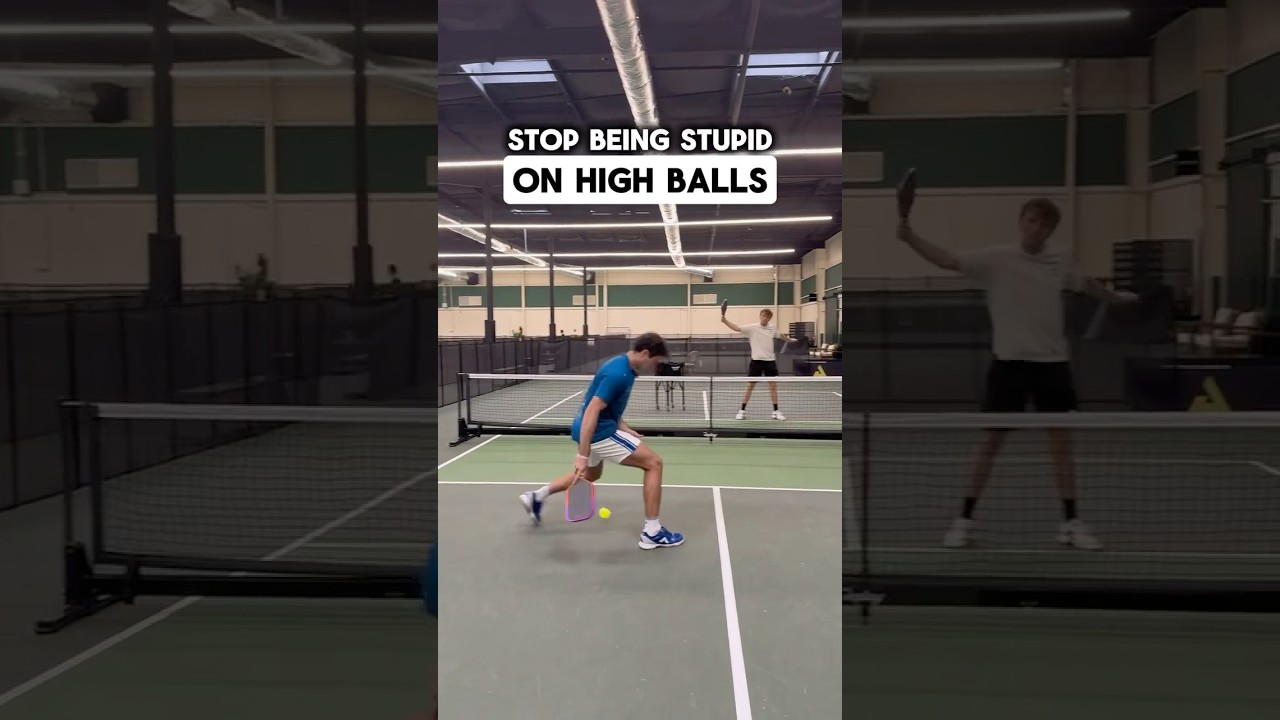
When a pickleball high ball comes at you, most players guess wrong and pay for it. This one backhand rule tells you exactly where to position every single time.
When a pickleball high ball comes off your opponent's paddle, your first instinct is probably to read where they are aiming and react accordingly.
That instinct is wrong, and it is costing you points.
The problem is not your reaction speed.
The problem is that you simply do not have enough time to process what your opponent is doing and move to the correct spot.
By the time your brain figures it out, the ball is already past you.
There is a better system, and it works every single time.
This tip comes from Richard Livornese on YouTube, and it is one of those adjustments that looks almost too simple until you try it in a real game and realize how much pressure it takes off your decision-making.
Love pickleball? Then you'll love our free newsletter. We send the latest news, tips, and highlights for free each week.
Why Guessing on High Balls Always Backfires
Every player has been there. The ball floats up, you try to read your opponent's paddle angle, and you move the wrong direction.
Then you watch the ball land exactly where you just were.
This is not a reading problem. This is a timing problem.
When the ball is in the air on a pickleball high ball exchange, the window between your opponent making contact and the ball arriving at your side of the court is extremely short.
You are asking your eyes and brain to process the opponent's body position, paddle face, arm swing, and intended target, all in under a second.
That is too much information to reliably process under pressure.
Even experienced players get burned by this repeatedly because they keep trusting a system that does not work consistently.
The fix is to stop trying to read and start using a default position instead.
What Does "Find the Backhand" Actually Mean?
Finding the backhand means that whenever a pickleball high ball pops up, you take a deliberate step toward the middle of the court and prepare for a pickleball backhand return, either one-handed or two-handed.
You are not waiting to see where the ball goes. You are choosing your position proactively before the ball arrives.
Here is why this works. When you shift to the middle and prepare for a backhand, you accomplish two things at once.
You cover the highest-percentage target your opponent is likely to aim for, and you still have enough court awareness and footwork to chase down a ball hit to your forehand side if needed.
Your backhand covers the middle. Your legs cover the wide forehand.
That is a much better trade-off than standing flat-footed and hoping you guess right.
How to Execute the Move Step by Step
Here is the exact sequence to use whenever you see a ball going high:
- Recognize the pickleball high ball early. The moment the ball rises above net height on your opponent's side, that is your cue. Do not wait for them to swing.
- Take one step toward the middle of the court. Not a big shuffle, just a deliberate shift of your weight and feet toward center.
- Set your backhand grip. Whether you prefer one hand or two, get your paddle into backhand position before the ball crosses the net.
- Stay loaded and ready to move wide. Keep your knees slightly bent so you can still push off toward your forehand side if the ball goes that direction.
- Trust the position. Do not second-guess yourself and drift back toward your forehand side. Commit to the backhand until you absolutely have to move.
That middle step is the one most players skip. They stay planted in their current spot and try to react late.
Moving before the ball is struck is what makes this system work.
 The Dink Media Team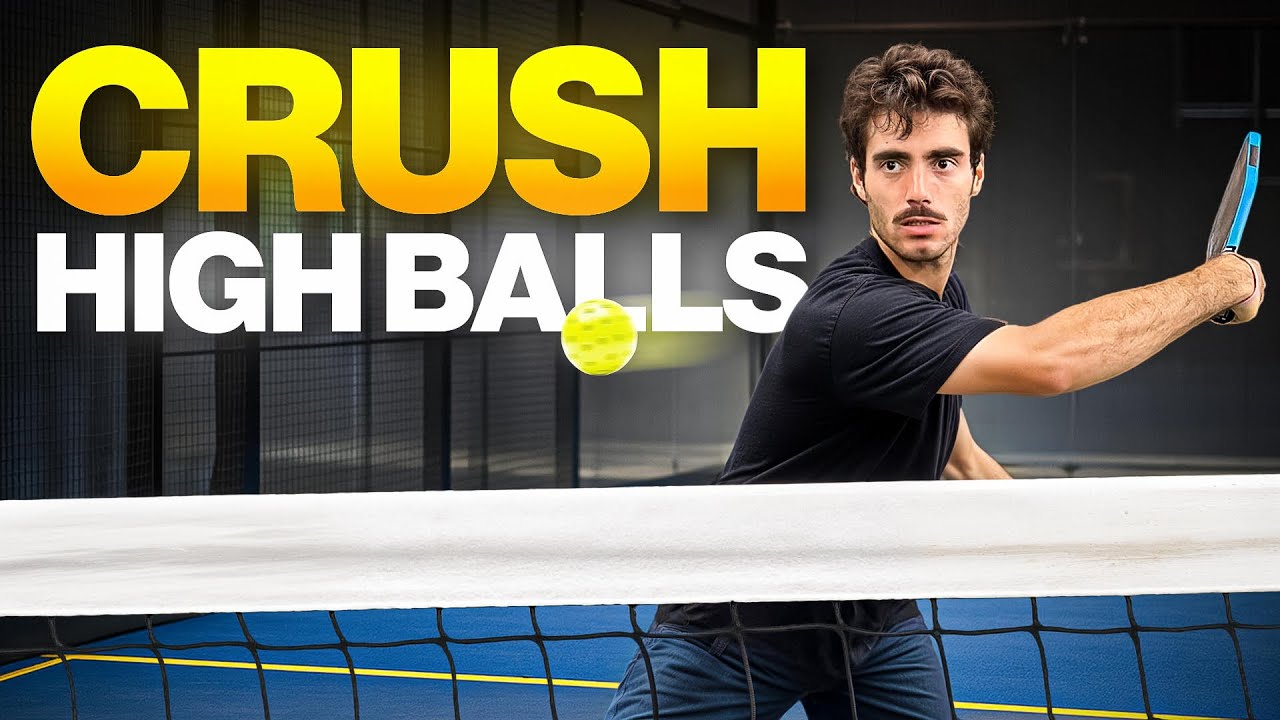
Why the Backhand Side Is the Right Default
For most players, the backhand is the more defensible side when receiving a hard or sharp ball.
This is especially true at the kitchen line, where there is very little time to set up a full forehand swing.
A two-handed backhand in particular gives you a stable, compact contact point that handles pace well.
If you have been working on your two-handed game, this is exactly the situation where that investment pays off.
You can check out some two-handed backhand counter keys from Parris Todd to build more confidence on that side.
The other reason the backhand default makes sense is court geometry.
When you are positioned near the center, a ball hit sharply to your forehand side is actually traveling more distance to reach you.
You have more time to react and run it down.
A ball hit hard to your backhand side from the middle of the net is the most dangerous shot your opponent can throw.
By already being there, you neutralize that threat completely.
 The Dink Media Team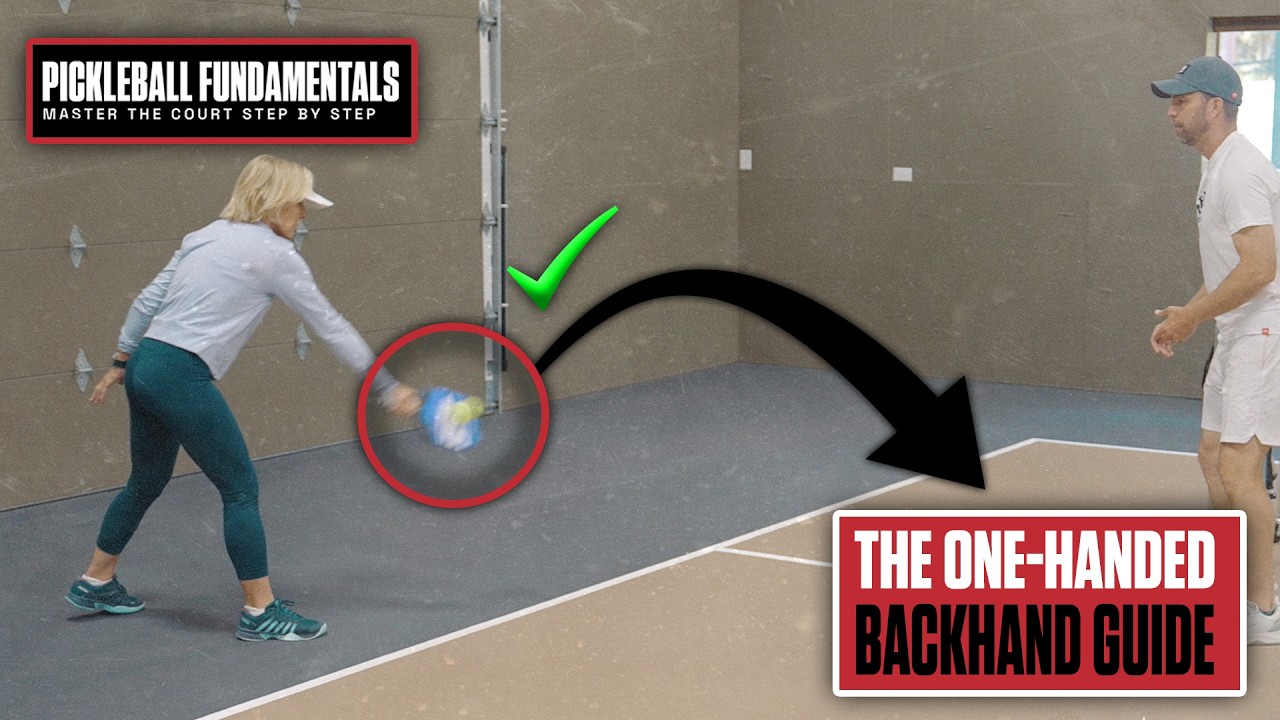
What Happens When You Miss the Wide Ball?
The honest answer is: sometimes you will not get to the wide forehand. That is a real trade-off with this approach.
But here is the thing. When you were guessing randomly before, you were giving up both sides unpredictably.
Now you are making a deliberate choice to protect the highest-percentage target and accept the small risk on the wide side.
That is a smarter gamble.
And as Richard Pickleball points out in the video, even when the opponent hits wide, you still have a real chance to run it down.
You are not completely out of the point.
Understanding the low forehand, high backhand rule in pickleball gives you a broader framework for making these kinds of positional decisions automatically instead of thinking through each one in the moment.
 The Dink Media Team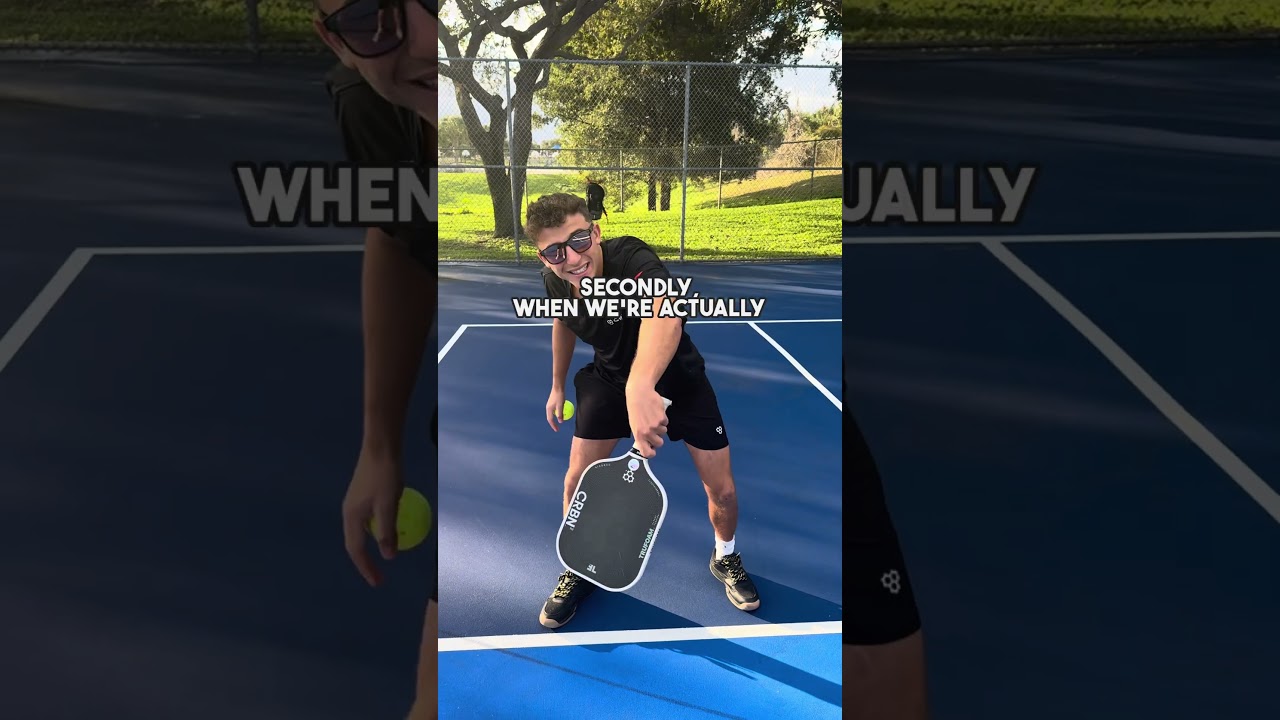
Is This Different for One-Handed vs. Two-Handed Backhand Players?
The footwork and the pickleball positioning principle are identical. Where it differs is in how much reach and stability you have at contact.
A one-handed backhand gives you slightly more reach on wide balls, which can be an advantage if your opponent does go to the outside edge of your backhand.
A two-handed backhand gives you more control and pop on balls hit directly at your body or to the strong middle zone.
Neither is wrong. Pick the grip that gives you the most confidence under pressure.
The key is committing to it before the ball arrives, not switching back and forth mid-rally.
If you want to sharpen your two-handed game specifically for these situations, these two-handed backhand dink fixes will transfer directly to your pickleball high ball responses at the kitchen.
 Alex E. Weaver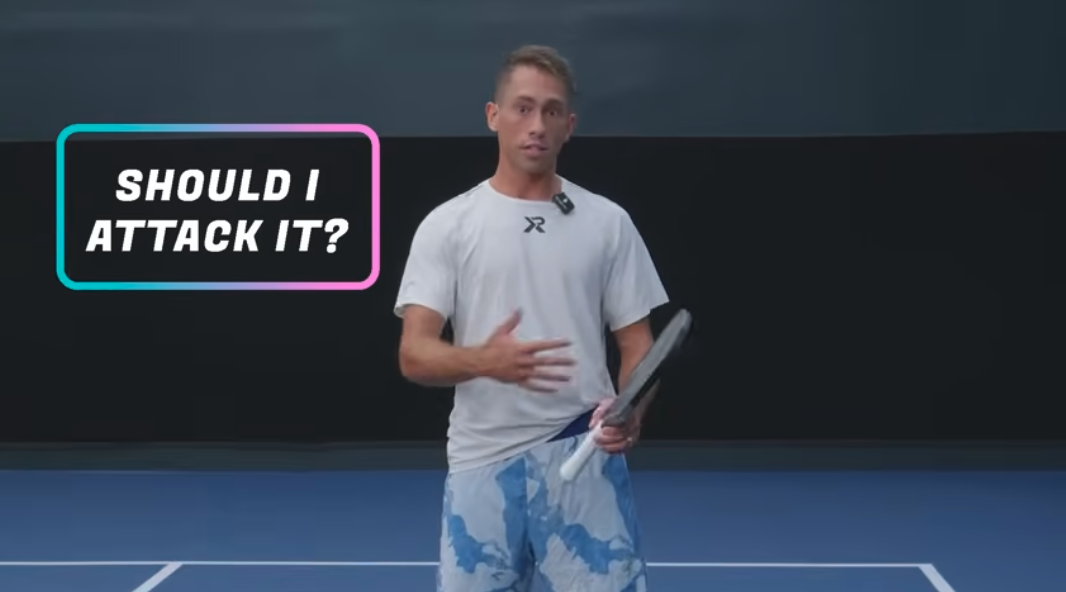
Common Mistakes Players Make With This Rule
Even after learning this pickleball high ball tip, players find ways to undercut it.
Here are the most common errors to watch for:
- Moving too late. You have to shift toward the middle before the opponent makes contact, not after. If you are waiting to confirm where the ball is going, you have already lost the advantage.
- Moving too far. One step toward center is enough. If you overcommit into the middle, the wide ball becomes completely unreachable.
- Not setting the paddle. Shuffling your feet without preparing your grip means you still have to set up your backhand under pressure. Both pieces need to happen together.
- Drifting back to the forehand habit. A lot of players do this unconsciously. They move to the middle, feel uncertain, and drift back toward the forehand side before contact. Stay committed.
- Forgetting footwork after the shot. Once you play the ball, reset your position. Do not stand in the middle of the court admiring your shot while your opponent sets up their next attack.
That last point matters more than people realize.
Positioning mistakes in pickleball compound quickly, and letting one good defensive play turn into a bad reset position can undo all the work you just did.
 The Dink Media Team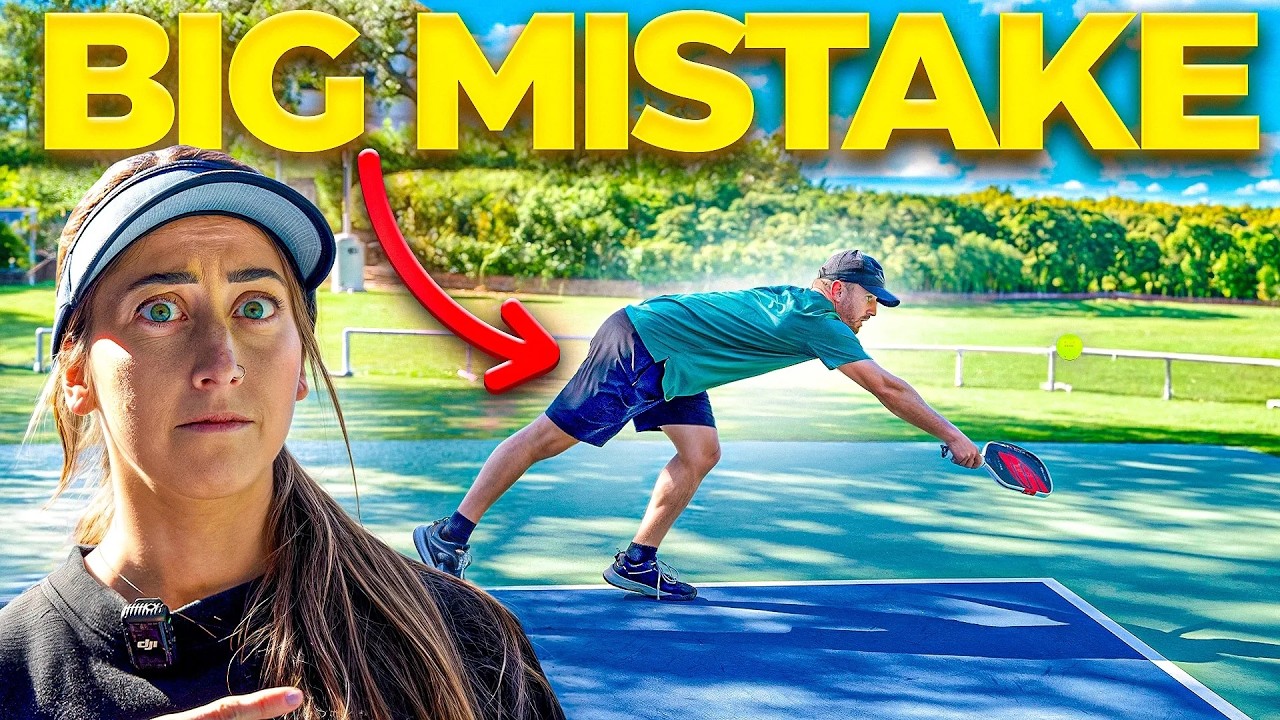
How This Rule Connects to Bigger Defensive Strategy
The backhand default on a pickleball high ball is really just one piece of a larger principle: remove decision-making during fast exchanges and replace it with automatic positioning rules.
When the game speeds up, your brain cannot keep up with real-time analysis.
Players who have pre-programmed responses for common situations always outperform players who try to read and react on every single ball.
This is exactly why learning the five keys to pickleball defense mastery is so valuable.
Each key is another automatic response that takes pressure off your decision-making in critical moments.
The pickleball high ball rule slots right into that system. High ball goes up, step to the middle, prepare backhand.
Simple, repeatable, effective.
 The Dink Media Team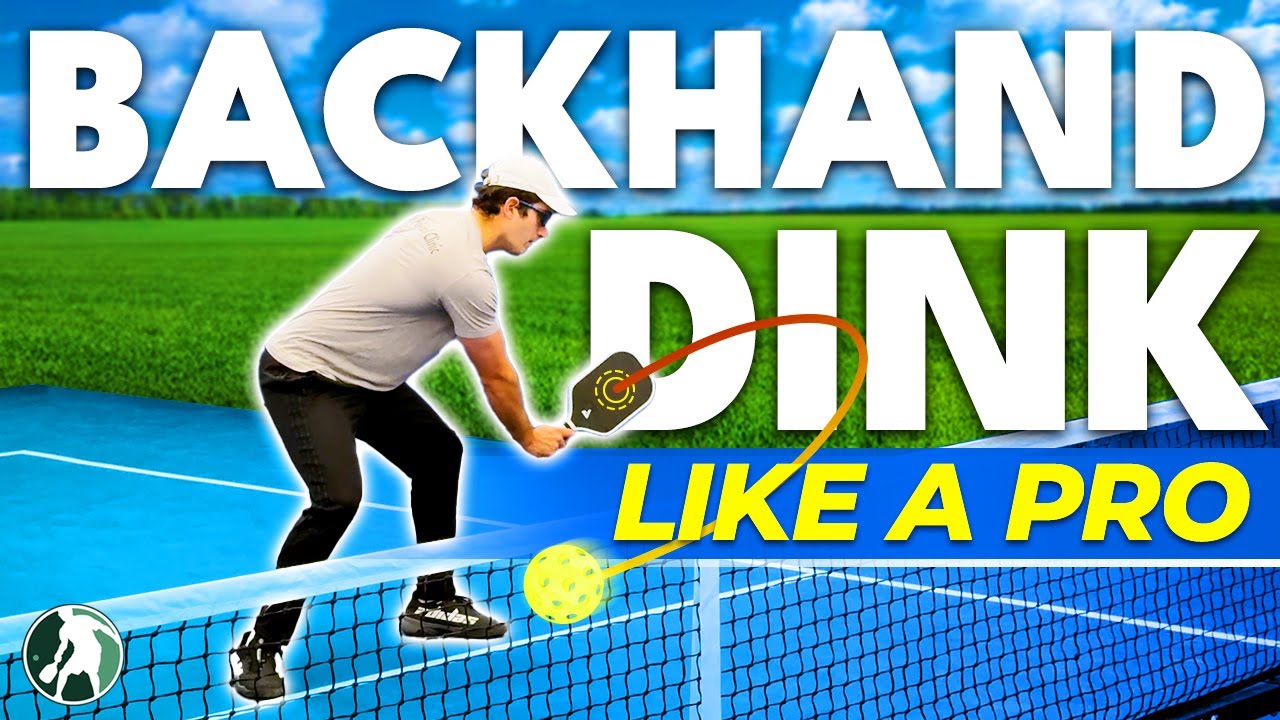
Putting It Into Practice During Drills
The best way to hardwire this habit is to drill it on purpose, not just hope it shows up in games.
Ask a practice partner to stand at the baseline and intentionally feed high balls while you work the kitchen.
Your only job is to step to the middle and prepare the backhand before every single pickleball high ball.
Do not worry about winners.
Focus entirely on the footwork and paddle prep timing.
After a few sessions of this, you will notice the movement starting to happen automatically in games without thinking about it. That is the goal.
You want this to become a reflex, not a conscious choice.
If you want to add this into a broader practice structure, these pickleball drills that build fitness and improve play give you a full framework for making practice time count at both ends of the court.
 The Dink Media Team
Why This Matters More Than You Think
Most players spend time trying to improve their offensive shots. They work on drives, speed-ups, and roll volleys.
But games are often decided by who handles the transition moments better. Pickleball high ball exchanges are transition moments.
They are the split second between a neutral rally and a point-ending attack, and the player who positions better almost always wins those moments.
Stop trying to guess. Step to the middle, find the backhand, and let your opponent have the wide ball if they want it.
That is a trade you should be willing to make every time.
You can also study how to block hard shots in pickleball to handle the situations where even your best pickleball positioning gets tested.
The players who stay consistent under pressure are not faster or more athletic. They just have better default rules for where to be and why.
This is one of those rules.
Start using it today.
And if you want to make sure your overall game has no obvious weak spots to exploit, these six fixes that erase unforced errors will round out everything you are building here.
Frequently Asked Questions
What is the best default position for a pickleball high ball?
The best default position is one step toward the middle of the court with your paddle prepared in a backhand grip. This covers the highest-percentage target your opponent can hit while still leaving you able to run down a wide ball on your forehand side.
Should I use a one-handed or two-handed backhand on high ball exchanges?
Either works, and the choice comes down to what gives you the most confidence under pressure. Two-handed backhands offer more stability and control on balls hit hard at your body, while one-handed backhands give slightly more reach on wide shots.
Why is trying to read your opponent on high balls a bad idea?
The time between your opponent making contact and the ball arriving at your side is too short to reliably process their body language, paddle angle, and swing path. Using a positional default removes that guesswork entirely and makes your response automatic.
How do I practice the backhand default rule?
Have a partner feed high balls from the baseline while you focus only on stepping to the middle and setting your backhand grip before every ball. Do this for several sessions until the movement becomes a reflex rather than a conscious decision.
Does this rule apply at all skill levels?
Yes, the rule applies from beginner through advanced play. At higher levels the execution becomes faster and the step toward the middle becomes smaller and more subtle, but the core principle of defaulting to the backhand on high balls stays the same.
Love Pickleball? Join 100k+ readers for free weekly tips, news & gear deals.
Subscribe to The Dink