
Sharpen Your Two-Handed Backhand Volley: 6 Keys From a Pro Lesson
The two-handed backhand volley looks effortless when a pro hits it, then falls apart the moment you try. Here are six keys that fix the shot, starting with where the power actually comes from.
The two-handed backhand volley is the shot that separates players who survive at the kitchen from players who control it.
You have seen it: an opponent calmly takes a fast ball out of the air and redirects it with pace, and you are left wondering how something that quick looked that easy.
Most players try to muscle the shot with their arms. That is exactly why it pops up, sails long, or dies in the net.
A recent Backpaddle Pickleball lesson broke the two-handed backhand volley down from the ground up, and the takeaways are refreshingly simple.
Below are six keys that will make your shot smoother, steadier, and far more dangerous.
Love pickleball? Then you'll love our free newsletter. We send the latest news, tips, and highlights for free each week.
What Is the Two-Handed Backhand Volley?
The two-handed backhand volley is a backhand-side shot you hit out of the air at the net, using both hands on the paddle for control and pace.
It covers two close cousins: the counter, where you redirect an opponent's speedup, and the roll, where you generate your own topspin and pace from a slower ball.
The grip on both is the same as your two-handed backhand counter from the baseline, just compressed into a tighter, faster window at the kitchen.
Get the fundamentals right and the same motion handles both shots.
Key 1: Get Below the Ball and Meet It Out Front on Your Two-Handed Backhand Volley
Start with your feet, because the shot falls apart before the paddle ever moves if your base is wrong.
You never want to stand straight up and reach down at the ball.
Bend your knees, get your body below the contact point, and keep a stance about shoulder width apart.
From there, the goal is to meet the ball out in front of you, not beside your hip.
Stay light on your toes. In mixed doubles especially, you will need to slide a step to cover the middle, and you cannot do that flat footed.
This is the same balanced base that keeps you from getting attacked at the kitchen on the fast exchanges.
The Stance That Sets Up Every Backhand Volley
Building that explosive first step starts with your ready position.
Heels slightly raised, weight forward, paddle neutral.
If you are flat on your heels, you have already conceded a half-second of reaction time you cannot afford at the kitchen line.
Key 2: Stay Loose and Light in Your Ready Position
Here is the mistake almost every player makes: they tense up. A stiff upper body cannot rotate, and rotation is where this shot lives.
The fix is a loose, relaxed ready stance. Slight bend in the knees, let your body settle naturally, and soften your shoulders and arms.
Think about the same easy hands you use when you dink, then carry that feeling into the volley.
That looseness is not just comfort. A relaxed grip is the foundation of fast hands, and it is the difference between a smooth counter and a jammed, late one.
If your hands feel like a vise, you have already lost the exchange. Building that feel starts with your pickleball grip and the way it lets the paddle move freely.
 The Dink Media Team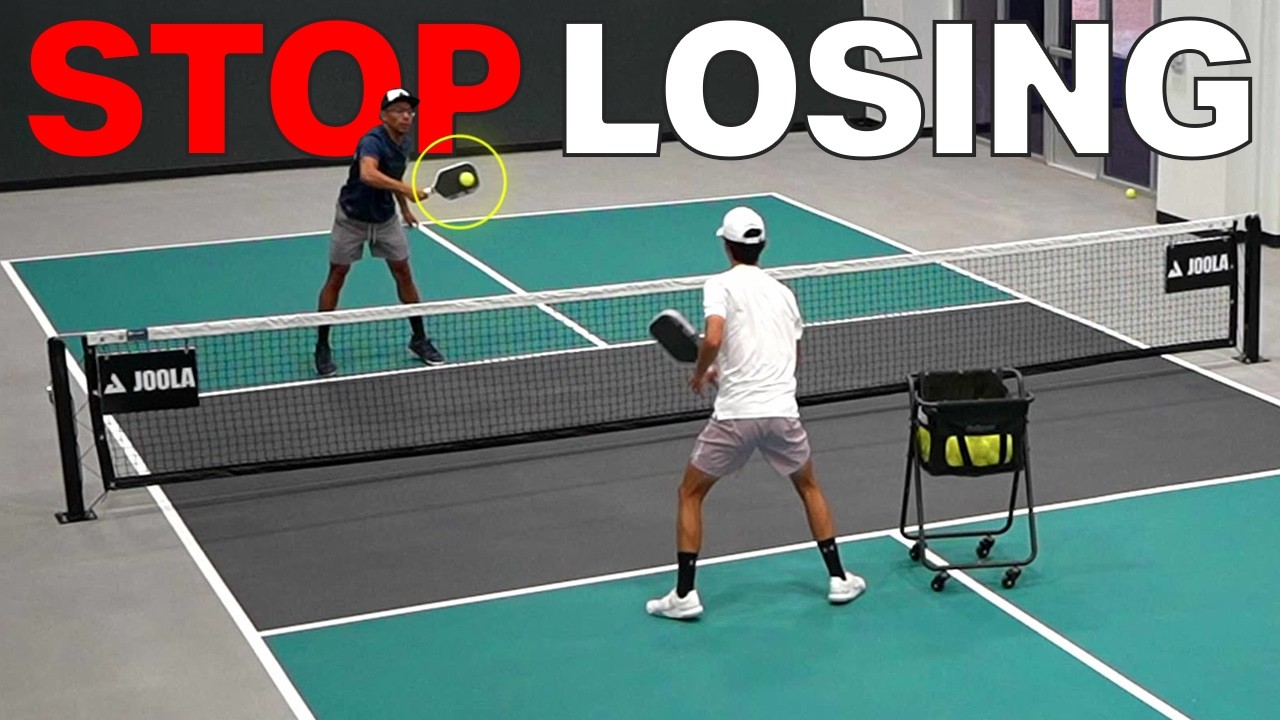
Key 3: Find Your Sweet Spot for Contact
Contact point is the quiet detail that makes the two-handed backhand volley repeatable.
You want the ball not too close to your body and not so far out that you lose control, right in the window where your arms can extend and still stay connected.
For a block or quick counter, keep the motion minimal. Stay low, lean slightly into the kitchen to take the ball early, and use a compact swing.
Do not jeopardize your balance with a big lean, just enough to meet the ball in front.
For a counter with more intent, bring the paddle a touch further back so you get a clean swing through the ball.
The swing should still look compact, finishing close to your body rather than flailing out wide.
Consistent contact point is what separates players who groove this shot from players who merely survive it.
Drilling your hand speed and court positioning together is the fastest path to making that window automatic.
 The Dink Media Team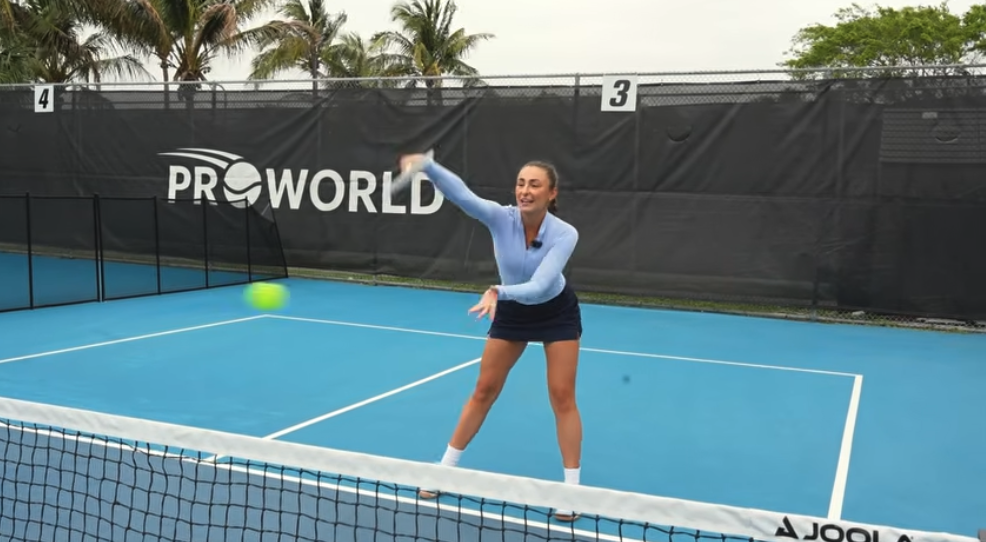
Key 4: The Two-Handed Backhand Volley's Real Power Source
If you take one thing from this article, take this: the power in a two-handed backhand volley does not come from your arms.
It comes from a smooth, relaxed turn of your body.
The coach in the lesson described it plainly.
As she meets the ball out in front, she turns and finishes with her body square again, and that unit turn transfers the power into the ball.
There is very little arm work involved.
Picture a calm, almost lazy torque through your core. Loose upper body, smooth rotation, then a finish facing forward.
When players first try it, they rotate stiffly and the shot feels forced.
Soften the upper body and the same turn suddenly produces effortless pace.
This is the same engine that drives a clean two-handed defensive shot the pros use, and it is why their counters look so easy.
They are not swinging hard. They are turning well.
If you want faster, more reliable exchanges at the net, build the motion the way you would in a focused hand speed drill rather than trying to add muscle.
Why Body Rotation Makes Your Backhand Volley Weapon-Grade
The players who make the two-handed backhand volley look effortless share one habit: their upper body is visibly relaxed at the moment of contact.
No locked elbows. No white knuckles. Just a smooth unit turn and a clean finish.
If you are chasing more pace on your backhand-side volleys, the answer is almost never more arm.
 The Dink Media Team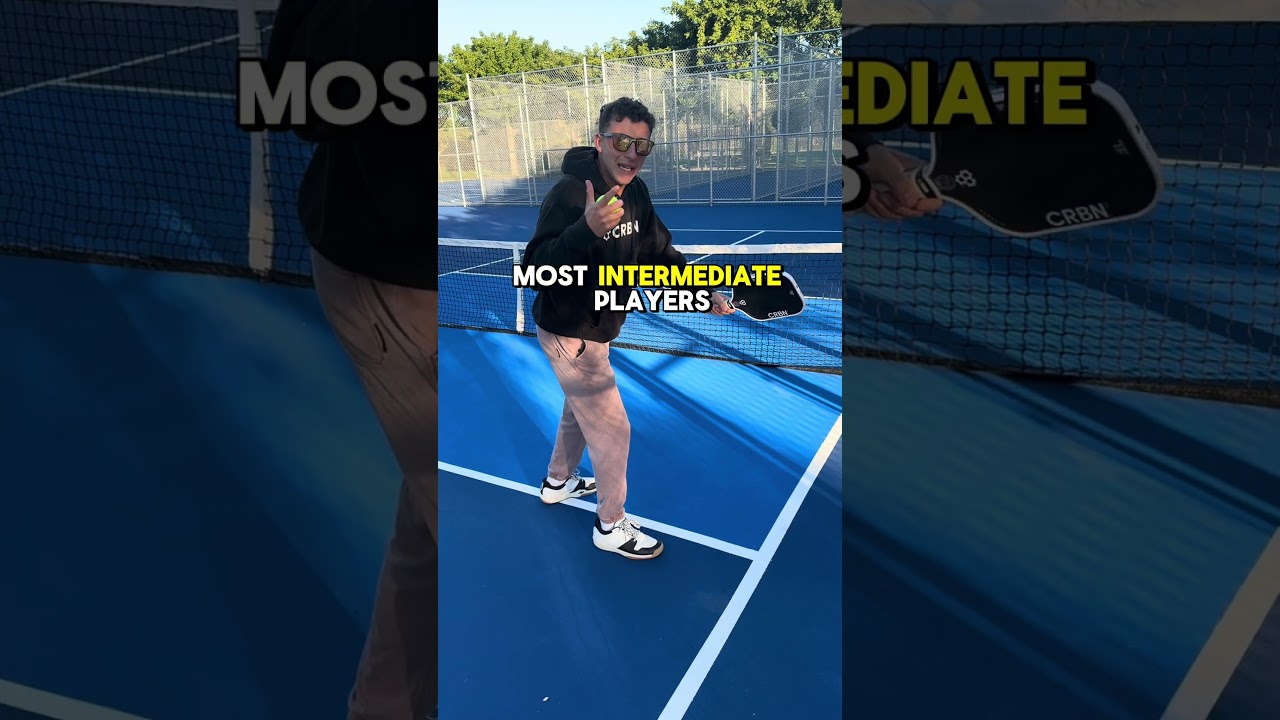
Key 5: Brush the Ball, Don't Hit It
For the roll version of this volley, stop thinking about hitting the ball and start thinking about brushing it.
Get under the ball slightly and let the paddle brush up the back of it.
That brushing contact, powered by the same unit turn, is what creates topspin and lets you push the ball down into the court with pace and margin.
You are not arming it over the net, you are spinning it down.
The mechanics here mirror any good topspin technique: the brush angle and paddle path matter more than raw force.
On a counter you borrow the pace your opponent gives you. On a roll you create your own through that smooth turn, which is exactly why the loose, relaxed body matters so much.
Understanding topspin mechanics from the ground up is one of the quickest ways to add teeth to your topspin technique.
This is also the bridge between defense and offense.
Once you can roll the ball with topspin off a slower feed, your two-handed backhand volley becomes a real speedup weapon instead of just a reset.
The pros who have made topspin their primary offensive tool understand exactly why this transition matters.
 The Dink Media Team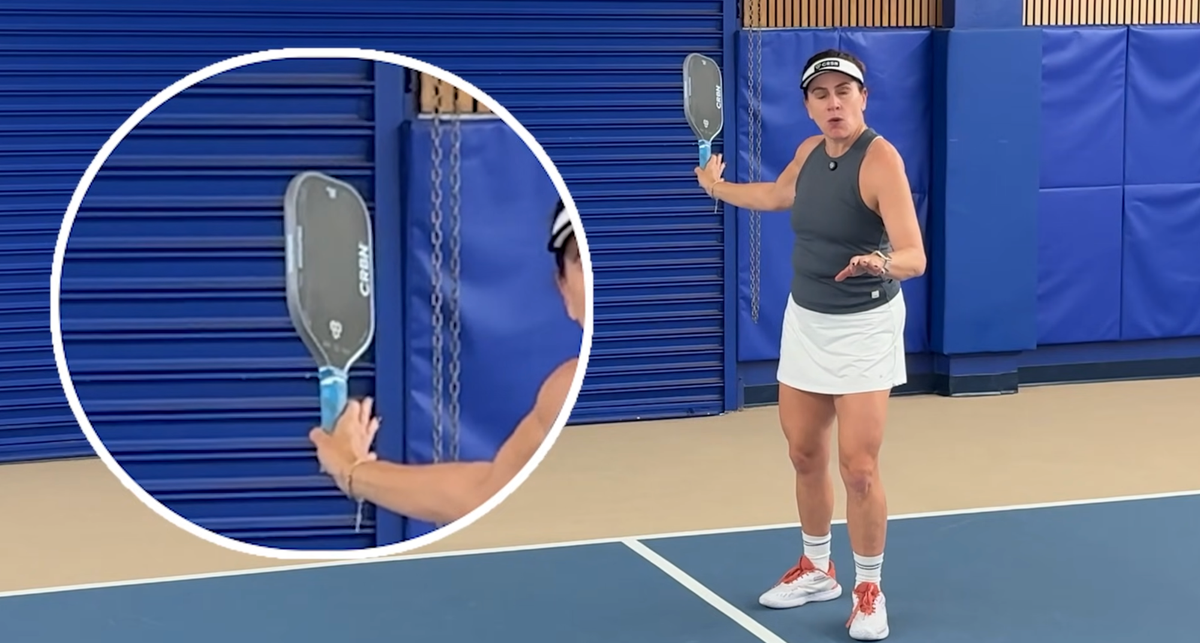
Where the Two-Handed Backhand Volley Wins You Points
A clean volley is only worth as much as the place you put it.
The two hands give you something a one-hander cannot: control and guidance even when you have to reach for a wide ball.
Here is how to use that control. Your placement options break down like this:
- Down the line: The safe choice. When you go down the line, the defender has very few good replies, so you rarely get burned.
- Middle: The expected ball. Opponents anticipate your backhand drifting to the middle, which is fine for pressure but predictable.
- Behind the opponent: The switch-up. Everyone expects the backhand to go middle or down the line, so redirecting it behind a player who is leaning the other way is a high-value surprise.
The lesson stressed that being able to change directions, especially going behind a player who is covering, is what makes the shot truly dangerous.
Groove the same direction first so your motion is repeatable, then add the behind-you ball as your change-up.
Knowing where to stand to take these shots cleanly is its own skill, and it ties directly into smart kitchen positioning.
Placement becomes even more powerful once your motion is clean enough that your opponent cannot read it.
That deception is the last layer, and it only comes after the fundamentals in Keys 1 through 5 are grooved.
For players working toward 5.0, mastering all six keys here is exactly the kind of shot-specific growth covered in the shots you must master before 2026.
 The Dink Media Team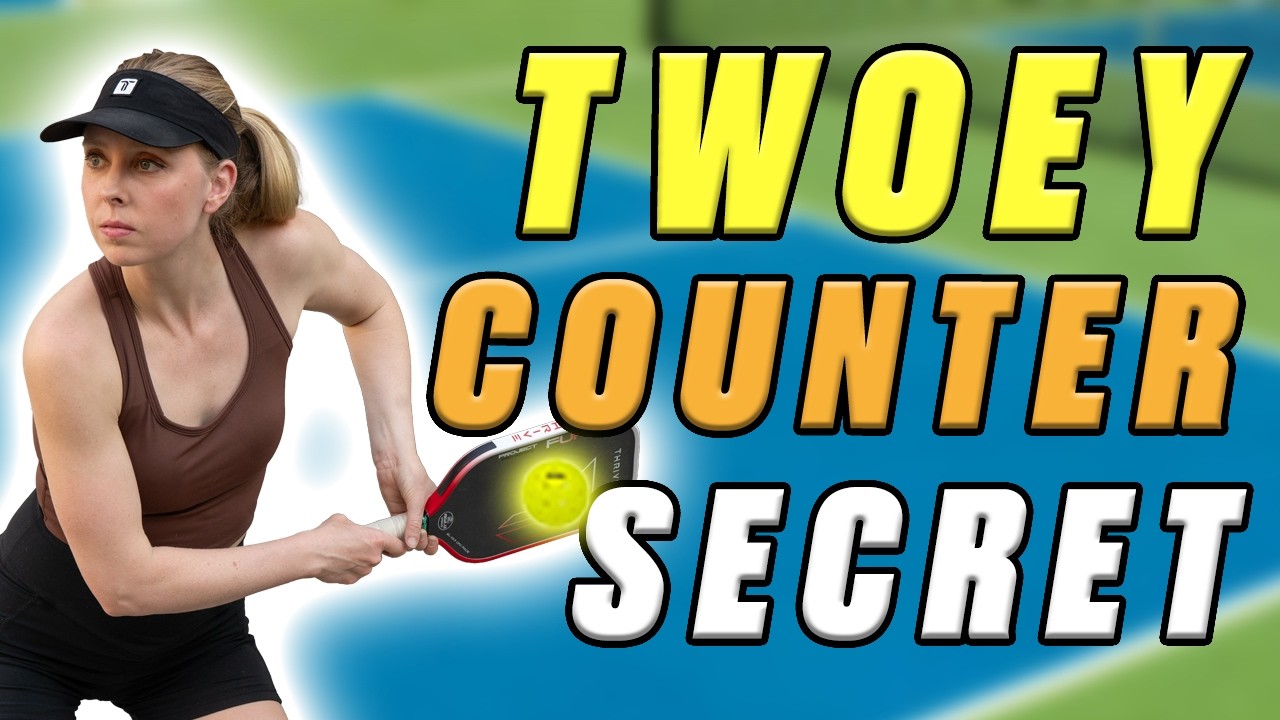
Key 6: Know When to Roll and When to Flick on Your Two-Handed Backhand Volley
This shot is not your only net weapon, and part of owning it is knowing when a different tool fits better.
The roll is your topspin option for balls sitting up around net height.
When a ball is lower or you need a quicker, more compact motion, a flick off the wrist can be the better answer.
Understanding the difference between a flick versus a roll keeps you from forcing the wrong shot under pressure.
If you want the full menu of net options and when each one applies, the complete volley guide lays out punch, flick, and roll side by side.
The two-handed backhand volley is the backbone, but a complete player has all three.
Building a full net game is exactly what separates good players from great ones, and the 12 drills you need to play your best pickleball in 2026 covers how to build that kind of complete arsenal through focused repetition.
 The Dink Media Team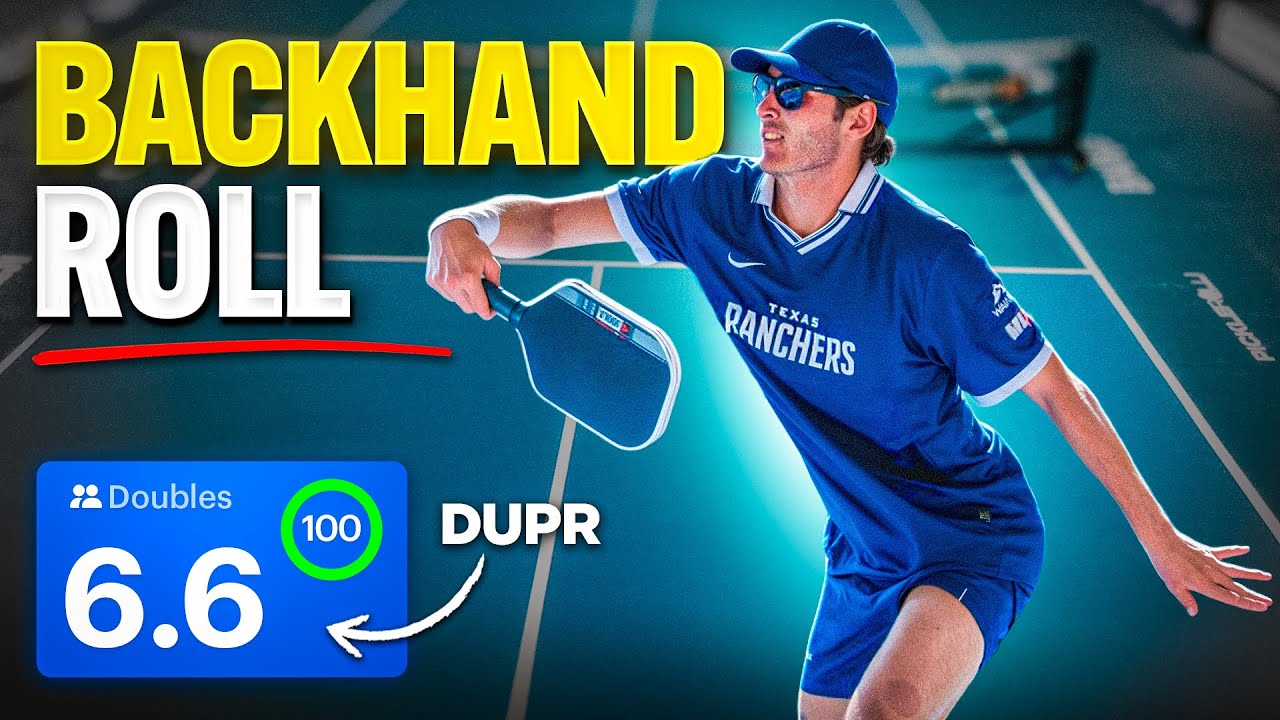
What the Pros Show Us About the Two-Handed Backhand Volley
Anna Leigh Waters, the World No. 1 on the Pro Tour of Pickleball, built much of her dominance on a two-handed backhand she trusts at full speed, as profiled in this look at the teenage phenom.
Watch her at the kitchen line and you will see exactly what the lesson teaches: a quiet, balanced base, loose hands, and power that comes from rotation, not effort.
Your equipment plays a role too.
The modern power-and-spin game rewards a paddle with a forgiving sweet spot and a textured face, and there is real variety in what today's top paddles offer for control versus pop.
Pick one that lets you brush the ball cleanly without fighting it.
The 6 essential pickleball shots to master for 2026 reinforces why the backhand volley belongs at the top of that list for any serious competitive player.
Modern pickleball at the highest level rewards players who can generate their own pace off both wings.
The four key strategies to winning in 2026 make clear that a reliable two-handed backhand volley is no longer optional at any competitive level.
Frequently Asked Questions
How do you add power to a two-handed backhand volley?
Power on a two-handed backhand volley comes from a smooth turn of your body, not your arms. Stay loose, meet the ball out in front, and let your core rotate so the unit turn transfers energy into the ball. Tightening up and swinging harder almost always reduces pace and control.
What grip should I use for a two-handed backhand volley?
Use the same relaxed two-handed backhand grip you would use from the baseline, kept loose rather than clenched. A light grip lets the paddle move freely and is the foundation of faster hands at the net. If your grip is tense, the shot will feel jammed and late.
What is the difference between a backhand counter and a backhand roll?
A counter redirects the pace your opponent already gave you, so you use their speed with a compact swing. A roll generates your own topspin from a slower ball by brushing up the back of it. Both use the same loose body and unit turn, just applied to different incoming speeds.
Why does my two-handed backhand volley keep popping up?
A volley pops up when you stand too tall, make contact too close to your body, or stiffen your upper body and lift with your arms. Get below the ball, meet it out in front, and brush rather than scoop. Staying low and loose keeps the paddle face stable through contact.
Should beginners learn the two-handed or one-handed backhand volley?
Most players find the two-handed backhand volley easier to control because the second hand adds guidance and stability, especially when reaching. It is a reliable first choice at the kitchen. Once the two-hander is solid, you can add a one-handed option for the widest balls.


Love Pickleball? Join 100k+ readers for free weekly tips, news & gear deals.
Subscribe to The Dink