
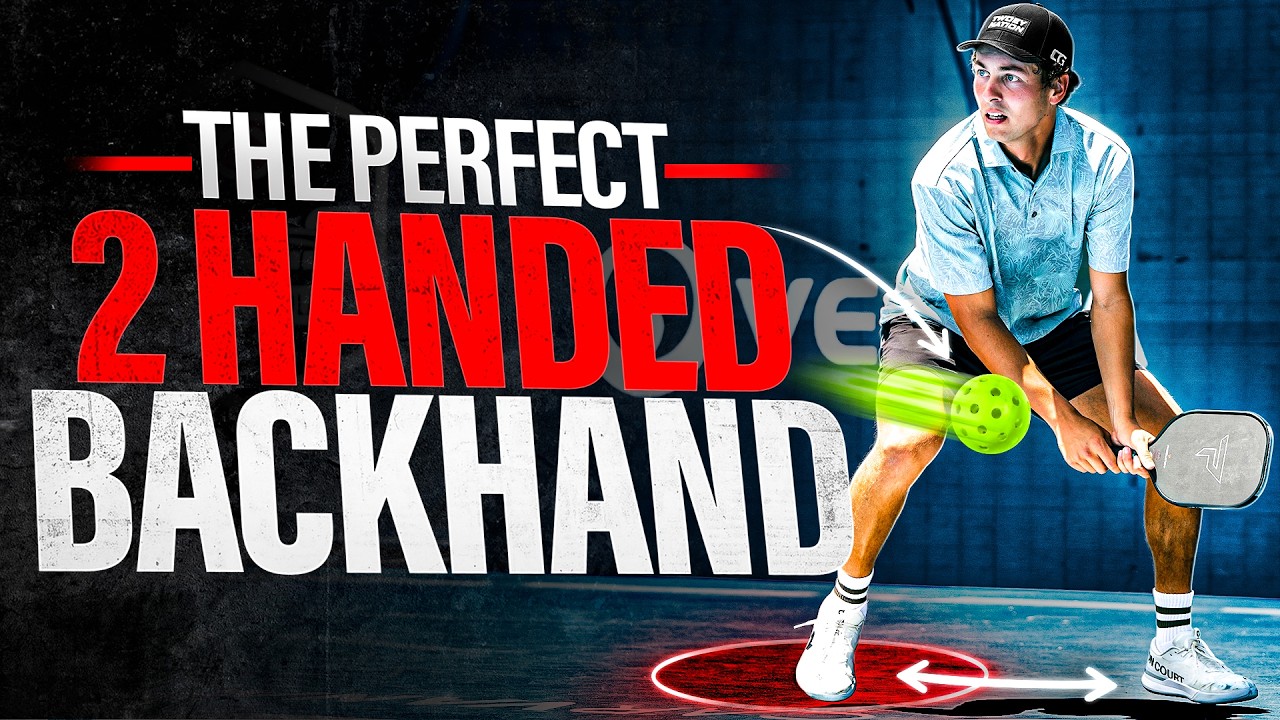
The two-handed backhand pickleball shot gives you power and control when built correctly. Here is exactly how to stop leaving pace on the table every time you hit it.
The two-handed backhand pickleball shot makes most players uncomfortable because they have never been taught the fundamentals behind it.
You show up to the ball, try to muscle it over the net, and it either floats short or clips the tape.
The problem is almost never effort. It is preparation, contact point, and how you move through the ball.
This breakdown comes from Connor Garnett on YouTube, where top-five professional player Connor Garnett walks through every mechanical layer of the shot, from grip to swing path to distance control.
Connor is know for having one of the most elite twoeys in the sport. So listen up.
Love pickleball? Then you'll love our free newsletter. We send the latest news, tips, and highlights for free each week.
Start With the Grip or Everything Else Breaks
Your grip sets the ceiling on your two-handed backhand pickleball shot before you ever swing.
Get it wrong and no amount of footwork or hip rotation saves you.
For right-handed players, your right hand goes into a continental grip, sometimes called a shake hand grip. That lines up with the top bevel of the paddle handle.
Your left hand then goes on the back of the paddle. This is where players get tripped up.
 Connor Derrickson
Three Finger Placements for the Two-Handed Backhand Pickleball Grip
Here are three finger placement options and what each one does:
- One finger on the back of the paddle: Garnett's default recommendation. Gives you a blend of feel and control. Start here.
- Two fingers on the back: Even more feel. Good for players who prioritize precision over pace.
- No fingers on the back: More power. Less feel. Better for players who already have solid timing.
Start with one finger. Once the shot feels repeatable, adjust from there based on whether you want more touch or more pop.
What Is the Kinetic Chain and Why Does It Matter Here?
The kinetic chain is the sequence of body segments that transfer energy from your feet through your hips, torso, arms, and finally into the paddle.
When any part of the chain gets blocked, you lose power at the contact point.
On the two-handed backhand pickleball shot, the most common chain breaker is bad footwork.
If your hips get closed off before you swing, the energy stops there and your arms have to do all the work alone.
That is why proper footwork is not optional. It is the foundation of every powerful rep on this shot.
If you want to build better footwork habits across the whole court, fixing your split step timing is a great place to start.
How Do You Move Your Feet to Set Up the Shot?
Get to the ball correctly and the two-handed backhand pickleball swing almost takes care of itself. Rush it or plant wrong and even a good grip cannot save you.
The Footwork Sequence for a Two-Handed Backhand Pickleball Setup
Here is the footwork sequence Garnett teaches:
- Shuffle toward the ball if it is close. Keep your hips open throughout the movement.
- Plant your outside foot (right foot for right-handed players). This is your anchor.
- Step in with your front foot using a heel-to-toe motion. That heel-to-toe detail naturally shifts your weight forward into the shot.
- If the ball is far away, use a crossover step followed by an outside plant, then step in with the front foot.
The move you must avoid: letting your front foot cross so far that you end up facing perpendicular to the court.
That closes your hips and kills the kinetic chain immediately.
Keep those hips open so your body can rotate through the ball, not around it.
For more on how footwork ties into your entire movement game, check out these pickleball footwork tips that apply at every level.
 The Dink Media Team
The Swing Path That Creates Power and Spin
This is where the shot actually becomes dangerous.
The swing path on a two-handed backhand pickleball shot is low to high, and that is not negotiable.
Your paddle needs to start below the ball. Not level with it. Below it.
That angle is what gives you the upward swing path to generate topspin and lift the ball cleanly over the net.
The Three Phases of a Two-Handed Backhand Pickleball Swing
- Paddle below the ball at setup, angled downward so you have room to swing up through contact.
- Hips drive the paddle out. You are not leading with your elbow or forcing with your arms. Your hips bring the paddle through.
- Put the paddle in the backpack. This is Garnett's cue for the finish. After contact, your paddle follows through up and behind your shoulder, like you are tossing it into a backpack on your back.
 Zoey Weil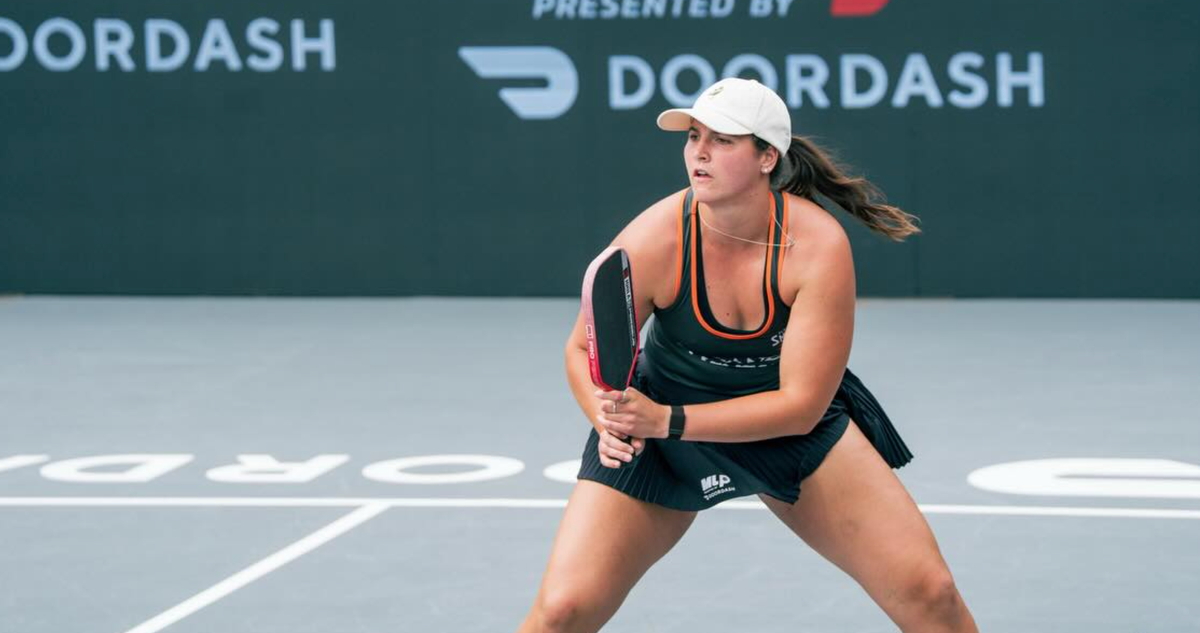
That finish locks in the low-to-high path and keeps the ball from dumping into the net.
If you start your swing above the ball, you will miss into the net almost every time. The fix is simple: get under it first.
You do not need to swing hard to get pace. The hips create the power. The swing path creates the spin. The backpack finish creates the control.
When all three work together, this shot sounds different off the paddle and you will hear it immediately.
Learn more about how spin and contact interact in this breakdown of pickleball drive spin and contact point.
 The Dink Media Team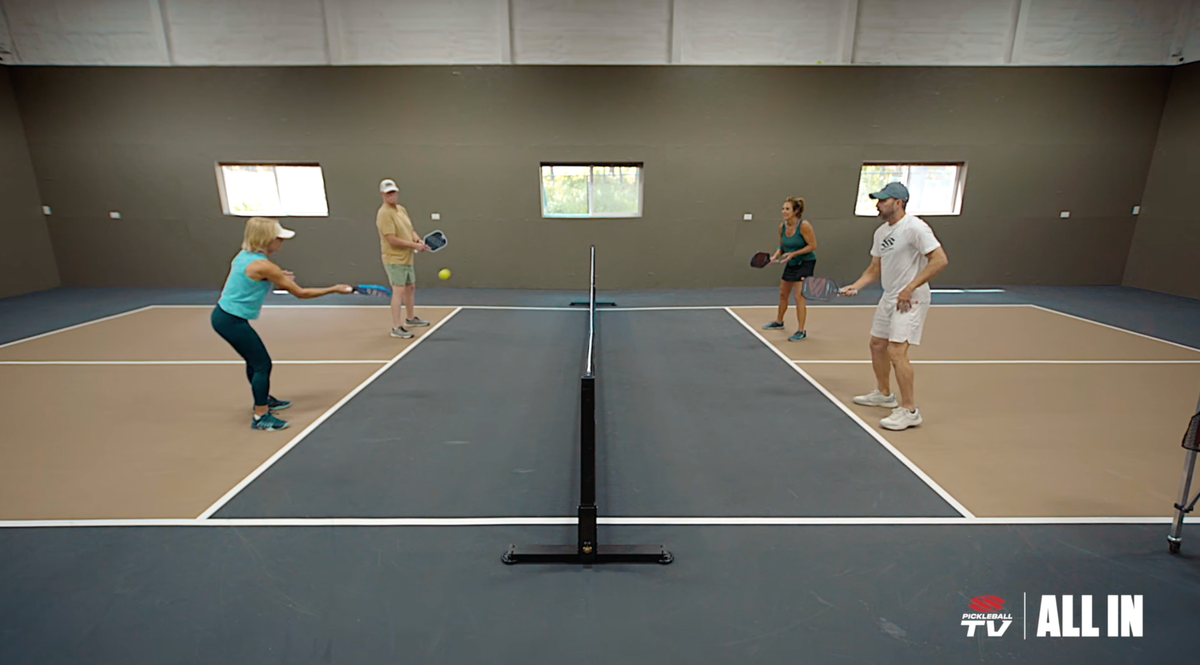
Why Is Your Contact Point Costing You Power?
Most players hit this shot with too little power not because of their swing speed but because of where they make contact with the ball. There are two contact mistakes that drain pace from your two-handed backhand pickleball shot.
The Two Contact Mistakes Killing Your Two-Handed Backhand Pickleball Power
Too close to your body: When your arms are tight to your torso, you shrink the lever your arms create. Physics works against you here. The further the contact point is from the center of rotation, the more acceleration you generate. Arms tucked in means less acceleration, less pace.
Too far in front: When the ball is too far out ahead of you, you have already passed the optimal impact window. The shot feels weak and you lose directional control at the same time.
The correct contact point lines up with the middle of your chest.
Your arms have enough extension to act as a full lever, and your hips and torso can still drive through the ball at that position.
When you get this right, the sound off the paddle changes. It becomes sharper and more consistent.
Garnett makes this point explicitly: slow your swing down, find the right contact point, and you will actually hit harder than players who are swinging as fast as they can from the wrong position.
This principle connects directly to what we cover in pickleball lessons for beginners about building timing before speed.
One mental cue that helps: think about letting the ball drop onto the paddle.
That slight pause before you swing naturally slows you down and puts you in the right position at contact.
 The Dink Media Team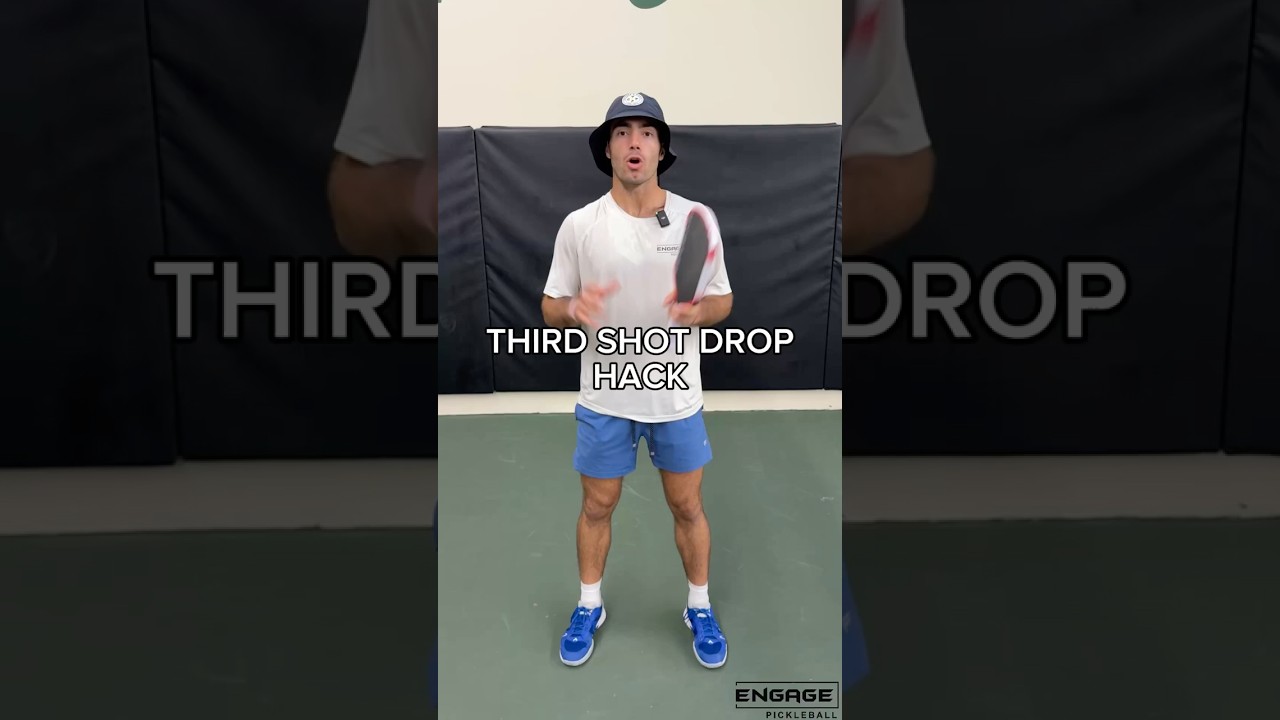
How Do You Control the Ball Instead of Just Hitting It?
Power without control is just chaos. The shoulders are the key to keeping your two-handed backhand pickleball precise.
Most players stand upright and swing directly through the ball. That gives you impact but no ability to shape where the ball goes.
Instead, lean your shoulders slightly into and around the ball at contact.
This motion absorbs some of the impact and redirects it into the direction you want the ball to travel.
Think of it as going around the ball slightly rather than straight through it.
When your shoulders are down and wrapping around the contact, you will keep the ball lower over the net and place it more accurately.
Stand tall and swing through it directly and the ball pops up with less control.
For more on keeping dinks and drives down in the court, this article on two-handed backhand dink fixes covers the same shoulder principle applied at the kitchen.
 The Dink Media Team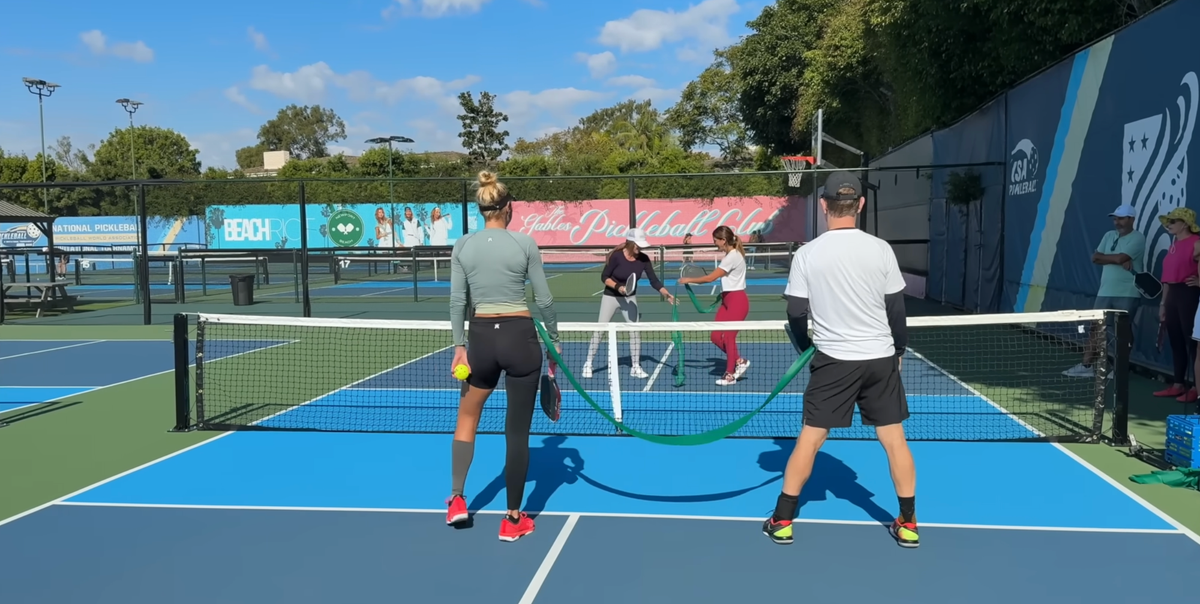
Distance Control: The Backswing Is Your Volume Knob
Once you have the swing path and contact point sorted, two-handed backhand pickleball distance control comes down to two variables: how far you start your backswing from the ball and how long you wait before initiating it.
Two-Handed Backhand Pickleball Distance Fixes That Work Immediately
- Missing long consistently? Shorten the backswing. Start your paddle closer to the ball before you swing. Same swing speed, shorter path, less pace.
- Missing short consistently? Take a fuller backswing. More distance for the paddle to travel before contact means more acceleration through the ball.
- Dealing with a hard incoming shot? Skip waiting for the ball to drop. Shorten your swing and absorb the pace that is already on the ball.
The trick is that your swing speed can stay relatively constant.
You regulate distance by changing the length of the backswing, not by swinging harder or softer.
That consistency is what makes this shot repeatable under pressure.
Letting the ball drop onto the paddle before you swing is the master skill underneath all of this. The ball is slowest at the bottom of its arc.
Contacting it there gives you the most time, the most control, and the clearest read on where to place it.
That patience is exactly what separates players who look smooth from players who look rushed. If you want to build the full skill set around managing pace, start there.
The two-handed backhand pickleball shot is genuinely one of the most powerful weapons in pickleball when built correctly.
The two-handed backhand counter at the highest level works off these exact same foundations.
Start with the grip, get your footwork opening your hips, swing low to high, find that chest-level contact point with arm extension, and wrap your shoulders around the ball.
That is the whole blueprint.
For more on building a complete backhand game, including how the same mechanics apply to drops, see this guide on keys to a better backhand third shot drop.
And if you want to see how the two-handed roll fits into your attacking game, this breakdown of the two-handed backhand roll is a natural next step.
Frequently Asked Questions
What grip should I use for a two-handed backhand in pickleball?
Your right hand (for right-handed players) should use a continental grip on the top bevel of the handle. Your left hand goes on the back of the paddle, with one finger extended as a starting point for feel and control. Adjust the number of fingers based on whether you want more touch or more power.
Where should I make contact with the ball on a two-handed backhand?
Contact should line up with the middle of your chest, with your arms extended enough to create a full lever away from your body. Too close and you lose acceleration. Too far in front and you lose pace and direction.
Why does my two-handed backhand go into the net?
The most common cause is starting your paddle at or above ball level instead of below it. You need a low-to-high swing path to generate lift and topspin. Drop your paddle tip below the ball before you swing and finish up toward your backpack.
How do I get more power on my two-handed backhand without swinging harder?
Power comes from your hips, not your arms. Let your hip rotation drive the paddle through contact and focus on getting the correct contact point at chest level with arm extension. Most players who swing fast but hit soft are contacting the ball too close to their body or too far in front.
How do I control distance on my two-handed backhand?
Use your backswing length as the primary control. A shorter backswing produces less pace even at the same swing speed. A longer backswing adds distance.
Let the ball drop to its slowest point before initiating your swing for the most consistent results.

Love Pickleball? Join 100k+ readers for free weekly tips, news & gear deals.
Subscribe to The Dink