
Why Your Two-Handed Backhand Dink Keeps Going Long (And How to Fix It)
The two-handed backhand dink is one of the most deceptive shots in pickleball when done right. Here is exactly how to stop hitting it long and start generating topspin that moves your opponents around.
The two-handed backhand dink is one of the most underused weapons at the kitchen line, and most players who try it are making the same contact mistake.
They hit it like a tennis shot. They drive through the ball with too much forward momentum, the paddle face closes up, and the ball sails long or pops up for an easy attack.
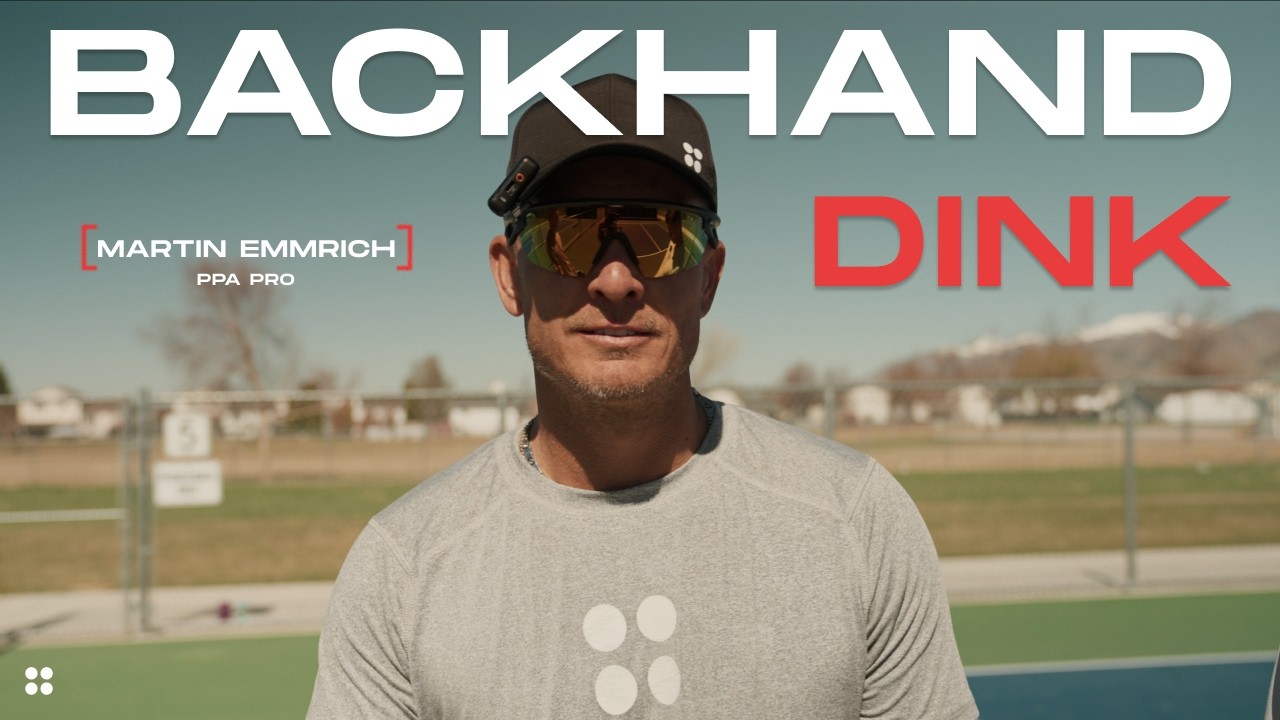
PPA Pro Martin Emmrich broke down the exact fixes in a lesson with Holbrook Pickleball on YouTube, and the details here are specific enough to change how you dink starting today.
Love pickleball? Then you'll love our free newsletter. We send the latest news, tips, and highlights for free each week.
Why the Two-Handed Backhand Dink Is Worth Learning
If you are starting out with dinking technique, Emmrich's advice is clear: skip the slice and go straight to the two-handed topspin dink.
The slice dink is fine for placement, but it gives opponents a visual cue. When you add your second hand to a slice, they already know something is coming.
That alarm bell kills your element of surprise.
With the two-handed topspin dink, your speed up and your dink look identical at setup. Same grip, same motion, different pace. That is the whole point.
Emmrich puts it bluntly: roll a slow dink, roll another slow dink, then speed up with the exact same swing. Your opponent cannot read it. That is a weapon.
If you want to understand how topspin dinks create offense at the kitchen, this breakdown of 7 topspin dink keys is worth reading alongside this lesson.
What Are You Actually Doing Wrong?
The biggest mistake players make with the two-handed backhand dink is coming from a tennis contact point.
In tennis, you hit from behind the ball and drive through it, even on topspin shots.
In pickleball, that motion hits the ball too hard and too flat. The result is a deep dink that your opponent can volley directly out of the air.
Emmrich's correction is simple but counterintuitive. You need to get your paddle under the ball, not behind it.
Then you brush upward toward your chin, reducing forward momentum and adding topspin that pulls the ball down into the kitchen.
This is also why players who pop up their dinks tend to be coming over the top of the ball or driving flat.
Check out these three fixes that stop you popping up dinks if that is a recurring problem.
The 5 Keys Martin Emmrich Teaches for This Shot
Here is the exact framework Emmrich walked through in the lesson.
- Get under the ball, not behind it. Your paddle contact point needs to be below the equator of the ball. Think about cupping it from underneath rather than swinging through it like a drive.
- Brush up toward your chin. The swing path goes up, not forward. You are rolling the ball with topspin, not pushing it toward the net. Less momentum forward, more momentum upward.
- Open the paddle face. Yes, even though it feels like you will pop it up. The upward brush creates the topspin that brings the ball back down. An open face paired with forward drive is what causes pop-ups, not an open face paired with an upward brush.
- Use 70% left hand, 30% right hand (for right-handed players). Your dominant right hand will try to take over and pull the shot. Let your left hand lead the motion. The right hand is there for coordination, not power.
- Get into position before contact. Your paddle should start at your knee level. If you are reaching out or making contact high on your body, you cannot execute the upward brush properly. Your feet have to move to make this shot work.
Every one of these keys connects back to the same root idea: stop treating this shot like a tennis groundstroke.
 The Dink Media Team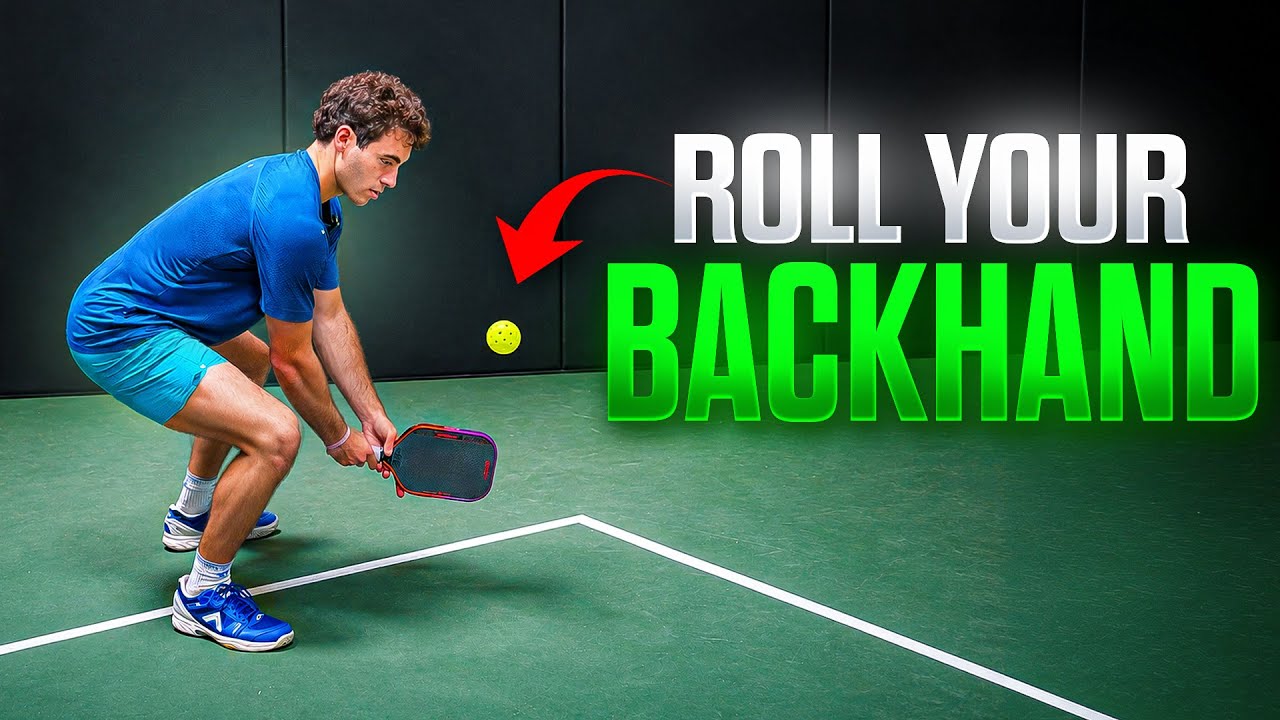
Why Does the 70/30 Hand Rule Change Everything?
This is the detail that most players miss when they first try the two-handed backhand dink.
As a right-handed player, your right hand is stronger and more coordinated. That sounds like an advantage, but on this shot it is a liability.
Your right hand wants to pull through the contact, which opens your upper body and throws off your swing path.
When you commit 70% of the motion to your left hand, you stay compact. Your shoulders do not rotate open. The paddle stays on the correct upward track.
Emmrich points out that even though the left hand is less coordinated, the 30% contribution from your right hand is enough to keep the shot precise.
You are not abandoning coordination. You are just stopping your dominant hand from taking over the whole swing.
This concept connects directly to how players master the two-handed backhand roll, where hand dominance management is just as critical.
 The Dink Media Team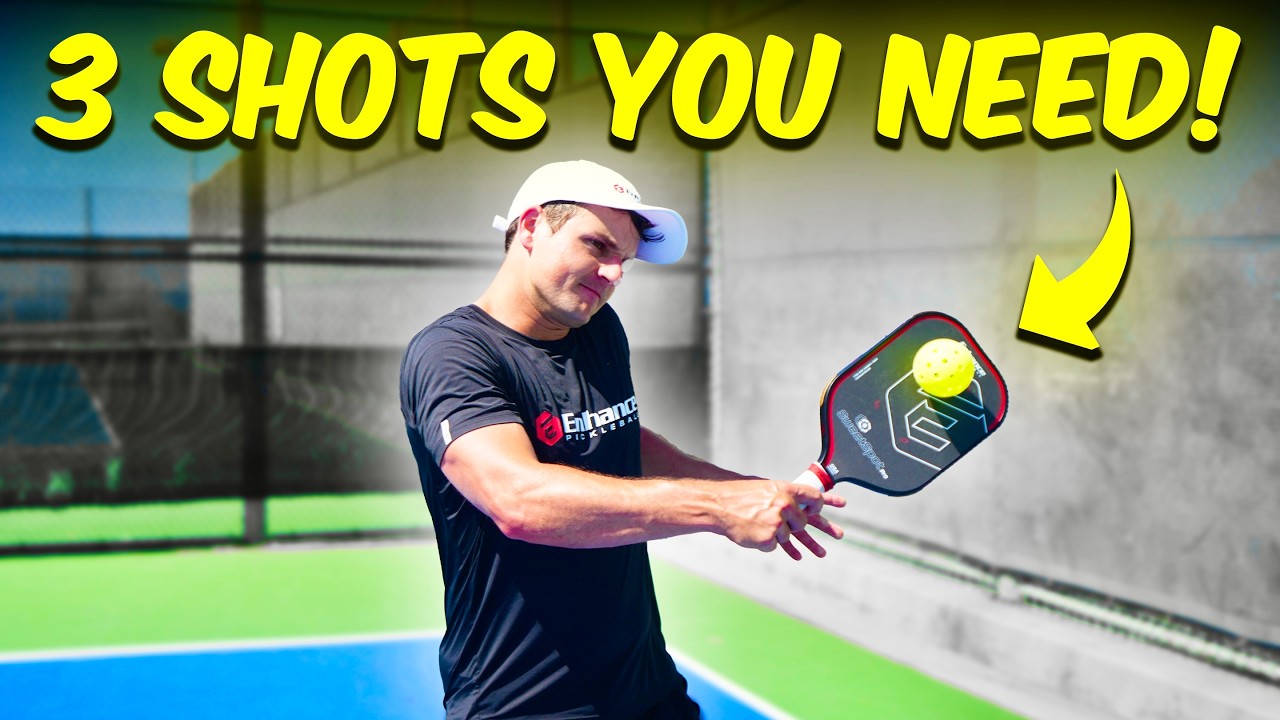
What Should Your Target Look Like at the Kitchen?
Shallow is always better than deep for dinks. This sounds obvious but it changes how you aim the shot.
Emmrich is specific about this. If your dink lands deep in the kitchen or near the transition zone, your opponent can volley it out of the air and attack.
You have given them a free offensive opportunity.
You want the ball to bounce close to the kitchen line on their side, in a spot they cannot reach with a volley.
That forces them to let it bounce and dink back up, keeping the rally neutral.
Once you have the shallow dink working consistently, you can start moving the ball around.
Roll one out wide to the backhand, roll another to the middle, then speed up to the body.
That variety is what makes the fake dink and speed up combo so effective when the two-hander is your base shot.
 The Dink Media Team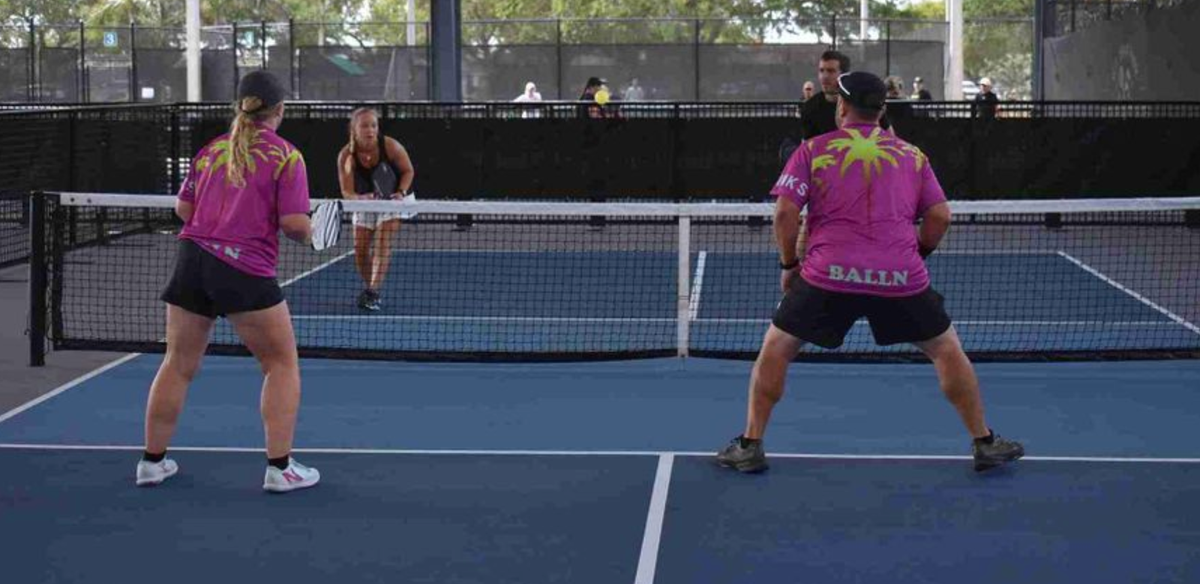
How Does Footwork Actually Affect This Shot?
You cannot hit this shot well from a bad position. Full stop.
Emmrich emphasizes that for right-handed players, the ideal contact happens when your left leg is forward.
If the ball pulls you onto your right leg, your body moves out of the shot and you lose control of the swing path.
This means you need to be reading the incoming ball early and moving before contact, not reacting after it bounces.
Connor Garnett gets singled out by Emmrich as a pro who executes this perfectly, staying so low and forward that the shot becomes almost automatic.
Staying athletic with good knee bend is the foundation.
Check out the breakdown on pickleball knee bend and how to stop using your back to get low if your stance is still collapsing under pressure.
Here is a quick checklist for your pre-shot setup on every two-handed backhand dink:
- Knees bent, weight forward on the balls of your feet
- Left leg forward at contact (right-handed players)
- Paddle starting at or below knee height
- Grip pressure at 70% in the left hand before the swing begins
- Eyes on the ball's contact point, not on where you want it to go
Getting these habits locked in during drilling is the difference between a shot that works in warmup and one that holds up in a real game.
 The Dink Media Team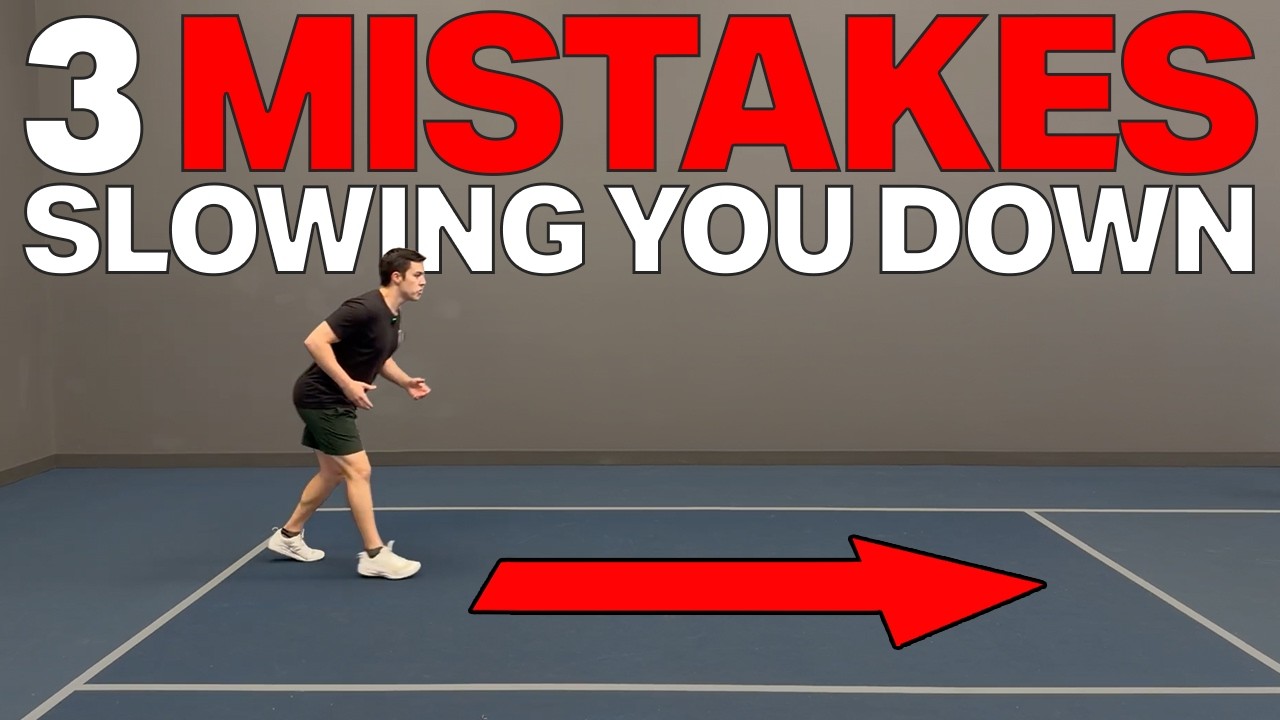
How Do You Train This Shot When You Are Not in a Lesson?
Repetition in isolation first, then add pressure.
Start by working cooperative cross-court dink rallies where both players are specifically grooving the upward brush and shallow target.
You are not trying to win the rally. You are building the motion.
Once the spin is consistent and the ball is landing shallow, introduce the speed up from the same setup.
goal is to make both shots feel identical until the moment of acceleration. If your partner can tell a speed up is coming before contact, your disguise is not there yet.
For structured drilling, these three backhand dink drills for kitchen mastery give you a progression you can run with a partner in any session.
The players who improve fastest on this shot are the ones who track their spin, not just their placement.
If the ball is not rotating forward off the paddle, the technique is still off regardless of where it lands.
If you are working toward a rating jump and want to know which other shots matter most alongside this one, these five shots every 4.0 player needs to reach 4.5 lay out the full picture.
And if you want to understand why some 4.0 players never seem to break through despite practicing, these three habits keeping 4.0 players stuck are worth an honest look.
The two-handed backhand dink is not a complicated shot. But it demands that you unlearn the tennis instincts and commit to a motion that feels wrong at first.
Once the spin clicks, you will wonder how you ever dipped without it.
Getting the topspin working also ties directly into disguising your speed ups so they stop getting attacked. That is the payoff for all of this work at the kitchen line.
Master the contact point, trust the upward brush, and let your left hand do more work than feels natural.
Do that consistently and you will start to see exactly why Martin Emmrich calls this the first shot he would teach any player learning pickleball today.
Frequently Asked Questions
What is the biggest mistake players make with the two-handed backhand dink?
The most common mistake is driving through the ball with forward momentum, which is a carryover from tennis. You need to contact the ball from underneath and brush upward toward your chin, not push forward through the shot. That forward drive kills your spin and causes the ball to go long or land deep where opponents can volley it.
Should I use more left hand or right hand on a two-handed backhand dink?
For right-handed players, your left hand should contribute about 70% of the motion. Your right hand is there for coordination only, contributing roughly 30%. If your right hand takes over, it pulls your upper body open and ruins the swing path.
Why does the two-handed backhand dink disguise a speed up better than a slice dink?
With a slice dink, adding your second hand to the paddle is a visible signal that something is changing. Opponents read that cue immediately. With the two-handed topspin dink, your setup and swing look identical whether you are rolling slow or accelerating into a speed up, so opponents cannot read your intention before contact.
How shallow should my two-handed backhand dink land?
Your target should be close to the kitchen line on your opponent's side, not deep in the transition zone. A deep dink gives opponents the chance to volley it out of the air and attack you. A shallow dink forces them to let it bounce and reset, keeping the point neutral.
What foot position should I be in when I hit a two-handed backhand dink?
Right-handed players should have their left leg forward at the moment of contact. If the ball pulls you onto your right leg, your body rotates away from the shot and you lose control. Move your feet early so you are always making contact with that left foot forward and your weight stable.
Love Pickleball? Join 100k+ readers for free weekly tips, news & gear deals.
Subscribe to The Dink