
If you're stuck at 4.0 pickleball, the problem probably isn't your technique. These five shots close the gap between 4.0 and 4.5 faster than any drill you're currently running.
If you're playing 4.0 pickleball and keep losing to players you know you're better than, the problem is almost never your mechanics.
The problem is your shot menu. You're showing up to 2026 matches with a 2022 toolkit, and the game has moved on without you.
These five shots come from Cliff Pickleball on YouTube, and they cover exactly what separates players who plateau at 4.0 from those who push through to 4.5 and beyond.
Love pickleball? Then you'll love our free newsletter. We send the latest news, tips, and highlights for free each week.
The Real Problem Is Not What You Think
Most players at 4.0 can drop, drive, and dink. Those shots are fine. What they're missing is a second response from the same position.
When the ball is comfortable and your opponent is giving you time, you still reach for the same slow, floaty shot you use under pressure.
That is a free gift to anyone who knows how to attack.
Modern pickleball rewards players who can read the situation and change the speed, shape, and intention of a shot from one rally to the next.
If you only have one answer per scenario, better players will figure you out fast. Here is how to fix that.
Shot 1: The Aggressive Topspin Drop
The old version of this shot is slow, soft, and high. That version has its place when you are under pressure.
But when you are balanced and comfortable, hitting that same floaty ball is giving your opponent all the time they need to settle and attack.
The aggressive topspin drop travels with real speed, clears the net safely, lands deep in the kitchen, and forces your opponent to contact it below net level.
That last part is the key. If they have to hit up, they cannot attack you.
Here is how to execute it correctly:
- Get your paddle underneath the ball with a relaxed grip
- Brush forward and upward into the back of the ball, not straight up
- Start the motion from the shoulder, let the wrist finish naturally
- Accelerate without tension; squeezing kills the spin and turns it into a flat drive
The most common mistake is trying to generate topspin entirely from the wrist. That is where inconsistency comes from. The motion starts at the shoulder.
Use this shot every time you get a short return, you are balanced, and the ball is sitting at knee height or above.
If your opponent is crowding the kitchen line, the speed removes their time and the topspin keeps the ball in the court.
For more on keeping a forehand topspin drop low and effective, that breakdown is worth your time.
Shot 2: The Fifth Shot Counter
Everyone practices the third shot drop. Almost nobody practices what happens next.
Your opponent drops the third shot right at you as you move forward. Most players panic and block it back softly, straight into the same problem.
That passive block hands the serving team another chance to reset and attack.
The fifth shot counter puts the serving team back under pressure immediately. Here is the mechanic:
- Paddle out in front of your body at all times
- Use a compact swing, absorb slightly with the elbow
- Push forward through the ball, never take the paddle behind your body
- The pace is coming to you already; you are redirecting, not manufacturing power
Your target matters more than how hard you hit it.
Aim at the player who is still transitioning, the middle between both opponents, or the outside foot of the player who drove the ball.
Pick one of those three before the ball arrives.
This is one of the most underrated shots in recreational pickleball because players spend zero minutes practicing it. That gap is fixable.
 The Dink Media Team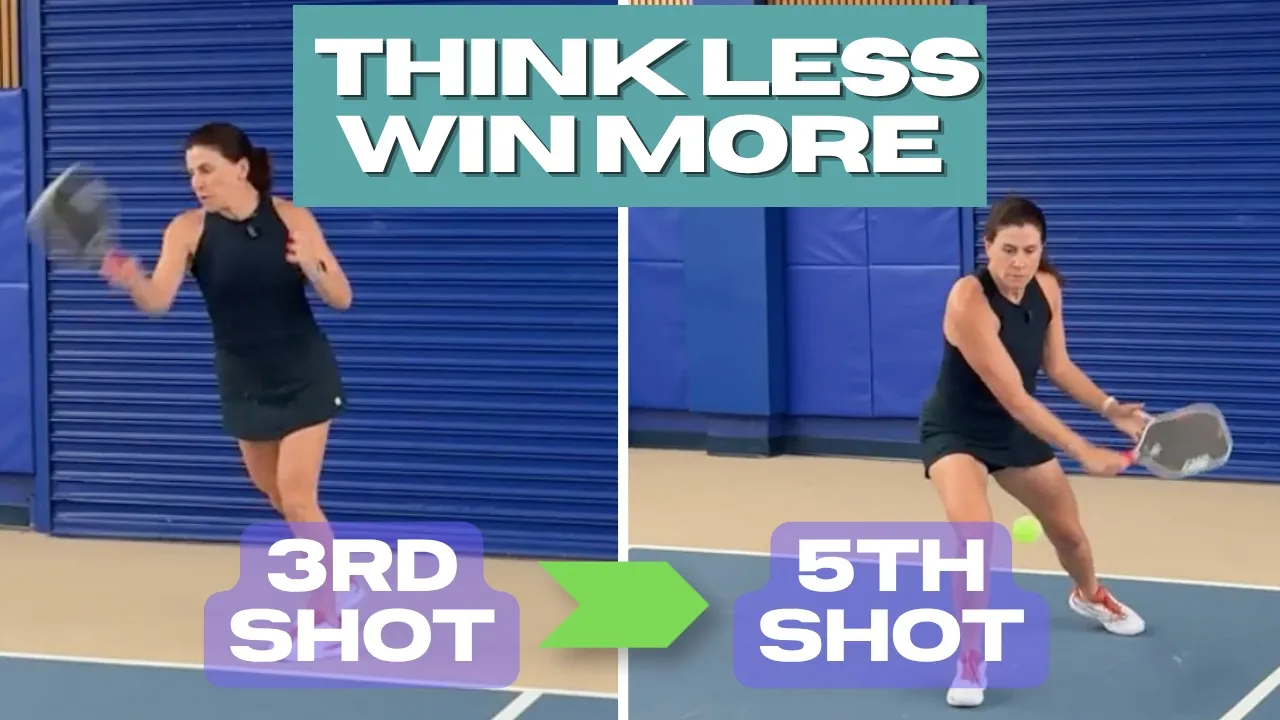
Shot 3: The Two-Handed Backhand Roll
This is becoming one of the most important shots in the modern game. It lets you attack balls that are slightly below net level without needing a full backswing.
That used to be a purely defensive situation.
Now it is an offensive one.
Your dominant hand controls the paddle face. Your non-dominant hand creates the acceleration and the topspin.
That division of labor is what makes the shot work.
The mechanics are straightforward. Tip of the paddle slightly down, elbow connected close to your body.
Pull the paddle forward and upward with your non-dominant hand.
Finish across your body, not up toward the ceiling.
Use it when the ball is slightly below the net in front of your back hip, or when a ball is bouncing easy in the kitchen and it is too low to drive flat but high enough to apply pressure.
Here is a deeper look at why the two-handed backhand belongs in your game.
One important reminder: you are not always trying to win the point with this shot.
Sometimes the goal is to create a difficult return that you can finish on the very next ball.
 The Dink Media Team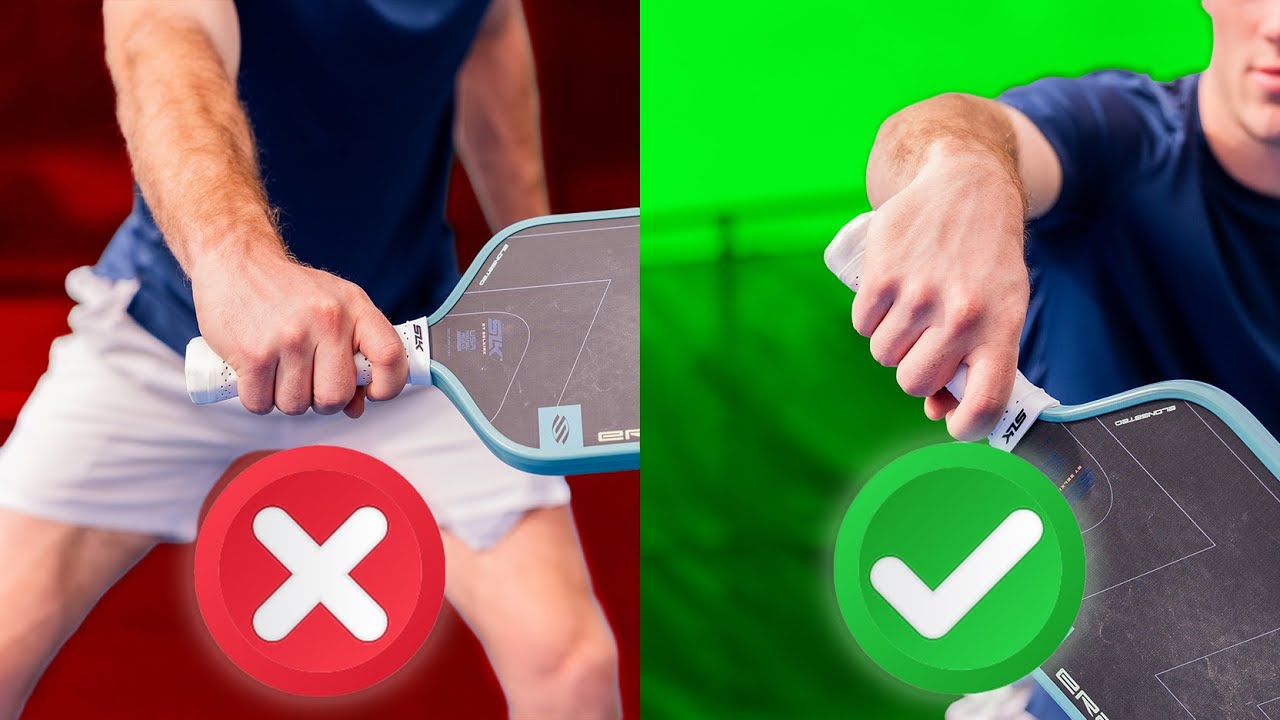
What Is the Hybrid Drive and Why Does It Create Indecision?
The hybrid drive sits between a full drive and a standard drop, and it does something neither of those shots can do alone.
It creates genuine indecision in your opponent.
A full drive at pace gives your opponent something clear to redirect. A slow float gives them time to set up and attack. The hybrid drive gives them neither.
They do not know whether to block it, volley aggressively, or let the ball bounce.
Hit it at 60 to 70 percent speed with topspin, using a compact swing. Your target is around the feet or the paddle side of whoever is at the kitchen line.
The ball should not scream at them but it should not float either.
When a player is guessing, they produce weak returns. You are not building power here. You are building hesitation, and that hesitation is a weapon.
For players working on keeping opponents uncomfortable, the hybrid drive fits directly into that approach.
 The Dink Media Team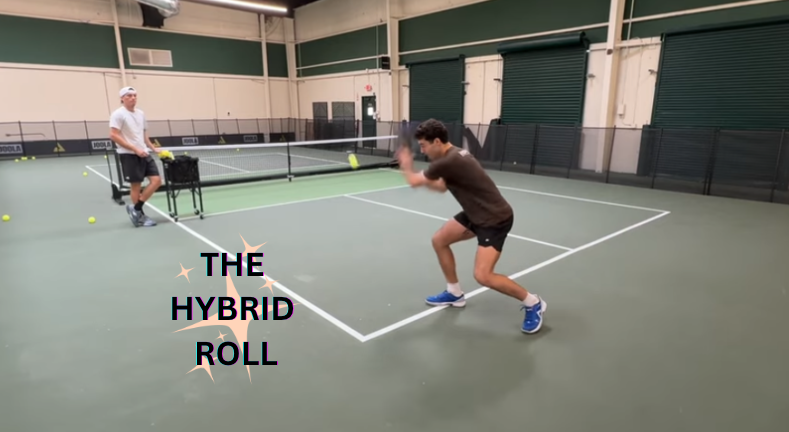
How Do You Execute the Counter Reset Without Panicking?
This shot separates 4.0 players from 4.5 players more than anything else on this list. It is not flashy. It will never show up in a highlight.
But players who have it are very hard to beat.
The difference comes down to decision timing. Intermediate players decide whether to attack or defend before the ball even arrives.
Advanced players read the ball and make the decision based on where it actually lands.
Here is the mechanic for the counter reset:
- Start in a counter-ready position with your paddle out front
- If the ball arrives at a height you can work with, punch forward through it
- If it drops below your ideal contact point, relax your grip, shorten your swing, and let the ball rebound softly into the kitchen
- The read happens after your opponent strikes the ball, not before
That last point is the hardest part for most players to accept. Pre-deciding your shot based on what you think is coming is exactly what gets you into trouble.
If you are struggling with resets popping up, this breakdown on reset mechanics explains exactly why that happens and how to correct it.
 The Dink Media Team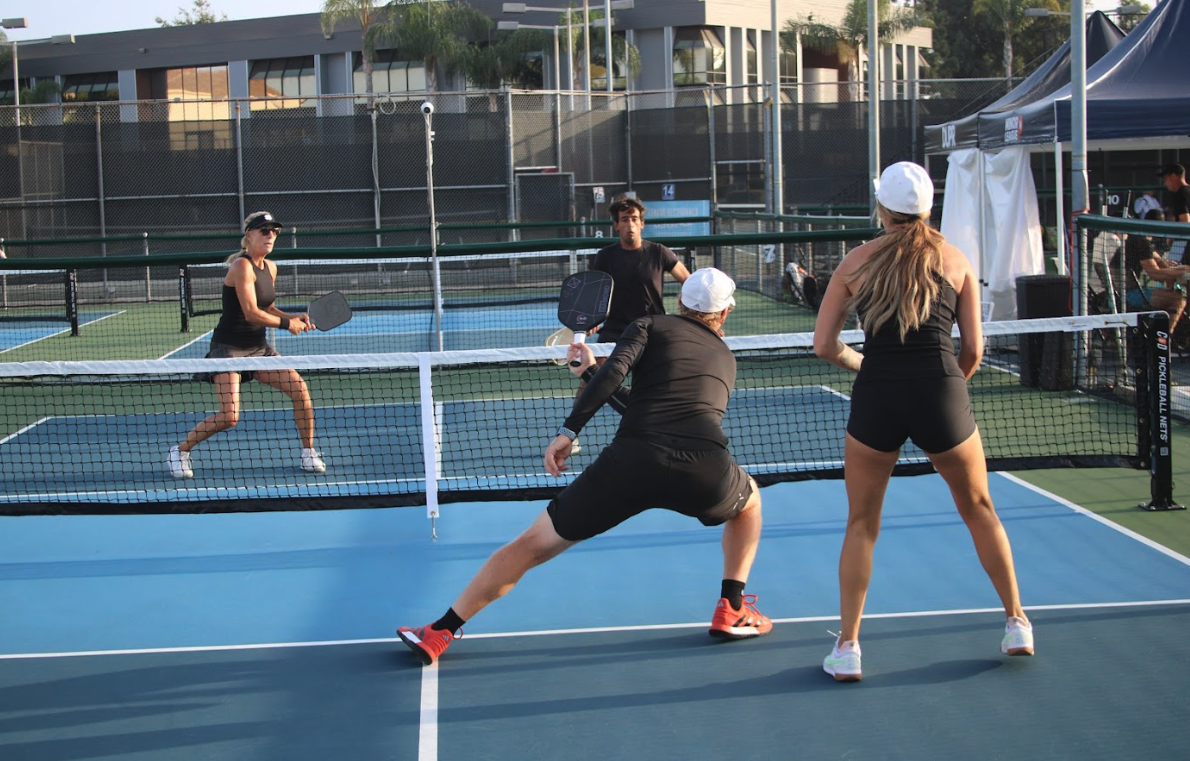
How Do You Actually Build These Shots Into Your Game?
You do not need to master all five of these right now. That is the wrong approach and it leads to confusion on the court.
Pick the one shot that shows up most often in your matches. Give it two focused weeks.
Not just the mechanics, but learning to recognize the right ball and the right moment to use it.
A good shot used at the wrong time is still a bad decision.
The players moving from 4.0 to 4.5 are not necessarily hitting harder or moving faster. They are making better decisions one moment earlier than their opponents.
That is what a wider shot menu actually gives you.
It gives you options, and options give you time to think.
If you want to see how this connects to broader patterns at the kitchen line, this piece on what separates 4.0 from 5.0 players is a useful companion read.
You can also look at the shots that help players reach 4.0 faster to understand what foundation you are building on.
For the mechanical side of staying controlled under pressure, these three reset fixes will clean up the most common errors that cost points at the 4.0 level.
And if you are losing points because you are giving opponents too much time to breathe, constant pressure tactics will show you how to fix that specifically.
The fifth shot counter, the aggressive topspin drop, the two-handed backhand roll, the hybrid drive, and the counter reset are five responses that most 4.0 players simply do not have.
Adding even two of them to your regular game changes how opponents have to plan against you. That is the real goal.
Being harder to read, and harder to beat.
For players who want to go deeper on attacking the right ball at the right moment, these five factors for when to speed up are worth studying alongside this list.
And if the transition zone is still costing you points as you try to bring these shots together, here is why most mistakes happen there and what you can do about it.
Frequently Asked Questions
What is the biggest difference between 4.0 and 4.5 pickleball players?
The biggest difference is shot variety from the same position. A 4.5 player can attack or reset from identical court positions, while a 4.0 player typically commits to one response before the ball arrives. That pre-decision is what gets exploited.
What is the hybrid drive in pickleball?
The hybrid drive is a shot hit at 60 to 70 percent speed with topspin, landing around the feet of a player at the kitchen line. It sits between a full drive and a standard drop, which creates indecision because your opponent cannot clearly identify it as a ball to block, volley, or let bounce. That hesitation produces weak returns.
How do you hit a topspin drop without losing control?
The key is starting the motion from the shoulder and letting the wrist finish naturally, rather than trying to generate all the spin from the wrist alone. Keep your grip relaxed throughout the swing because tension kills the spin and produces a flat drive instead. Brush forward and upward into the back of the ball, not straight up.
When should you use the two-handed backhand roll in pickleball?
Use it when the ball is slightly below net level in front of your back hip, or when a bounce in the kitchen is too low to drive flat but high enough to apply real pressure. Your non-dominant hand drives the acceleration and topspin while your dominant hand controls the paddle face. This shot turns what used to be a defensive situation into an offensive one.
Why does the counter reset matter more than a standard block?
A standard block sends the ball back passively and keeps the pressure on you. The counter reset reads the incoming ball first and either punches through it when the height is right or absorbs it softly into the kitchen when it drops. That ability to produce two different outcomes from one ready position is what makes players at the 4.5 level very difficult to attack consistently.

Love Pickleball? Join 100k+ readers for free weekly tips, news & gear deals.
Subscribe to The Dink