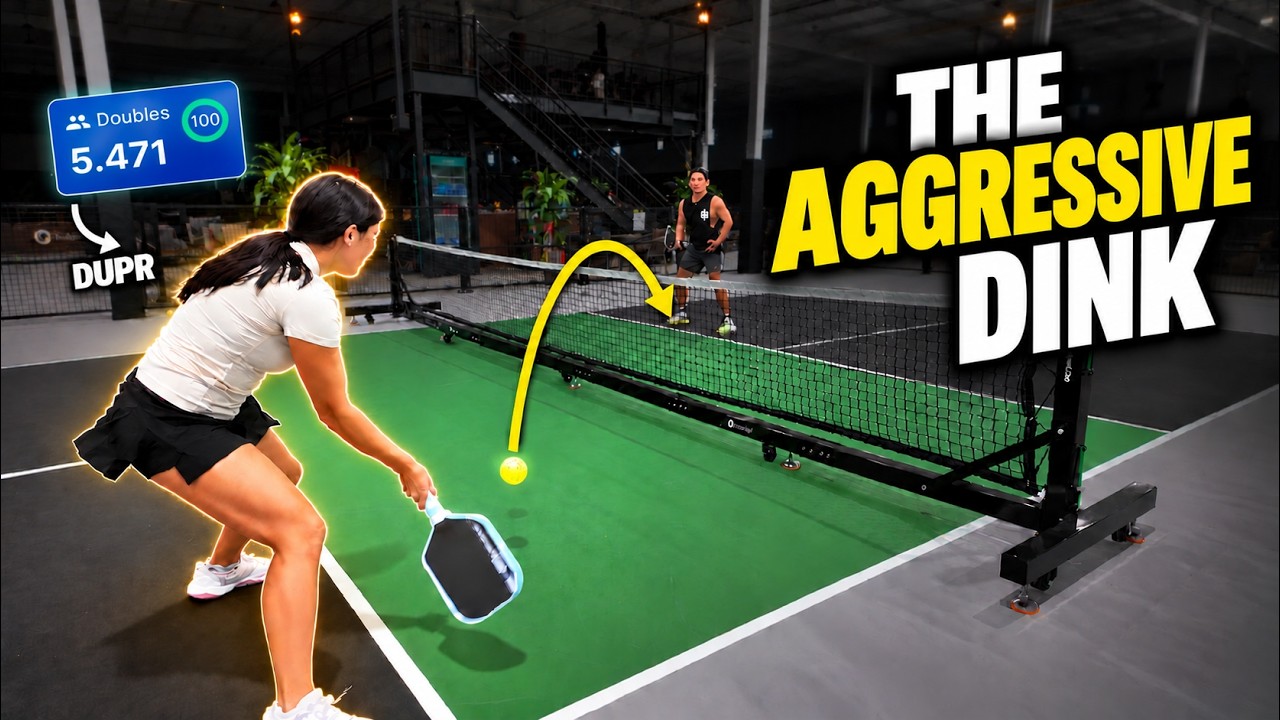

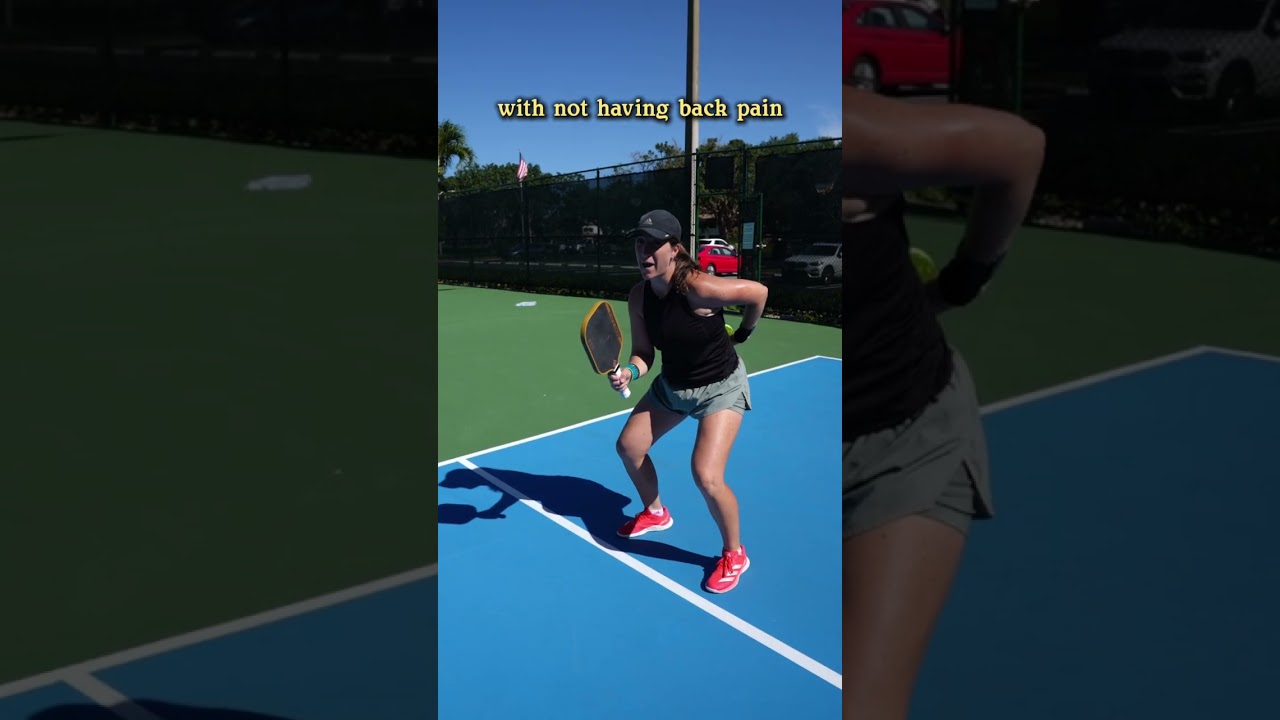
Most players think they're bending their knees in pickleball, but they're actually just hunching their back. Fix your pickleball knee bend and you'll move better, reach more, and stop hurting.
A proper pickleball knee bend is one of the most misunderstood fundamentals in the game, and it is costing recreational players balance, reach, and healthy backs every single session.
Ask any rec player if they bend their knees and they will say yes without hesitation.
But watch them play for five minutes and you will see the truth: most of them are folding at the waist with straight legs, not actually getting low through a genuine knee bend.
This piece breaks down exactly what proper knee bend looks like, why the fake version is so common, and what you need to do to fix your stance for good, a foundation that also feeds into a simple 4-step system to win more pickleball games.
The insight comes directly from Mari Humberg Pickleball on YouTube, whose sharp eye for common mechanical errors makes this one of the clearest breakdowns of the topic available.
Love pickleball? Then you'll love our free newsletter. We send the latest news, tips, and highlights for free each week.
The Fake Knee Bend Nobody Talks About
Here is the core problem: when most players think about getting low, they hinge forward from their hips and round their lower back.
Their legs stay nearly straight. This is not a knee bend.
This is a back bend.
The real version means your knees push outward and forward over your toes, your hips drop, and your chest stays relatively upright.
The difference between these two positions is enormous, even if both feel like "getting low" in the moment.
If you have ever walked off the court with a tight or aching lower back, the fake knee bend is likely the culprit.
Repeated hunching under pressure puts consistent strain on the lumbar spine in a way that a proper athletic squat does not.
Why Does This Mistake Happen So Often?
Part of the reason is habit. Most people are not naturally trained movers, and when someone says "get low," the easiest physical response is to tip the torso forward.
It feels like you are getting closer to the ball, which is part of the goal, so the movement gets reinforced.
The other reason is that the fake knee bend does not immediately punish you the way other mistakes do. A missed dink is instant feedback.
A slightly wrong stance just quietly limits you over time.
You do not notice how much balance and reach you are sacrificing until you stand in a real athletic stance and feel the difference.
That comparison is the whole point of Mari Humberg's demonstration in the video.
What Does Proper Knee Bend Actually Look Like?
Proper pickleball knee bend is an athletic squat position applied to a ready stance.
Think of it like a basketball defensive stance or the start position of a tennis player waiting for a serve.
Here is what it requires:
- Feet roughly shoulder width apart, toes pointed slightly outward
- Knees bent and tracking over the toes, not caving inward
- Hips pushed back slightly, weight in the middle of the foot
- Chest upright, not folded forward over the legs
- Paddle held in front of the body at roughly waist height
Notice that the chest stays up. This is the biggest visual tell between the real version and the fake.
If your eyes are looking at the ground because your torso is pitched forward, your stance is wrong.
 The Dink Media Team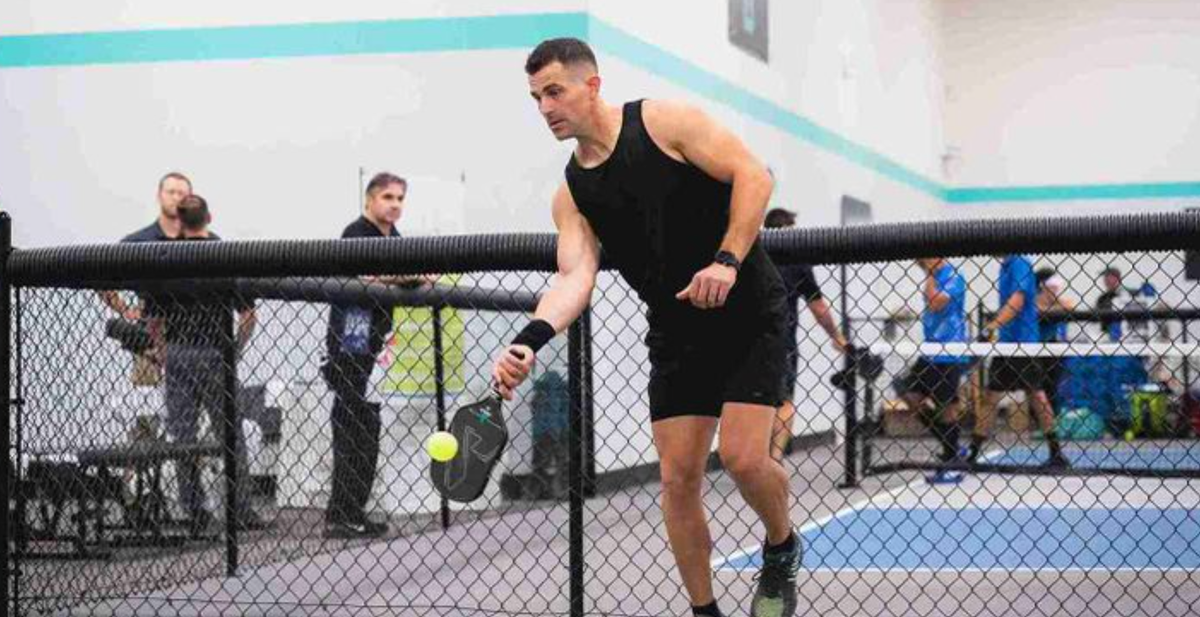
How Does This Help Your Balance?
When you bend at the back instead of the knees, your center of gravity shifts too far forward. You are essentially leaning.
Any fast ball to your left or right forces a recovery step just to stay upright before you can even swing.
A true knee bend keeps your weight centered and low.
Balanced weight distribution means you can move left or right, forward or back, without first correcting a lean.
Every split step, shuffle, and reset starts from a more neutral and powerful position.
This is why you will often see elite players looking almost effortless when they cover the court.
Their footwork is not magic. It starts with a stance that lets them push off in any direction immediately.
If you want to work on that kind of movement, this complete drop step guide breaks down the footwork mechanics behind it.
 The Dink Media Team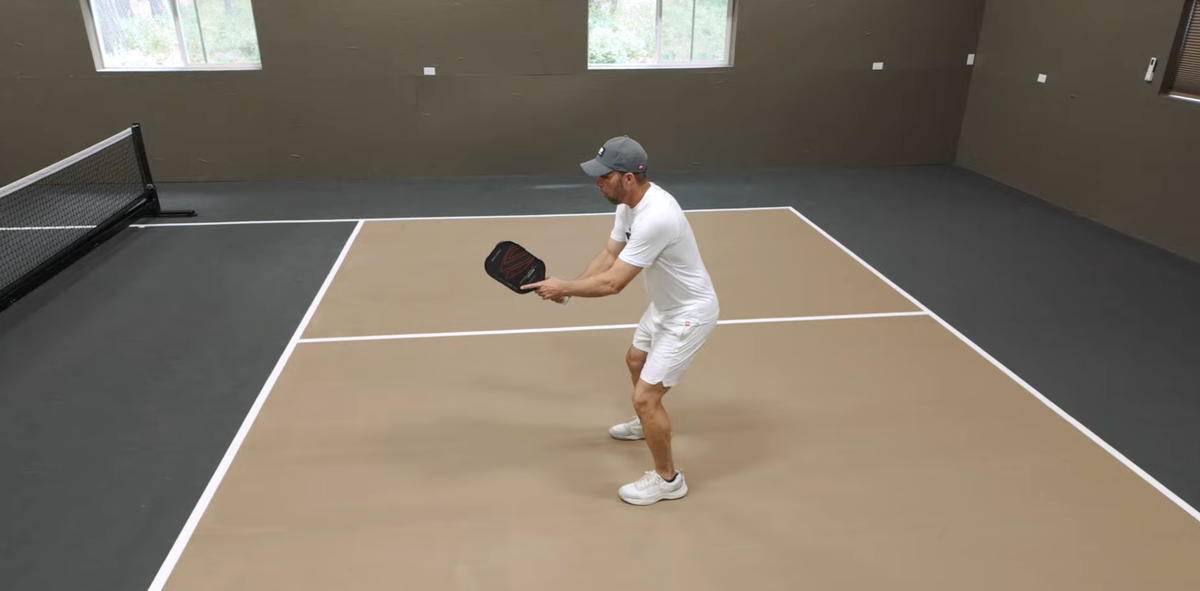
What About Your Reach?
This is the benefit most players do not expect.
When you are in a proper knee bend with your chest up, you can extend your paddle arm forward much further than when you are hunched.
When your torso is pitched downward, your shoulder is already pulled forward and down.
There is nowhere left to go. You end up jabbing at balls instead of meeting them with a full extension.
A square, upright chest gives your arm room to move. You will reach more balls in front of you, which is exactly where you want to make contact.
That forward contact point is critical for stepping in on dinks and taking the ball early at the kitchen.
 The Dink Media Team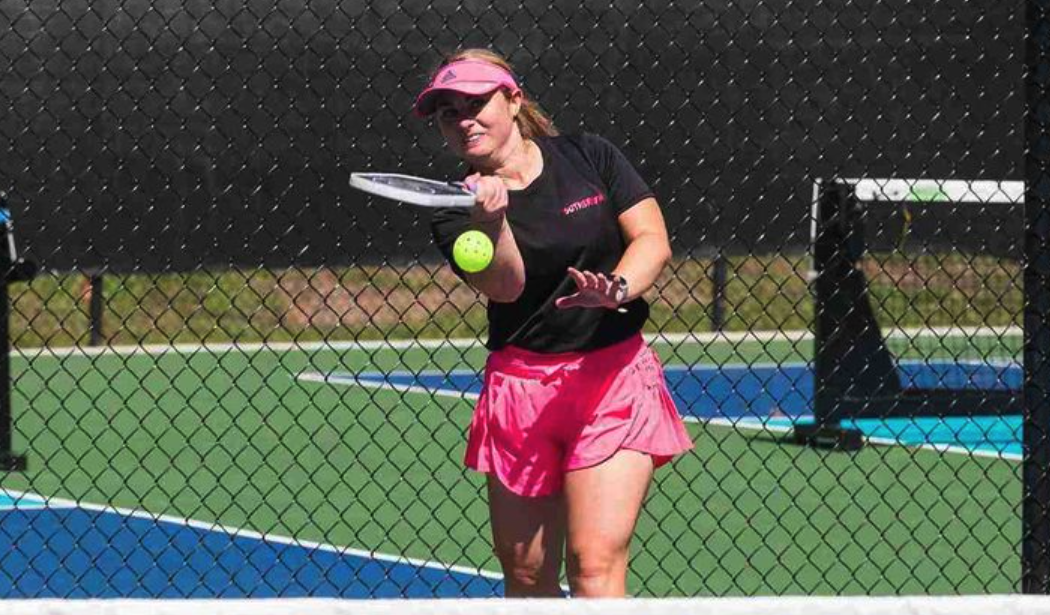
Three Ways to Check Your Own Stance Right Now
You do not need a coach on the court to audit your stance. These three checks will tell you everything:
- The shadow test: Stand in your ready position and look at your shadow or your reflection. If your back is angled forward more than your shins are angled forward, you are hinging at the waist, not the knees.
- The chest tap: Have a partner lightly tap your chest while you are in your ready stance. If you tip backward easily, your weight is too far forward from a waist hinge. In a real knee bend, you should feel stable.
- The thigh burn test: Hold your ready stance for 20 seconds. If you feel zero effort in your quads and feel it only in your lower back, your legs are not actually loaded. Real knee bend will make your thighs do work.
Use these checks during warm-ups or drill sessions before the habit is reinforced again through match play.
 The Dink Media Team
How to Train Your Body to Default to the Right Position
Knowing what proper knee bend looks like and actually defaulting to it under pressure are two very different things. Here is how to wire in the right habit:
- Start every rally with a deliberate ready stance check before the ball is served
- Add bodyweight squats to your warm-up so your legs recognize the position
- During dinking drills, pause between each shot and reset your stance before the next ball
- Ask a partner to call out "back" any time they see you hinging forward during a drill
- Watch video of yourself playing if possible. The fake knee bend is obvious on camera even when it feels correct in person
The goal is to make the athletic position your automatic resting state on the court, not something you consciously think about.
That kind of automaticity comes from repetition in drills, not just matches.
Even limited court time can be used effectively if you make stance a focus of each session.
 The Dink Media Team
Is This Related to Common Pickleball Mistakes?
Yes, directly. A poor stance is a root cause behind several errors that players usually blame on other things.
Popping the ball up, getting jammed on fast shots, losing balance during resets, all of these trace back to where your body is positioned before the ball even arrives.
If you are regularly getting caught off guard by hard shots, your stance is making it worse.
Handling hard shots becomes dramatically easier when you are already in a stable, low, centered position.
The same goes for kitchen line play.
Kitchen line errors often happen not because players lack skill but because they are slightly off balance when the ball arrives.
A solid knee bend is foundational for consistent play at the net.
That stability also helps when you need to handle a soft shot right at your feet, which demands real knee bend more than almost any other situation.
 The Dink Media Team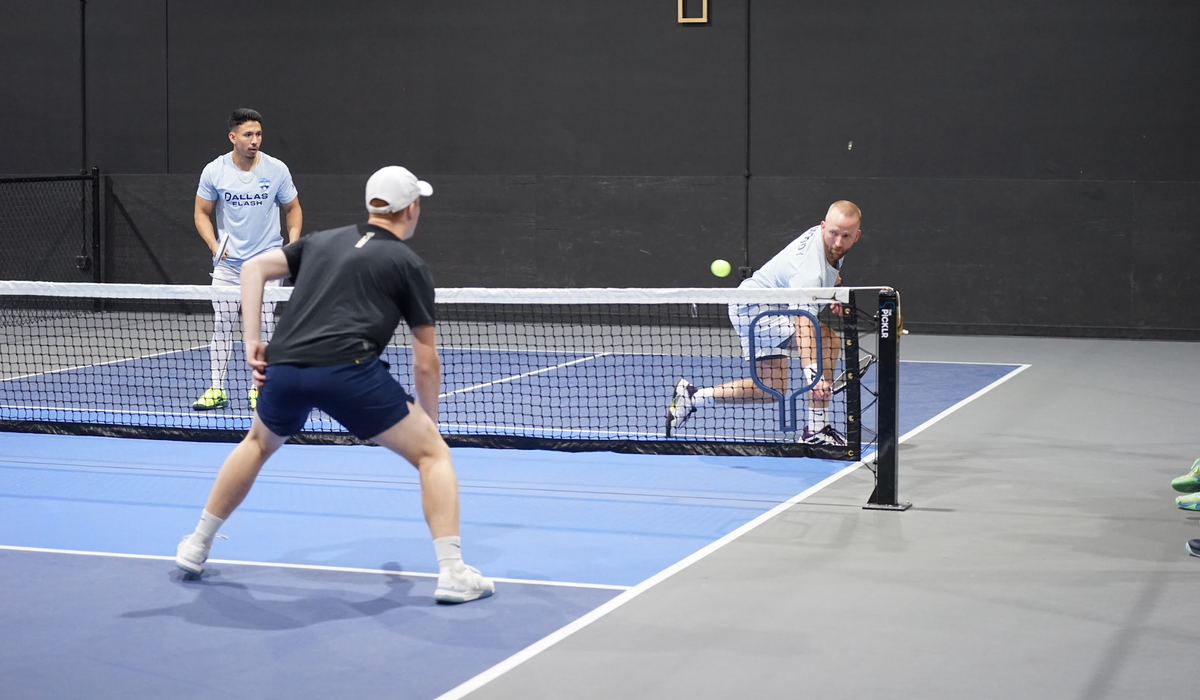
What About Back Pain Specifically?
If you play recreational pickleball and you are dealing with lower back soreness after sessions, your stance deserves serious attention.
The hunched, straight-leg position repeatedly loads the lumbar spine in a flexed position under load.
Over time, that pattern creates cumulative strain. A proper knee bend shifts the load to your legs and glutes, which are far better equipped to handle it.
Your back is not meant to be the primary shock absorber of your athletic movement.
This is not a small quality-of-life upgrade.
For players who want longevity in the game, fixing the knee bend is one of the highest-value mechanical changes available.
If you want to go further on physical preparation, these core exercises used by pro players pair well with a corrected stance for long-term durability.
 The Dink Media Team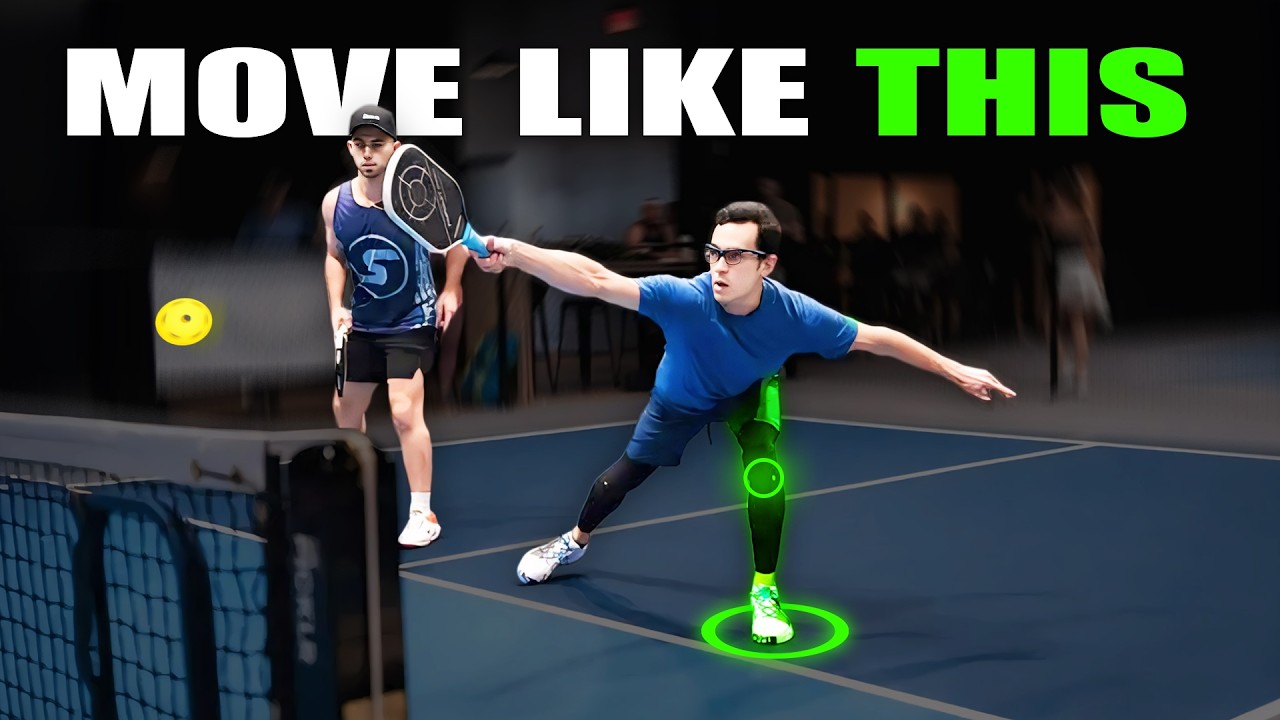
What Rec Players Get Wrong About "Getting Low"
The phrase "get low" is thrown around constantly in pickleball coaching.
But without a clear picture of what it means, players fill in the blank with whatever feels like down to them. Usually that means forward, not actually low.
Getting low means your hips descend toward the ground, not your chest. Those are completely different directions. One builds power and balance.
The other builds back pain and instability.
The next time someone tells you to get low, remember: it is a vertical drop through your knees and hips, not a forward tilt from your waist.
That one correction, applied consistently, will change how you move, reach, and feel on the court.
It also feeds directly into common shuffling mistakes that players make when they are not properly loaded in their stance.
And if you find yourself losing points due to errors you cannot explain, unforced error patterns often tie back to exactly this kind of foundational stance problem.
Fix the stance. Everything else gets easier from there.
Frequently Asked Questions
What is the correct knee bend position for pickleball?
The correct pickleball knee bend has your knees pushed forward over your toes, hips dropped, and chest upright, like a basketball defensive stance. Your weight should sit in the middle of your foot, not on your toes or heels. This is a genuine squat position, not a forward lean from the waist.
Can a bad stance in pickleball cause back pain?
Yes. Bending at the waist instead of the knees puts repeated strain on the lower back during play. Shifting the load to your legs and glutes through proper knee bend significantly reduces that stress.
Players who fix their stance often report immediate relief from post-game back soreness.
How do I know if I am faking my knee bend?
Check your chest angle versus your shin angle in your ready stance. If your torso is more tilted than your lower legs, you are hinging at the waist. You can also hold the position for 20 seconds; if your quads feel nothing and your back feels it, your legs are not loaded correctly.
Does proper knee bend actually improve reach in pickleball?
It does. When your chest stays upright in a real knee bend, your shoulder is free to extend your paddle arm fully forward. A hunched posture limits your arm extension because the shoulder is already pulled down and forward.
You will reach more balls and make contact further out in front of your body.
How long does it take to fix the knee bend habit?
Most players can feel the correct position immediately once it is demonstrated. Making it automatic under match pressure takes deliberate repetition over several weeks of drills. Consistent stance resets during dinking practice and warm-up routines are the fastest way to rebuild the habit.

Love Pickleball? Join 100k+ readers for free weekly tips, news & gear deals.
Subscribe to The Dink