How to Step In on Dinks in Pickleball to Create Pressure and Angles
Stepping in on dinks in pickleball is one of the fastest ways to shift from reactive to offensive at the kitchen line. Learn the footwork, timing, and positioning cues that let you create pressure and open angles your opponents can't handle.
Knowing how to step in on dinks in pickleball is the difference between playing defense on every ball and owning the kitchen conversation. Master the pickleball dink: 5 essential shots is the foundational read before layering in the step-in as an advanced technique.
Most players stand flat-footed at the NVZ line, waiting to react.
The players who win rallies are the ones leaning in, closing space, and dictating where the next ball goes.
This isn't a power move. It's a positioning move. And it's probably the most underused weapon in the recreational game.
Love pickleball? Then you'll love our free newsletter. We send the latest news, tips, and highlights for free each week.
What Does It Mean to Step In on a Dink in Pickleball?
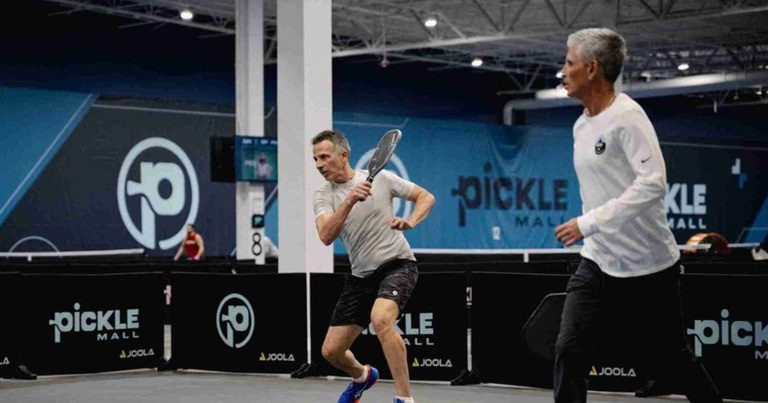
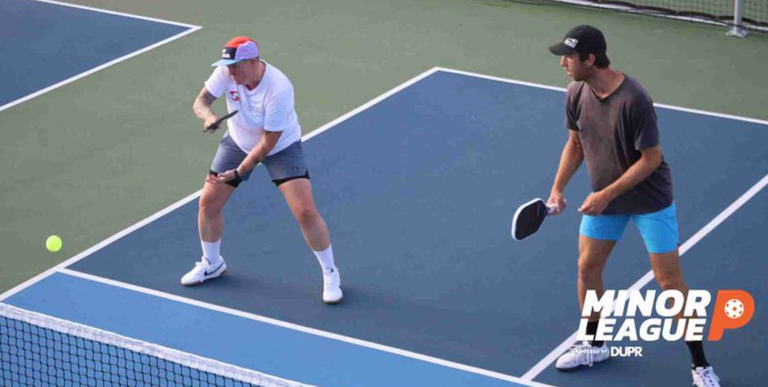
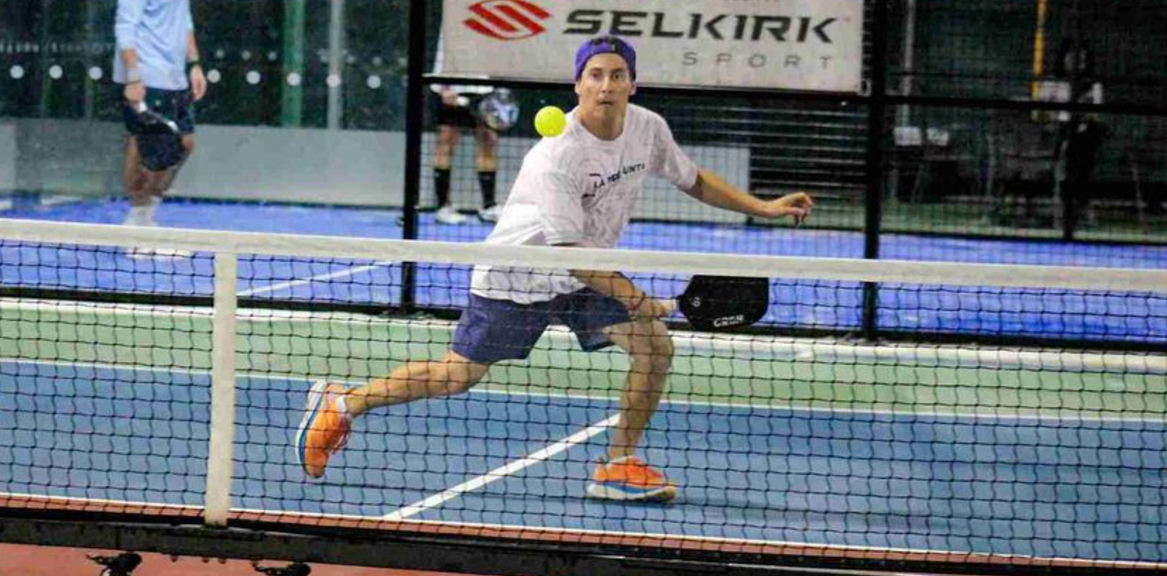
Stepping in on a dink means moving your front foot toward the kitchen line to intercept the ball earlier in its arc, before it drops to its lowest point.
Instead of waiting for the ball to come fully to you, you're meeting it at its peak, which gives you a more neutral or even offensive contact point.
Here's the thing: when you let a dink fall all the way to your feet, you're forced to lift the ball back up.
That gives your opponent time and forces you into a defensive shot. When you step into the dink and take it higher, you're in control.
The mechanics are simple: weight on your front foot, paddle in front of your body, contact the ball at roughly waist height or above.
What's harder is the decision-making, knowing which dinks to step into and which ones to let come to you.
Why Stepping In on Dinks in Pickleball Creates Real Pressure
Stepping in compresses time for your opponent. The faster the ball comes back, the less time they have to reset, reposition, or set up an attack.
This is the core principle behind pressure zone pickleball: you're not necessarily hitting harder, you're hitting sooner.
Think about what happens when you play against someone who constantly steps into dinks. Every ball you send feels rushed.
You start making errors not because the shot was difficult but because you didn't have time to think.
That's the psychological and tactical power of compressing the rally.
Research on reaction time in racquet sports supports this.
A 2025 study published in the Journal of Sports Sciences found that reducing the time interval between opponent contact and ball arrival significantly increased unforced error rates, even among skilled players.
The margin was not small: error rates jumped by roughly 18% when response time dropped below 450ms. Stepping in on dinks pushes your opponent toward that threshold.
Beyond the clock pressure, stepping in lets you redirect angles more aggressively. A ball you take at knee level can only go so many places. A ball you take at waist height opens up sharper cross-court angles, sharper down-the-line attacks, and the option to drive rather than dink. Why angles matter in pickleball is the full geometric breakdown of why this contact point advantage compounds across an entire rally.
How to Step In on Dinks in Pickleball: The Footwork
The correct technique for stepping in on a dink starts with your ready position, not the step itself.
If you're standing upright with your weight on your heels, you can't step in quickly enough to matter.
Here's the breakdown:
- Athletic stance at the NVZ line: Knees slightly bent, weight on the balls of your feet, paddle up and in front.
- Read the ball early: Watch the opponent's paddle face and point of contact. If the ball is coming up or staying flat, that's your cue.
- Step toward the ball with your front foot: A half-step or full step forward, not sideways. You're closing distance, not shuffling laterally.
- Contact the ball in front of your body: This is non-negotiable. Late contact kills the angle and sends the ball long.
- Recover immediately: Step back to your base position. Don't get caught leaning in when the next ball comes.
Improving your pickleball footwork with this key technique is the training companion that makes stepping in feel natural rather than risky.
One mistake to avoid: stepping in and then freezing. The step creates pressure only if you're back and ready for the counter.
JW Johnson's unusual dinking technique is worth studying when you step in on dinks in pickleball. He steps into contact and immediately recovers weight, which is what lets him step into ball after ball without getting caught flat-footed.
 The Dink Media Team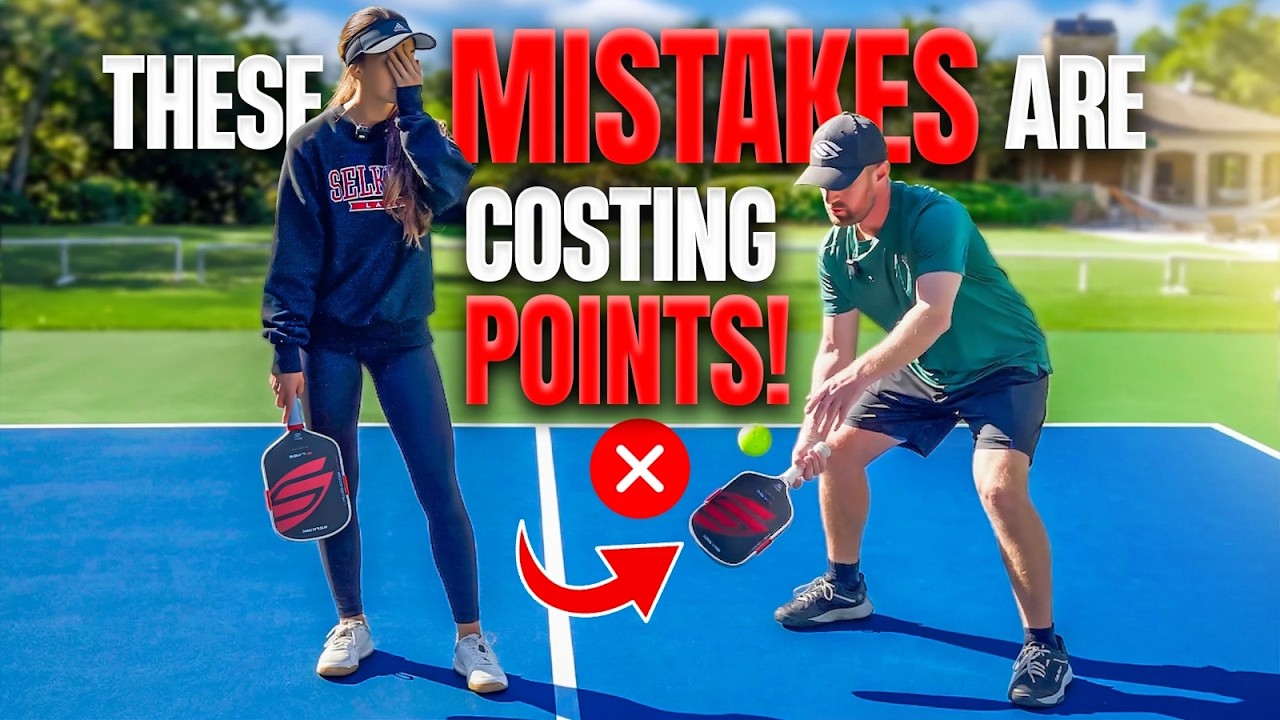
Which Dinks Are Worth Stepping Into?
Not every dink calls for a step-in. The general rule: step into dinks that are at or above the tape line, and let low dinks come to you.
A ball that's dropping fast from a high trajectory is hard to attack on the step. You'll rush contact and pop it up.
The better play is to read the pace and trajectory early, then commit to the step only when the ball is genuinely attackable or re-directable.
High-percentage step-in opportunities:
- Cross-court dinks that stay flat or pop up slightly, ideal for redirecting down the line
- Middle balls with pace, step in and take time away before your opponent recovers their position
- Short balls that land close to the kitchen line, step in and put the ball at their feet
Dinks that arrive low and slow are usually better left alone.
Slice dinks in particular drop fast and kick low after bounce, which makes them hard to step into without risking a lifted ball. Recognize the spin and adjust.
The drive vs. drop fifth shot breakdown covers similar shot-selection logic that applies directly to knowing when to step in on dinks in pickleball and when to hold your position.
 The Dink Media Team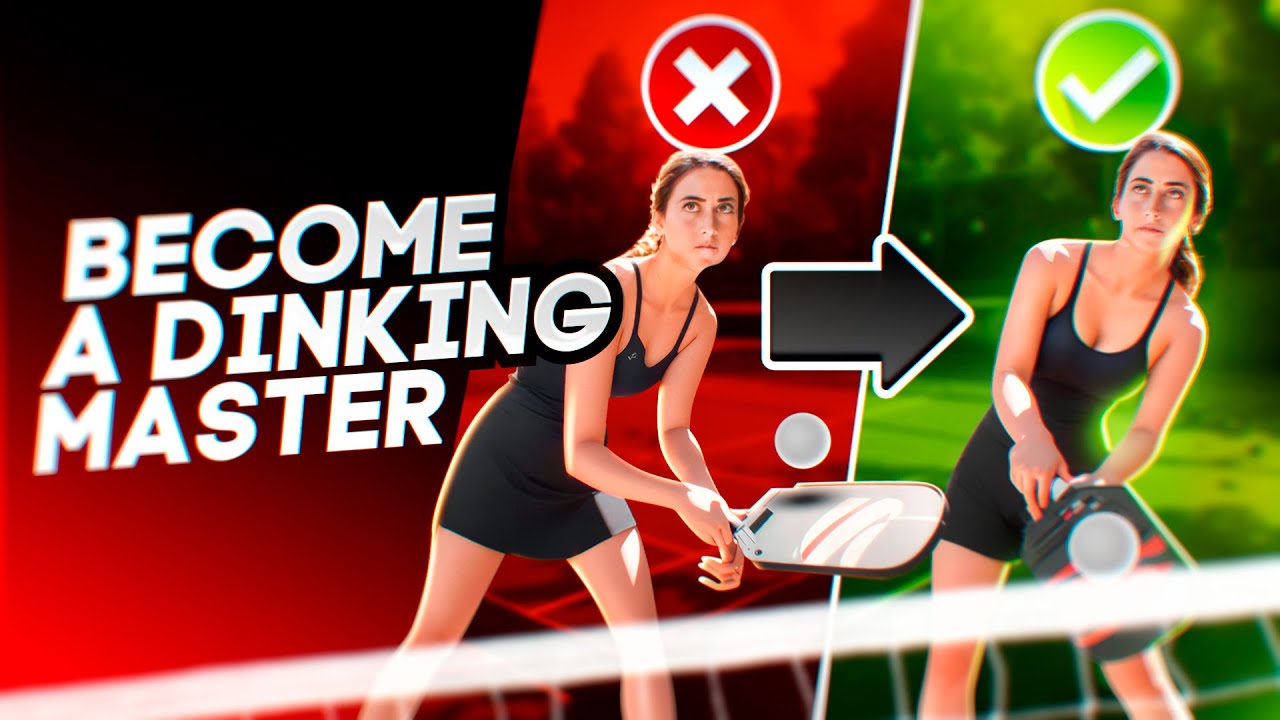
How Stepping In on Dinks Opens Angles You Weren't Using
Here's the angle math: contact point height determines shot angle.
The higher you take the ball, the steeper the cross-court angle you can create without sending the ball into the net.
Most players are dinking into a limited zone because they're taking the ball low. When you step in and take it at height, you gain access to:
- Sharper cross-court angles that push opponents off the sideline
- Down-the-line redirections that catch opponents who overshift
- The middle gap in doubles when one partner moves wide to cover
This is how elite players create attackable setups from dink rallies without hitting a single hard ball.
They step in, redirect the angle, then step in again on the next ball. Eventually the opponent lifts something, and then the hand battle starts.
In doubles specifically, stepping in on the right ball at the right time can shift court coverage entirely. One partner steps in cross-court, the other covers the middle, and suddenly the opponents are scrambling to cover angles they didn't expect. Off-ball positioning in pickleball: stop ball watching is exactly the off-ball awareness that makes coordinated step-ins in doubles a repeatable system rather than a lucky coincidence.
 The Dink Media Team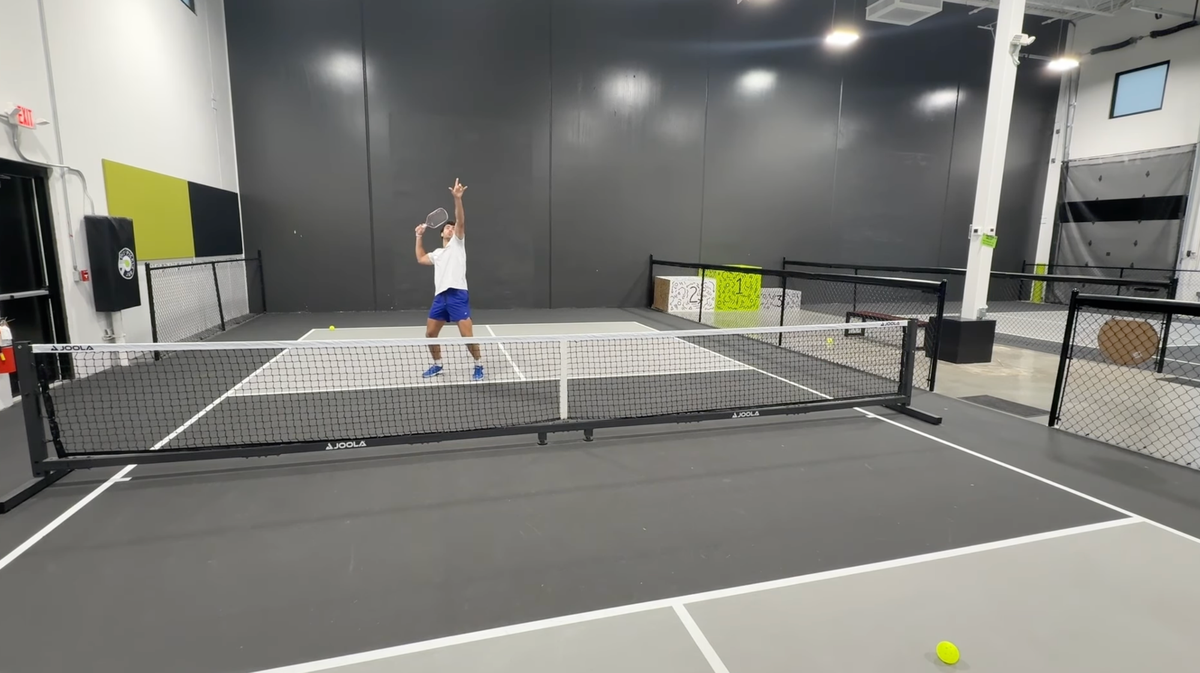
The Biggest Mistake Players Make When Stepping In on Dinks
Stepping in too late. Players see the opportunity, hesitate, then commit after the ball has already dropped.
Now they're reaching down and forward, which produces an off-balance, shanked dink. Worse, they're out of position for the next shot.
The fix is to make the decision earlier, not at ball contact. Read the ball off your opponent's paddle.
If it's going to stay high, start your step during the flight, not when the ball is already dropping.
The second common mistake: stepping in with no plan. Stepping in without a target or intent just gives you a rushed dink from an awkward position.
Every time you step in, have a clear answer: am I going cross-court, down the line, or to the middle?
Resetting poorly after a failed step-in is how rallies unravel. If you step in and the ball isn't where you expected it, don't force the attack. The pickleball reset: the one skill that takes you from 3.5 to 5.0 is the recovery framework that keeps a mistimed step-in from handing your opponent the point.
Reset, recover, and look for the next opportunity.
 The Dink Media Team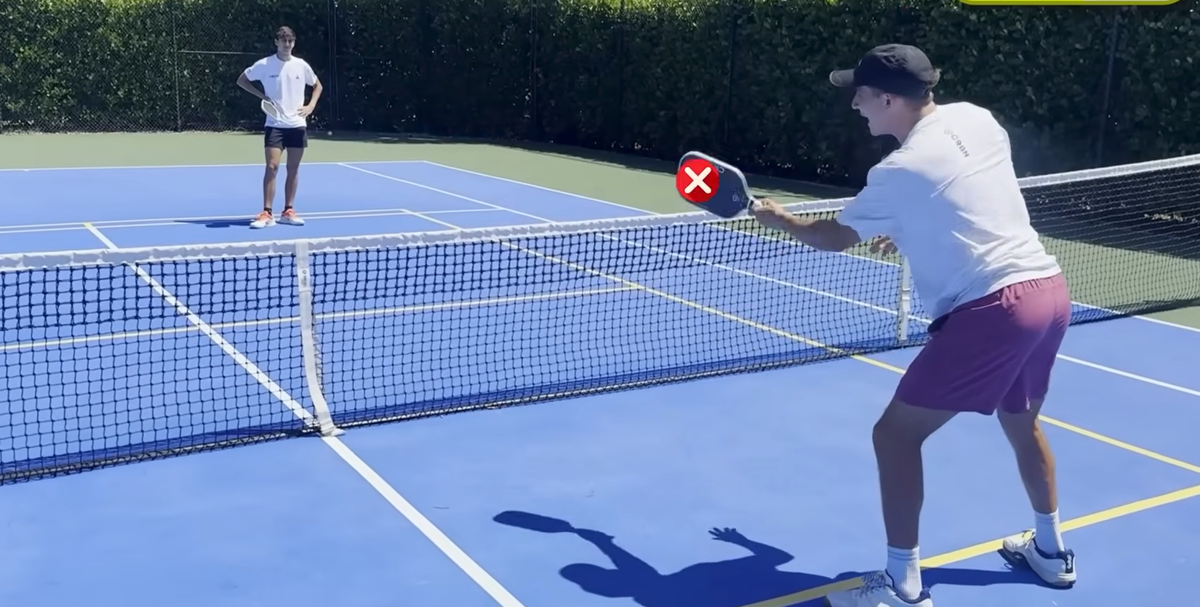
Key Takeaways
- Step in on dinks in pickleball by meeting the ball at peak height rather than waiting for it to drop.
- Contact point height is everything: higher contact creates sharper angles and more shot options.
- The step-in is a footwork decision made early, during ball flight, not after the bounce.
- Not every dink is worth stepping into: target flat, high, or short balls, and let slice dinks come to you.
- Stepping in compresses your opponent's reaction time and shifts the rally from neutral to offensive.
- In doubles, coordinated step-ins by one partner open the middle for the other.
Frequently Asked Questions
What does it mean to step in on a dink in pickleball?
Stepping in on a dink means moving your front foot forward to intercept the ball earlier in its trajectory, before it drops to its lowest point. You're taking the ball at height rather than waiting for it to fall to your feet. This gives you more control over shot direction and prevents you from being forced into a defensive lift.
When should you step in on dinks in pickleball?
Step in when the ball is arriving at or above net height and staying relatively flat or slightly elevated. These are the balls you can take early and redirect with purpose. Avoid stepping into low, heavy topspin balls or slice dinks that drop quickly, as those usually require a more patient, controlled response from your base position.
Does stepping in on dinks in pickleball create better angles?
Yes. The height at which you contact the ball directly affects the angles available to you. When you step in and take the ball higher, you can redirect it at sharper cross-court angles or redirect it down the line without it clipping the net. Players who always take the ball at the lowest point are limited in where they can send it.
How do I avoid NVZ violations when stepping in?
As long as your feet stay behind the kitchen line at the point of contact, you're legal. The NVZ rule applies to your position when you volley, not when you take a bounce. When stepping in on dinks that have already bounced inside the NVZ, you can step into the kitchen to play the ball. Just make sure both feet are outside the NVZ before volleying. Review the USA Pickleball official rulebook for the full NVZ rule language before committing to aggressive step-ins near the kitchen line.
How can I practice stepping in on dinks?
The best drill is a cross-court dinking rally with a partner, with one player focusing entirely on stepping into every attackable ball while the other feeds a mix of high and low dinks. Pickleball's hardest dinking drill gives you a structured version of this step-in practice. You can also practice solo against a wall, using court tape to mark your step-in target zone and training yourself to commit early.

Love Pickleball? Join 100k+ readers for free weekly tips, news & gear deals.
Subscribe to The Dink