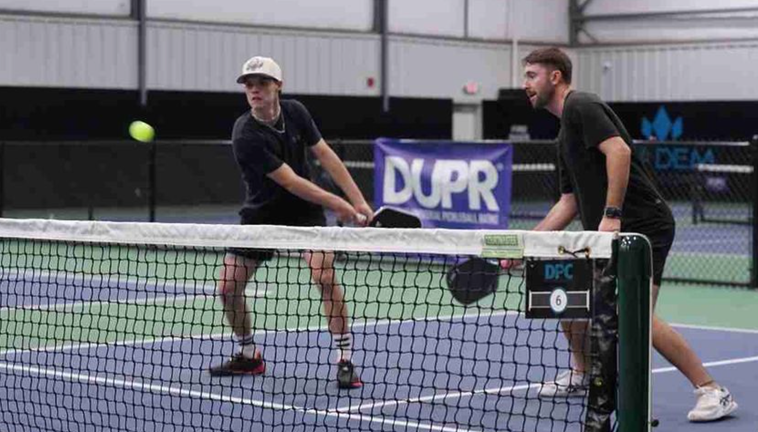

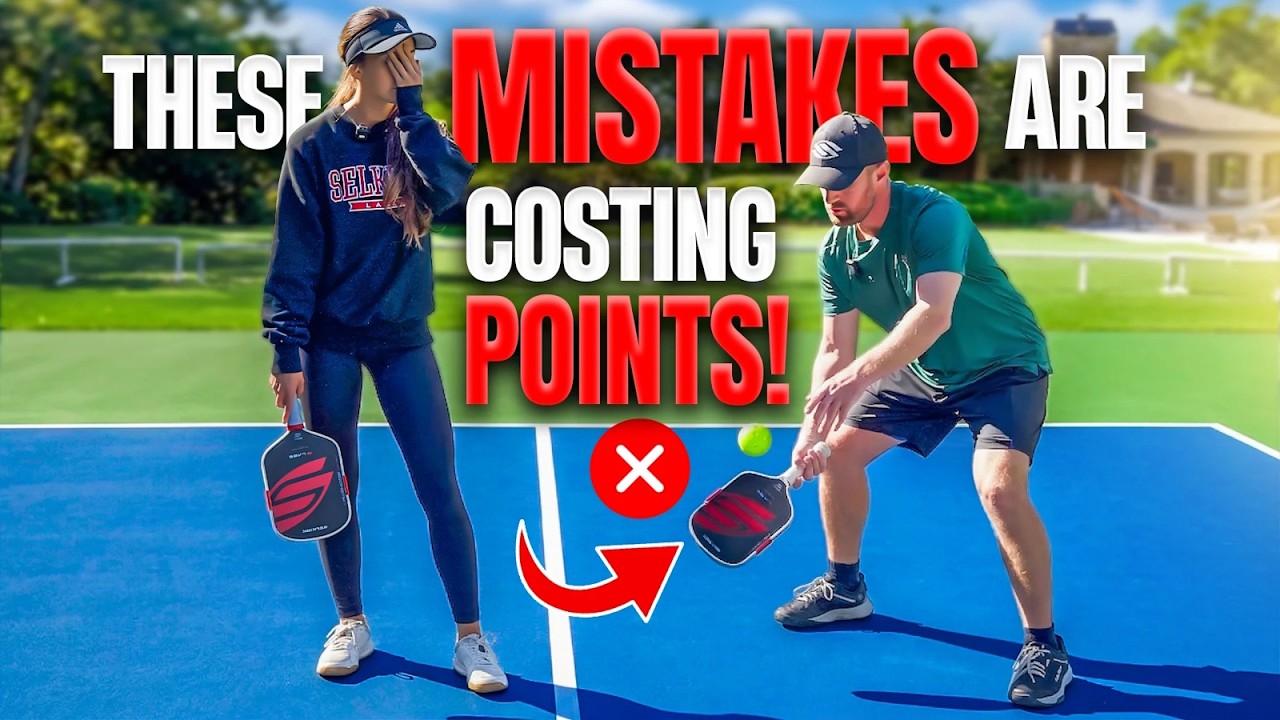
Your pickleball dink game is either winning you points or gifting them away. Master these 5 essential pickleball dink shots and learn exactly when to deploy each one based on the ball you receive.
The pickleball dink is the foundation of modern pickleball strategy, yet most players treat it like a one-dimensional shot.
Your dink game is either winning you points or gifting them away.
The difference between a 3.0 player and a 4.5 player often comes down to dink selection and execution, not raw power or athleticism.
According to PlayPickleball.com, a leading pickleball coaching resource, there are five distinct dink shots every serious player should master.
More importantly, you need to know when to hit each one based on the ball you receive.
This isn't about hitting the same dink every time. It's about reading the court and choosing the right tool for the moment.
Love pickleball? Then you'll love our free newsletter. We send the latest news, tips, and highlights for free each week.
1. The Topspin Pickleball Dink: Your Aggressive Foundation
The topspin dink is probably the shot everybody wants to hit, and for good reason.
It's the most aggressive dink variation you can throw at your opponent, and it allows you to put more pace on the ball because of the forward spin applied to it.
Here's what makes topspin special:
- When your opponent receives a ball with topspin, it's spinning forward.
- When it bounces, it travels into your opponent faster because of that spin.
- The ball also arcs over the net with a dipping motion, which means you can apply more pace without the ball staying up. It actually dips, making it harder to handle.
But here's the catch: you can't hit a topspin dink on every shot.
There are specific conditions that need to be in place.
First, you need to be positioned well behind the ball. You can only really hit this shot once the ball comes up to the apex area, which is the highest point of the bounce.
Why? Because to get topspin, you need to contact the ball below the equator (imagine a line running horizontally through the middle of the ball).
If you hit directly behind the ball, that's a flat ball with no spin.
The more you brush under the ball, the more topspin you create.
The only way to do this is to let the ball bounce and almost see the bottom of the ball as you contact it. Yes, it's technical.
Yes, most players try to hit topspin on every ball and fail.
But if you get in position, stay balanced, and create that brush contact, you'll generate a really good topspin dink that puts immediate pressure on your opponent. If you want to go deeper on spin mechanics, mastering topspin in pickleball has a full three-step progression guide worth bookmarking.
2. The Slice Dink: Deception Through Backspin
A lot of players assume the slice dink is purely defensive. That's wrong. It's also offensive, just in a different way.
When you slice the ball, you're creating backspin. As that ball hits the ground, instead of jumping into your opponent like topspin, it almost freezes in time and pushes slightly forward.
It's a tricky dink to handle, and it creates offensive opportunities when mixed into your arsenal.
With slice, you're not contacting the ball directly under like topspin. Instead, you're starting high and coming low and under the ball.
Here's where most players mess up: they simply go high to low and create a chopping motion.
If you only hit high to low, you're hitting down on the ball and it goes in the net.
The correct technique is a high-to-low-to-high cupping motion. That's what carries the ball, creates the backspin, and generates good shape to go over the net while still creating that tricky landing scenario.
You can't slice every ball either.
- Look for balls that are outside your body and outside your contact point zone.
- Because you're able to cup the ball, you can reach balls that are normally out of reach and still create a hard dink shot for your opponents to handle.
- If you're caught off guard and reaching for a ball, that's another great time to add slice into your dinking arsenal.
The backhand version of this shot has its own nuances. Perfecting the backhand slice dink breaks it down with three essential tips.
 The Dink Media Team
3. The Lift or Reset Dink: Your Defensive Reset Button
The lift dink, also called a reset dink, is defensive in nature.
And here's something important: you really want to choose offensive and defensive dink shots based on the ball you get. That's how you win points.
A defensive lift dink is an absolute must because it allows you to get back in position after you're in a compromised spot. If you're getting pulled wide, you're compromised and can't do anything offensive.
But if you reset that dink with a simple lift, now you have a chance to get back in position and maybe hit something offensive on the next ball.
Another time to hit a lift dink is when the ball is traveling behind you and you're pressured.
Heads up: hundreds of thousands of pickleballers read our free newsletter. Subscribe here for cutting edge strategy, insider news, pro analysis, the latest product innovations and more.
If you get pushed off the line, you might just hit a lifting because at that point, if you do something really offensive, you're in the middle of the court and not in a great position to win a firefight. Understanding the pickleball reset is the one skill that can take you from 3.5 to 5.0.
Here's the biggest mistake people make with a lift dink: they make it travel so high that the opponent can take it out of the air.
The thing with a reset or lifting is you want it to bounce. You really do. You want it to bounce or be shallow enough that your opponent has to hit up on it.
Remember, there are two types of shots in pickleball: shots you hit up on (defensive) and shots you hit down on (offensive).
If you hit a lifting where your opponent can take it out of the air, you didn't reset the point. You only compromised yourself more.
A good lift dink makes your opponents hit up on it, which keeps you in control.
The Dink Media Team
4. The Pressurized Volley Dink: Offensive Pressure at Net
Unlike a lifting that's defensive, the pressurized volley dink is more offensive.
To hit an offensive volley dink, you have to choose a shot that's above net level or at net level. You cannot hit an offensive volley dink from below and expect success. You'd be hitting so far up on the ball that the return on investment just isn't there.
With the volley dink, you need to pick a ball that's traveling above net level and coming deeper toward you.
Why does the ball need to come closer? Because if the ball is far away and you have to reach forward, you have zero leverage to push and direct that ball.
You need a ball that travels closer to your body so you can actually direct it somewhere.
This is why you can't use this dink variation on any ball. If you're outstretched, you don't have anywhere to push the ball.
Choose a ball that travels closer to your body.
The technique is straightforward: don't be super wristy with it.
Instead, choose that ball and have it generate from your shoulder, directing it in a different direction.
Typically, you want a little topspin on that ball, so you contact it under the equator line. What it looks like is a pushing motion down with topspin, hitting in that pressurized zone with a little more pace.
It doesn't look flashy, but when you add this into your dinking arsenal, you create a lot of offensive opportunities. Pairing this shot with modern kitchen strategy gives you four offensive tactics that compound fast.
The Dink Media Team
5. The Emergency Short-Hop Dink: Your Bailout Shot
The emergency short-hop dink is not a shot you want to hit, but you absolutely need to know it. It's your bailout shot for when things go wrong.
This is the shot you hit when you're surprised and a ball lands really close to your feet or body. It happens when you're off guard.
What you do is understand that the ball's coming at your feet, reach down, have an open paddle face, and absorb the pace while getting the ball over the net. You're not doing much with it because you're taking that dink off the ground.
Remember, the only direction you have to go from here is up.
If your opponent hits you some aggressive topspin dinks and you're surprised, all you're doing is putting your paddle down, absorbing that pace, and getting back in the point.
This is not an offensive shot. It's truly a bailout.
But you do need to know it because there will be times when you're not balanced, you're not there, and the ball is coming right at your feet. All you do is put your paddle down, absorb that pace, get the ball back up, and try to find your positioning again. The complete short hop guide is worth the read if this shot costs you points regularly.
The Dink Media Team
Why Pickleball Dink Selection Matters More Than You Think
The real lesson here isn't about technique alone. It's about dink strategy and reading the court.
Every ball you receive is different. The height, depth, spin, and pace all tell you which dink shot to hit.
Beginners and intermediate players often try to hit the same pickleball dink every time. That's a losing strategy.
The players who move up the ranks are the ones who can assess a ball in milliseconds and choose the right tool. Sometimes that's an aggressive topspin dink. Sometimes it's a defensive reset. Sometimes it's a slice to create confusion.
Five signs you're still an intermediate player often come down to exactly this: defaulting to the same pickleball dink regardless of what the ball is doing.
Your kitchen game will never be the same once you master these five dink shots and understand when to deploy each one. Pickleball is growing fast at every level, as ESPN has covered the sport's rapid rise in depth, and the players separating themselves are the ones making smarter decisions at the kitchen line.
Frequently Asked Questions
What is the most important pickleball dink to master first?
The topspin dink is the most important to master first because it's the most aggressive and teaches you proper contact and spin mechanics. However, beginners should start with basic flat dinks before progressing to spin variations. Once you understand the fundamentals, topspin gives you the foundation for all other dink variations.
Can you hit a topspin pickleball dink on every ball?
No, you cannot hit a topspin dink on every ball. You need specific conditions: the ball must be at the apex of the bounce, you must be positioned well behind it, and you must be able to see the bottom of the ball to create the brush contact. Trying to force topspin on every ball is a common mistake that leads to errors.
When should I use a slice dink instead of a topspin dink?
Use a slice dink when the ball is outside your body and outside your contact point zone. Slice is also great when you're caught off guard and reaching for a ball. The backspin creates a tricky landing that's harder for your opponent to handle, making it an excellent offensive variation in specific situations.
What's the difference between a lift dink and a reset dink?
A lift dink and a reset dink are essentially the same shot used in different situations. Both are defensive shots that allow you to get back in position. The key is making sure the ball bounces or is shallow enough that your opponent has to hit up on it, keeping you in control of the point.
How do I know when to use the pressurized volley dink?
Use the pressurized volley dink when you have a ball traveling above or at net level that's coming closer to your body. You need leverage to direct the ball, so only use this shot when you're in a strong position at the net. If you're outstretched or the ball is far away, choose a different dink variation.

Love Pickleball? Join 100k+ readers for free weekly tips, news & gear deals.
Subscribe to The Dink