3 Shuffling Mistakes Ruining Your Pickleball Footwork (And How to Fix Them)
Most players think their hands are the problem when it's really their feet. These three shuffling mistakes quietly wreck your pickleball footwork, and each one has a simple fix.
Bad pickleball footwork hides in plain sight.
You blame your hands, your paddle, or your partner, when the real problem is what your feet did two steps before the ball ever arrived.
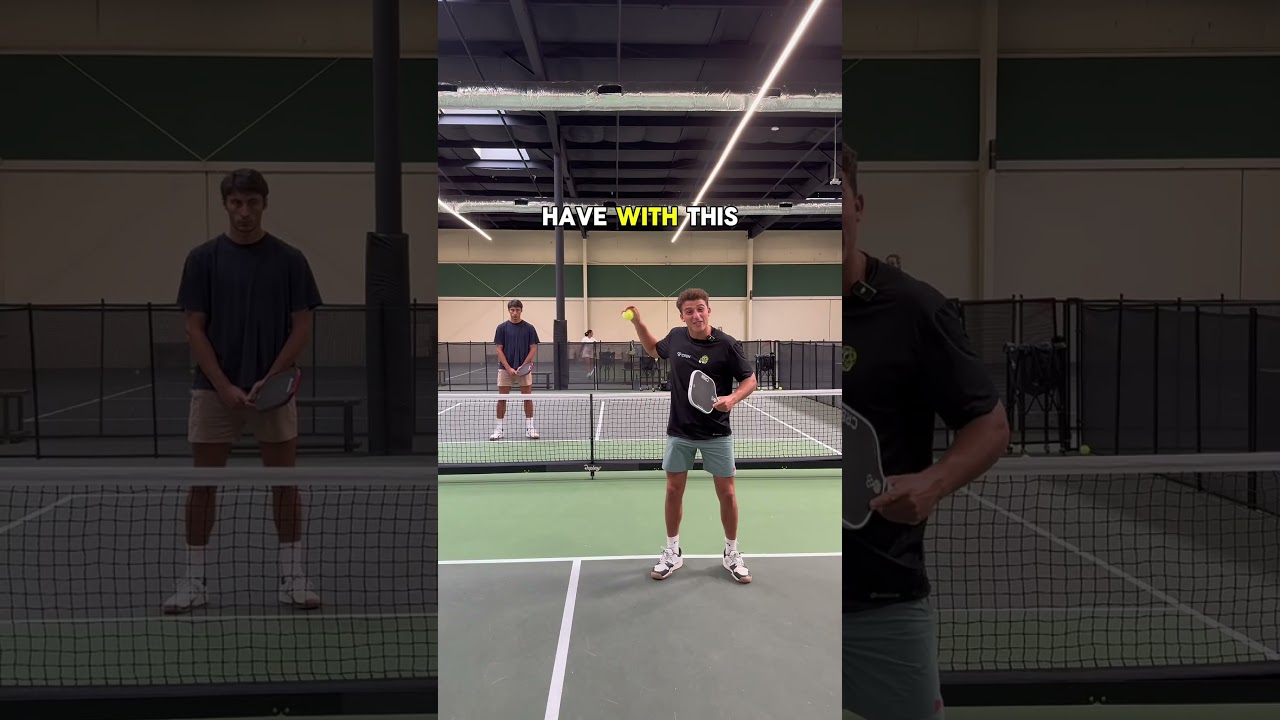
Coach Ty Woody breaks this down in a video built entirely around the shuffle, the single most common movement in the sport.
His point is blunt: most players shuffle wrong, and it sets them up in a bad position before they even swing.
Below are the three mistakes he sees most, the corrections that fix them, and the one small step that quietly separates good movers from everyone else.
Love pickleball? Then you'll love our free newsletter. We send the latest news, tips, and highlights for free each week.
What Good Pickleball Footwork Actually Looks Like
Good pickleball footwork keeps you low, balanced, and inside your own frame so you can stop on a dime and react to the next ball.
Everything else is detail.
A shuffle is the lateral, side-to-side movement you use to cover short distances without crossing your feet.
It is how you track a dink across the kitchen or slide over to cover a poach. Done right, you stay square to the net and ready.
 Alex E. Weaver
Done wrong, you arrive late and off balance.
Ty frames the whole skill around three checkpoints: stay low the entire time, plant strong, and push off your back leg to cover space efficiently.
Hold those three and your court movement tightens up immediately.
If you want to know why this matters more than another hour of drilling shots, consider that a huge share of errors come from the transition zone, the exact place where pickleball footwork breaks down under pressure.
That breakdown is exactly what understanding the pickleball transition zone is built to address.
The 3 Shuffling Mistakes Wrecking Your Pickleball Footwork
These are the errors Ty flags most often. Read each one and be honest about which describes your game, because most players are guilty of at least two.
- Reaching with your lead leg so your foot plants outside your frame.
- Pulling yourself with your front leg instead of pushing off the back leg.
- Planting on the outside of your foot and shifting your weight onto your heel.
Mistake 1: You Reach With Your Lead Leg
When players want to cover ground, they stab the lead foot way out in front, landing outside the frame of their body.
"Very politely," Ty says, "you would be wrong when you do that."
Reaching feels like it covers more space, but it does the opposite.
Your weight strands behind the foot, you cannot push off cleanly, and you open yourself up to injury.
It is the same reason a sprinter does not run faster by flinging a leg out front.
This is the lateral version of the same habit that makes you lunge and reach for dinks at the kitchen instead of moving your feet to the ball.
If this sounds like a pattern in your game, six stubborn habits losing you pickleball points covers exactly this kind of mechanical leak.
Mistake 2: You Pull With Your Front Leg Instead of Pushing With Your Back
The second error is a power-source problem. Players shift their weight over the front leg and drag themselves sideways, one small step at a time.
Watch yourself do it and count the steps. It takes far more of them, your body parts all move in different directions, and your feet land in a poor position to react.
Power in a clean shuffle comes from driving off the back leg, not from hauling yourself forward with the front one.
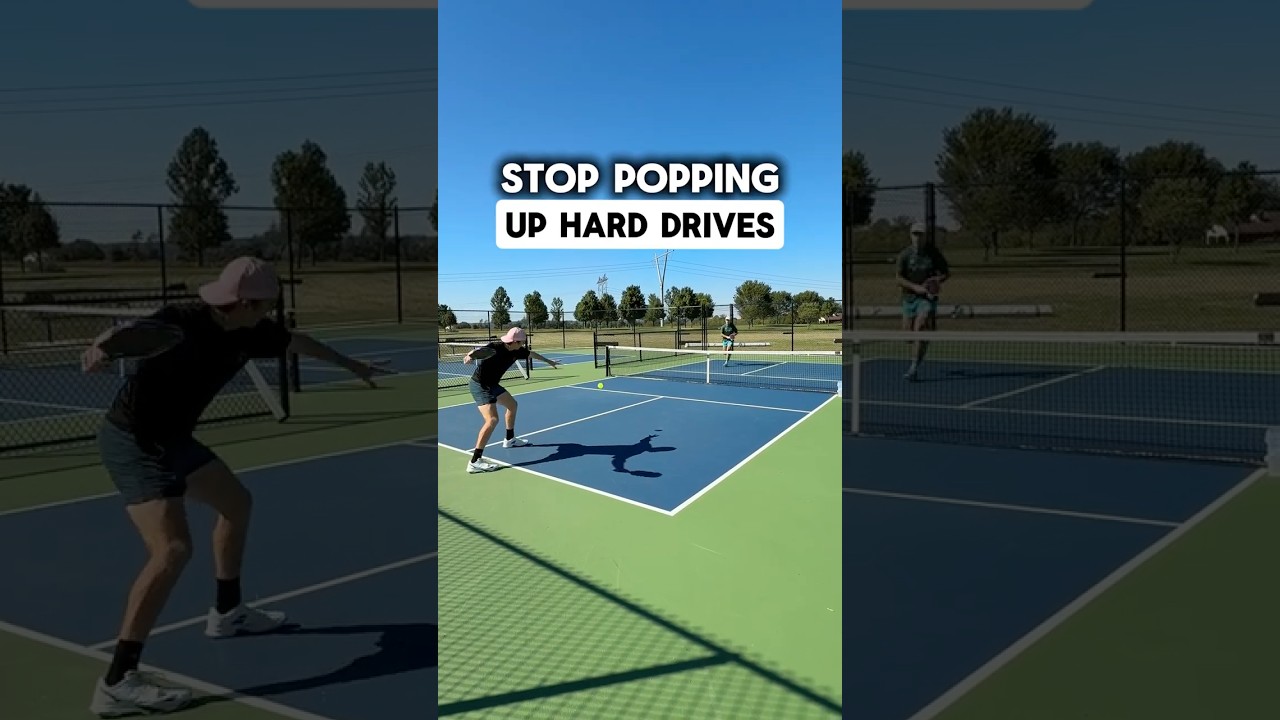
This same principle applies when you're fighting bangers in the transition zone.
The players who survive those exchanges are almost always the ones with a stable base and efficient pickleball movement, not the ones swinging harder.
Mistake 3: You Plant on the Outside of Your Foot
The third mistake happens at the stop. Players slide to the ball, plant, and let their weight roll to the outside edge of the foot.
The moment that happens you lose your big toe's connection to the ground, your weight drifts back to your heel, and your momentum carries you backward.
Now you are leaning away from the net with no base to launch from, which is a brutal spot to defend from and a slow one to recover after being pushed back.
This is the exact imbalance that turns a manageable attack into an outright winner for your opponent.
Getting your pickleball stance right before the point starts goes a long way toward preventing it.
Pair that with the right pickleball shoes for lateral support and you eliminate a lot of the slip that makes this mistake worse.
 The Dink Media Team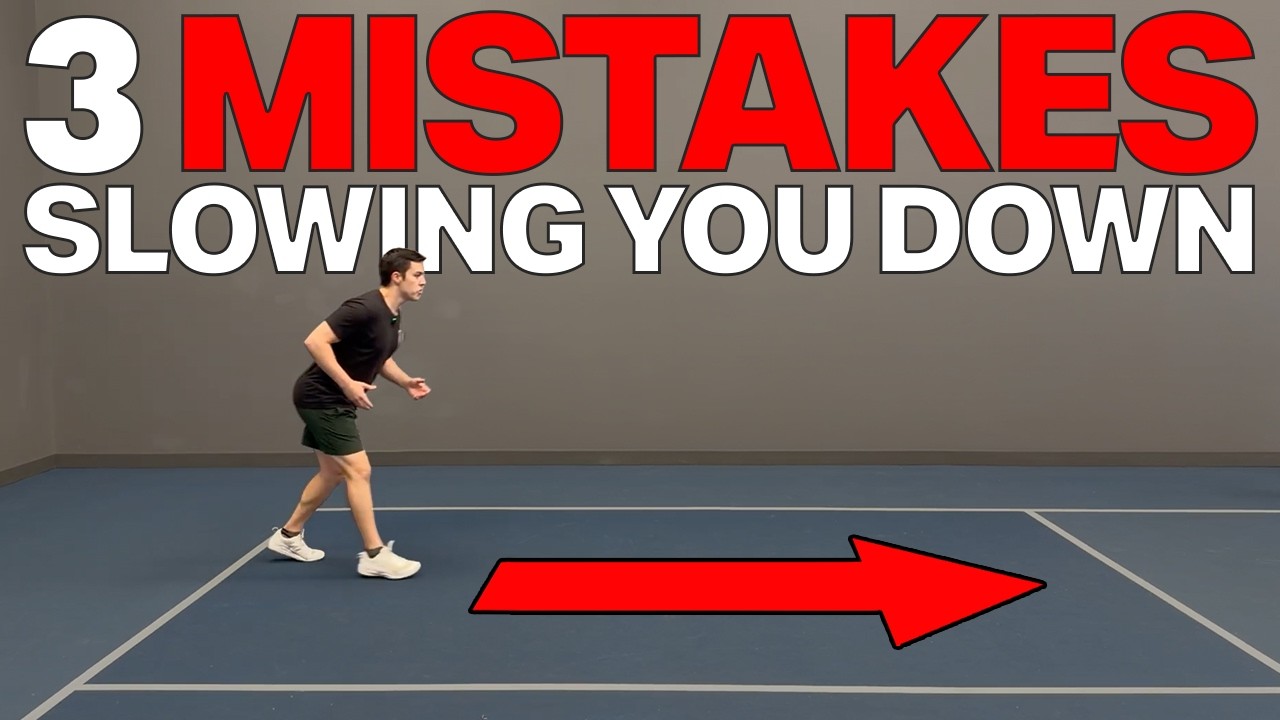
How Do You Fix Your Shuffle?
You fix your shuffle by controlling three things: your upper body, the part of your foot you push from, and where your lead leg lands.
Each correction maps directly to one of the mistakes above.
Start with the bobbing. If you sway side to side as you move, imagine a low ceiling just above your head that you cannot hit.
That single cue forces you to stay down through the whole shuffle instead of popping up between steps.
Next, change where you push from. Drive off the inside ball of your foot, not the outside edge.
As Ty puts it, pushing off the inside aims your body toward your target, while pushing off the outside aims you upward, exactly where you do not want to go.
These cues are simple, but they only stick with reps.
A short set of footwork drills for pickleball two or three times a week will do more for your game than another bucket of dinks.
Fixing the Reach: Keep Your Lead Leg in Your Frame
To kill the reach, get your force from driving through the ground off the back leg and let the lead leg come back down underneath your hip.
It can start out wide, but it has to recover under you.
We are all built a little differently, so do not obsess over a perfect spot.
The rule is simple: when you shuffle and stop, that lead foot lands inside your frame, close to under your hip, not stabbed out to the side.
Nail this one correction and your overall pickleball positioning improves immediately, because your weight is centered and ready rather than stranded on the wrong side of your body.
Fixing the Plant: Load the Inside, Keep a Shin Angle
At the plant, stay on the ball of your foot and keep a slight forward shin angle.
That angle is your tell. If your shin is stacked straight up over your foot, you have shifted too much weight to the outside.
Stay low with that shin leaning slightly forward and you can stop, hold, and immediately fire in any direction, whether that means sliding again or exploding forward.
The same balanced base is what lets pros hold a strong recovery position after an attack.
Perfecting pickleball posture covers the full-body version of this same foundation.
 The Dink Media Team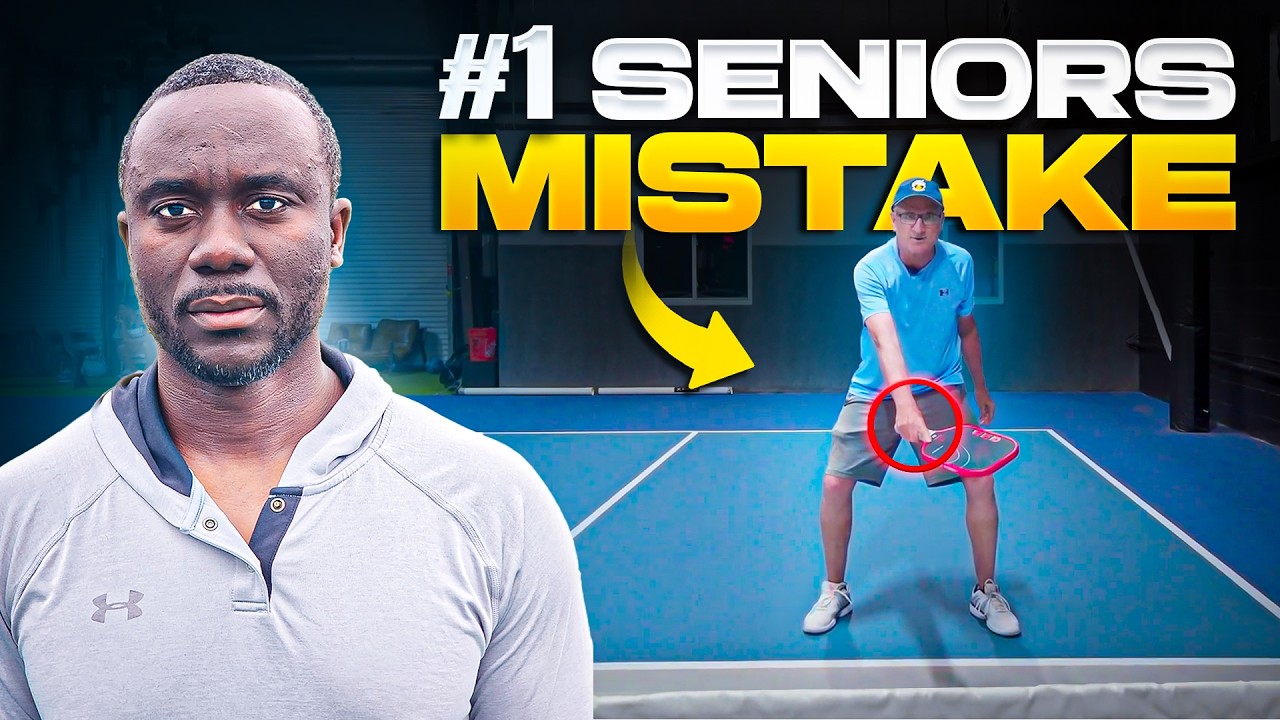
The Recovery Step That Changes Your Pickleball Footwork
The recovery step is the move that turns a clean plant into instant momentum for your next shuffle, and Ty calls it the difference maker for changing directions.
Here is the sequence.
As you reach the plant on a direction change, sink low, put more weight on your inside leg, keep that leg a touch straighter, then switch your feet and shuffle back the other way.
The trailing leg slides to where the lead leg was, while the lead leg shifts over but stays underneath you and inside your frame.
Done well, you use the energy from the plant to spring straight into the next move and cover a surprising amount of ground.
Done poorly, you stop dead at the cone and have to start your shuffle from zero.
Two things make or break it:
- Prepare sooner. Start setting up the cut early, not at the last instant. Decide late and you get jammed up, blow past your spot, and lose time.
- Lead with the inside shoulder. Aim your body where you want to go, then shift your weight over and down so even a full-speed change of direction stays balanced.
This is the pickleball footwork that lets elite players look unhurried.
Watch Anna Leigh Waters reset her feet between shots and you will see it: she is almost always squared up and balanced before the ball arrives, which is why she rarely looks rushed even in a firefight.
A day in the life of Anna Leigh Waters shows how deliberately she approaches every movement on court.
That economy of movement, not raw speed, is what makes her so hard to attack.
Clean feet make slow hands look fast.
When your base is solid, your reaction time effectively improves, and you can anticipate the next ball instead of scrambling for it.
 The Dink Media Team
Why Movement Beats Another Hour of Drilling Shots
If you want to get better, you have to work on your movement, and Ty does not soften it: "It really is that simple."
Drilling your shots matters, but quality time spent on being a better mover cleans up your mechanics everywhere.
More body awareness and body control puts you in good positions, and good positions make every shot easier.
Watching a video will not save you, though. You have to get on court, get in the gym, and put in reps.
That work does not all happen between the lines.
Some of the most useful gains come from training your feet off court and adding agility drills that carry straight into your transition zone movement during a match.
According to Yahoo Sports, Coach Mary's breakdown of the pivot, shuffle, and crossover steps lines up almost exactly with what Ty teaches, right down to keeping the paddle in front and not turning your back to the net on the recovery.
The crossover step, in particular, is a widely recognized method of movement for covering more ground quickly without sacrificing your ready position.
And when your feet do fail you and you get stranded, knowing how to handle the short hop buys you a defensive option until your pickleball footwork can catch up.
Better feet just mean you need that bailout far less often.
If you are ready to stack skills on top of this foundation, the 12 drills you need to play your best pickleball in 2026 gives you a full training menu that starts with movement and builds from there.
Frequently Asked Questions
What is the most common pickleball footwork mistake?
Reaching with the lead leg is the most common error players make when working on their pickleball footwork. Players stab the front foot outside their frame thinking it covers more ground, but it strands their weight and leaves them off balance. Keep the lead foot landing under your hip instead.
Should you push off your front foot or back foot when shuffling?
Push off the back foot. Pulling yourself sideways with the front leg takes more steps and scatters your balance. Driving off the back leg, from the inside ball of the foot, moves you farther in fewer steps and keeps you square to the net.
How do I stop losing my balance when I plant?
Stay on the ball of your foot with a slight forward shin angle and load the inside of your foot, not the outside edge. If your shin stacks straight up over your foot, your weight has drifted outside and you will tip onto your heel.
What is a recovery step in pickleball?
It is the quick foot switch after a plant that uses your stored momentum to launch into the next shuffle. The trailing leg slides to where the lead leg was, the lead leg shifts over but stays under you, and you cover far more ground than starting from a dead stop.
How often should I practice my pickleball footwork?
Two or three focused sessions a week is plenty to build real change. Short, deliberate footwork drills for pickleball paired with off-court agility work will improve your pickleball footwork faster than simply playing more games.

Love Pickleball? Join 100k+ readers for free weekly tips, news & gear deals.
Subscribe to The Dink