
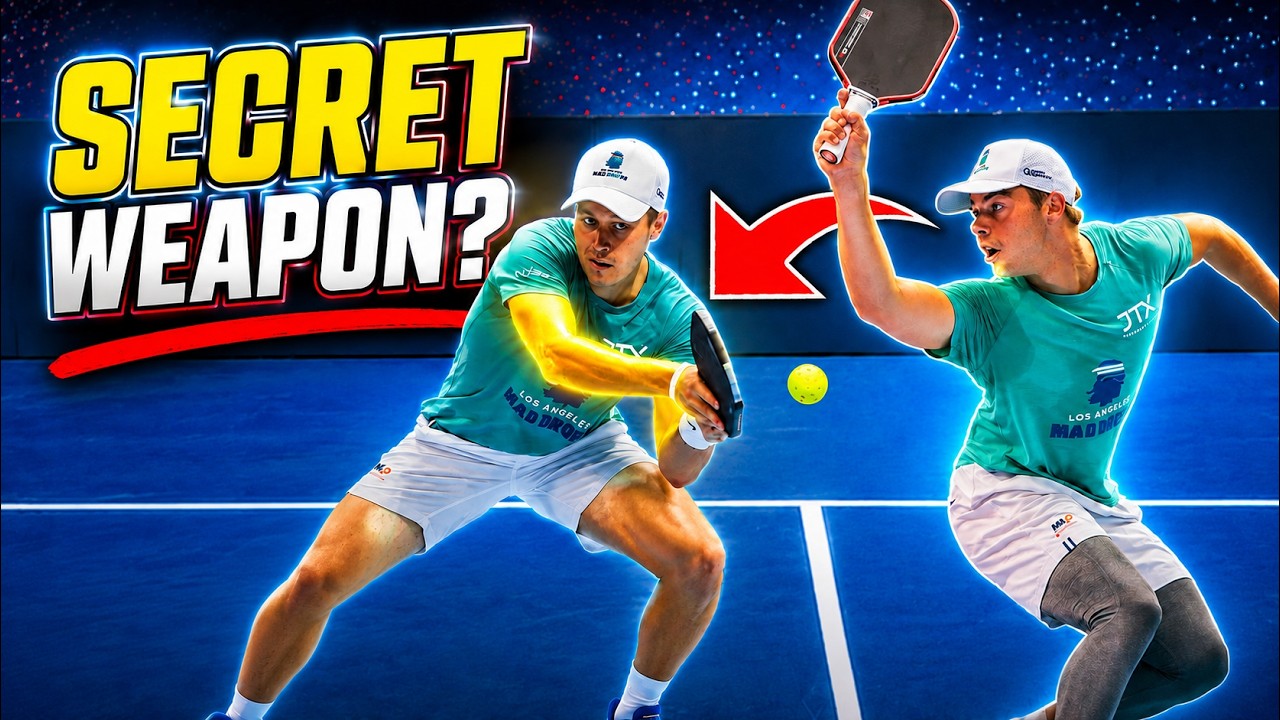
Playing with a lefty partner in pickleball gives you a built-in weapon most teams never use correctly. Here is exactly how to stop neutralizing that advantage and start winning more points with it.
A lefty partner in pickleball is supposed to give you one of the biggest structural advantages in doubles.
Two forehands protecting the middle, aggressive angles from both sides, and a stacking setup that forces opponents to play into your strength.
Most righty-lefty teams never get there.
Instead they bump paddles, argue over middle balls mid-point, and accidentally hand opponents easy looks down the center.
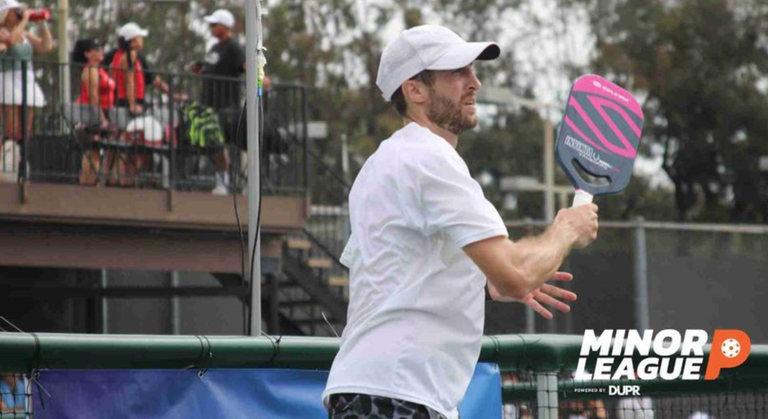
This breakdown comes straight from Zane Navratil on YouTube, where he teamed up with Max Freeman, one of the best lefties on tour and Ben Johns' current MLP partner, to lay out exactly how to stop wasting this advantage and start weaponizing it.
Love pickleball? Then you'll love our free newsletter. We send the latest news, tips, and highlights for free each week.
The Core Advantage You Are Probably Throwing Away
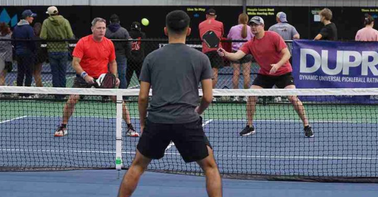
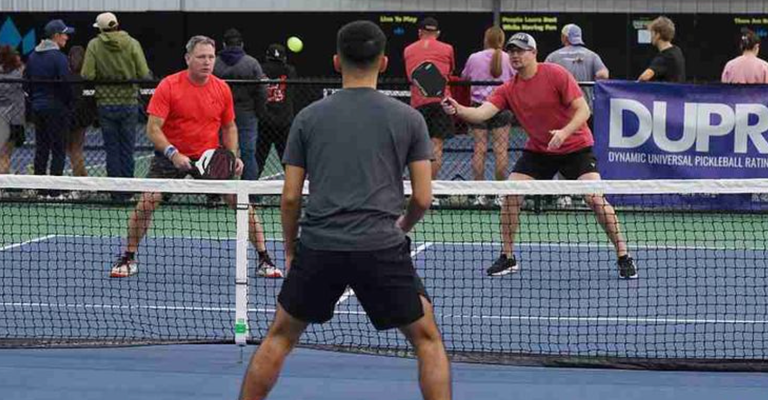
The entire point of a righty-lefty partnership is two forehands in the middle.
When both players stand on their natural sides, the middle of the court becomes a forehand-dominant zone for both of them simultaneously.
That flips the normal calculus of doubles. Opponents can't attack the center without running into a forehand from either direction.
But here is where most teams go wrong: they never talk about who owns what before the match starts.
By the time a middle ball comes flying in, both players are either freezing or colliding.
You need to have three specific conversations with your lefty pickleball partner before you step on the court together.
Do it then, not during a dinking rally.
- Who takes middle dinks when both players could reach them
- Who owns the third shot from each side of the court
- Who is the primary finisher when an attackable ball sits up in the middle
This is not about establishing a rigid pecking order.
It is about reducing decision-making in the moment so both players can move without hesitation.
Stack Every Time You Serve
Stacking is the mechanism that keeps your forehands in the middle.
If you are playing with a lefty pickleball partner and not stacking on serve, you are giving up the structural edge before the point even starts.
The right-handed player typically serves from the right side, then shifts left after the serve.
The left-handed player positions on the left side so that both forehands face the center of the court once the point begins.
 The Dink Media Team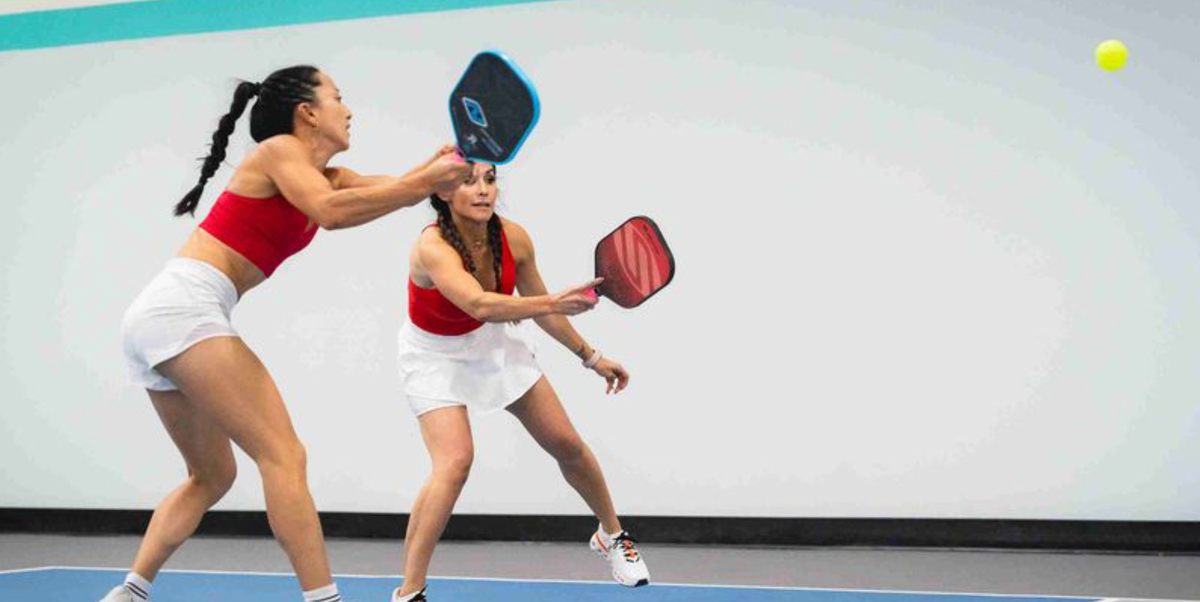
Unwinding the stack on the return side takes more practice.
The key, according to Navratil and Freeman, is keeping your return in front of you rather than going for a flashy angle.
A return that drifts wide while you are mid-transition makes you a sitting target for a drive.
And yes, stacking is fully legal under the current rulebook, so nobody at your local rec center can talk you out of it.
For a deeper look at crosscourt strategy in pickleball, that breakdown covers the angles worth building your stack around.
How Do You Run the Dinking Game as a Righty-Lefty Team?
Dinking patterns look different when both players have forehands in the middle. The goal is to use crosscourt angles aggressively so that your partner can crowd the center and punish anything that comes back through the middle.
Here is what that looks like in practice:
- Hard crosscourt dinks from the right side pin the opponent wide and pull them off center, letting the lefty partner step into the middle with their forehand.
- Backhand rolls or forehand rolls crosscourt from the left side accomplish the same thing in reverse, setting up the right-handed player to own the center.
- Middle dinks redirected behind you are a subtle but effective setup move. Taking a middle ball and placing it back behind you opens a lane for your lefty partner to come in with pressure from the center.
The crosscourt dink is doing double duty here. It creates control in the rally and positions your partner to attack.
If you want to sharpen this specific skill, this one crosscourt dinking tip is worth working through first.
One rule that both Navratil and Freeman emphasize: when the ball is on your side of the court, you handle it with your backhand if needed.
Do not reach across and pull your partner out of position just because you have a forehand in the middle.
The point of having forehands in the center is to cover the center, not to take every ball from every angle.
 The Dink Media Team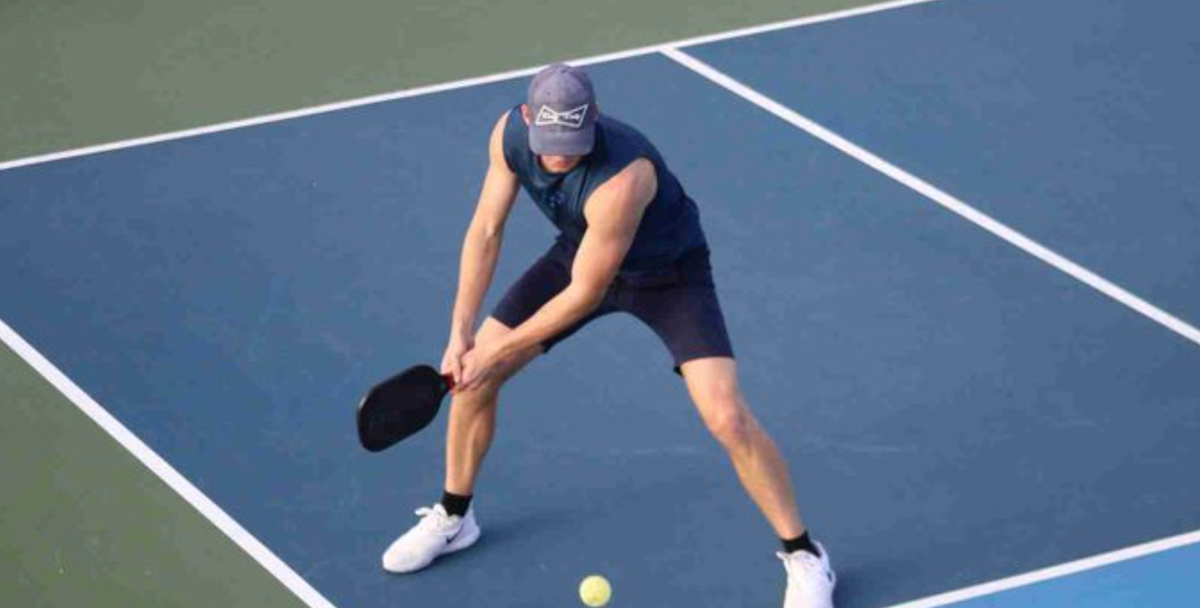
What Are the Best Speed Up Patterns for a Lefty?
Max Freeman walks through his favorite speed up patterns in the video. They are worth understanding even if you are the right-handed partner, because you need to know what your lefty is looking for so you can set them up.
Freeman's preferred speed up positions include:
- Dead ball toward the inside foot: When the ball sits low and slightly inside, Freeman attacks the opponent's body or backhand side. The goal is to funnel the return back toward his own backhand for a combination finish.
- Backhand side ball through the middle: Freeman takes this one aggressively through the center and then finishes with his forehand. He can do this out of the air or off the bounce depending on where the ball sits.
If you are the right-handed player in the partnership, your job on these plays is not to get in the way. Trust the pattern.
When Freeman or any lefty sets up that inside-foot forehand, the right-handed partner should be holding their position and preparing for the counter, not reaching.
Understanding when to roll versus flick at the kitchen will help you know which speed up to trigger and when to hold back.
It's also worth noting that pros have quietly abandoned the slice in these exchanges, which changes what your lefty is realistically hunting for.
 The Dink Media Team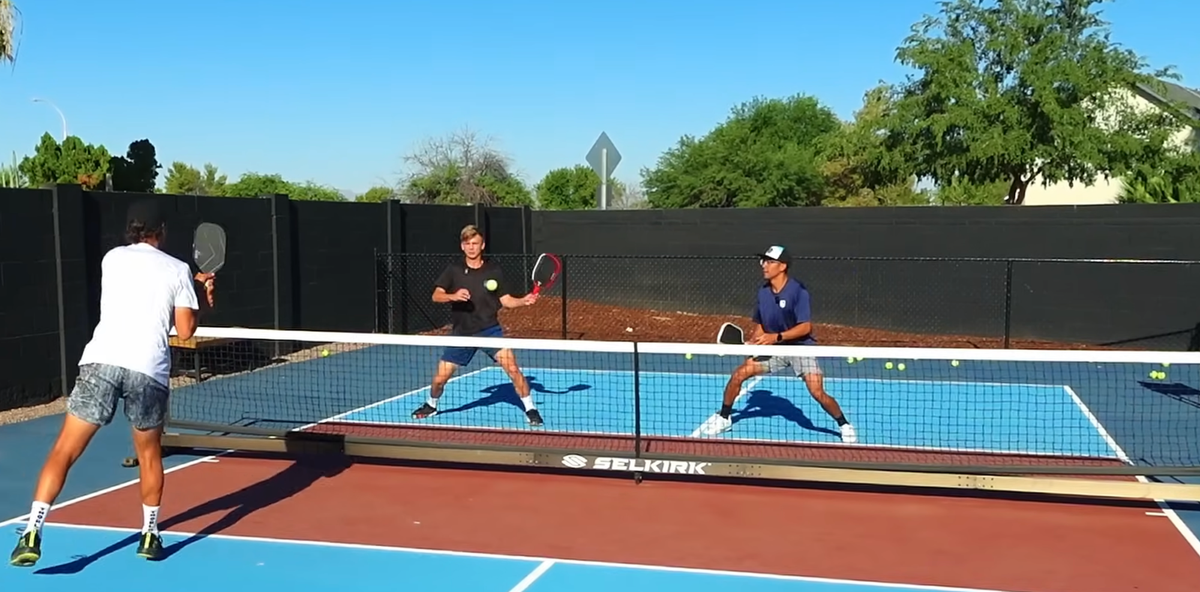
How Should You Hit Your Third Shot With a Lefty Partner?
Third shots get significantly more dangerous for your opponents when you and your lefty pickleball partner are moving together correctly.
The setup is what makes the third shot aggressive rather than just neutral.
As the right-handed player hitting the third shot, the default is to drive or drop in front of yourself.
Keeping the ball in front of you gives your partner the opportunity to poach the middle on either a drive or a drop opportunity.
The aggressive crosscourt drop is the other option.
When you get a ball you can attack with a sharp drop crosscourt, your lefty partner should already be anticipating the poach position in the center.
For the lefty player hitting the third shot, the pattern mirrors exactly.
Drive balls in front of you, work the middle, and go aggressive crosscourt only when the quality of ball supports it.
Knowing when to drop versus drive based on your court position makes this decision much easier in a live point.
And for fine-tuning the actual mechanics of the drop, this wrist fix is one of the fastest ways to clean up the shot.
 The Dink Media Team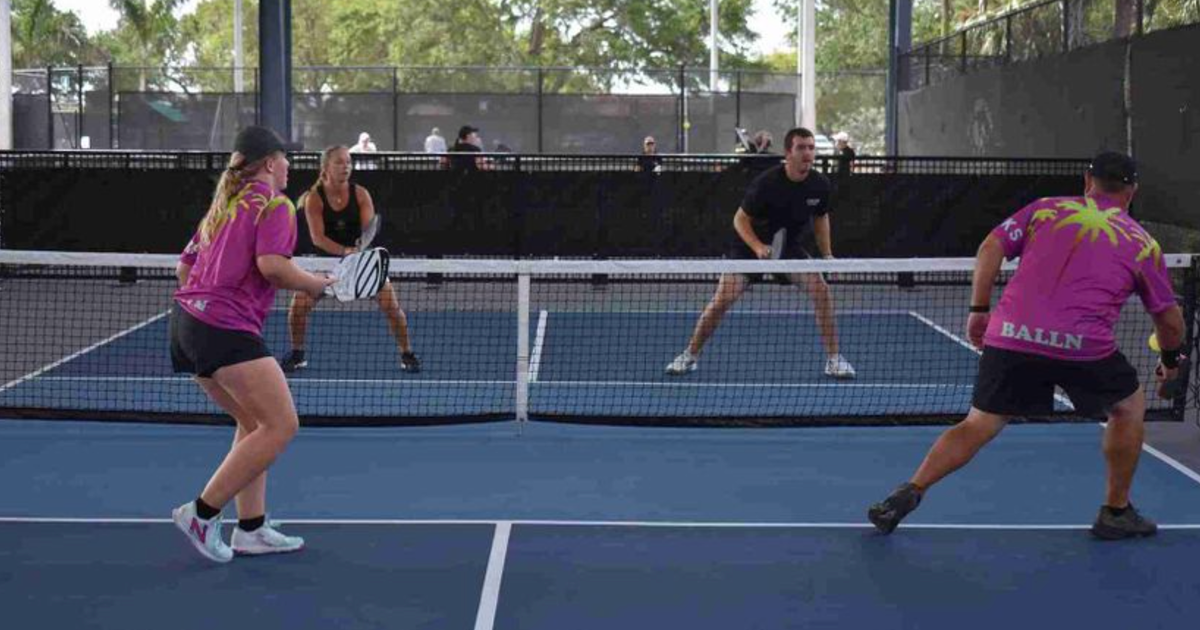
Paddle Position Decides Who Takes the Ball
Even with all your pre-match communication, there will be balls where the answer is not clear.
Whoever's paddle is already in front takes that ball. That is the rule.
This is not about who is the better player or who has the stronger forehand. It is about who is already committed and in position.
Overriding a committed player to take a ball yourself is how you create collisions and missed shots.
Freeman and Navratil are both explicit about this: sometimes you will both swing for the same ball. That is acceptable.
Two forehand partners bumping paddles occasionally is a sign the partnership is being aggressive, not a sign that something is broken.
The other half of this rule applies equally. If you genuinely cannot reach a middle ball, pull back and let your lefty pickleball partner's forehand come through.
Forcing contact on a ball you have no business hitting is worse than ceding it. Learning when to take the forehand versus the backhand is a skill in itself.
 The Dink Media Team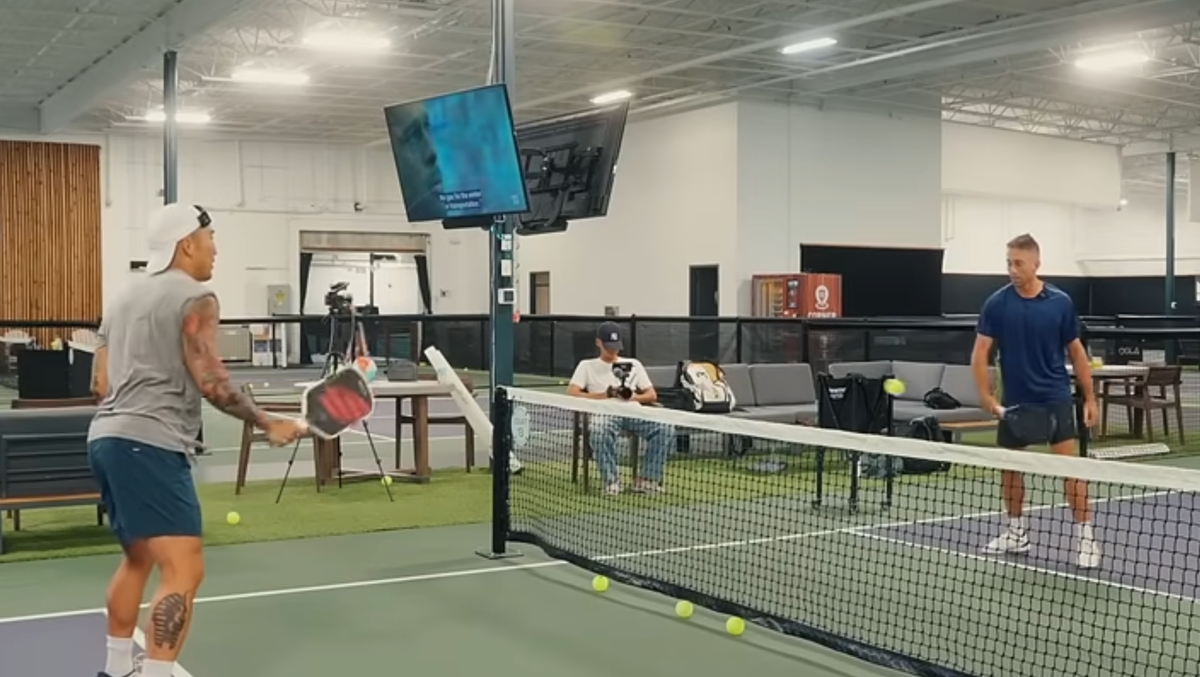
Return Strategy Changes Depending on Whether You Stack
Your return game looks different based on whether you are stationary or unwinding from a stack.
These are not the same situation and they require different thinking.
When you are stationary, you have the freedom to hit aggressive crosscourt returns.
Go hard, go wide, and set your partner up to crowd the middle before the opponent can reset.
When you are unwinding the stack, your priority changes. You need to keep the return in front of you so you are not caught mid-transition by a drive.
A conservative, well-placed return while you get into position is far more valuable than a flashy wide return that exposes you.
If your returns tend to drift long or go wide under pressure, these quick return fixes directly address what goes wrong during transition moments.
And if you want the full picture of how your serve and return connect, these essential return targets are worth working through systematically.
Layering them into a simple four-step practice system is the fastest way to make them stick.
 The Dink Media Team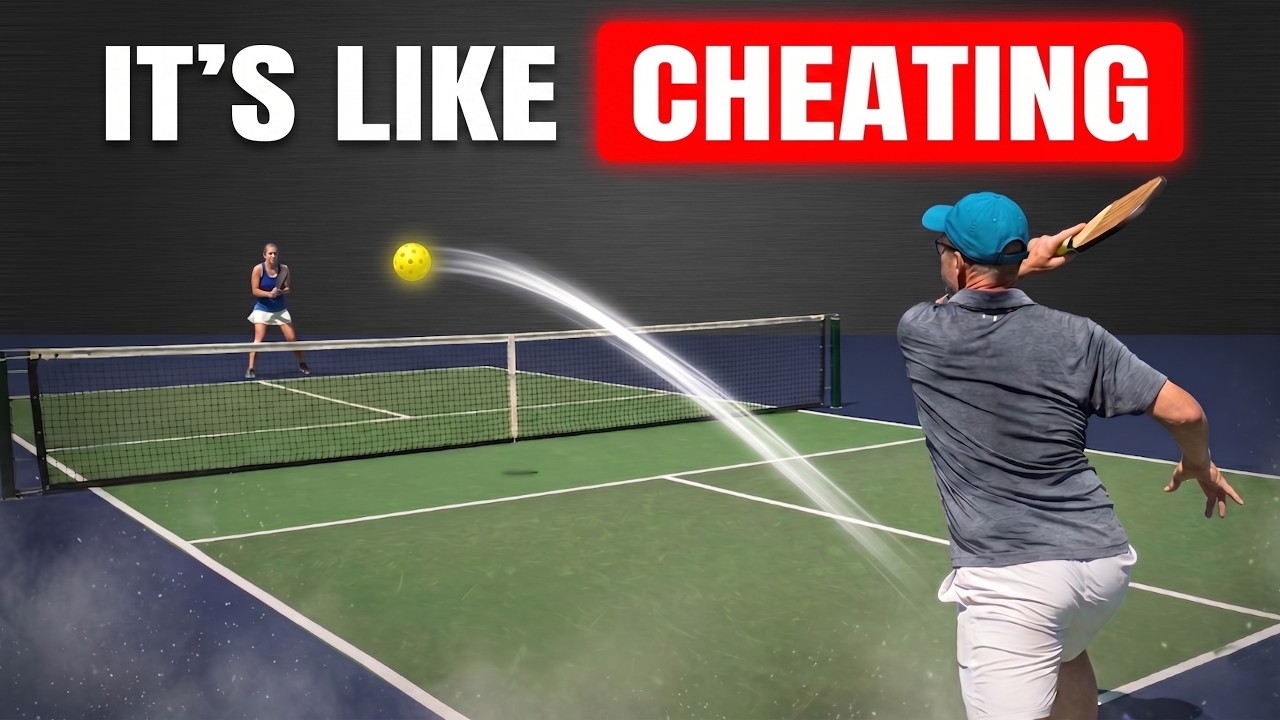
What About Playing Against a Lefty?
Understanding how to play with a lefty pickleball partner makes you sharper against one.
Once you know how righty-lefty teams are designed to set you up, you can start anticipating their patterns and breaking their rhythm before they get established.
If you want to go deeper on that side of the equation, how to neutralize a left-handed pickleball opponent covers the specific pressure points to target.
You can also check out the benefits of playing with a left-hander for a broader tactical menu.
The righty-lefty partnership is one of the most structurally sound setups in doubles pickleball.
But it only works when both players commit to the system, communicate before the match, and trust each other to own their zones during the point.
Get that right and the advantage is real. Skip it and you are just two players bumping paddles and wondering why the middle keeps opening up.
Frequently Asked Questions
What is the main advantage of a lefty righty pickleball partnership?
A lefty-righty team places two forehands in the middle of the court, which makes the center nearly impossible to attack. This structural advantage forces opponents to go wide or deal with aggressive forehand counters from either partner. It is one of the most effective doubles setups in the game when executed correctly.
Do you have to stack when playing with a lefty?
Stacking on the serve side is strongly recommended because it is the only way to maintain your forehands in the middle after the serve. Without stacking, your natural court positions put backhands in the center instead of forehands. You should also learn to unwind the stack on the return side, which requires a more conservative return to protect yourself during the transition.
Who should take middle balls in a lefty righty doubles team?
You should decide before the match who takes middle dinks, middle thirds, and middle finishers as a default. During a live point, whoever's paddle is already in front of the ball should take it, regardless of the pre-match conversation. Expecting perfect execution every time leads to hesitation, which is worse than the occasional paddle collision.
What are the best dinking patterns for a righty-lefty team?
Aggressive crosscourt dinks are the foundation because they pull opponents wide and let the middle partner crowd the center with their forehand. Redirecting a middle dink back behind you is another effective pattern that creates a lane for your partner to step in with pressure. Both moves work best when the non-dinking partner is reading the play and already moving into position before the ball is struck.
How should a lefty attack from the kitchen line?
A lefty's most dangerous speed up comes when the ball is dead toward their inside foot, allowing them to drive the opponent's body or backhand side and then set up a backhand combination. Balls on the backhand side can be driven aggressively through the middle and finished with the forehand out of the air or off the bounce. The right-handed partner should recognize these setups and hold their position rather than reaching for the same ball.

Love Pickleball? Join 100k+ readers for free weekly tips, news & gear deals.
Subscribe to The Dink