
Pickleball Stacking for Beginners: Full Stack vs Half Stack Explained
Stack pickleball doubles beginners need to master one of the most misunderstood tactics in the game: intentional position-swapping to control court sides. This guide breaks down full stack vs half stack so you and your partner can start using it immediately.
Stacking in pickleball doubles is the single tactic that separates "we just play together" from "we actually have a system."
If you've watched pro doubles and wondered why players seem to be standing in the wrong spots before the serve, you've seen stacking in action.
Learning how to stack pickleball doubles as a beginner changes everything about how you think about court positioning.
Here's the short version: stacking is a deliberate formation where both players line up on the same side of the court, then shift to their preferred sides once the ball is in play.
It keeps your strong-side player on their dominant side throughout the entire point, regardless of which side the serve or return puts them on.
That's the concept. The execution is a little more involved.
Love pickleball? Then you'll love our free newsletter. We send the latest news, tips, and highlights for free each week.
What Is Stacking in Pickleball Doubles?
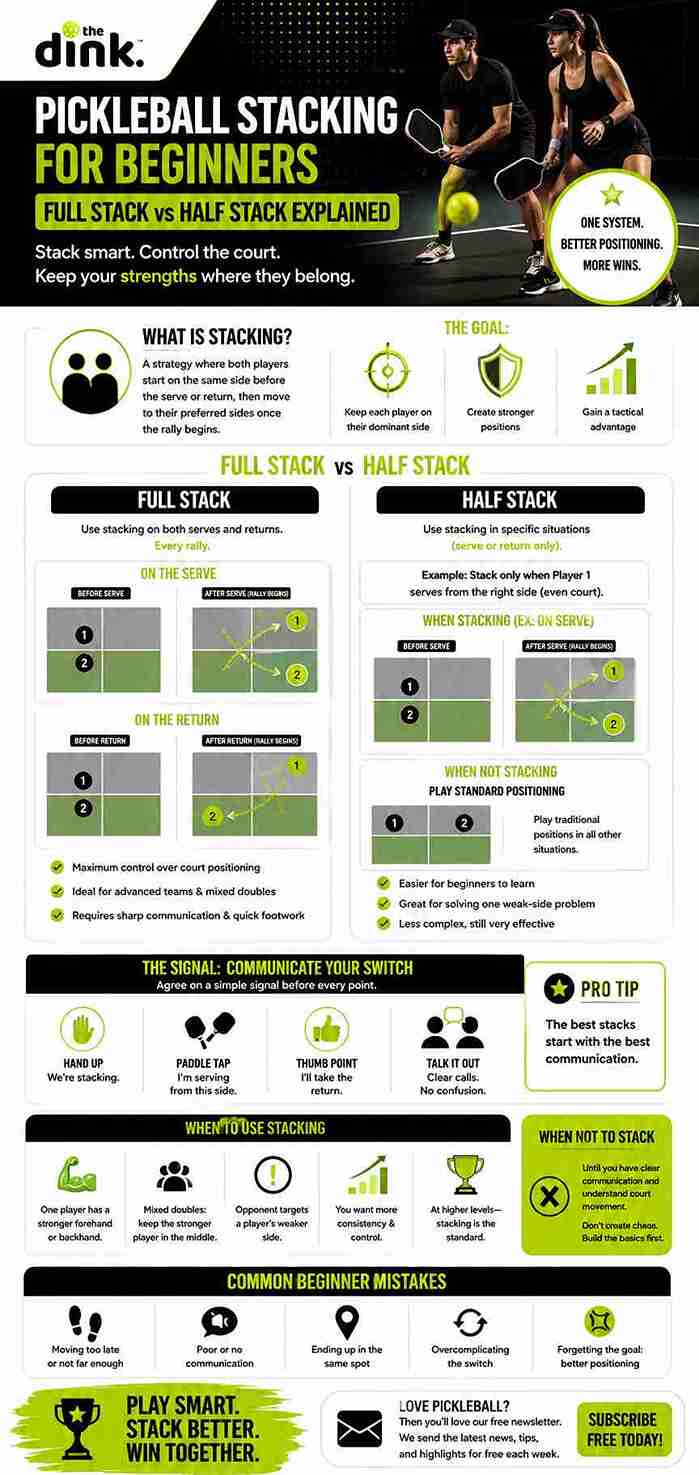
Stacking in pickleball doubles is a court positioning strategy where both players stand on the same side of the court before a serve or return, then quickly relocate to their intended sides once the rally begins.
The goal is simple: keep each player on the side that matches their dominant hand or strongest position, no matter where the rotation would otherwise put them.
In standard doubles, players switch sides based on who's serving and whether points are scored. That's fine at a recreational level.
But as soon as you start playing with a consistent partner, you'll notice that the natural rotation constantly forces one of you into uncomfortable positions.
Your right-handed partner ends up running backhands all day on the left side. Stacking fixes that.
The USA Pickleball official rulebook doesn't restrict where players stand before the serve makes contact, which is precisely what makes stacking legal and effective.
You're not bending any rules. You're just using all of them.
Understanding doubles strategy in terms of T and sideline placement is the foundation stacking builds on.
Once you know where you want to end up, stacking is how you get there.
Full Stack vs Half Stack: What's the Difference?
These two formations get confused constantly. They're both versions of stacking, but they're used in different situations and executed differently.
Here's the breakdown.
Full Stack: Both Players Stack on Every Rally
Full stack means your team uses the stacking formation on both serves and returns, every single time.
Neither player ever occupies the "traditional" starting position.
You've fully committed to your preferred side assignments, and you manage the positioning reset on every point.
Here's how it works in practice:
- On the serve: The server stands near the centerline (or even crosses to the other side), the partner stands behind them on the same half of the court. Once the serve lands and the rally starts, both players move to their designated sides.
- On the return: The returner takes the ball from whichever side it comes to, and their partner pre-positions on the opposite half. After the return, both players transition to their preferred sides as they move toward the kitchen.
Full stack is what you'll see at the pro level, especially among mixed doubles teams where one player has a significantly stronger forehand or where a lefty-righty combo benefits from keeping the forehand in the middle.
The upside: total control over court positioning.
The downside: it requires sharp communication, quick footwork, and a solid understanding of kitchen positioning to pull off cleanly.
Half Stack: Stacking Only in Specific Situations
Half stack means you only use the stacking formation on one side of the ball, typically just on the serve or just on the return.
You play traditional positioning in all other situations.
This is the version most beginner and intermediate players should start with. You're not throwing out your entire positioning system.
You're inserting stacking strategically in the moments where it helps most.
A common use case: your team only stacks when Player A is serving from the right side (even court) because that's the situation that puts them on their weaker side.
Every other rally, you play normal positioning. It's a targeted fix, not a full overhaul.
Half stack is also a great way to improve teamwork without overcomplicating your communication system mid-game. Start there.
 The Dink Media Team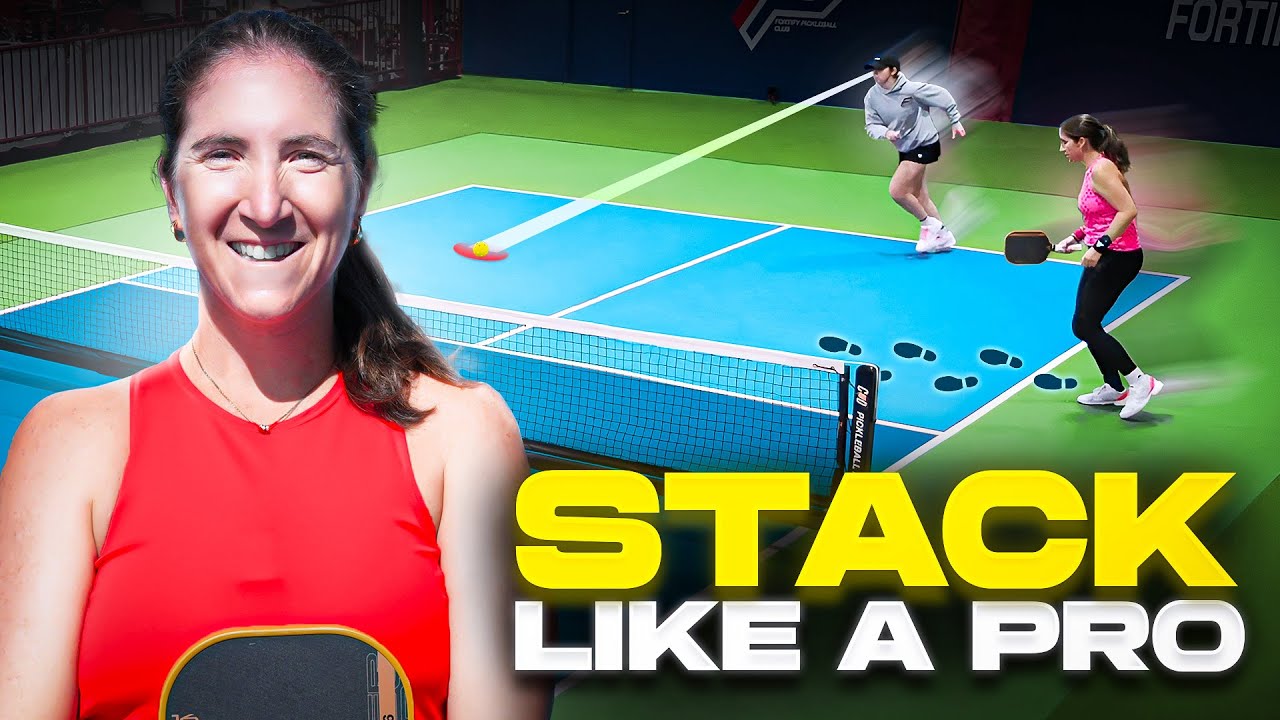
Why Do Doubles Teams Use Stacking?
The core reason is forehand dominance. In pickleball, your forehand is almost always your more powerful, more reliable shot.
Stacking ensures both players can prioritize their forehand coverage, which means fewer weak returns and better offensive options.
There's also a handedness argument. A right-left combination puts both players' forehands toward the center of the court when positioned correctly.
The center is where most balls go, so having two forehand-first players covering the middle is a serious tactical advantage.
Beyond hand dominance, stacking gives you predictability with your partner. Both players know exactly where they're going after every serve and return.
That clarity reduces hesitation, eliminates the "I've got it, no you've got it" mid-court collision, and keeps your court coverage in doubles airtight.
The Dink Media Team
How to Execute the Stack as a Beginner
Ready to actually try this? Here's a step-by-step for your next rec game.
Step 1: Decide Who Goes Where
Before the match starts, agree on your preferred sides. Usually, the stronger player or the player with the dominant forehand toward the middle takes the left side (ad court). That keeps their forehand in the most high-traffic zone.
Step 2: Set Up the Stack on the Serve
If you're stacking on the serve, the server stands near (or slightly past) the centerline. Their partner lines up behind them on the same side, just outside the court. The key detail: the non-serving partner must not interfere with the returner's view, so stay behind the baseline and give the returner a clear sightline.
Once the serve clears the net and lands in, both players shift to their assigned sides and start transitioning toward the kitchen.
Step 3: Set Up the Stack on the Return
The returner takes whichever side the serve goes to. Their partner pre-positions on the other half of the court, typically at or near the kitchen line. Once the return is made, both players move into their desired positions.
A clean return is essential here. A shaky return that pops up gives the serving team easy putaways before you've had a chance to reset to your preferred sides. Don't sacrifice shot quality for positioning.
Step 4: Use a Signal System
Communication is non-negotiable when you stack pickleball doubles as beginners. The simplest method: the player who would normally be in the "wrong" spot gives a tap on their leg or calls "stack" before the point starts. Both players know what's coming and execute accordingly.
Jason Flamm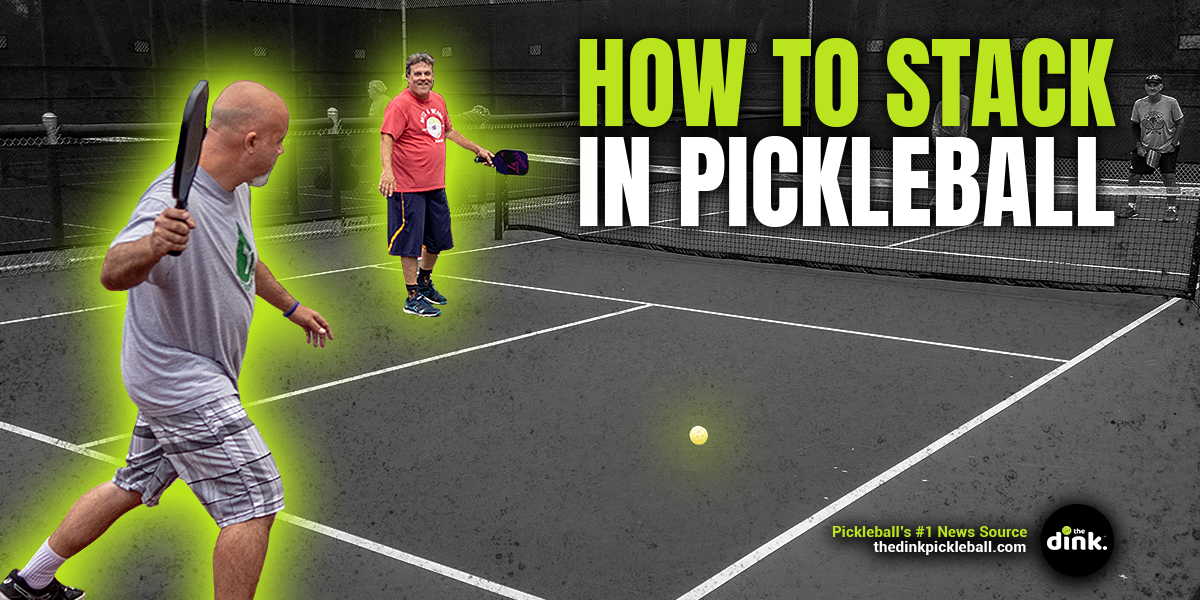
When Does Stacking Hurt More Than It Helps?
Stacking isn't always the right call. Here are the situations where it backfires.
- When your third shot isn't reliable. The window between the serve and getting to your preferred positions is narrow. If your third shot drop is shaky, you're not going to have time to get to your side before your opponent attacks. Fix your transition game first.
- When your partner communication breaks down. Stacking with someone you've never played with before almost always creates confusion. Both players hesitate. Both try to cover the same ball. You've made a tactical move that turned into a tactical disaster.
- When the serve goes to the wrong spot. If you're stacking and the serve ends up in an awkward location, your partner is scrambling from an already-compromised position. Consistency of serve placement matters more when you're stacking.
For newer players, starting with 3 beginner fundamentals before adding the complexity of stacking will give you a much stronger base to work from.
The Dink Media Team
Stack Pickleball Doubles Beginners: Key Takeaways
Here's what to hold onto:
- Stacking is a positioning strategy that keeps players on their preferred court side regardless of natural rotation.
- Full stack means you use it every rally, on both serves and returns.
- Half stack means you use it selectively, typically in one specific situation where the rotation puts you out of position.
- Start with half stack. Learn the movement, nail the communication, then layer in full stack later.
- The biggest beginner mistake is stacking without a clean serve or return. Your positioning means nothing if the ball is being attacked before you've transitioned.
- Mid-court awareness during the stack transition is critical. You're most exposed in the 3-5 steps after the serve or return.
The Dink Media Team
Stacking in Action: A Quick Glossary
Stacking: A doubles formation where both players line up on the same side before a serve or return, then transition to their preferred sides during play.
- Full stack: Using the stacking formation on every single point, both serving and returning.
- Half stack: Using the stacking formation only in specific situations, typically one side of the ball.
- I-formation: A variation of stacking where the net player crouches low to obscure their planned direction, usually used for deceptive poaching. Not a beginner tactic, but worth knowing the name.
- ATP (Around the Post): Not related to stacking, but often comes up in doubles strategy conversations. File it for later.
- Stack Pickleball Doubles for Beginners: Drills to Lock It In
You can't just read about stacking and expect it to work in a live game. The movement has to become automatic.
- Drill 1 – The Serve & Slide: Set up with a partner. Server stacks, calls "stack," hits the serve, and both players slide to their assigned sides. No rally needed. Just repeat the serve-and-transition motion 20 times until it feels natural.
- Drill 2 – Return Stack Reps: Returner receives a serve from any side, makes the return, and both players immediately move to their preferred positions and hold for three seconds. Focus on not rushing the return to get to position faster. The return quality comes first.
- Drill 3 – Full Rally Stack: Play out full points with stacking on every serve. Keep score. Identify where the communication breaks down and fix it. Drilling with a partner on coordinated movement is one of the fastest ways to lock in a new system.
For solo prep between sessions, solo pickleball drills can help you build the shot quality you'll need to execute stacking effectively when a partner isn't available.
Frequently Asked Questions
What is stacking in pickleball doubles for beginners?
Stacking in pickleball doubles is a court positioning strategy where both players stand on the same side before a serve or return, then shift to their preferred sides once play begins. For beginners, the easiest way to think about it is this: stacking lets you control which side each player occupies, instead of letting the scoring rotation decide for you. It's legal under USA Pickleball rules because players are free to position anywhere before the serve makes contact.
What is the difference between full stack and half stack in pickleball?
Full stack means your team uses the stacking formation on every single point, both when serving and returning. Half stack means you only stack in specific situations, such as when one player gets rotated to a side that doesn't suit their game. Full stack requires more communication and movement precision. Half stack is easier to learn and implement, which makes it the better starting point for most beginners working on doubles positioning.
Is stacking legal in pickleball?
Yes, stacking is completely legal. The USA Pickleball rulebook only requires that the correct player serves from the correct side of the court. Where the non-serving or non-returning partner stands is unrestricted before the serve, which is the window stacking uses. The only rule that applies is that the non-serving partner cannot obstruct the returner's view. As long as that condition is met, stacking is a legitimate tactic at every level of play.
When should beginners start using stacking in doubles?
Beginners should start experimenting with half stack once they have consistent serves, reliable returns, and can execute the third shot drop or drive with reasonable consistency. If your transition game is still shaky, stacking will expose you during the window between the serve and getting to position. Build your core shot mechanics first, add half stack second, then layer in full stack as communication with your regular partner improves.
Why do pro pickleball players always seem to be in the "wrong" spot?
They're not in the wrong spot. They're stacking. What looks like a positioning error is actually a deliberate formation designed to get both players to their preferred sides once play begins. Pro doubles teams use full stacking almost universally because maintaining forehand-heavy coverage in the center of the court is a decisive tactical advantage at the highest levels. When you see both players huddled on the same side before the serve, that's a system working exactly as intended.

Love Pickleball? Join 100k+ readers for free weekly tips, news & gear deals.
Subscribe to The Dink