

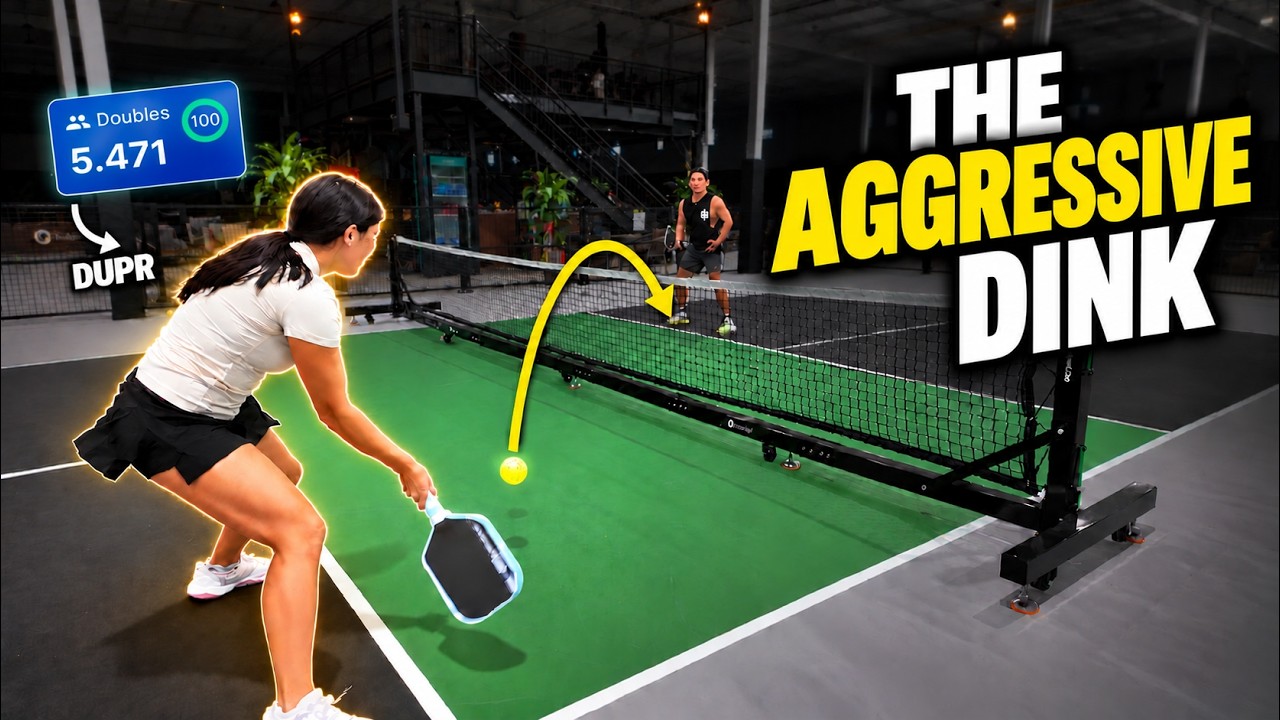
7 Topspin Dink Techniques From a 5.47 DUPR Player That Win the Soft Game
A heavy topspin dink gives your opponent less time and sets up pop-ups for your partner. Here are seven techniques from 5.47 DUPR player Christina Chin to build yours.
You know the feeling: you dink a ball that looks perfect, and it sits up just enough for your opponent to attack.
A real topspin dink fixes that, because the ball dips, jumps off the bounce, and gives the other team less time to do anything with it.
Christina Chin, a 5.47 DUPR player and seven-time Canadian champion, is nicknamed "Softy" for a reason.
Her soft game is the best part of her game, and she walks Ed Ju through exactly how she builds it in this lesson on his YouTube channel.
Below you will find her paddle angle, follow-through, drill, target spots, and the short hop that keeps you alive when you get pushed back.
Every technique is something you can try at your next practice.
Love pickleball? Then you'll love our free newsletter. We send the latest news, tips, and highlights for free each week.
Why Does a Topspin Dink Beat a Dead Dink?
A topspin dink adds pace and dip, so your opponent has less time to react than they would against a dead dink floating over the net.
Christina says it plainly: “These dead dinks, you’re not going to get a bead of sweat on you.”
Her goal is to dink with a purpose. She moves opponents around, creates pop-ups, and lets her partner finish the point.
That is the mindset shift. You are not dinking to stay in the rally. You are dinking to build the next ball.
Technique 1: Drop the Paddle Face and Stay Loose
The paddle tip should point toward the floor before contact.
Christina describes it as dipping her face on every single shot, which also lets her hold the ball and disguise a speed-up.
Most players dink with a flat face, and a flat face produces a flat ball. A loose wrist is what lets the tip drop.
When you tighten up, the paddle goes flat and the spin disappears. When you stay loose, the tip stays down and the brush happens naturally.
If you want more on fixing your paddle angle, that breakdown pairs well with this lesson.
Technique 2: Brush Up and Through at About 45 Degrees
Think of the swing path as a 45 degree brush, not a 90 degree punch. Your face starts pointed at the floor and finishes angled slightly up.
Christina explains that if you just push with a flat face, there is no pace and no spin. The brush is what creates both.
Ed noticed his own dinks were landing deep because he slammed on the brakes at contact.
When you stop the paddle, the ball pops, so trust the brush and keep the paddle moving.
 The Dink Media Team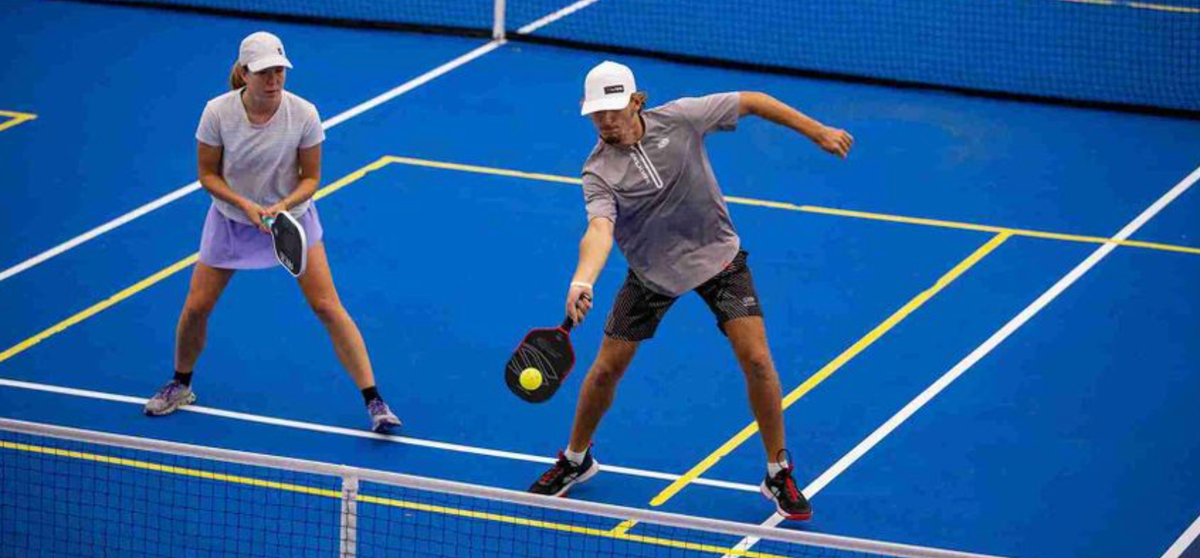
Technique 3: Follow Through Across Your Body
Finish your swing on the opposite side of your body instead of stopping on the same side.
This surprised Ed, who said no coach had ever told him to follow through on a dink.
Christina admits many coaches teach finishing on the same side because it is safer. You will not over-hit as easily, but you also give up spin and pace.
If you have the touch, the full follow-through is what makes the topspin dink heavy. It works even better on crosscourt dinks, where you have more room to generate spin.
A good way to build that touch is to work on dink consistency before adding more speed.
 The Dink Media Team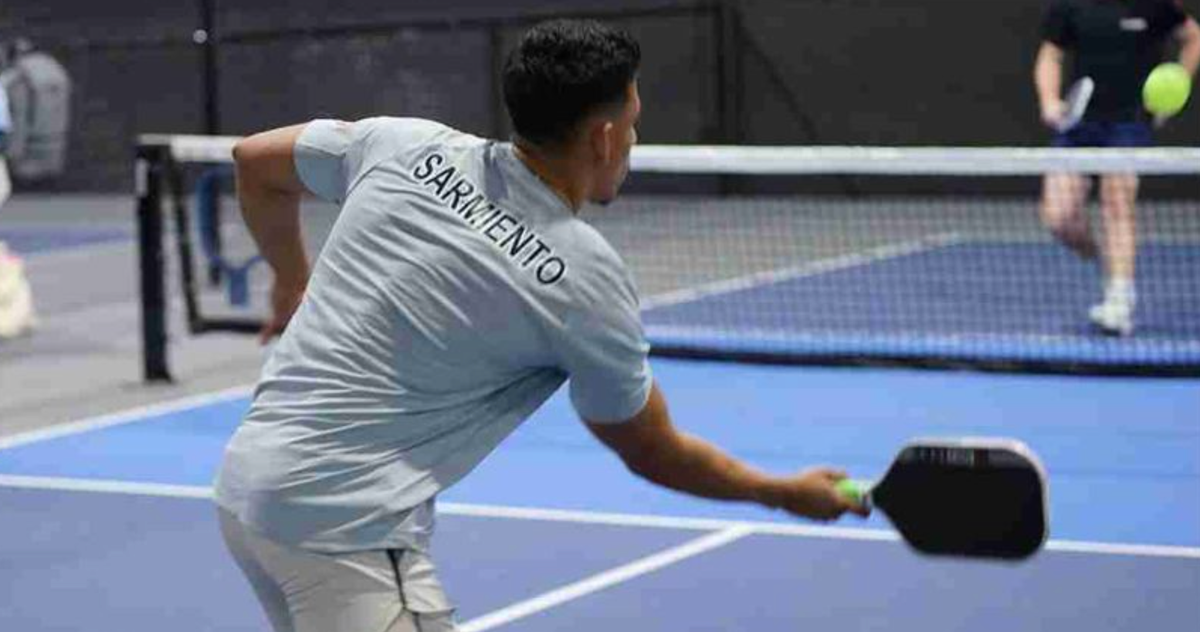
Technique 4: Use Shoulder, Elbow, and Wrist Together
Heavy spin comes from the whole arm, not just the wrist. Christina uses shoulder, elbow, and wrist together, and the elbow does break.
For beginners, she teaches dinking mostly from the shoulder because it is a bigger, steadier muscle. Once your touch is solid, you add wrist to create topspin.
Wrist alone will pop the ball up. Shoulder alone will give you a push dink with no bite.
 The Dink Media Team
Technique 5: Drill It With the Figure Eight
The figure eight drill is how Christina built her touch.
One player dinks crosscourt every time, and the other dinks straight every time, so the ball travels in a figure eight pattern.
Because the distance is short, you have to be soft. If you hit too hard, it becomes a pop-up that the other player can flick.
Here is how to run it:
- Start with one player dinking crosscourt and the other dinking straight ahead.
- Aim to land the ball in the middle of the kitchen, not deep.
- Absorb pace when needed to keep the ball soft.
- Build a rainbow arc instead of a line drive over the net.
- Swap roles every few minutes so both of you train both patterns.
If you want more structured work, these pickleball practice drills for any skill level are a solid next step.
 The Dink Media Team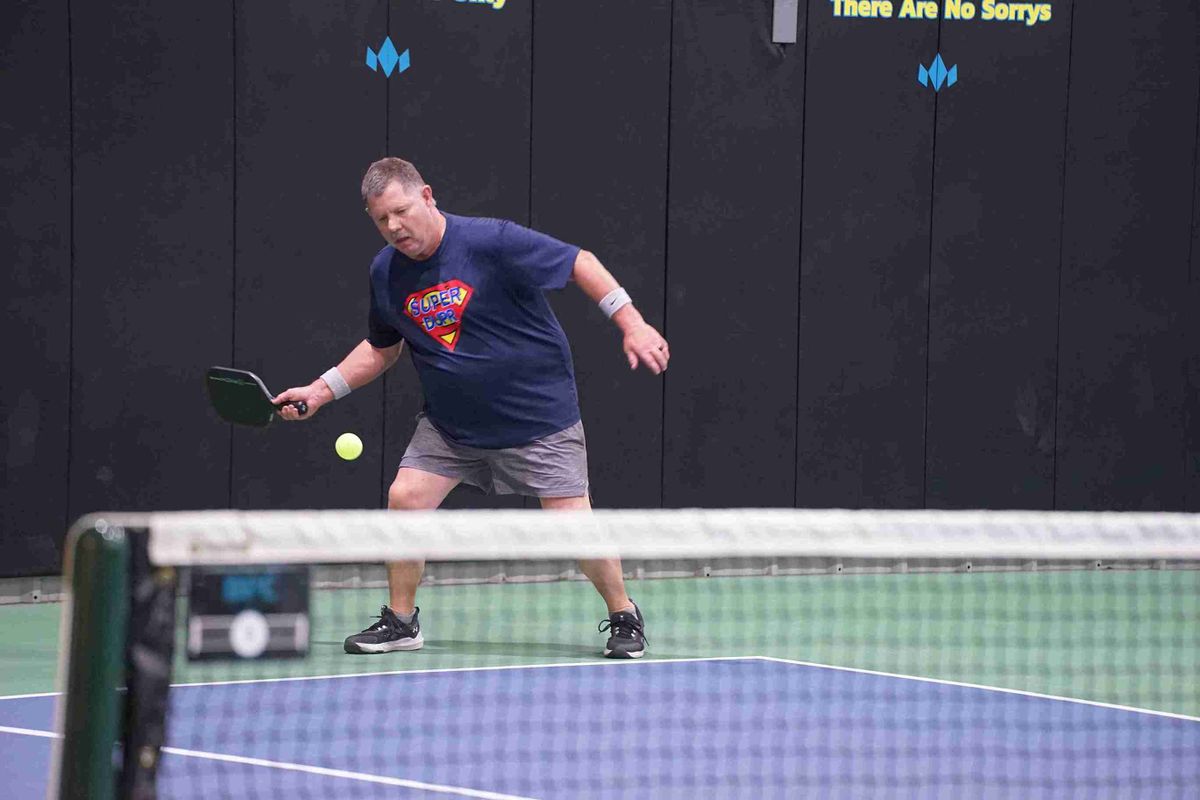
Technique 6: Dink to Target Spots, Not to the Person
Christina plays with four target spots on the court and mixes them depending on how the opponents shift.
She is always looking up and thinking two steps ahead.
Most players stare at the opponent and just try to get the ball over. A strategic dinker watches for open space and creates more of it.
Here is her pattern:
- Push one opponent wide with a dink down the line.
- Watch whether they camp out in that spot.
- If they do, the middle opens up for a speed-up off the bounce.
- Mix it up so nobody can predict where the next ball is going.
This ties directly into targeting the middle in doubles, and into dinking with intention.
 Eric Roddy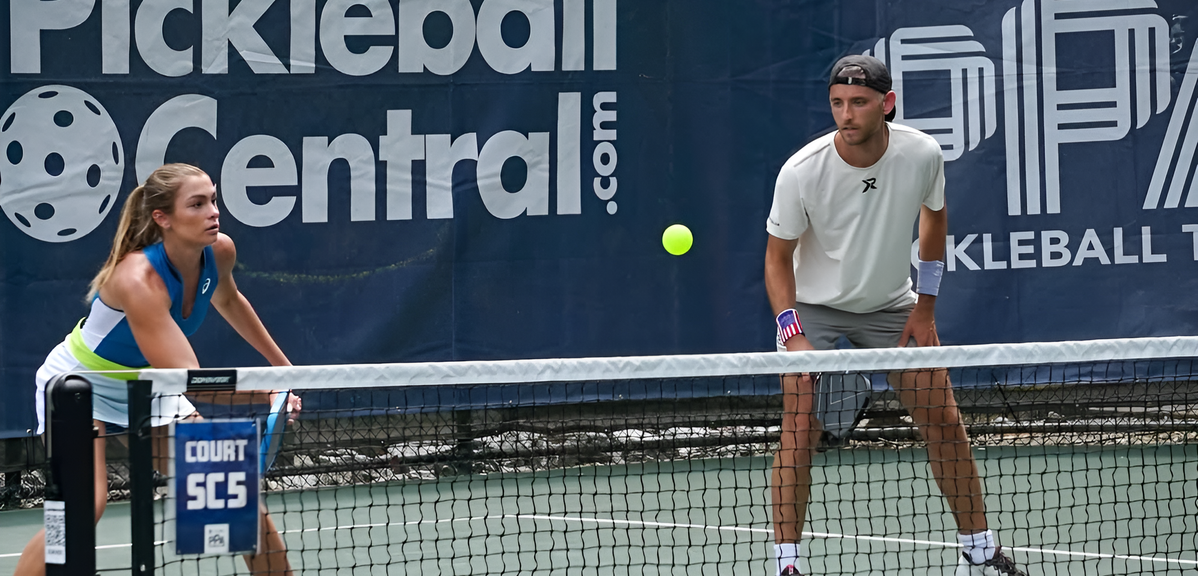
What Should You Do When You Are the One Getting Pushed Wide?
Aim for your opponent's inside foot, and take balls out of the air when you can.
Christina says the biggest mistake is getting into an ego battle where the crosscourt dink gets wider and wider.
When she is on the receiving end, she changes the pattern to neutralize the aggressive player.
An inside foot dink forces a defensive reset, because the opponent cannot be as aggressive on that ball.
It is also smart to communicate with your partner so they shade over and cover the middle if you are getting stretched.
Watching your own inside foot helps you stay balanced.
For a deeper look at this, read how to win a dink battle.
 The Dink Media Team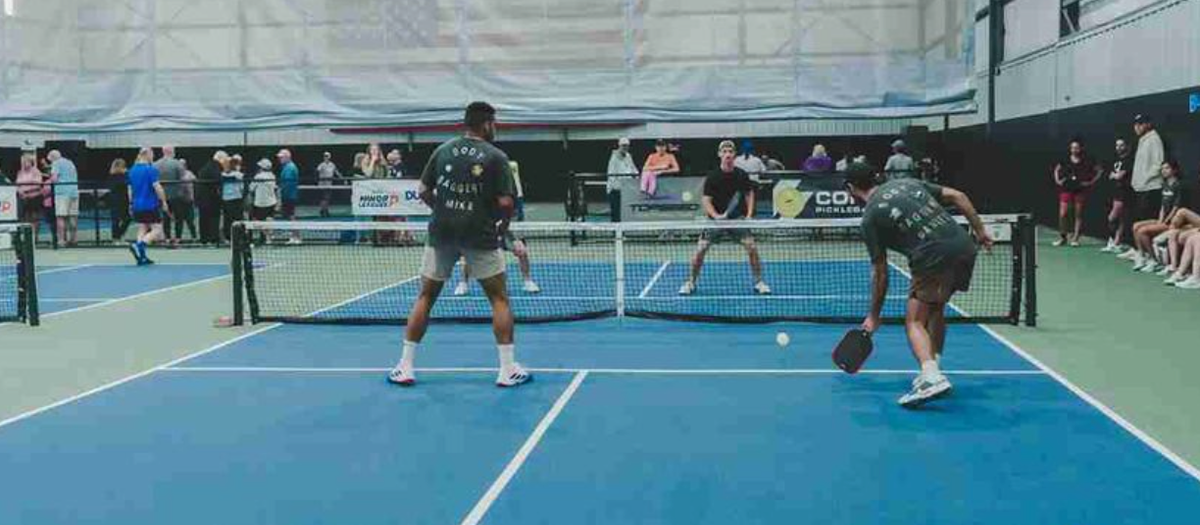
Technique 7: Master the Short Hop for Aggressive Dinks
The short hop is your defensive tool when an aggressive dink pushes you back.
Get low, dip the face, open it slightly, and push the ball so it lands shallow in the kitchen.
Christina uses a super soft grip because gripping hard turns the ball into a pop-up.
She does not swing through on these, because trying to attack an aggressive dink usually pops it up.
Definition: A short hop is a shot hit immediately after the ball bounces, with an open, soft paddle face, used to defend a deep or aggressive dink.
 The Dink Media Team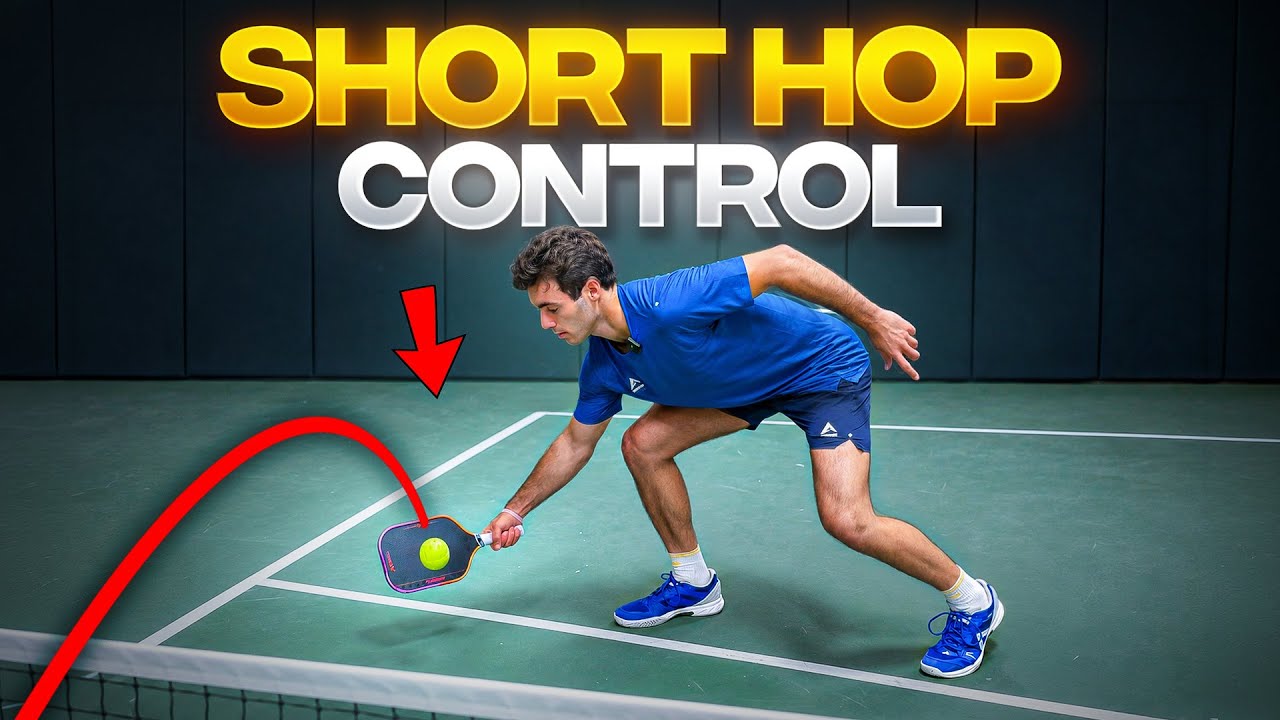
How Do You Know When to Short Hop, Top Spin, or Volley?
Read where the incoming dink lands. Christina breaks dinks into three types: defensive, neutral, and aggressive.
- Defensive dink (lands in the shallow part of the kitchen): attack it with a topspin dink.
- Neutral dink (lands mid-kitchen): attack it with topspin.
- Aggressive dink (lands deep or to a target spot you cannot reach): short hop it, or volley it if you can get there.
Volleying is a mode, not a rule. If you hit an aggressive dink, lean in and shadow the next ball so you can volley it, but do not volley everything.
When she sees a neutral, slow ball coming back, she steps back, hits a topspin dink, and then follows it in.
If you want to practice taking balls early, this guide on attacking a dink out of the air will help.
 The Dink Media Team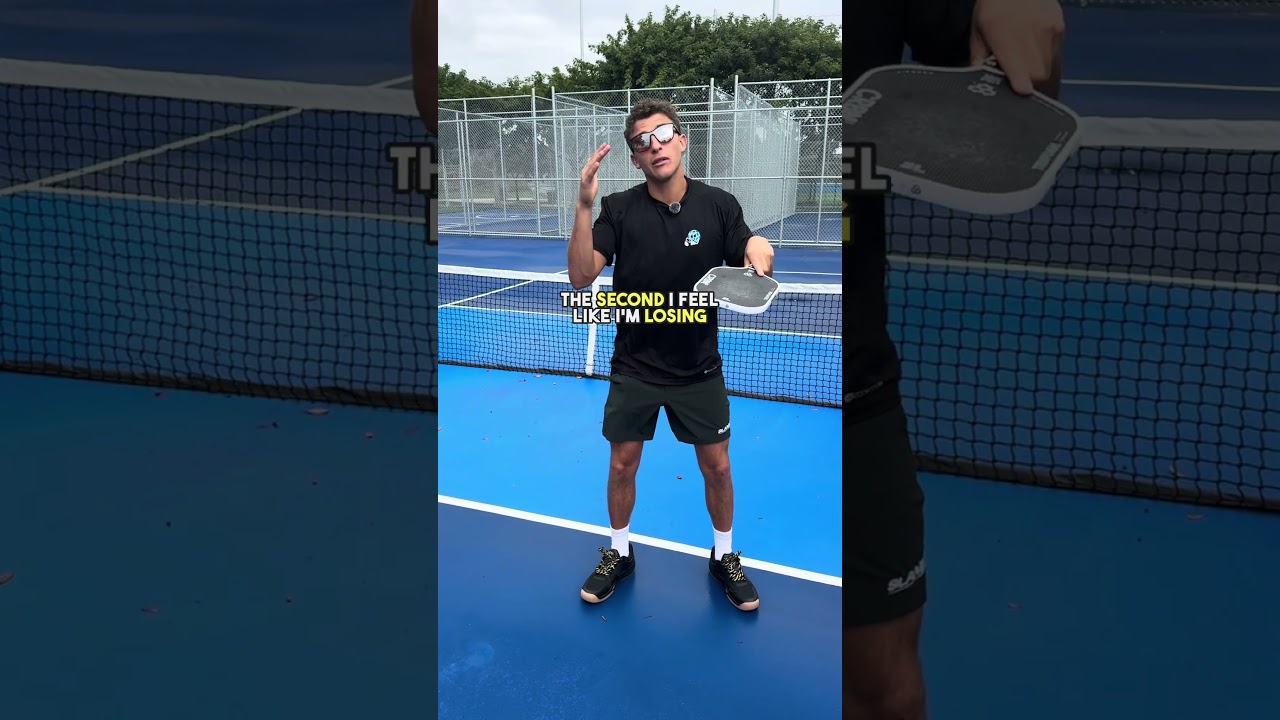
What Does This Look Like in a Real Game?
At the end of the lesson, Ed and Christina played a game to three, and you could see every concept at once.
Christina moved Ed side to side, hit inside foot to reset the pattern, and used the middle when he shaded wide.
Ed leaned on short hops to survive, and still described getting sucked into a black hole of dinking where every ball felt controlled by the other side.
That is what a heavy topspin dink does over time. It does not win the point on one shot, it wins it through a series of small advantages at the kitchen line.
 The Dink Media Team
Does Your Paddle Matter for Topspin Dinking?
Yes. A paddle with a rougher surface helps you grab the ball and create more spin, though technique still matters most.
If you are shopping, look at paddles with the most spin based on RPM, or browse power paddles that are excellent at dinking if you want a bit more pop behind your speed-ups.
A paddle will not fix a flat face or a stiff wrist. Build the technique first, then pick the tool that matches it.
 Justin Barton
Putting It All Together at Your Next Session
Start with the loose wrist and dipped paddle face, then add the brush and full follow-through.
Run the figure eight drill until your dinks land mid-kitchen instead of deep.
Once that feels natural, start picking target spots and watching your opponent’s inside foot.
Add short hops for aggressive balls, and you will have the full soft game Christina uses to control rallies.
If you are stuck in a plateau, it is worth reading about 4 pickleball dink types that win more points to round out your toolbox.
Frequently Asked Questions
How do you hit a topspin dink in pickleball?
Drop your paddle tip toward the floor, stay loose in the wrist, and brush up and through the ball at about a 45 degree angle. Finish with a full follow-through across your body for more spin and pace.
Should you follow through on a dink?
If you have good touch, yes. Christina Chin follows through across her body on neutral and defensive dinks because it adds spin and pace compared to stopping on the same side.
Why do my dinks go deep?
You are probably stopping the paddle at contact, which pops the ball forward. Brush through the ball with a dipped face and aim for the middle of the kitchen.
What is a short hop in pickleball?
A short hop is a soft, open-faced shot hit right after the bounce, used to defend aggressive dinks. Get low, grip loosely, and try to land it shallow in the kitchen.
What is the figure eight drill?
One player dinks crosscourt every time while the other dinks straight every time, creating a figure eight pattern. It trains soft touch and topspin because hitting too hard produces a pop-up.

Love Pickleball? Join 100k+ readers for free weekly tips, news & gear deals.
Subscribe to The Dink


