How to Hit a Forehand in Pickleball: Grip, Swing & Follow-Through
Knowing how to hit a forehand in pickleball is the foundation for every aggressive shot in your arsenal. Master the grip, swing path, and follow-through and you'll own the baseline.
Understanding how to hit forehand pickleball shots correctly is probably the single biggest skill gap between a 3.5 and a 4.5 player.
Not the dink. Not the third-shot drop.
The forehand. It's the shot you'll hit more than any other, and most recreational players are doing at least two things wrong every single time they swing.
The good news? The mechanics are learnable. The grip is simple. The swing path is repeatable.
And once you lock in your follow-through, the whole thing clicks into place in a way that genuinely changes how you play.
Love pickleball? Then you'll love our free newsletter. We send the latest news, tips, and highlights for free each week.
What's the Right Grip for a Pickleball Forehand?
The continental grip is the baseline starting point for hitting a forehand in pickleball, though many players find the eastern grip gives them better topspin.
To find the continental, hold your paddle like you're shaking hands with it. The V of your thumb and index finger should sit on the top bevel of the handle. That's it.
The eastern forehand grip rotates slightly clockwise (for right-handers) from there.
Your palm sits more behind the handle, which squares the paddle face more naturally at contact.
 Alex E. Weaver
It's a small adjustment, but it's what separates flat shots from shots with shape. You can read more about pickleball grip styles and how they affect your game here.
One thing most players overlook: grip pressure. Squeezing the handle at 7 or 8 out of 10 tension is killing your touch.
Studies in racket sport biomechanics consistently find that relaxed grip pressure improves swing speed and reduces arm fatigue.
Keep it loose. Tighten only at the moment of contact.
Avoid the western grip for pickleball.
It works in tennis with a longer swing and more topspin requirements, but on a smaller court with a lower bounce, it limits your range and makes low balls nearly impossible to handle cleanly.
How to Hit a Forehand in Pickleball: The Swing Path Explained
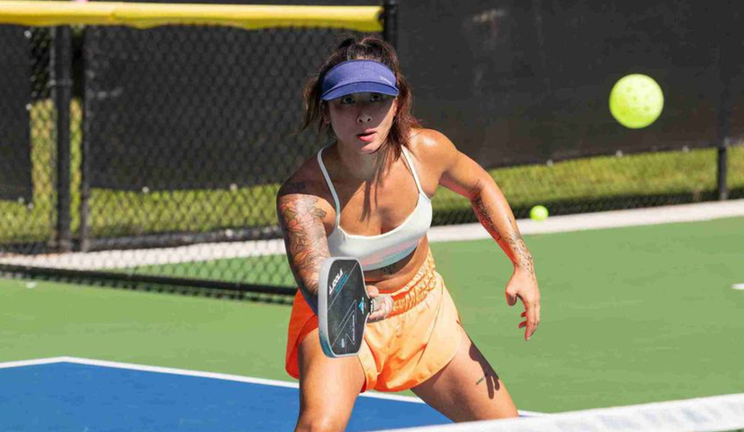
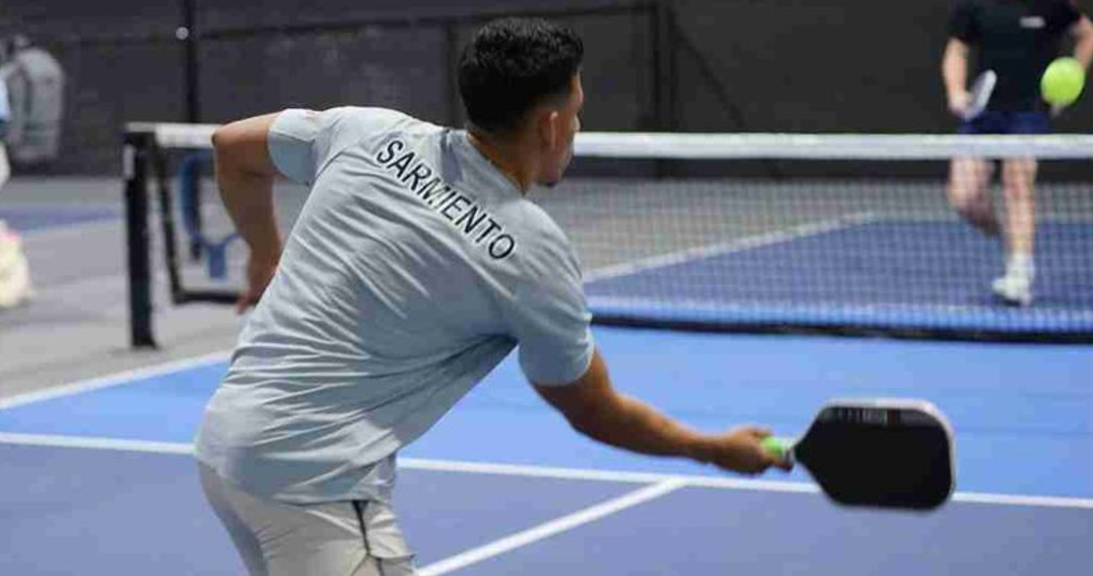
A proper pickleball forehand swing travels from low to high, making contact out in front of the body at waist height, and finishing at shoulder level.
That's the whole blueprint.
Here's the thing about swing path: most players swing sideways instead of upward.
A sideways swing gives you a flat ball with minimal margin over the net and zero spin.
A low-to-high swing brushes the back of the ball, creates topspin, and pulls the ball down into the court after it clears the net.
That's the difference between a shot that stays in and one that clips the tape.
The pickleball drive technique depends on compressing this swing into a shorter, more explosive motion than you'd use in tennis.
You don't have room for a full windup. The backswing should go back to roughly your hip pocket, then drive forward with your whole body rotating into the shot.
 Thomas Shields
Body rotation is doing most of the work. Your core, your hips, your shoulder, they're the engine. The arm is just the delivery system.
Players who muscle the ball with only their arm end up inconsistent and tired.
Turn through the shot. Your belt buckle should be pointing toward your target by the time you finish.
Contact point: out in front, every time. If the ball is getting to your hip or behind your body, you're letting it play you.
Step into position early, set your feet, and meet the ball where you can swing forward into it.
This connects directly to your stance and court positioning, you can't fix your swing if your footwork puts you in the wrong place.
How Does Topspin Change the Forehand in Pickleball?
Topspin is generated by brushing up the back of the ball during the swing, creating forward rotation that pulls the ball down after it peaks.
More topspin means more net clearance with the same depth, which is the whole reason it matters.
To add topspin to your pickleball forehand, accelerate the paddle upward through contact.
The angle of your paddle face at impact matters here: a slightly closed face (tilted slightly downward at the top) combined with an upward swing path creates the brush needed for heavy topspin.
Check out how the master topspin pro approach breaks down the mechanics in detail.
Research on topspin mechanics in racket sports confirms that swing speed and contact point elevation relative to the ball are the two primary variables affecting spin rate.
The faster you swing through the ball (not at it), the more spin you get.
 The Dink Media Team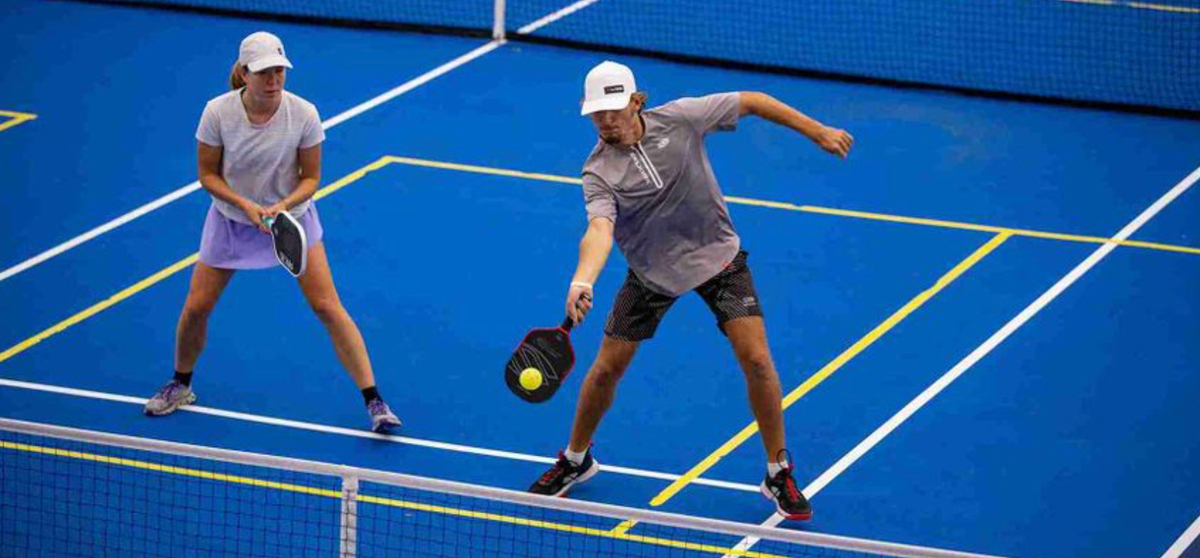
Is There a Difference Between a Forehand Drive and a Forehand Reset?
Yes, and knowing which one to hit is just as important as knowing how to hit it.
These are technically the same stroke but executed with completely different intent, swing speed, and contact.
- The forehand drive is your aggressive shot. Full swing, full rotation, contact out in front, follow-through high. You're trying to drive through the court and put your opponent on the defensive. It's the shot you hit when the ball sits up in the transition zone and you have an opening. The drive vs. drop decision at the fifth shot is where players at every level have to make this call in real time.
- The forehand reset is the complete opposite. Soft hands, a shortened swing, and a slightly open face absorb pace and redirect the ball softly into the kitchen. You're not generating pace, you're canceling it. The swing looks similar on the outside, but the grip pressure drops, the arm decelerates, and the follow-through barely reaches waist height. Think of it as a controlled catch, not a swing.
Mixing these two shots from the same setup creates confusion for opponents. If your drive and your reset look identical until contact, you're doing it right.
If they look different from the moment you start your backswing, your opponents will read you early.
 The Dink Media Team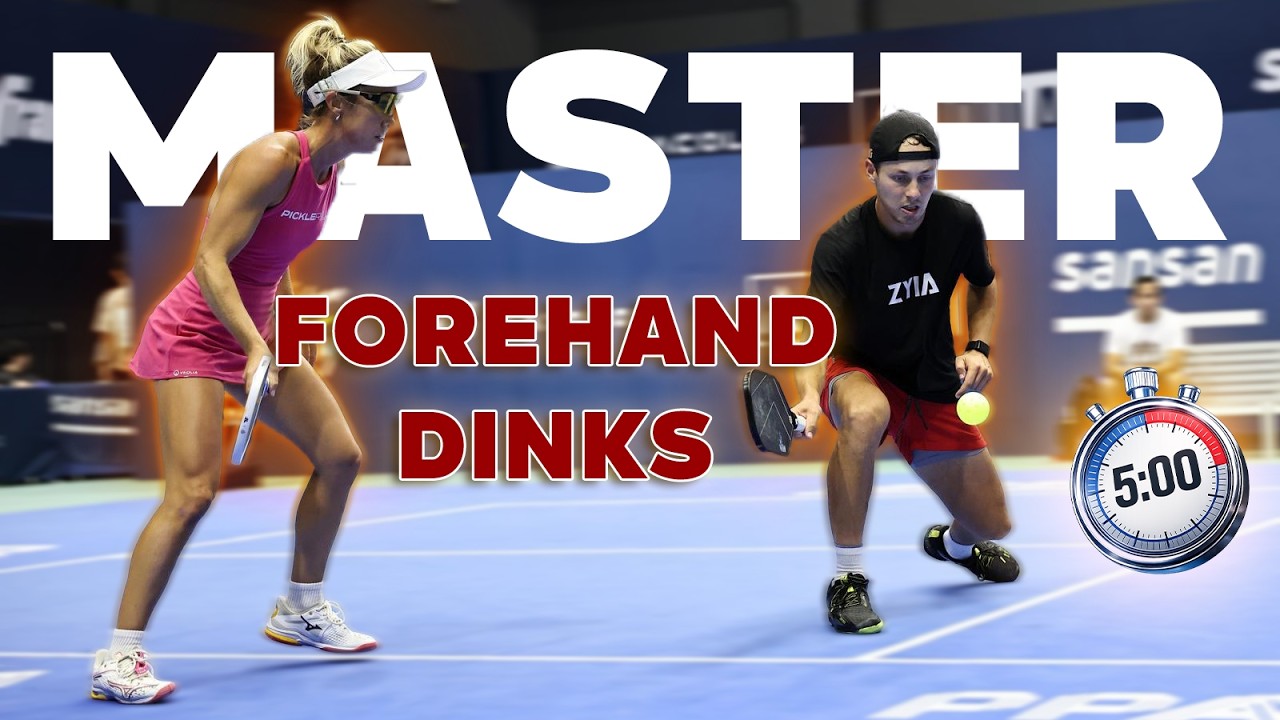
What Does a Good Follow-Through Actually Look Like?
The follow-through on a pickleball forehand finishes with the paddle at or above shoulder height, pointing roughly toward the target.
If your paddle ends up down by your hip or wrapped around your back, something broke down earlier in the swing.
Follow-through isn't just a finishing touch. It's a diagnostic tool. A high, clean finish tells you that you swung through the ball correctly.
A low, choppy finish means you decelerated at contact. Deceleration at contact is where power and spin both go to die.
The swing volley is a different animal, but watching how pros handle follow-through on aggressive volleys reveals the same principle: committed, complete, forward.
Not tentative. Not pulled back early.
One drill that locks in follow-through fast: hit ten forehand drives and hold the finish position for two seconds after each one.
If you can't hold it, you weren't committed to it. This feedback loop rewires the habit faster than any verbal cue.
Recovery matters too. After the follow-through, your paddle should return to a neutral ready position in front of your body.
A paddle that ends up wrapped around your side takes too long to reset, and at the NVZ line, a half-second is the whole rally.
Read more on power shots and recovery positioning here.
 The Dink Media Team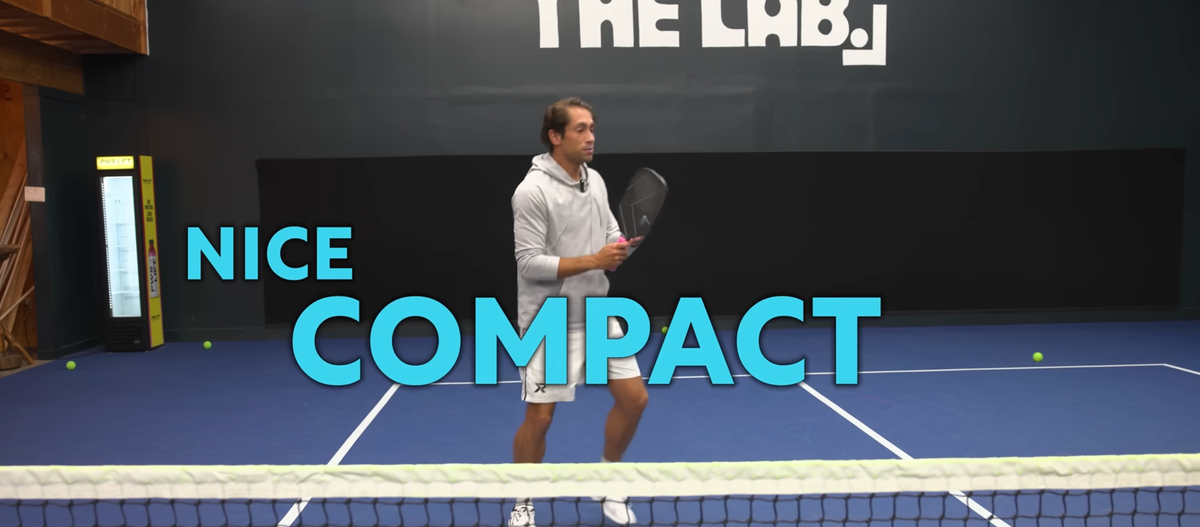
Why Footwork Is the Hidden Half of Your Forehand
Most forehand problems aren't hand problems. They're foot problems.
Poor footwork puts you in the wrong position before the swing even starts, and no amount of technique adjustment fixes a shot hit from the wrong spot.
The ideal forehand setup is a semi-open or closed stance with your non-dominant foot stepped slightly forward (for right-handers, that's the left foot).
This lets your hips rotate through fully. A squared-up or open stance limits hip turn and forces you to compensate with your arm.
Watch any pro forehand in slow motion and you'll notice they're almost always moving to the ball, not reacting to it.
Advanced shot selection drills train this instinct, recognizing early where a ball will land and moving there before you swing.
Two footwork habits that directly improve your forehand:
- Split step before every shot. A small hop as your opponent contacts the ball loads your legs for any direction. Players who don't split step are always a half-step late.
- Stay on the balls of your feet. Flat-footed players can't generate the explosive step needed to move into a forehand properly. It's a posture thing more than anything else.
The connection between footwork and mid-court positioning is where recreational players lose the most points, not from bad swings, but from being out of position when the ball arrives.
 The Dink Media Team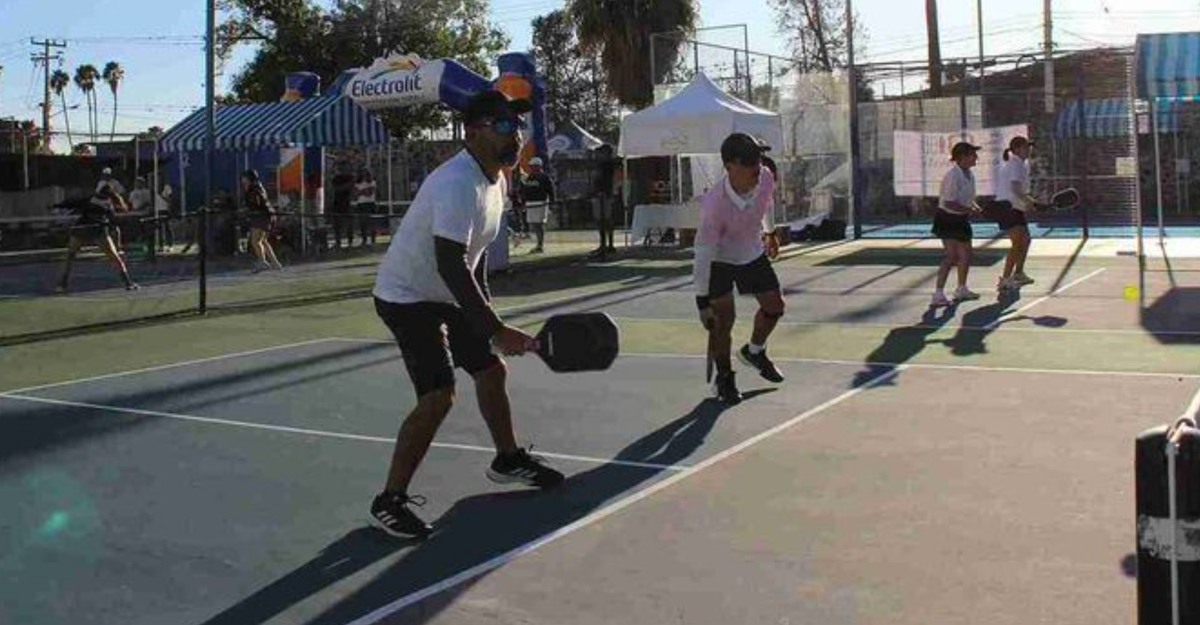
Forehand Drills That Actually Accelerate Your Progress
The fastest way to improve your pickleball forehand is through isolated, repetitive drilling with immediate feedback, not just playing games.
Games hide your weaknesses. Drills expose them.
Three drills worth building into your practice routine:
- Wall rallies. Hit forehand drives against a wall from eight to ten feet away. The wall forces quick recovery and quick setup. Aim for a target zone on the wall to force accuracy alongside consistency.
- Crosscourt forehand-to-forehand rallies. Both players hit only forehands crosscourt. You're forced to move laterally to find your contact point, which simulates match conditions better than static feeding.
- The feed-and-drive drill. A partner feeds balls to your forehand side from the kitchen line. You drive each ball back crosscourt from the baseline. Focus entirely on contact point and swing path rather than placement.
The slice return and the backhand volley both benefit from the same contact-point discipline as the forehand, so work done on your forehand carries across your whole game.
According to research on motor skill acquisition in racket sports, blocked practice (repeating one motion) builds initial mechanics faster, while random practice (mixing shots) improves in-match application.
The ideal training structure uses blocked practice early in a learning cycle and random practice once mechanics stabilize.
 The Dink Media Team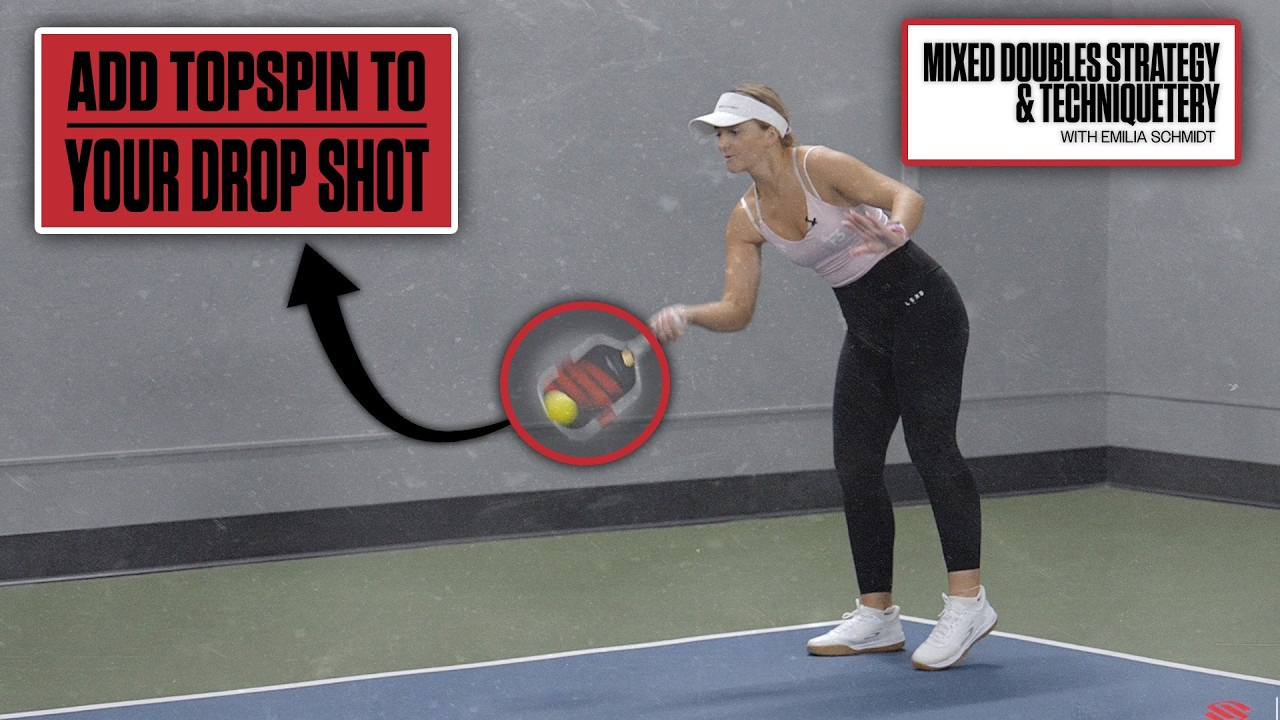
Key Takeaways
- The continental or eastern grip is the standard for pickleball forehand mechanics, not the western grip you see on tennis courts.
- Contact point matters more than swing speed. Out in front, waist-high, every time.
- A compact low-to-high swing path generates topspin without sacrificing control.
- Follow-through should finish at shoulder height, not wrapped around your body.
- Footwork sets up the forehand. If your feet are wrong, the swing is already compromised.
- The forehand drive and the forehand reset live on opposite ends of the same swing, knowing which to use is half the battle.
Frequently Asked Questions
How do you hit a forehand in pickleball for beginners?
Start with the continental grip, keep your backswing short, and focus entirely on contact point. The ball should meet the paddle face out in front of your body, at waist height. Swing low to high and let the follow-through carry to shoulder level. Don't worry about power early. Consistency at the right contact point builds the foundation for everything else.
What grip should I use for a pickleball forehand?
The continental or eastern forehand grip works best for most players. The continental offers versatility across different shots, while the eastern gives a slightly more natural paddle-face angle at contact for topspin drives. Avoid the western grip in pickleball since the lower bounce and smaller court make it harder to handle. Your grip pressure should stay relaxed until the moment of contact.
How do I add topspin to my forehand in pickleball?
Brush up the back of the ball with a low-to-high swing path and close the paddle face very slightly at contact. Swing speed matters more than technique here: accelerate through the ball, not at it. Keep your contact point out in front of your body so you have room to swing upward through the ball rather than pushing forward at it.
Why does my forehand keep going into the net?
Usually this means either the contact point is too far back (the ball is getting past waist height before you make contact), the paddle face is angling downward at impact, or you're decelerating at contact. Record your swing from the side and check where your paddle face points at the moment of contact. Nine times out of ten, net errors on the forehand trace back to contact point, not swing speed.
How is the pickleball forehand different from a tennis forehand?
The pickleball forehand uses a shorter, more compact swing because the court is smaller and rallies are faster at the net. Tennis players often overswing when they transition to pickleball. The grip is similar (continental or eastern), but the backswing should stop at hip level rather than winding up behind the shoulder. Topspin mechanics work the same way, but the margin for error on swing path is smaller given the lower net clearance needed.

Love Pickleball? Join 100k+ readers for free weekly tips, news & gear deals.
Subscribe to The Dink