
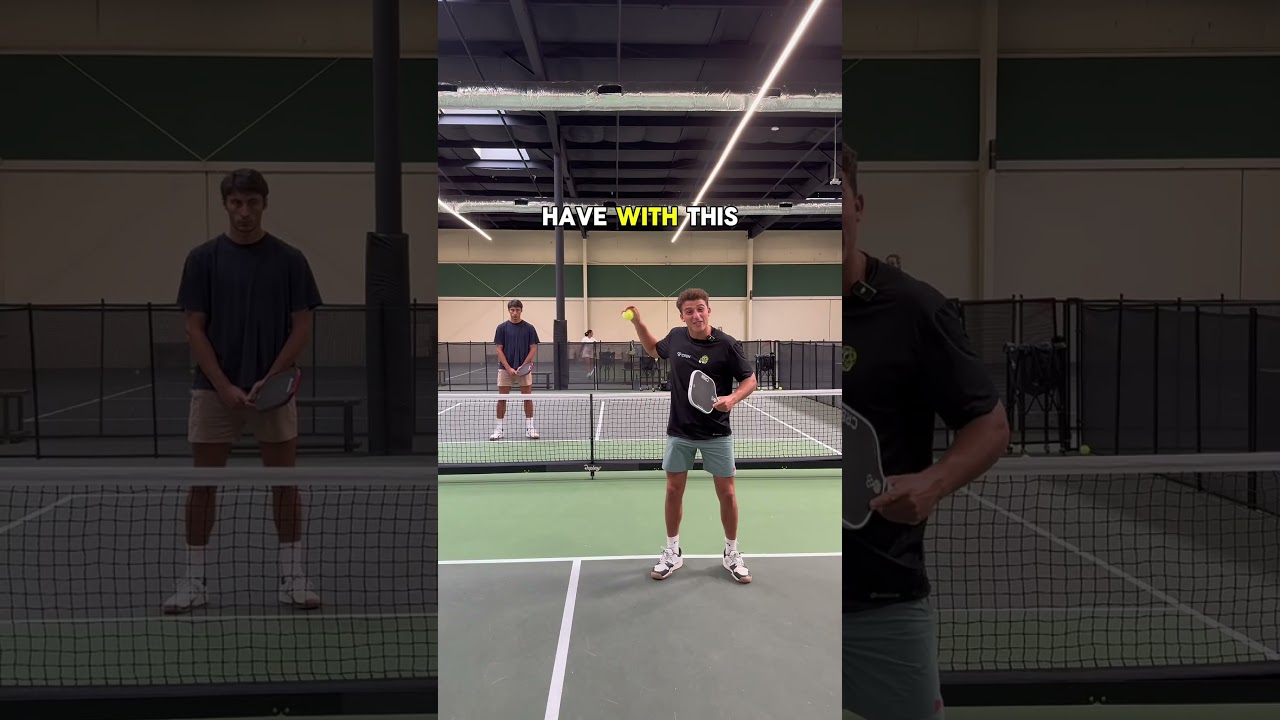
The middle dink is not a neutral ball. Use these three reads to take control and become a nightmare for any opponent at the kitchen line.
The middle dink is one of the most misunderstood balls in pickleball.
Most players treat it like a ball they just have to survive, pushing it back softly and hoping for the best.
That passive approach is exactly what your opponent wants. When the ball lands in the middle, you actually have more options than almost any other dink situation.
The problem is most players do not recognize those options in the moment.
This breakdown comes from tanner.pickleball on YouTube, who laid out three specific reads you can use to flip the script and take control of the middle dink exchange.
Love pickleball? Then you'll love our free newsletter. We send the latest news, tips, and highlights for free each week.
Why the Middle Dink Is Not a Neutral Ball
Here is what most amateur players get wrong: they see the middle dink as a reset moment.
They take a breath, push it back, and let the opponent decide what happens next.
That is giving away a free turn.
The middle of the court is one of the best positions to create problems, because you have width on both sides and height as an option above you.
Your opponent knows this too. When the ball comes to the middle, a smart opponent is already scanning their options at the kitchen line.
If you are also scanning theirs, you take back the initiative before they even decide.
The key is learning to read your opponent's body position in the split second before you make contact.
What Does "Reading Your Opponent" Actually Mean?
Reading your opponent means watching their body before you commit to a shot. It is not about guessing.
It is about using what they show you to make the highest percentage decision possible. The three body cues to watch are simple:
- Are they leaning forward toward the net?
- Are they shading toward the middle of the court?
- Are they balanced and still at the line?
Each cue maps to a specific response. Let's go through all three.
Read 1: They're Leaning In, So You Lob
When your opponent is leaning toward the net, they are anticipating a fast ball coming back at them. They want to volley something short or speed up on you first.
That lean is a gift. Their weight is moving forward, which means backward movement is going to be late and awkward.
The lob does not need to be perfect here. It just needs to clear their extended paddle and land somewhere deep.
Understanding the offensive lob will help you see the situation from both sides of the net.
Knowing when your opponent expects it helps you disguise it better.
One important note: the lob off the middle dink works best when you disguise it with the same paddle preparation as your regular dink.
If your swing changes shape early, they will read it and recover.
 The Dink Media Team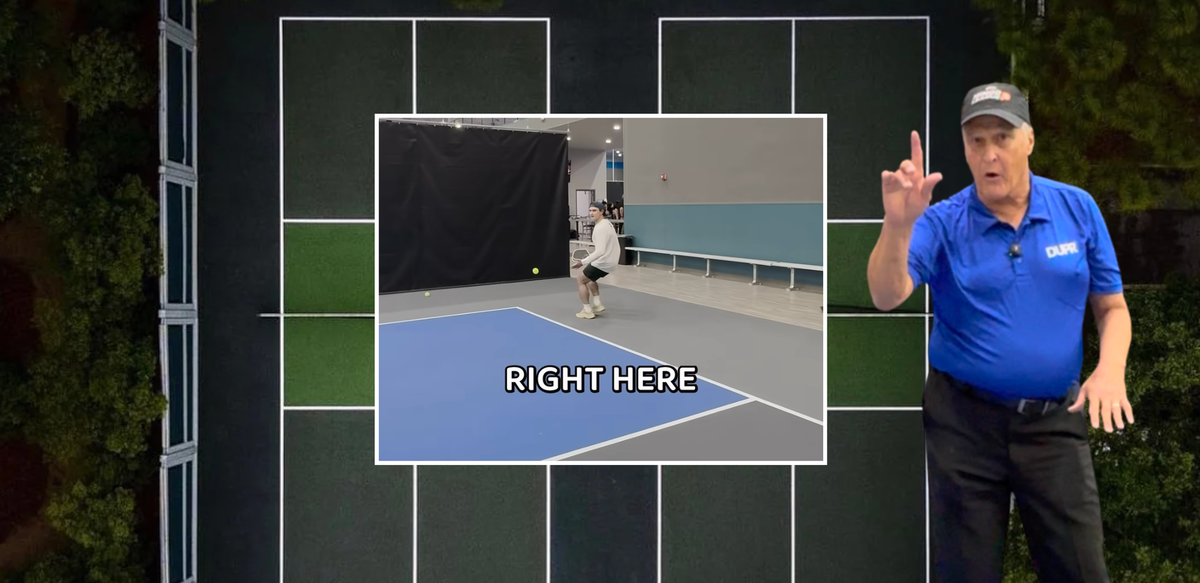
Read 2: They're Covering Middle, So You Go Wide
When your opponent is shading toward the center of the court, they are protecting the obvious angle.
They expect you to push it back through the middle or speed up down the line.
That coverage creates a gap on the wide side. Going cross-court wide pulls them laterally and forces a difficult stretch dink or a pop-up.
The key here is placement over power. You do not need to rip it wide.
A controlled dink that lands near the sideline and stays low is far more effective than a fast ball they can absorb.
This is exactly the kind of dink variation that separates players who just keep the ball alive from players who are building toward a winner.
One underrated bonus of the wide dink: it resets their court position. Once they chase that wide ball, the middle opens right back up for your next shot.
 The Dink Media Team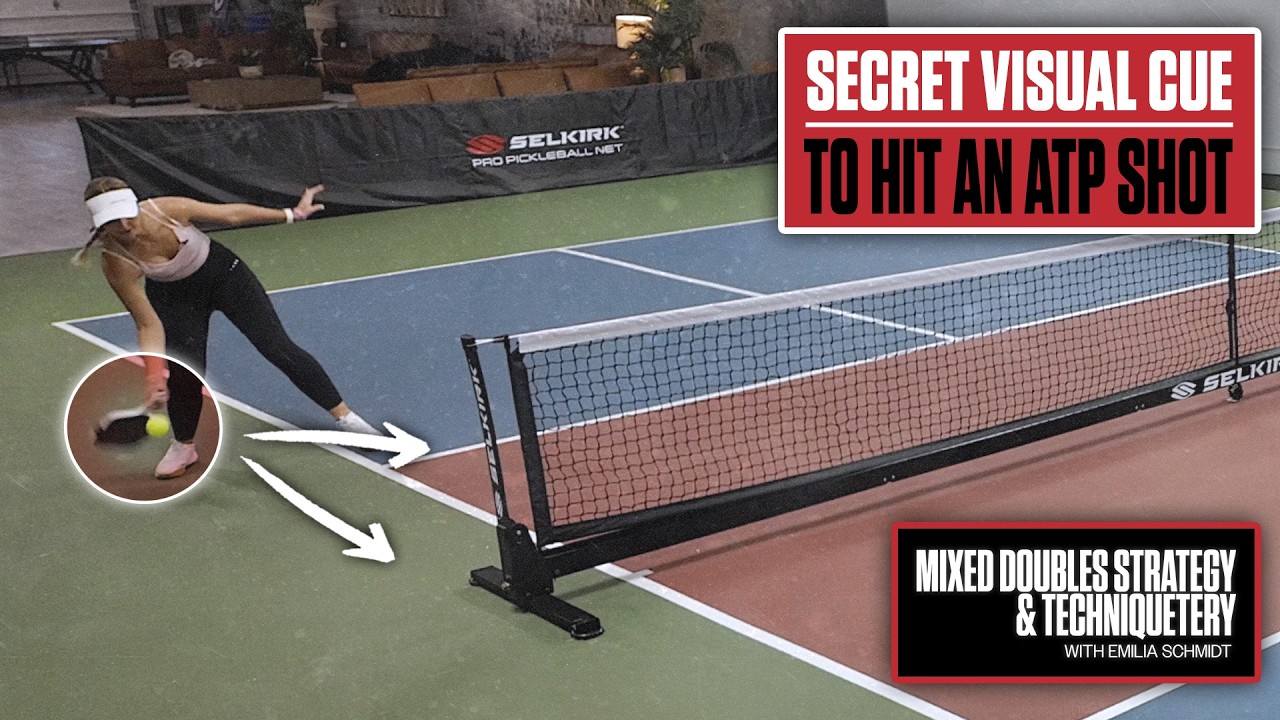
Read 3: They're Balanced, So You Speed Up at the Chicken Wing
When your opponent is still and balanced at the kitchen line, they are in a good defensive position. There is no obvious gap and no body lean to exploit.
This is when you attack the chicken wing, which is the backhand shoulder area on their dominant side.
When a player raises their elbow to defend a ball coming at that spot, the elbow flares out like a wing.
The chicken wing is a structurally weak position for most players.
The paddle face is hard to control and the swing path is cramped, so a well-placed speed-up to that spot usually produces a pop-up or a mishit.
The speed-up here does not need to be a full rip.
A firm, compact punch that stays below shoulder height is more effective than a ball they can reset easily, and hitting it with consistent mechanics makes the shot repeatable under pressure.
One mistake players make when they go for the chicken wing: they aim too high. Keep the ball below their elbow if possible.
 Alex E. Weaver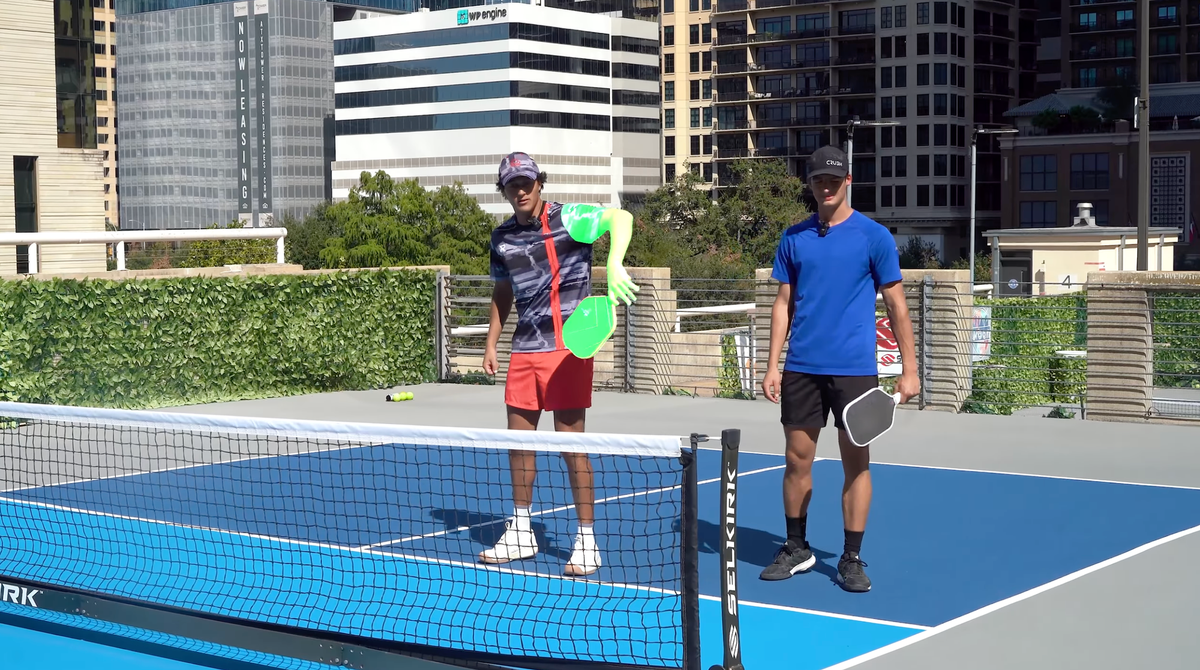
How Do You Know Which Read to Use?
The honest answer is that it takes reps. You are not going to nail this perfectly in your next game.
But you can start by picking just one read to focus on per session.
Here is a simple framework to practice:
- Lob read: Look for their chest moving toward the net. Any lean forward means lob.
- Wide read: Look for their feet shading toward center. Any middle coverage means wide.
- Speed-up read: Look for a still, neutral stance. Balanced equals attack the chicken wing.
Start with just the lob read for a full session. Then add the wide read the next time.
Build it piece by piece rather than trying to run all three at once.
If you want a deeper look at escaping dinking pressure using the same principles of reading and reacting, that breakdown applies directly to the middle dink situation.
 The Dink Media Team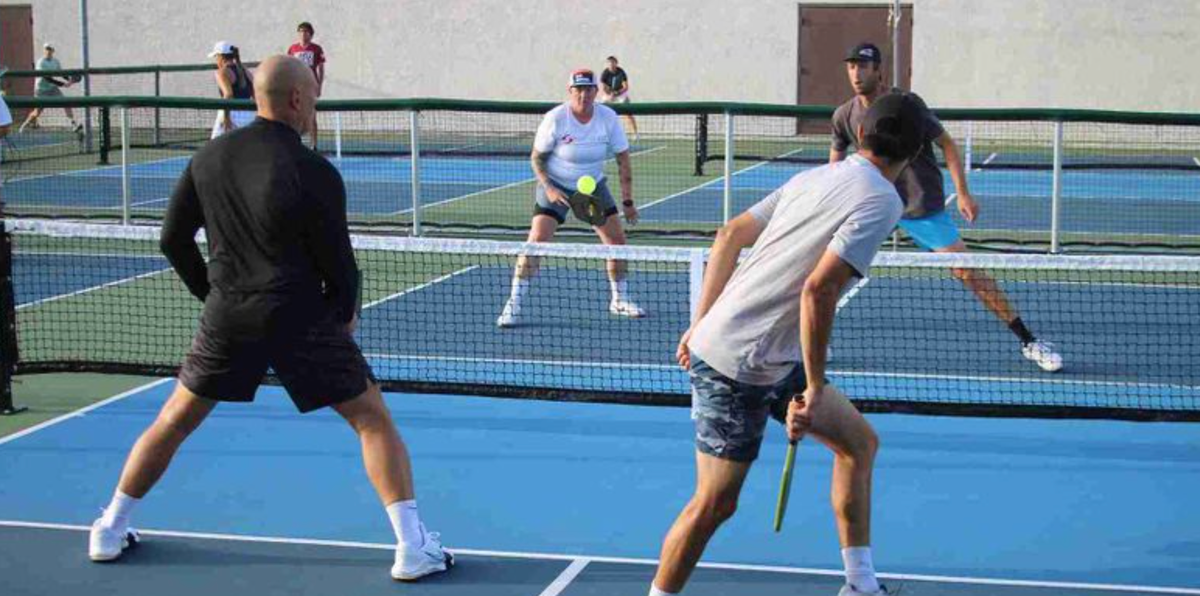
Why Variety Is the Real Weapon
The three reads are not just three options. They work together as a system because your opponent cannot take all three away at once.
If they lean back to protect the lob, the speed-up becomes easier.
If they guard the chicken wing, the wide dink opens up. If they step toward the wide angle, the middle becomes vulnerable again.
This is exactly how Ben Johns operates at the kitchen.
He lets his opponent's movement tell him which option to take, and every choice increases the value of the others.
You do not need Ben Johns hands to use this framework. You just need to stop defaulting to the same middle dink response every single time.
Variety is what makes you hard to play. When your opponent cannot predict your next shot, they start guessing instead of reading.
Guessing leads to late movement, late movement leads to poor contact, and poor contact leads to points for you.
If you find you are popping up dinks under pressure before you even get to this decision point, fixing your contact mechanics first will help.
 The Dink Media Team
Putting It Together at the Kitchen Line
The middle dink is not a ball you survive. It is a ball you own when you know what to look for.
Watch their lean, their shade, and their stillness. Let those cues make the decision for you.
Your job is just to execute whichever option presents itself with clean mechanics and calm body language.
Working on dink placement alongside this decision framework will make each option more reliable when the moment counts.
One final reminder: do not wait for a perfect read. Good enough information acted on quickly is almost always better than a perfect read acted on too late.
If your overall shot selection is still costing you at the kitchen, the ball height and court positioning checklist gives you a clean mental framework for when to attack and when to reset.
And to apply this same tactical reading across your whole doubles game, these doubles strategies nobody talks about cover reading and reacting from every position on the court.
Remember that the non-volley zone rules governing every one of these exchanges are spelled out in the official USA Pickleball rulebook, including what you can and cannot do on that speed-up follow-through.
Stop being passive. The middle dink is yours to take.
Frequently Asked Questions
What is the middle dink in pickleball?
The middle dink is any dink that lands in the central portion of the court, roughly between the two players on the opposing team. It is often treated as a neutral ball, but it actually gives the hitter multiple options because there is court available on both sides. Knowing which option to take depends on reading your opponent's body position before you make contact.
What is a chicken wing in pickleball?
The chicken wing is a defensive body position where a player raises their elbow outward to block a ball coming at their backhand shoulder. It looks like a wing flaring out to the side, which is where the name comes from. It is a structurally weak position because paddle control is limited and the swing path is cramped, making it a prime target for a speed-up.
When should you lob during a dink rally?
You should lob when your opponent is leaning forward toward the net, because their weight is already moving in the wrong direction to recover. The lob does not need to be deep or perfect in this situation. It just needs to clear their reach and land somewhere in the back half of the court.
How do you become more unpredictable at the kitchen line?
The fastest way to become unpredictable is to consistently vary your responses based on what your opponent gives you rather than defaulting to one shot. When you use all three options, including the lob, the wide dink, and the speed-up, your opponent cannot pre-commit to any single defense. Over time, that variety forces them into guessing, which leads to errors.
How do I know when to speed up a pickleball dink?
Speed up the dink when your opponent is balanced and still at the kitchen line with no obvious body lean or movement in either direction. A balanced opponent has no positional weakness to exploit with placement, so attacking the chicken wing area gives you a structural advantage instead. Keep the ball low and aim below their elbow for the best chance of producing a weak return.
Love Pickleball? Join 100k+ readers for free weekly tips, news & gear deals.
Subscribe to The Dink