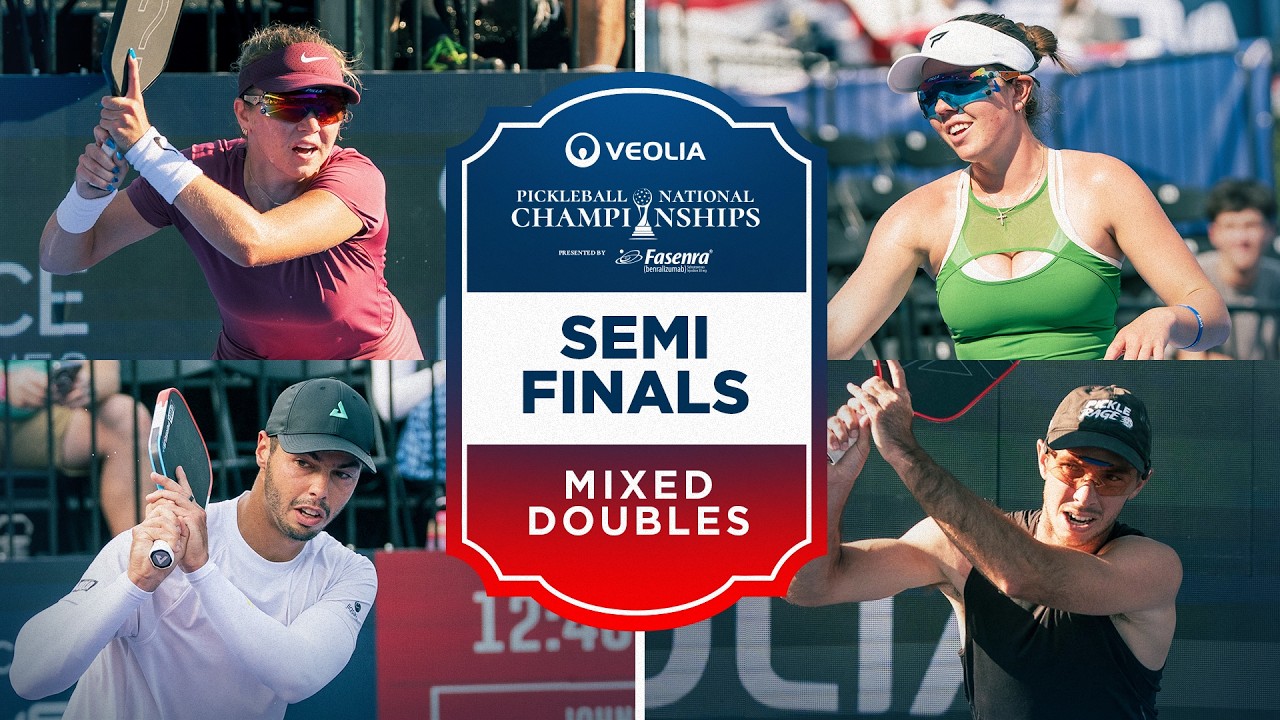
7 Tactics That Beat Ben Johns and Anna Leigh Waters at the PPA National Championships
At the PPA National Championships, Jorja and JW Johnson pulled off one of the biggest upsets of the season. Here is exactly how they did it, point by point.
The PPA National Championships just gave us one of the most instructive matches of the season, and if you watched it without taking notes, you missed a clinic in competitive doubles strategy.
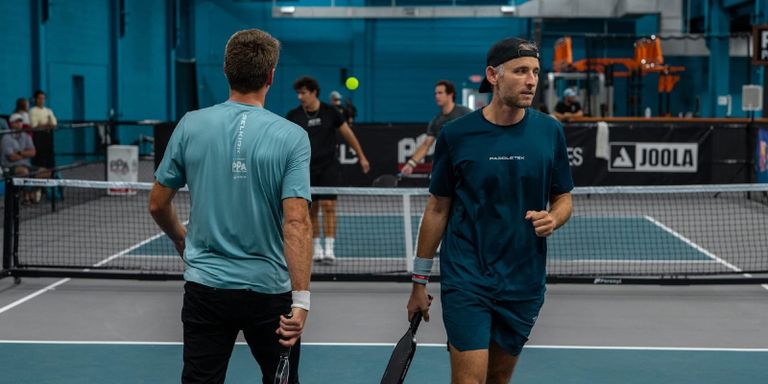
Jorja Johnson and JW Johnson took out top seeds Ben Johns and Anna Leigh Waters in three games.
They did it with flying Ernes, short hop lobs, relentless kitchen pressure, and a level of physical aggression that kept the top seeds constantly uncomfortable.
This breakdown covers the seven specific tactics the Johnson siblings used, what made each one work, and how you can pull pieces of this into your own doubles game.
The full match was broadcast by PPA Tour on YouTube, and it is worth watching alongside this breakdown.
Love pickleball? Then you'll love our free newsletter. We send the latest news, tips, and highlights for free each week.
What Actually Won This Match?
The Johnson siblings won because they raised their level from game one to game three while Ben and Anna Leigh made uncharacteristic errors.
But that framing gives the Johnsons too little credit.
They executed a specific game plan, stuck with it under pressure, and had answers for every adjustment the top seeds made.
Here is what that looked like in practice.
Tactic 1: Jorja Attacked Cross-Body at JW's Range
Jorja Johnson came in knowing that JW Johnson tends to go cross-body.
Her response was not to retreat. She locked her feet in at the kitchen line and countered from there.
That is the key detail. Most players back off when they sense a big hitter loading up. Jorja stood her ground and used the pace against the attacker.
If you want to apply this, you need to trust your hands and stop giving up real estate at the line. Here is why most players lose hands battles and what to fix first.
Tactic 2: The Flying Erne at Critical Moments
Jorja hit two Ernes in this match, and they were not the same shot. One was a traditional Erne. The other was a full flying leap through the air.
The flying version caught the opponent mid-swing, off balance, and completely out of position.
That is the whole point of the Erne: you are taking time away and creating an angle that does not exist from the standard kitchen position.
The setup matters as much as the execution. Learn how to hit the Erne correctly before you try to fly across the court with it.
 The Dink Media Team
Tactic 3: Short Hop Lobs That Disguised Perfectly
The short hop lob is one of the most underused weapons at the recreational level, and Jorja Johnson showed exactly why it works at the pro level.
The disguise is what makes it dangerous. Your opponent reads a drop or a dink, and then the ball sails over their head before they can react.
Ben Johns tracked one down but could not get back into position.
This shot pairs with patience. You set it up by being predictable with your soft game, then you flip the script.
Here is how to execute the short hop at the net without telegraphing it.
 The Dink Media Team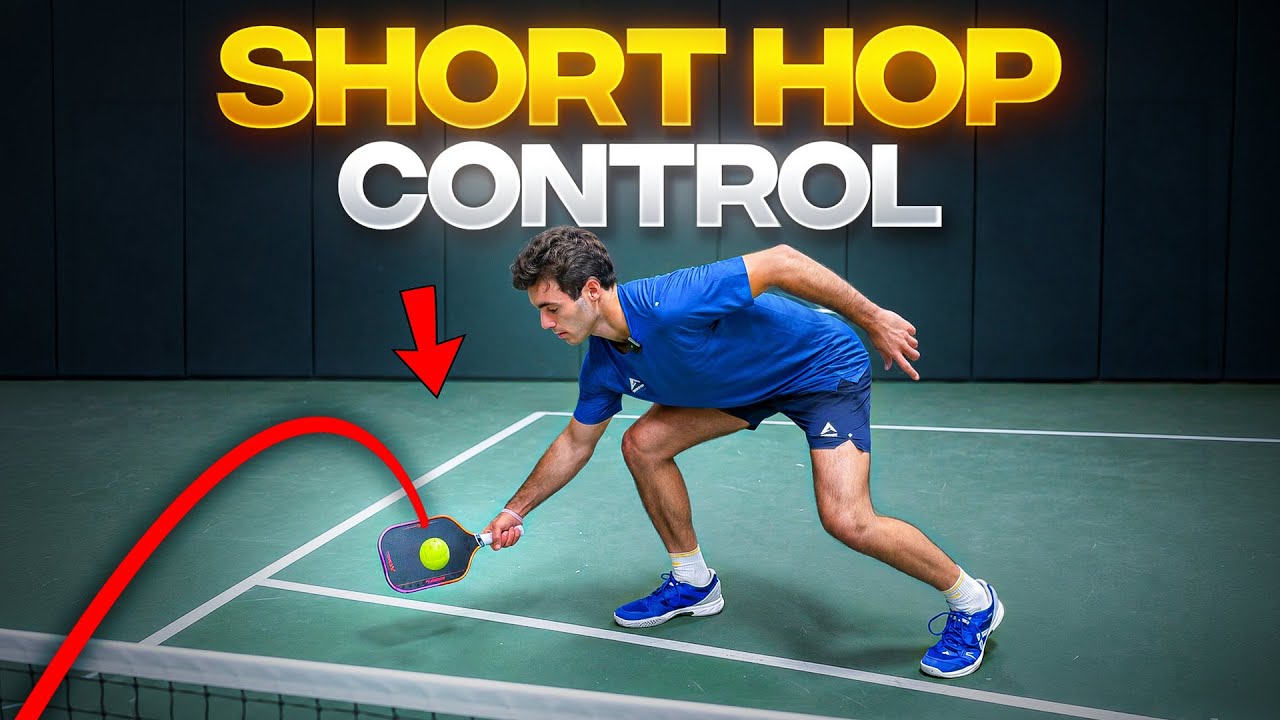
What Were Ben and Anna Leigh Doing Wrong?
The error count from the top seeds was stunning.
Approaching double digits in unforced errors before the midpoint of the match, with several coming from routine positions.
Ben Johns struggled with his third shots throughout.
His crosscourt attacks on JW Johnson were mixing well, but the midcourt ball kept popping up. Against this team, that is a death sentence.
Anna Leigh Waters settled into an unusually passive crosscourt dinking pattern and held it longer than she should have.
Her speed up percentage was solid when she did attack, but the stretches of passivity gave the Johnsons free rhythm.
 Alex E. Weaver
Tactic 4: JW Lobbed More and Created New Problems
JW Johnson started introducing lobs deeper into the match. The first one was a hint.
By the time he committed to it, Ben and Anna Leigh had no reliable read on what was coming next.
Adding a lob to your game does not mean using it constantly. It means threatening it enough that your opponent has to respect it, which opens everything else up.
If your lob coverage is weak, you are giving opponents a free pass.
Use these three steps to improve your lob coverage and stop giving away easy overhead opportunities.
 The Dink Media Team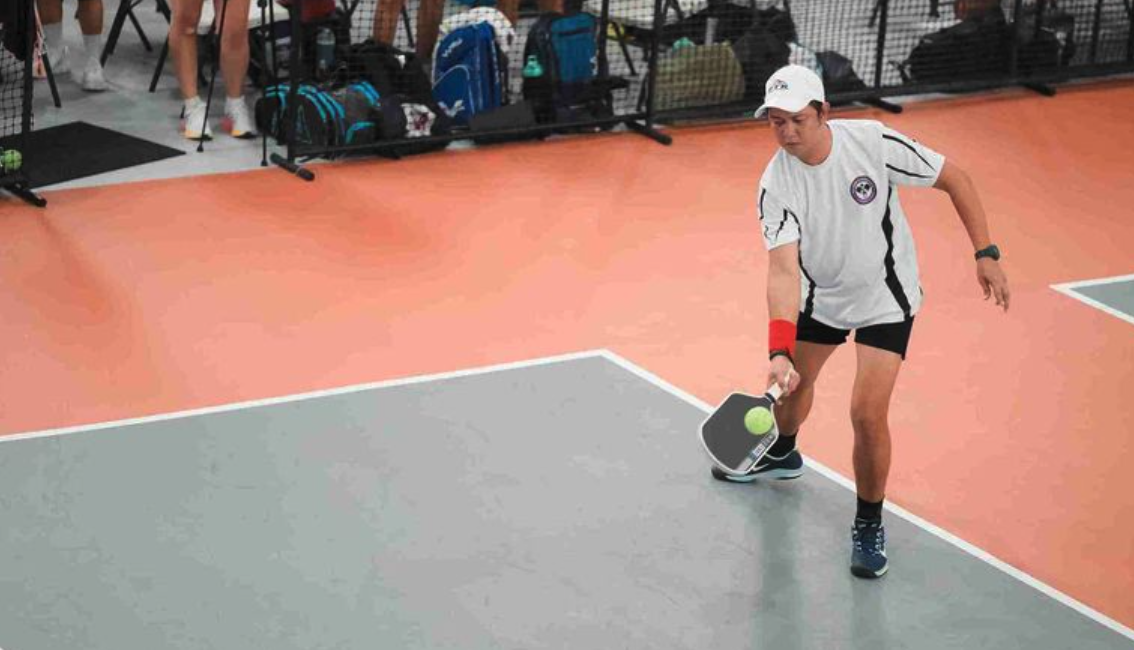
Tactic 5: Speed Up Targeting to Ben's Hip
This was one of the most consistent tactical choices from Jorja Johnson during the firefights.
She went straight ahead at Ben Johns repeatedly, targeting the right hip and left hip alternately to force an awkward paddle position.
The commentary noted it clearly: right hip, left foot, left hip, line. Jorja cycled through those locations rather than firing at the same spot twice.
That kind of targeting takes practice. Fast hands in pickleball are about mechanics and placement, not just swinging harder.
 The Dink Media Team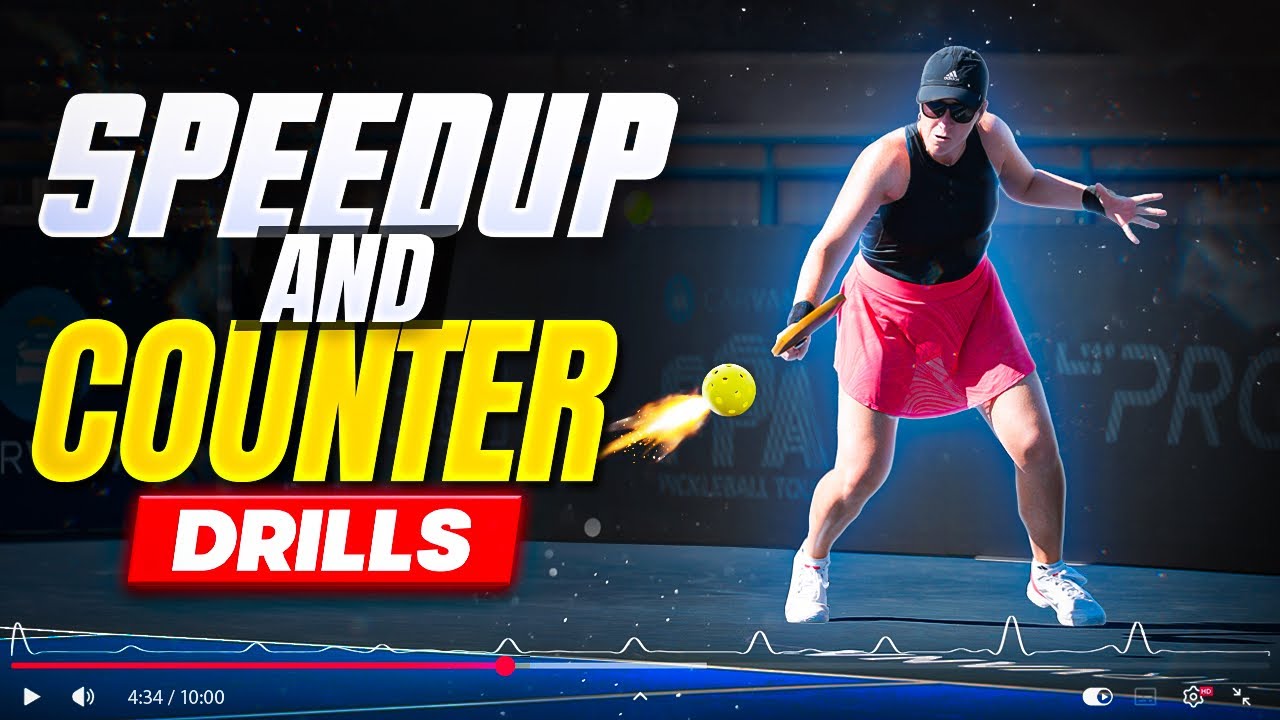
Tactic 6: JW Dominated the Middle With Threat Positioning
JW Johnson changed the match in game two and three by becoming a constant threat in the middle.
His presence there forced Anna Leigh Waters to adjust her first volley location, and she overcorrected.
The commentators noted she was thinking about keeping Jorja back while JW was lurking in her periphery.
That kind of split focus breaks down decision-making at the speed of pro play.
Middle control is one of the most powerful tools in doubles and one of the least practiced at the amateur level.
These eight doubles strategy fixes will show you how to start owning the middle of the court.
- Poach threat without committing: JW made Anna Leigh hesitate just by standing in the right spot
- Cut off crosscourt angles: He blocked two shots in a row that had been going crosscourt through the middle
- Force the opponent behind you: Once Ben started going to the corner instead of through JW, Jorja had an easier read on shot selection
- Follow up the speed up: JW and Jorja both tracked the second, third, and fourth ball after each exchange
 The Dink Media Team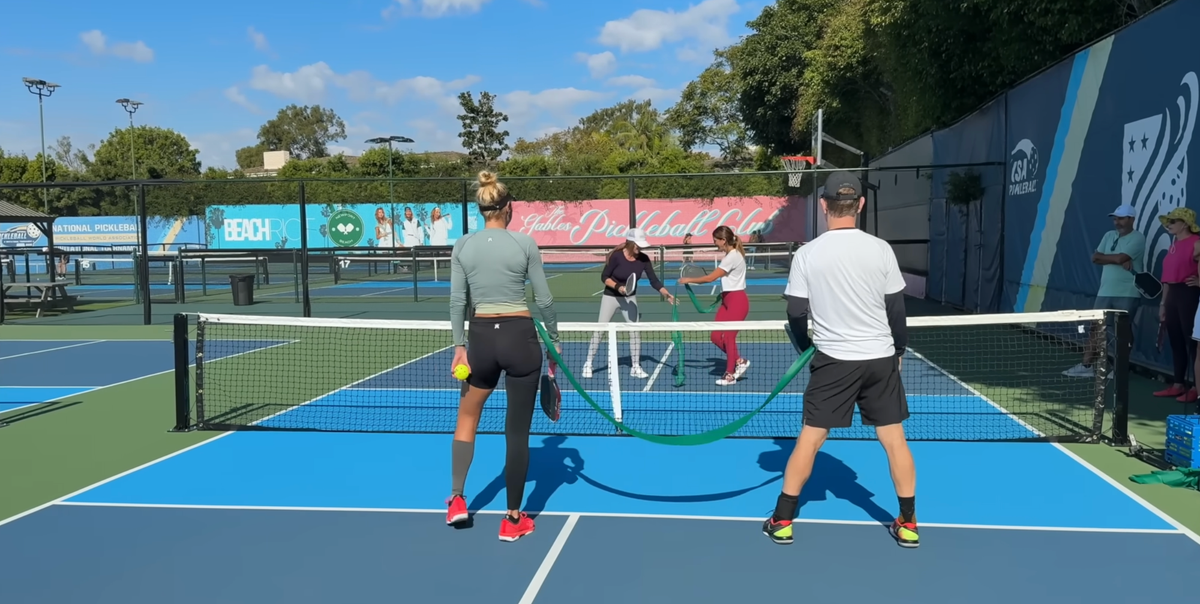
Tactic 7: Staying Patient Until the Pattern Broke
This is the tactic that most recreational players skip entirely. Jorja Johnson passed on several attackable balls early in rallies, waiting for a better look.
When she finally went, it was decisive. No guided shots around the post. No tentative rollover.
She committed fully and ended the point.
That kind of patience requires you to trust your defense enough to stay in long rallies.
These three reset fixes will help you survive long enough to pick the right moment to attack.
 The Dink Media Team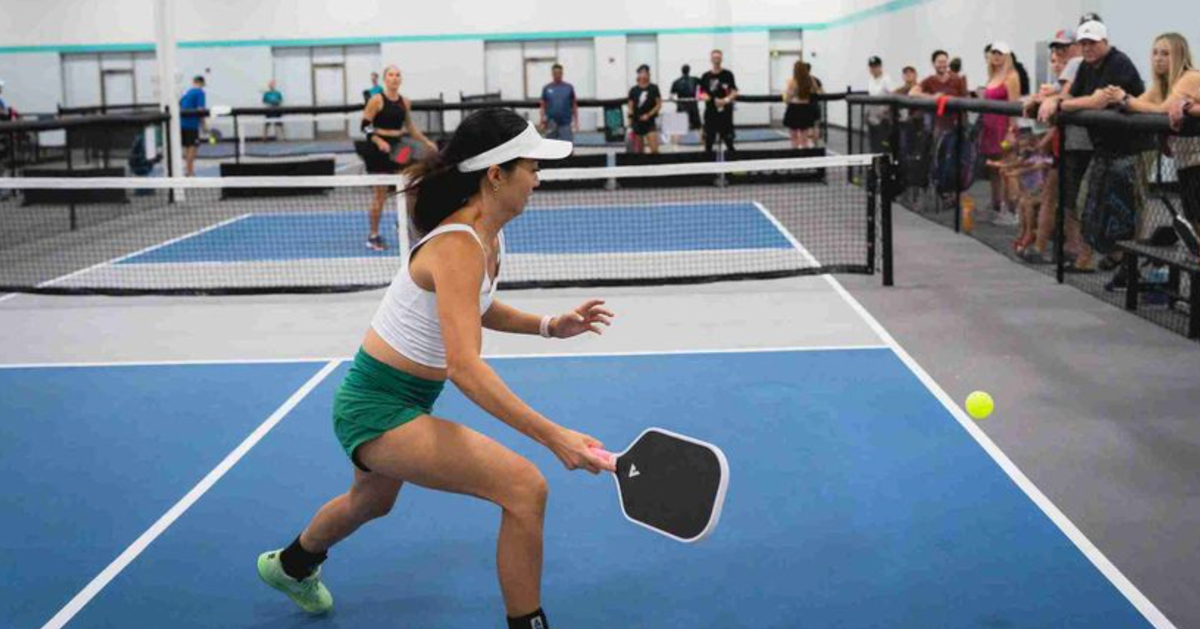
How Did the Match Turn in Game Three?
The Johnson siblings trailed early in game three and then went on a run that flipped the momentum completely. From a 6-2 deficit down, they fought back and eventually closed it out 11-6.
The turning point was a combination of three things happening at once.
- Jorja's cut drop volley landed short and came back like a pitching wedge, forcing Ben to play a ball that was already sailing out
- JW started lobbing more frequently, and neither top seed had a comfortable answer
- Ben's third shots stopped finding the safe zone, and he popped up multiple balls that the Johnsons punished without hesitation
Once the Johnsons grabbed a lead in game three, they protected it by going right back to the same tactics that built it.
No panic. No strategy change. Just execution.
That is what separates the teams that close out matches from the teams that collapse. Here are six fixes for closing out matches when you have the lead.
 Erik Tice
What Can You Actually Take From This?
You're not copying JW Johnson's flying Ernie next weekend.
But you can take the framework: pick a target, vary the location, stay patient, and commit when you attack.
Most amateur players do the exact opposite. They attack randomly, vary nothing, and guide the ball instead of driving it.
The Johnsons showed you what intentional, structured aggression looks like.
The other thing worth stealing is Georgia's kitchen discipline.
She stood in. She countered from contact, not from two steps behind the line.
Use the kitchen line as a target, not a rule, and your defensive positioning will improve immediately.
And if your doubles game needs a structural overhaul, start with your shot selection under pressure.
These four strategies that pros use every game will give you a clearer decision tree in high-pressure moments.
This was a historic result at the PPA National Championships, and it won't be the last time these two teams meet.
When they do, you'll know exactly what to watch for.
Frequently Asked Questions
What is the PPA National Championships and why does it matter?
The PPA National Championships is one of the premier events on the Carvana PPA Tour, held in Carrie, North Carolina. It features the top professional pickleball players in the world competing across singles, doubles, and mixed doubles. A win here against the top seeds carries enormous weight in the pro rankings conversation.
How did Jorja Johnson win against Anna Leigh Waters?
Jorja Johnson stayed aggressive at the kitchen line, executed flying Ernes at critical moments, and used short hop lobs to push Anna Leigh off her position. She also held her ground during speed up exchanges instead of retreating, which neutralized Anna Leigh's aggressive first strike game.
What is a short hop lob in pickleball?
A short hop lob is a lob hit off a ball that has barely bounced, disguising itself as a dink or drop until the last moment. The disguise is the point: your opponent commits to a forward position and then cannot recover before the ball sails over. It is one of the hardest shots to read because the setup looks identical to a soft exchange.
Why did Ben Johns struggle in this match?
Ben Johns had an unusually high unforced error count, particularly on third shot drops and midcourt balls that kept popping up. The Johnson siblings targeted him repeatedly with body shots that forced late paddle positioning. His crosscourt attack patterns were inconsistent, and those errors compounded over three games.
What does the Erne shot mean in pickleball?
The Erne is a shot where a player steps or leaps outside the kitchen to volley the ball before it crosses the net post, taking time and angle away from the opponent. Jorja Johnson hit both a traditional Erne and a flying version in this match. Knowing when to go around the post versus over it is the key decision that separates effective Ernes from risky ones.

Love Pickleball? Join 100k+ readers for free weekly tips, news & gear deals.
Subscribe to The Dink