Most pickleball doubles players think positioning is everything, but that's only half the equation. These 8 fixes address the real reasons your pickleball doubles strategy isn't working.
Most players in pickleball doubles strategy think their positioning is the whole story. It isn't.
Where you stand on the court is only half the equation.
The other half is what your opponent is doing with the ball at that exact moment, and whether you're reading and reacting to it correctly.
These eight fixes come from Shea Underwood on YouTube, where he walks two doubles players through a complete overhaul of how they move, communicate, and cover the court together.
By the end, they look like a nightmare to play against. Here's exactly what they changed.
Love pickleball? Then you'll love our free newsletter. We send the latest news, tips, and highlights for free each week.
Fix 1: Watch Your Partner Hit the Third Shot
The first fix sounds almost too simple. When your partner is hitting the third shot drop, you need to be watching them, not the opponent.
What you're looking for is whether they hit a good shot or a bad shot. A good shot lands around your opponent's feet. A bad shot floats up around chest height.
That distinction tells you exactly what to do next.
If you're staring at the net or drifting forward on autopilot, you're skipping the most important piece of information available to you.
Fix 2: Use One Word to Communicate the Shot Quality
Once you know whether the third was good or bad, say something. Not a long sentence, just one word.
"Go" means the shot was good and your partner should advance toward the kitchen. "Back" means the shot was bad and they need to stay put or retreat.
The goal is to get that word out the moment the ball leaves your paddle. If you can see it's going to be good before you even make contact, say "go" early.
Your partner can start moving sooner and arrive at the kitchen in a much stronger position.
This is one of the most overlooked parts of pickleball decision making for mid-level players, and it costs teams points constantly.
Fix 3: Shuffle Sideways Instead of Running Forward
Here's a movement fix that most players completely ignore. When you're waiting to see if the third shot is good or bad, don't stand there facing the net.
Turn your body toward your partner and shuffle laterally. Now you can move in either direction instantly.
If your partner says "go," take your outside foot and drive forward.
If they say "back," step back quickly without crossing your feet.
Running straight forward and then having to reverse direction wastes precious time. The shuffle keeps you light and ready to react to either outcome.
 The Dink Media Team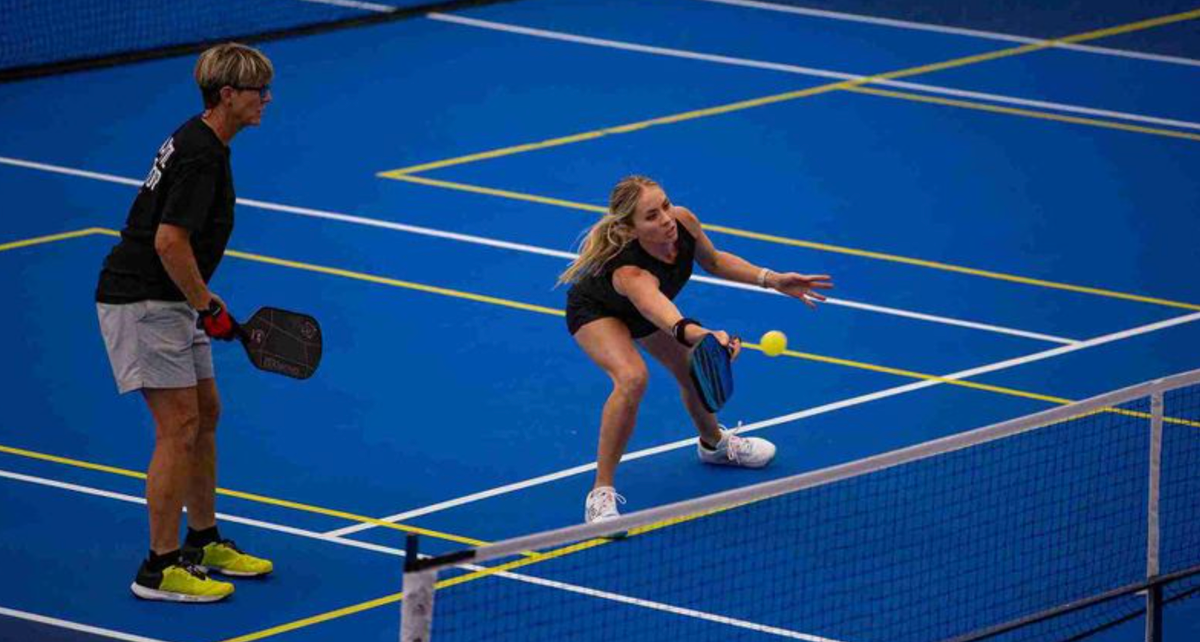
Fix 4: Split Step After Every Move
This applies to every sport with fast lateral movement, and pickleball is no different.
After you move forward or back in response to the third shot, you need to split step into a balanced, athletic stance.
A split step means both feet hit the ground at roughly the same time, weight centered, knees slightly bent.
You're not leaning one way or the other. You're ready.
If you arrive at the kitchen line already leaning forward or on your heels, you've lost your ability to react. Get balanced first, then be ready to attack.
This pairs directly with fixing your split step timing, which is a problem that shows up at every skill level.
 The Dink Media Team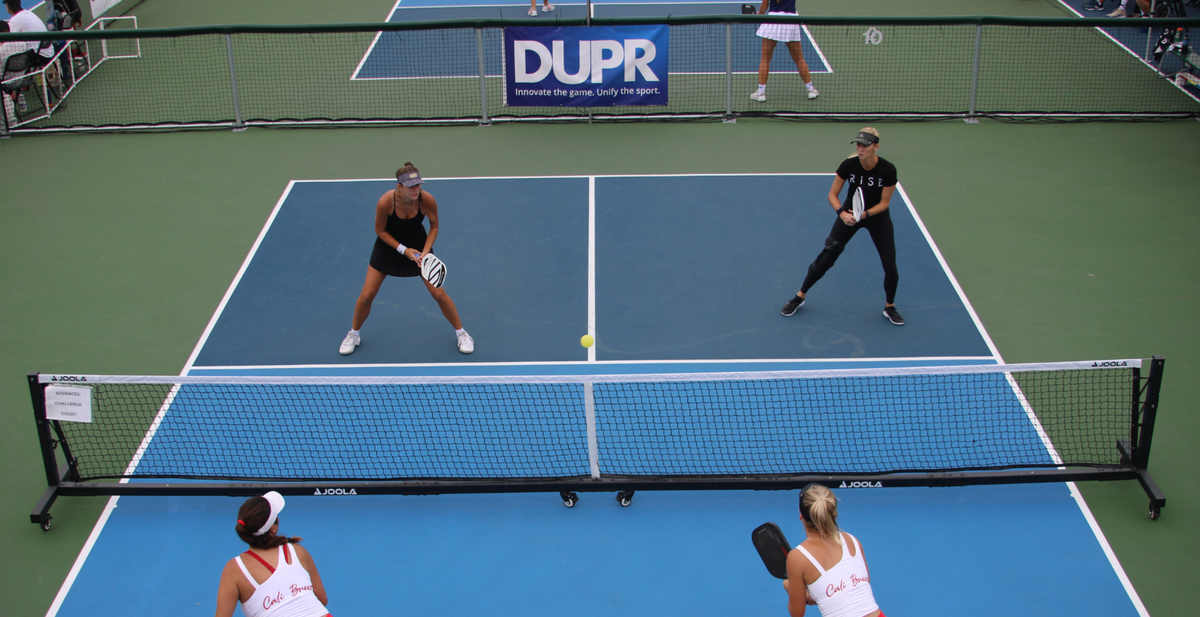
Does Stacking Really Matter for Casual Doubles?
Yes, and it matters more than most recreational players realize.
Fix number five is about stacking on serves, which simply means keeping the same player on the same side of the court regardless of the score.
When you and your partner switch sides randomly based on the score, you're creating chaos.
You now have twice as many scenarios to manage, and neither of you knows instinctively who covers what.
Instead, decide from the start who plays left and who plays right. The server steps across to their preferred side after serving.
The non-server positions themselves where they need to be.
Once you know the score and who's serving, you always know where you're standing. It becomes automatic.
This matters even more if you have a lefty-righty partnership, because a lefty righty team has a structural advantage in the middle that disappears the moment you stop stacking consistently.
 The Dink Media Team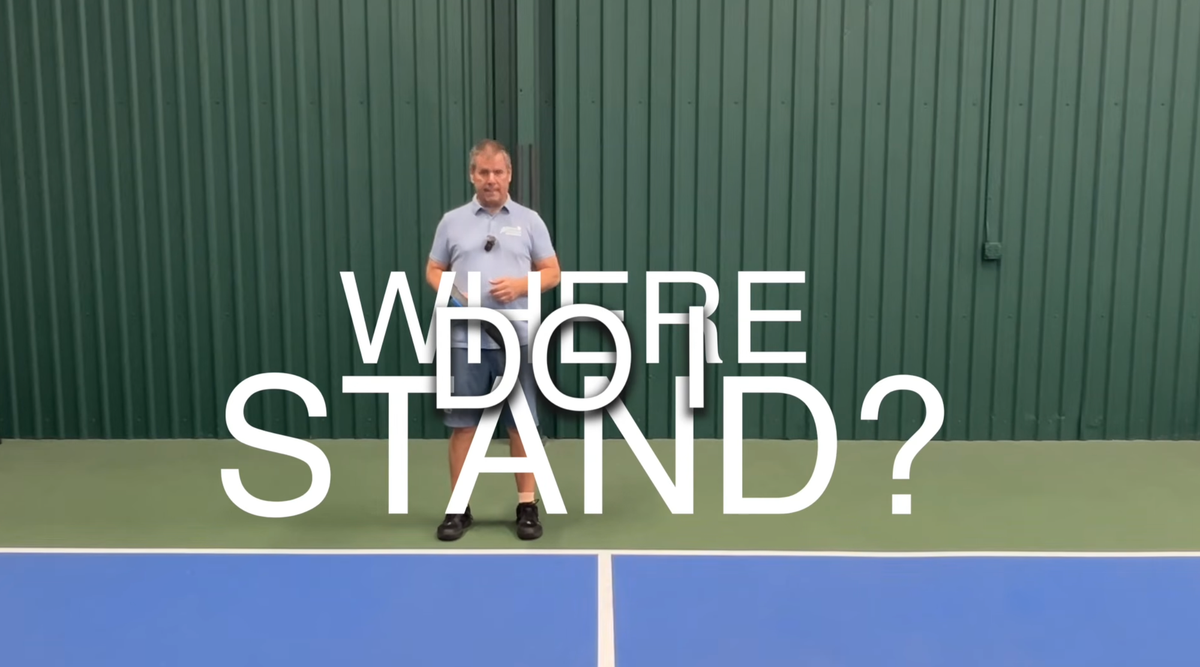
Fix 6: Move as a Unit, Not as Individuals
This is where most doubles teams fall apart at the kitchen. When the ball goes to one side, both players need to slide toward that side together.
Think of it as a connected unit. If your partner hits a ball to the opponent's right sideline, both of you shift right. If the ball goes left, both of you shift left.
You are always covering the space behind the ball.
The mistake most players make is only reacting to where the opponent hits the ball. You also need to react to where you hit the ball.
Every shot you send to one side creates a gap on the other, and moving as a unit closes that gap before the opponent can exploit it.
This concept connects directly to court positioning reads that better players use to stay ahead of the play.
 The Dink Media Team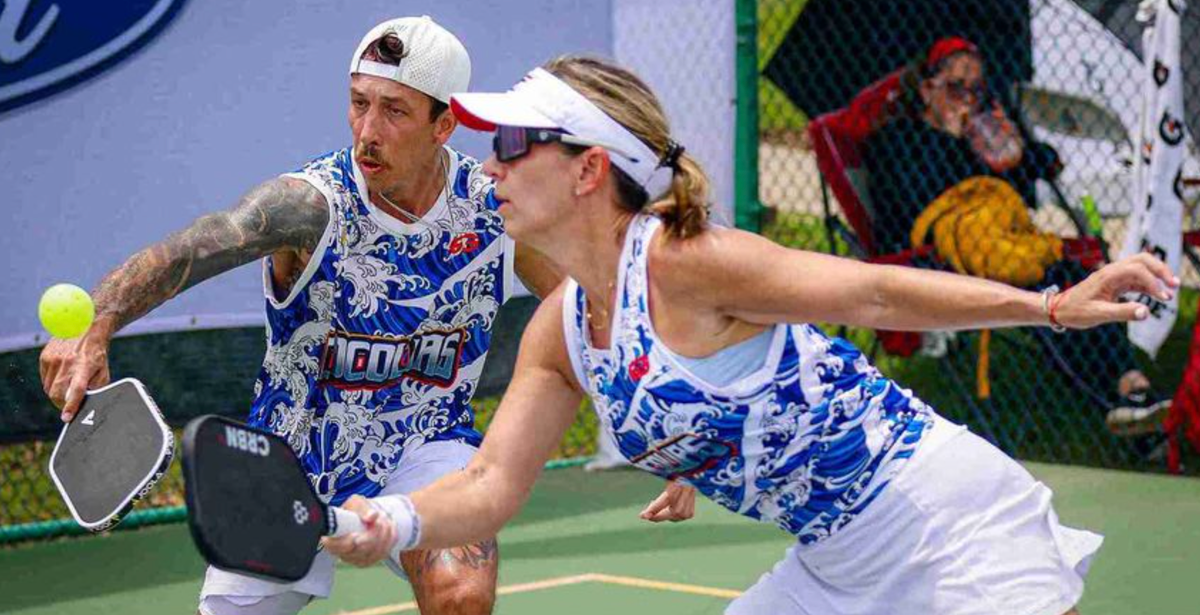
Fix 7: Aggressively Cover Your Sideline and Trust the Middle
Here is one of the most specific and most ignored rules in doubles positioning. Never let a ball go down your sideline. That is your responsibility, full stop.
The middle belongs to your partner.
If your partner has a big forehand in the middle and you keep creeping toward the center, you're covering space that's already handled while leaving your sideline exposed.
Step closer to your sideline than feels comfortable. Give your partner room.
When a ball gets hit all the way to the far sideline and you have to scramble, the instruction is simple: don't try to be a hero.
Just get it over the net.
A defensive return from the sideline that lands safely in the middle actually hurts the opponent because they hit it wide and they're still out of position.
This principle is also what makes the transition after your third shot so critical.
When you're advancing, sideline awareness is just as important as forward momentum.
 The Dink Media Team
What Does "Laser Pointer at the Ball" Actually Mean?
Fix number eight is about paddle positioning at the kitchen, and the cue that makes it click is this: imagine a laser pointer at the end of your paddle tip, always pointing at the ball.
Wherever the ball is on the opponent's side, your paddle tip tracks it. For a right-handed player, you want to shade slightly to the left side of the ball.
That's because your backhand can cover a wider range in that direction than your forehand can reach across your body.
For a left-handed player, shade to the right side of the ball for the same reason.
The goal is to never have your paddle so far to one side that a shot across your body becomes impossible to reach in time.
This does two things at once. It keeps your focus locked on the ball, and it keeps your paddle in the right position to attack or defend whatever comes next.
Combined with proper unit movement and sideline coverage, this is what makes a doubles team look like they're playing 2v1.
If your dinking technique needs work alongside this positioning fix, Tyson McGuffin's tip down dinking adjustment is worth studying closely.
 The Dink Media Team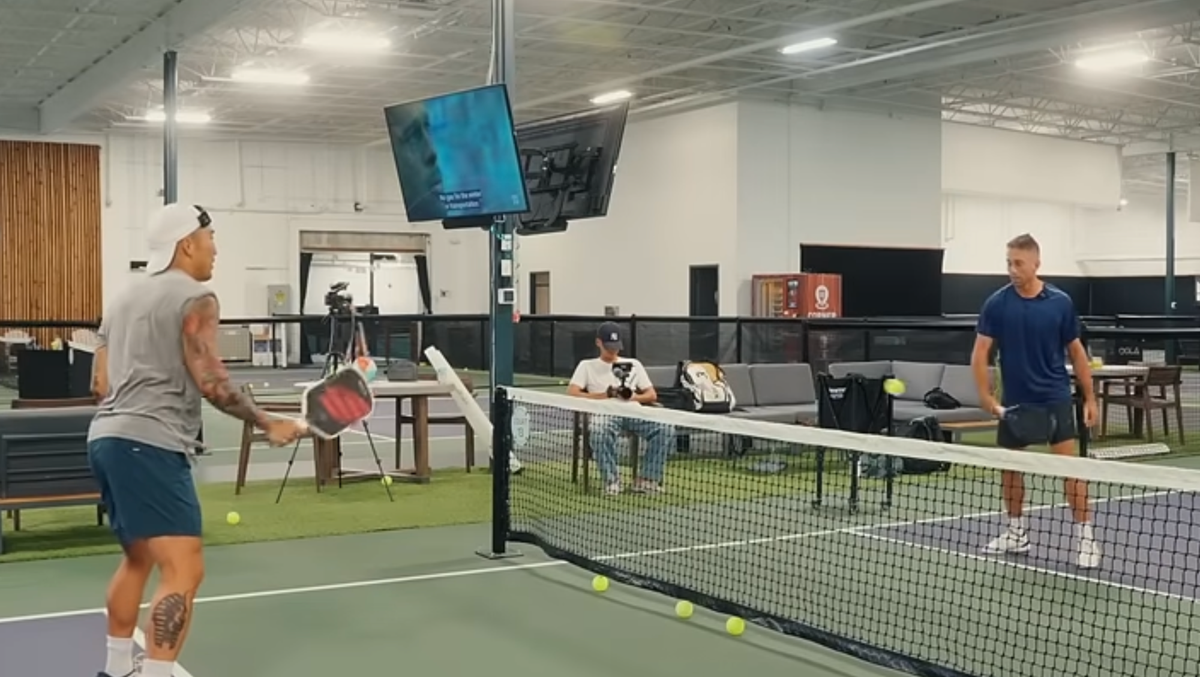
Putting All 8 Fixes Together
Here is a quick summary of the full sequence:
- Watch your partner hit the third shot to read whether it is good or bad.
- Call "go" or "back" the moment you know the shot quality.
- Shuffle sideways toward your partner so you can move in either direction fast.
- Split step after every move so you arrive balanced and ready.
- Stack on serves so each player always plays the same side.
- Move as a unit whenever either team hits the ball.
- Own your sideline and trust your partner to cover the middle.
- Laser pointer paddle always tracking the ball with proper shading for your dominant hand.
None of these fixes require elite athleticism. They require attention and intention. Most players skip them because they feel too basic.
That's exactly why they separate good doubles teams from the rest.
If you want to dig deeper into how better players read the court differently, this breakdown of what 6.0 players see that 4.0 players miss is a direct extension of everything covered here.
And if the third shot drop is still the weak link in your chain, this article on why you miss your third shot drop will help you clean up the shot that starts the whole sequence.
The other piece worth studying is how your transition zone movement connects to all of this.
Mastering the transition zone is what allows the "go" call to actually result in you arriving at the kitchen in a threatening position, not just arriving late and out of balance.
When you apply all eight fixes consistently, your opponents stop looking at you as someone to push around.
They start having to think twice before every shot. That's the shift worth chasing.
Frequently Asked Questions
What is the most important pickleball doubles strategy fix for beginners?
Watching your partner hit the third shot and communicating with a single word like "go" or "back" is the highest-impact change you can make immediately. It costs nothing athletically and gives both players instant clarity on what to do next. Most beginners skip this entirely and just guess.
How do I know when to move up to the kitchen after a third shot drop?
Move up when your partner's third shot lands around the opponent's feet, meaning the opponent is forced to hit up from below the net. If the shot floats up around chest height, stay back or retreat because the opponent has an easy attack. Your partner's verbal call of "go" or "back" is the trigger.
What does stacking mean in pickleball doubles?
Stacking means keeping each player on their preferred side of the court regardless of the score. The server steps to their side after serving, and their partner positions accordingly. It eliminates confusion about who covers what and lets each player play to their natural strengths every single point.
Why do I keep getting beat down the sideline in doubles?
You are probably standing too close to the center, leaving your sideline exposed. Your job is to aggressively cover your sideline and trust your partner to handle the middle. One deliberate step toward your sideline closes most of the gaps opponents are exploiting.
What is a split step and why does it matter in pickleball?
A split step is a small, balanced hop where both feet land simultaneously, leaving you in an athletic ready position. It matters because it resets your balance and reaction ability after every movement. Without it, you arrive at positions already leaning the wrong way and unable to change direction quickly.

Love Pickleball? Join 100k+ readers for free weekly tips, news & gear deals.
Subscribe to The Dink