
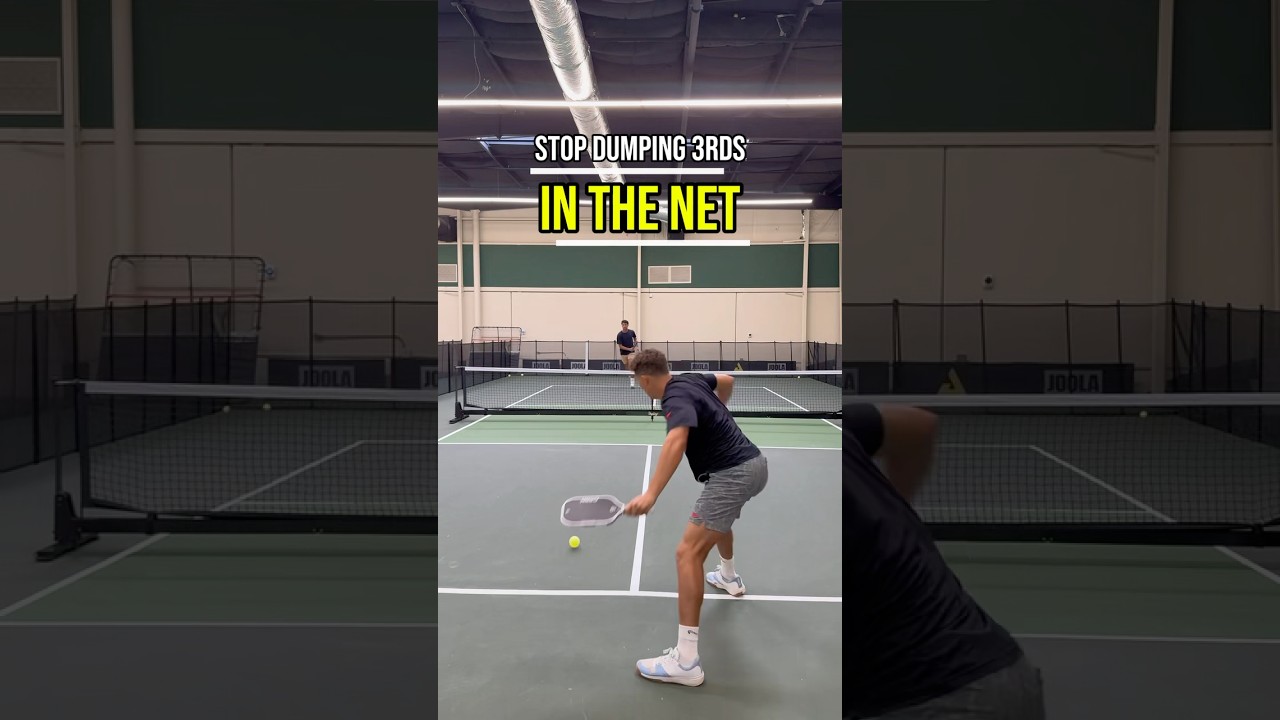
Why You Keep Missing Your Third Shots (And the Simple Fix That Works)
Most players sabotage their third shot drop before they even swing. Fix your position after the serve and your thirds will immediately become more consistent and more dangerous.
Your third shot drop is supposed to be the shot that gets you to the net.
Instead, it keeps sailing long, popping up, or flying off the paddle in ways that make no sense given how much you practice it.
The problem almost never lives in your swing. It lives in where you are standing when the ball comes back.
This breakdown from Tanner Tomassi covers the single positioning mistake that most amateur players make after the serve, why it wrecks your third shot before you even swing, and exactly how to fix it so your drops start landing soft and consistent.
Love pickleball? Then you'll love our free newsletter. We send the latest news, tips, and highlights for free each week.
The Mistake Happens Before You Even Hit the Ball
After they serve, most amateur players creep forward toward the baseline.
They are antsy, and they want to get to the kitchen faster, so they start drifting in before the return even lands.
It feels aggressive. It is actually one of the most common bad pickleball habits players carry without ever recognizing it.
Here is what actually happens when you creep in.
If your opponent hits a deep return, the ball lands around your feet or behind you and you have no room to move forward into the shot.
You are forced to hit off your back foot while scrambling backward.
That does one predictable thing: it makes you pop the ball up. Your weight is going the wrong direction and you lose control of the trajectory.
The third shot drop that was supposed to die in the kitchen floats right into your opponent's wheelhouse.
The fix is not complicated.
Stay well behind the baseline after you serve, give yourself room, and make sure you can always move your body weight forward into the shot instead of sideways or backward.
Why Does Body Weight Matter So Much on the Third Shot?
The third shot drop is one of the most feel-dependent shots in pickleball. Small changes in body position create massive changes in where the ball goes.
When your weight moves forward through contact, a few things happen automatically:
- Your paddle path stays low to high in a controlled arc
- You generate soft, upward momentum that pushes the ball over the net without power
- Your contact point stays in front of your body, which is where you have the most control
- Your chest stays over the ball, helping you finish the shot with precision
When you hit off your back foot, all of that falls apart. Your contact point gets behind you, your swing gets steep, and the ball goes up instead of forward.
This is also why players who have great drops in drilling fall apart in games.
In drilling you are set. In games you are moving, and bad positioning after the serve breaks your mechanics even when your swing is technically correct.
Understanding why you lose points after you serve almost always comes back to this exact issue, and it ties directly into how balance changes everything in your soft game.
How Far Back Should You Actually Stand?
Stand well behind the baseline after your serve. Not slightly behind it. Well behind it.
You want enough space that even a deep, heavy return of serve still gives you room to step forward.
Most players give themselves two or three feet of clearance when they actually need four to six.
Here is a simple way to think about it. After you serve, ask yourself one question: if that ball comes back to the baseline, can I still move forward to meet it?
If the answer is no, you are too close.
This connects directly to where your third shot drop should land.
When you are balanced and moving forward, you gain the ability to place the ball with intention instead of just trying to keep it in play.
 The Dink Media Team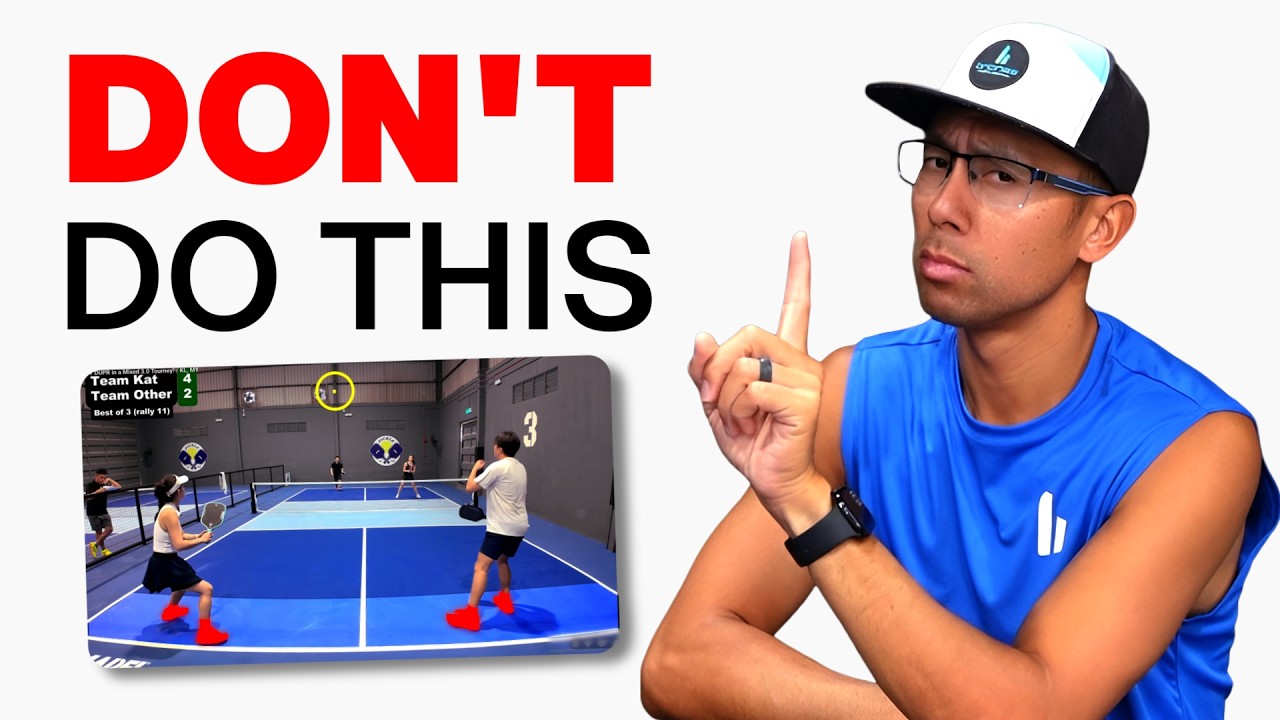
What Does a Correct Third Shot Setup Actually Look Like?
Here is the step-by-step process for setting up your third shot drop the right way.
- Serve with depth. A deep serve buys you more time to get positioned. A short serve rushes everything that follows.
- Take two to three steps back after your serve. Move away from the baseline, not toward it, and get your feet set behind the transition zone.
- Read the return early. Watch your opponent's paddle and body to identify whether the return is going deep or short as fast as possible.
- Load your weight toward the ball. Shift your weight so you are ready to step into the return rather than step back from it.
- Hit forward and upward. Drive your weight through the shot with a low-to-high swing path, finishing with your paddle face angled slightly upward.
None of these steps are complicated. The hard part is breaking the habit of creeping in, because moving forward feels so natural.
 The Dink Media Team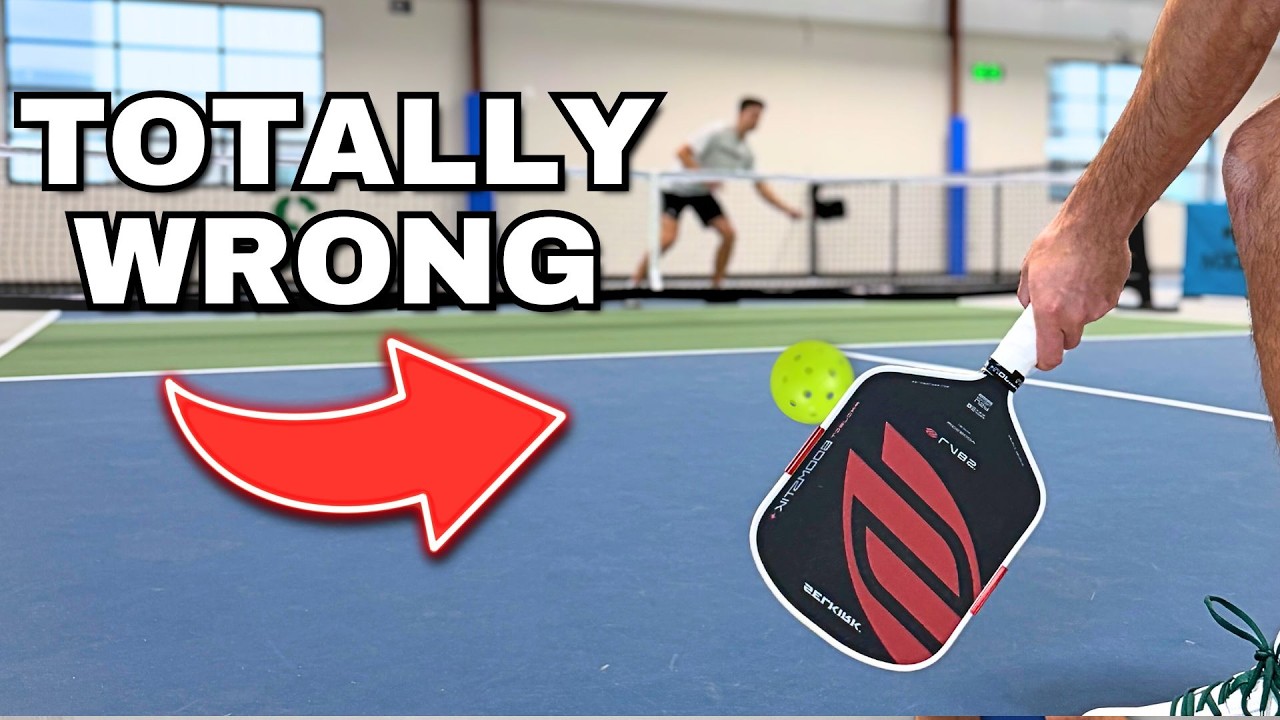
Is Your Serve Setting Up the Problem?
Sometimes the creeping happens because your serve is weak.
A short or low-bouncing serve gives your opponent an easy, aggressive return, and your brain starts moving forward to compensate before the ball comes back.
A deep, heavy serve forces a more defensive return. That buys you time and takes away your opponent's angle.
If you are struggling with serve depth, these three serve mistakes are worth looking at.
Fixing your serve and fixing your post-serve positioning work together, and one reinforces the other.
 The Dink Media Team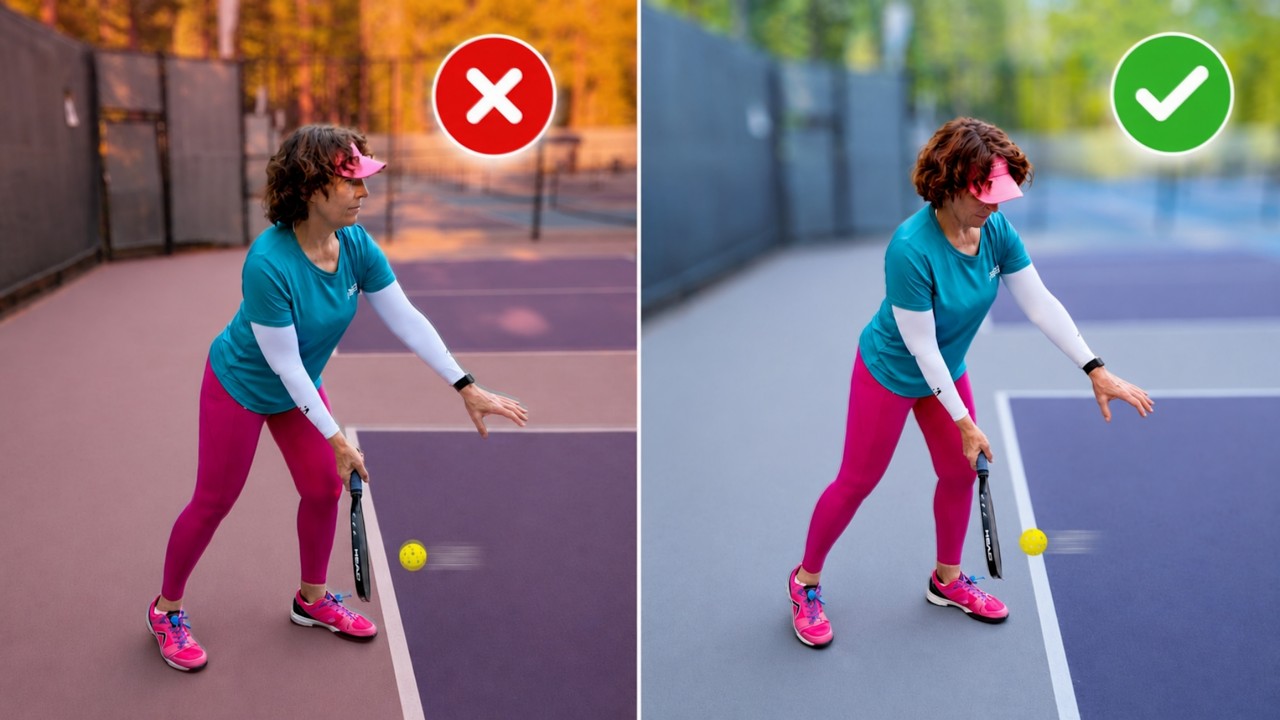
Are You Also Doing This on the Return Side?
This same principle applies when you are the returning team and your partner is waiting at the baseline after a rally reset.
Body weight going forward is the foundation of consistent soft shots across the entire game, not just on thirds.
Players who struggle with resets at their feet, drops from the transition zone, and even dinks under pressure are often dealing with the same root problem.
They are off balance when they make contact because their positioning has them moving backward or sideways instead of forward.
This is also why mastering the transition zone is so connected to understanding your weight transfer.
You cannot just muscle the ball soft. You have to be in a position where soft is actually possible.
For players who tend to rush everything, it is worth reading up on in-game pickleball mistakes because the serve creep is almost always paired with other pace-related habits that compound the problem.
 The Dink Media Team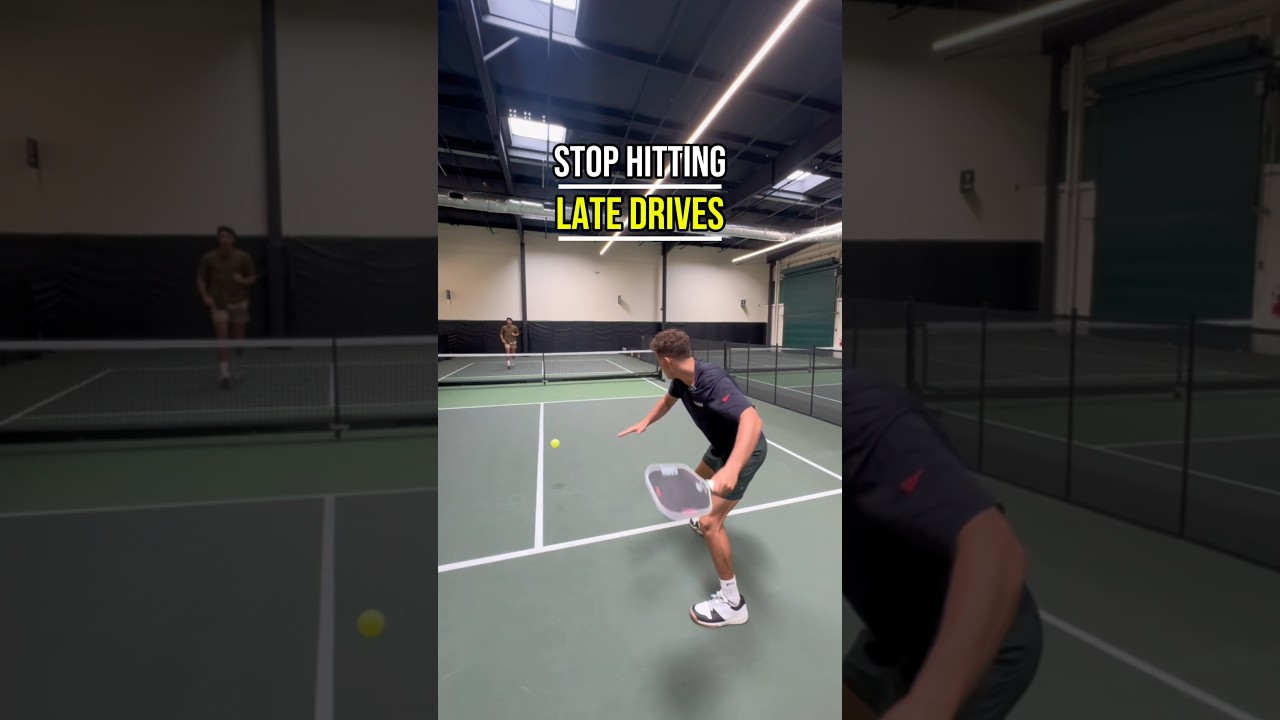
Drilling This Fix Into Your Game
You cannot just understand this fix intellectually. You have to build it into your muscle memory so it happens automatically in a real game.
Here are a few ways to drill it:
- Serve and freeze drill: After every serve in practice, physically stop and check your feet before you move. Make yourself pause for one full second to confirm you are behind the baseline with space to move forward.
- Serve and step back: After each serve, take two deliberate steps backward. Do this every single time in warm-ups until it becomes automatic.
- Weight check drill: Have a partner feed you returns while you practice stepping forward into each shot. Start with easy feeds to establish the movement pattern, then move to harder, deeper feeds.
- Live point tracking: During practice games, have someone count how many of your third shot drops are hit moving forward versus off your back foot. The data will show you exactly how often the habit creeps back in.
For players who want to pair this with targeted drilling, these drills for drives, drops, and volleys will help reinforce the forward-weight mechanics in different shot contexts.
You can also look at these third shot drop placement fixes once your positioning is cleaned up, because placement only matters when your body is in the right position to execute it.
 The Dink Media Team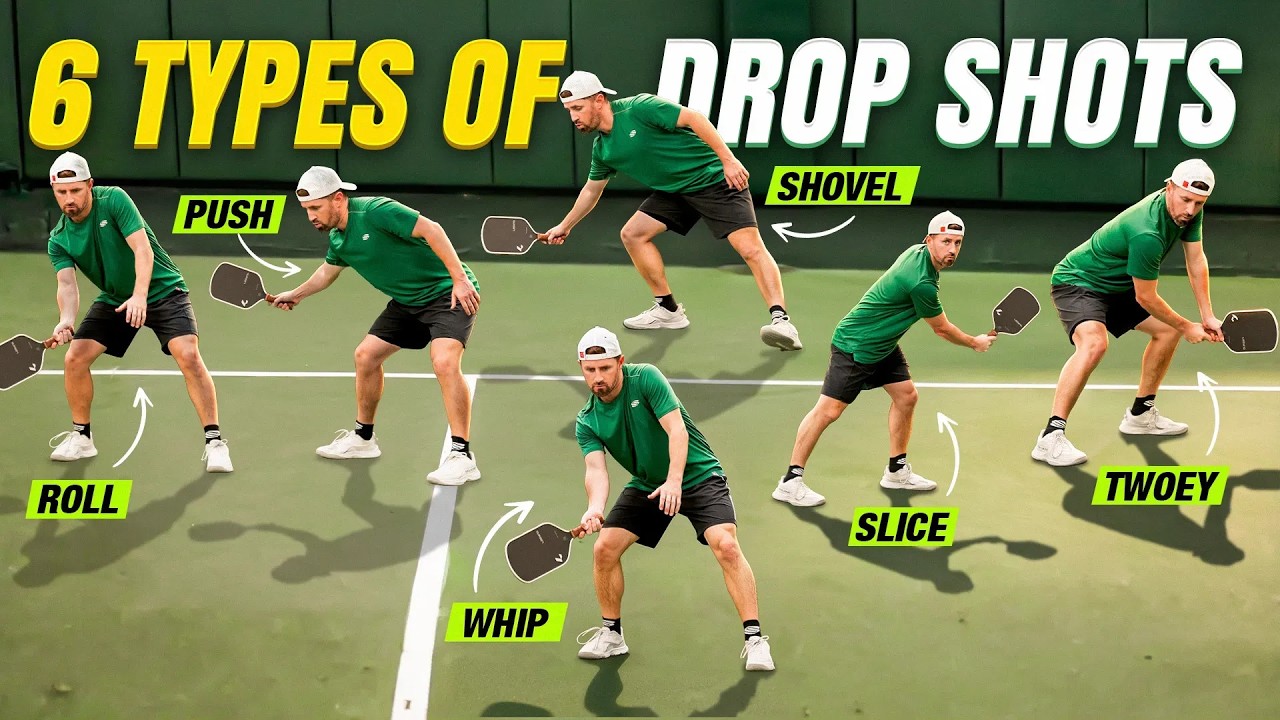
The One Thing to Remember Every Single Point
After you serve, your only job is to get behind the ball with room to move forward.
That is it. Everything else, your swing, your placement, your arc, follows from that.
Get your weight going forward and your third shots will be more consistent almost immediately.
The players who make the third shot drop look effortless are not doing anything magical with their hands.
They are simply never in a position where they have to muscle a soft shot out of a bad spot. They set themselves up so that soft is easy.
Start there. Fix the positioning first. The rest of the shot will follow.
And if you want to go deeper on building a complete third shot system, these six third shot drop techniques cover the full picture from contact to finish.
Frequently Asked Questions
Why does my third shot drop keep popping up?
Your third shot drop pops up most often because you are hitting off your back foot. When your weight shifts backward at contact, your paddle angle steepens and the ball gets lifted instead of pushed forward softly. Stay behind the baseline after your serve so you can always move your weight forward through the shot.
How far behind the baseline should I stand after serving?
Stand far enough behind the baseline that even a deep return still gives you room to step forward into the shot. For most players that means four to six feet behind the line. If a deep return ever pushes you backward, you are starting too close.
What is a third shot drop in pickleball?
A third shot drop is the shot hit by the serving team on the third shot of a rally, typically a soft arcing shot designed to land in the kitchen and neutralize the returning team's advantage at the net. It is the primary tool the serving team uses to get from the baseline to the kitchen line safely. Hitting it well requires body weight moving forward and a low-to-high swing path.
Does my serve affect how well I hit my third shot?
Yes, your serve directly affects your third shot setup. A deep, heavy serve forces a more defensive return and gives you more time to get positioned behind the baseline. A short or weak serve gives your opponent an easy attack that rushes your positioning and makes the third shot much harder to execute.
Why do my third shots work in drilling but fall apart in games?
In drilling you are usually stationary and already positioned correctly. In games, the habit of creeping forward after the serve puts you in the wrong spot before you even swing. Fixing your post-serve positioning is the bridge between drilling consistency and game consistency on the third shot drop.

Love Pickleball? Join 100k+ readers for free weekly tips, news & gear deals.
Subscribe to The Dink