
3 Serve Strategies That Give You an Instant Advantage in Pickleball
Most players treat the serve as a formality. These 3 pickleball serve strategies turn it into a weapon that puts you in control before the rally begins.
Your pickleball serve strategy is the one shot in the game where you control everything. The placement, the speed, the spin, the angle.
And yet most players serve to wherever is comfortable, not wherever is dangerous.
That's a missed opportunity every single point.
The serve sets the tone for the whole rally, and using it thoughtlessly is like giving your opponent a free pass to get comfortable.
These three tactics come straight from Richard Pickleball on YouTube, where the focus is on simple, actionable adjustments that actually change how you play.
Here's how to start using your serve as a strategic tool instead of just a way to get the ball in play.
Love pickleball? Then you'll love our free newsletter. We send the latest news, tips, and highlights for free each week.
Why the Serve Matters More Than You Think
The serve is the only shot in pickleball where you start with complete control.
Nobody is hitting at you, nobody is rushing you, and you have time to think about exactly where you want the ball to go.
Most recreational players waste that advantage. They just get the ball in and hope for the best on the third shot.
Smart players use the serve to create problems before the rally even starts.
When you force a bad return, your third shot becomes easier, your transition to the kitchen becomes cleaner, and you win more points with less effort.
The three strategies below show you exactly how to do that. Just remember that any pickleball serve strategy still has to clear the official serve rules before it clears the net.
Strategy 1: Serve to the Backhand When It's Weak
The first rule of smart serving is to identify the weakest shot your opponent has and make them use it immediately.
For most recreational players, that shot is the backhand return of serve.
A weak backhand return tends to pop up, land short, or go cross-court with little pace.
All three of those outcomes are good for you. A short return gives you an easier third shot.
A floaty return gives you more time. A predictable cross-court return lets you anticipate your next move.
Here's how to apply this tactic:
- Watch your opponent's first few returns and note whether the backhand looks hesitant, compact, or rushed
- Aim your serve toward the backhand hip or slightly behind the body to force an uncomfortable swing
- Commit to the target before you serve so you're not second-guessing mid-motion
- Keep the serve deep so they can't step around it and use their forehand instead
Depth is critical here.
A short serve to the backhand is still attackable, but a deep serve to the backhand is genuinely uncomfortable for most players at the 3.0 to 4.0 level.
If you want more control over where the ball lands without overhauling your mechanics, this breakdown on how to aim your pickleball serve without changing your swing pairs perfectly with this targeting approach.
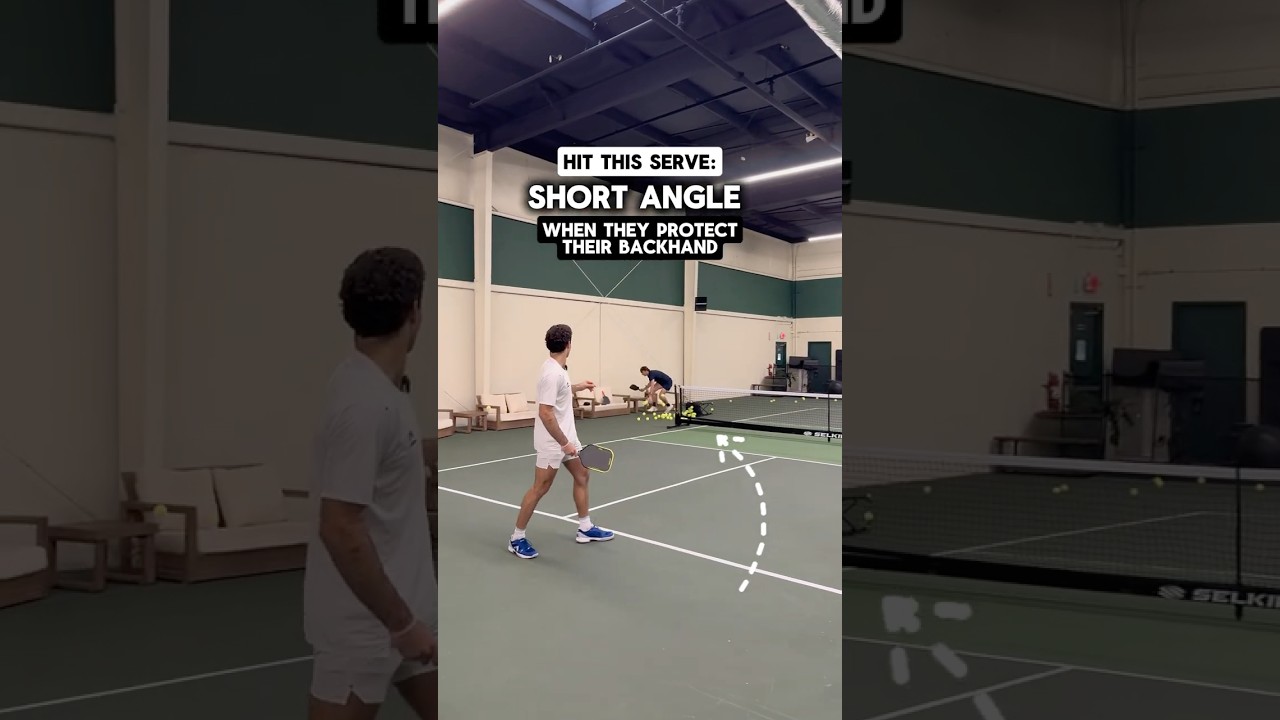
Strategy 2: Use the Short Angle When They Start Protecting the Backhand
Here's where your pickleball serve strategy turns into a real tactical weapon. Once your opponent knows you're hunting the backhand, they adjust.
They shift position. They cheat toward the backhand side. That's your cue to go the other direction with a short angle serve.
The short angle serve is hit wide toward the sideline to pull your opponent off the court and open space on the other side.
It doesn't need to be unreturnable. It just needs to force an awkward position and a difficult return.
This is classic misdirection, and it works at every level of the game. The backhand threat sets up the angle, and the angle keeps the backhand threat alive.
Short Angle Rules for a Smarter Pickleball Serve Strategy
- Don't go for it on the first point. Use the backhand serve first to get your opponent leaning.
- Aim for the sideline near the service box corner to maximize the angle.
- Accept some misses. The angle is harder to execute, so build it in practice before you rely on it in games.
- Be ready for a wide return. Pulling your opponent out wide often sends the ball back cross-court at a tough angle.
Understanding the serve mistakes that cost you points will show you why most players never develop this kind of variety in the first place.
 The Dink Media Team
What Is a Lob Serve and When Should You Use It?
A lob serve is a high-arcing serve that travels deep into the service box and forces the returner to hit from well behind the baseline.
It's not a speed play. It's a trajectory play.
Most players have never faced a well-executed lob serve in a recreational game. That unfamiliarity is exactly what makes it effective against the right opponent.
The key phrase here is "the right opponent."
The lob serve is specifically designed to exploit players who came from a tennis background or who naturally like to attack the return.
Tennis players are trained to step in on high balls and put them away.
But pickleball is a different game, and a deep lob serve that bounces high can actually be tricky to handle even for experienced players if they're not expecting it.
 The Dink Media Team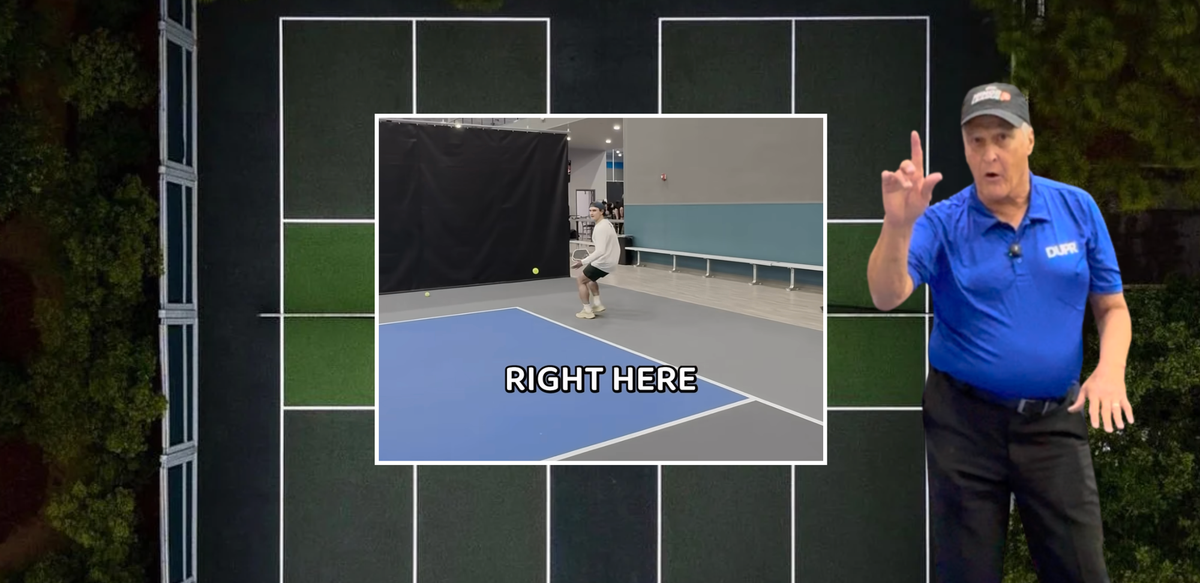
Strategy 3: Lob Serve Against Non-Tennis Players
The lob serve works best against players who have not played tennis and who tend to back up when the ball is coming down at them from a steep angle.
Many recreational pickleball players are not comfortable with high bouncing balls that land near the baseline.
Against these players, a well-placed lob serve can generate weak, floaty returns that practically set up your third shot for you.
Here's when and how to use it effectively:
- Watch for players who back up quickly when the ball goes high. That's a tell that the lob serve will bother them.
- Aim for deep center or deep backhand corner to maximize difficulty.
- Keep enough arc on the serve that it drops steeply into the service box and bounces above shoulder height.
- Don't use it against players who clearly have a tennis background. They will step in and punish the high ball.
The lob serve is not a gimmick. It's a situational weapon that you pull out when you've identified the right target.
Knowing how to beat every pickleball player type includes knowing which serves work against which opponents.
This is that knowledge applied to the serve specifically.
 The Dink Media Team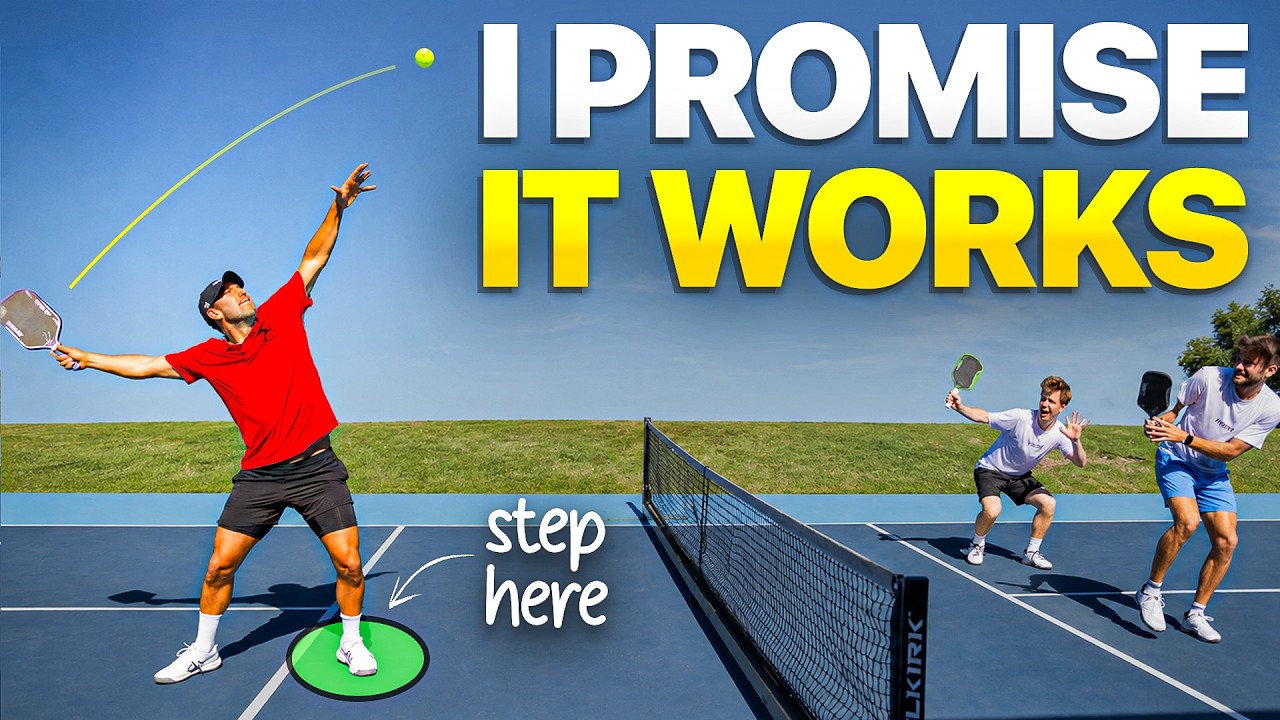
How to Combine All Three Serve Strategies
The real power here is not in any single serve. It's in rotating between all three based on what your opponent shows you.
Think of it as a simple system:
- Start by serving deep to the backhand. Watch what happens. Does the return pop up? Does your opponent look uncomfortable? Keep going there.
- When your opponent starts leaning or shifting toward their backhand, go wide with the short angle serve. Pull them out of position and open up the court.
- When you're facing a player who struggles with high balls and clearly hasn't played tennis, mix in the lob serve to generate weak returns and short balls you can attack.
The goal is to make your opponent think about your serve rather than read and react automatically.
Any time your opponent is thinking, they're a half-step slow on their return.
Players who develop this kind of variety are the ones winning more rallies before the third shot even matters.
For more on serve and return secrets most players never learn, there's a full breakdown worth reading after this.
 The Dink Media Team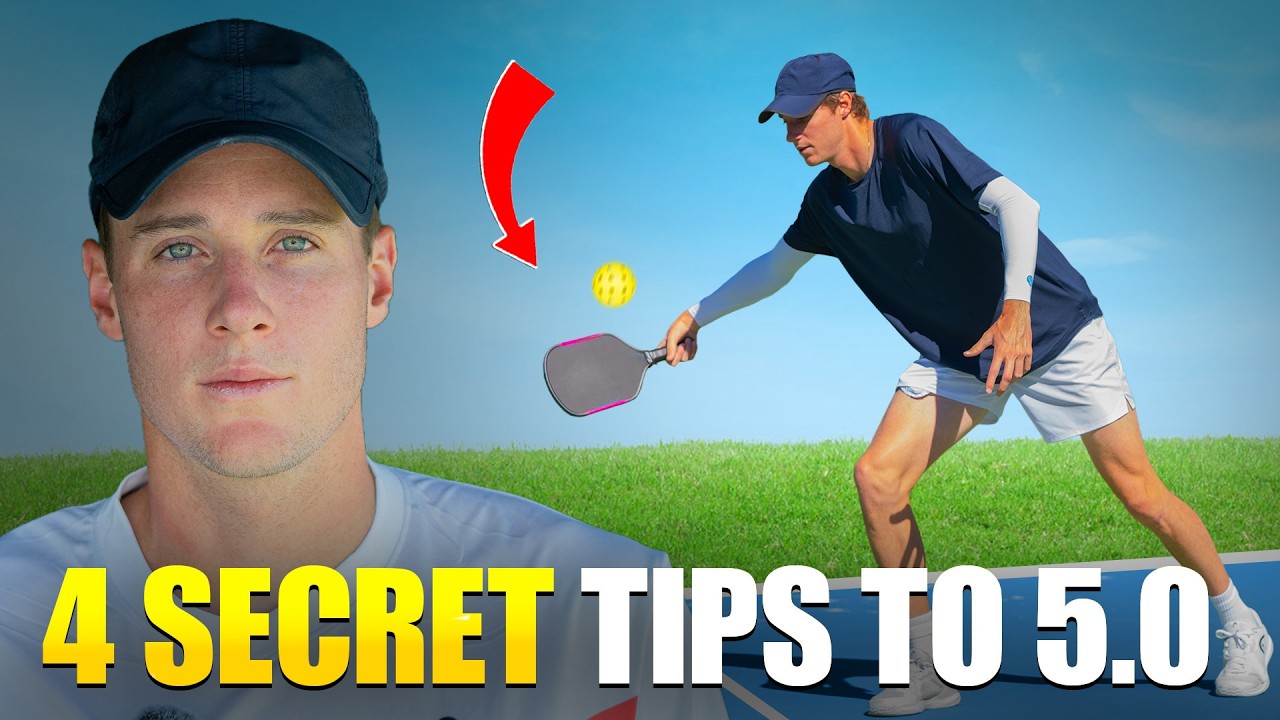
Building These Serves Into Your Practice
None of these tactics work if you can't execute them consistently under pressure. The backhand target requires depth control.
The short angle requires precise placement near the sideline.
The lob serve requires trajectory control that most players never practice.
Start by adding a specific serve target to your warmup every time you play.
Pick one of these three and spend five minutes serving to that spot before your game starts.
You'll be surprised how quickly consistency improves when you're aiming at something specific instead of just getting the ball in.
You can also get reps in with pickleball wall practice drills when a court isn't available.
For players who want to sharpen their overall game alongside their serve, fixing your serve for power and depth gives you the mechanical framework to build on.
 Eric Roddy
The Serve Is a Free Point Waiting to Happen
You get two chances every rally to put the ball exactly where you want it with zero pressure from an incoming shot. Most players treat that like a formality.
Target the weak backhand. Use the short angle to keep opponents guessing. Pull out the lob serve when you spot a player who struggles with high bouncing balls.
That's what a real pickleball serve strategy looks like.
Not complicated mechanics, not topspin you've never practiced, just smart targeting based on what's right in front of you.
The 3-step serve system for instant depth is a great next read, and pickleball shot selection using the 1 to 10 scale shows how the serve fits into your broader point-building plan.
Start using the serve as the weapon it actually is. You already have everything you need.
Frequently Asked Questions
Where should I aim my pickleball serve to get the best results?
Aim deep to your opponent's backhand as a default starting point. A deep backhand serve is the most reliable way to generate a weak return from recreational players who haven't developed a strong backhand side.
What is a short angle serve in pickleball?
A short angle serve is hit wide toward the sideline to pull your opponent off the court and open up space on the opposite side. It works best after you've already been targeting the backhand, so your opponent is leaning in that direction before you go wide.
When should I use a lob serve in pickleball?
Use the lob serve against players who are uncomfortable with high bouncing balls, particularly those who didn't come from a tennis background. Avoid it against tennis players who are trained to attack high balls from the baseline.
How do I add more variety to my pickleball serve without changing my whole swing?
Focus on small adjustments in contact point and follow through direction rather than rebuilding your motion from scratch. Practicing specific targets during warmup instead of just getting the ball in is the fastest way to build real serve variety.
Does serve strategy actually matter at the recreational level?
Yes, and it might matter more at the recreational level than anywhere else. Most players at 3.0 to 4.0 have a clearly weaker backhand, don't adjust well to angle or trajectory changes, and aren't expecting any strategic variation from the serve at all. That predictability is your biggest opportunity.

Love Pickleball? Join 100k+ readers for free weekly tips, news & gear deals.
Subscribe to The Dink