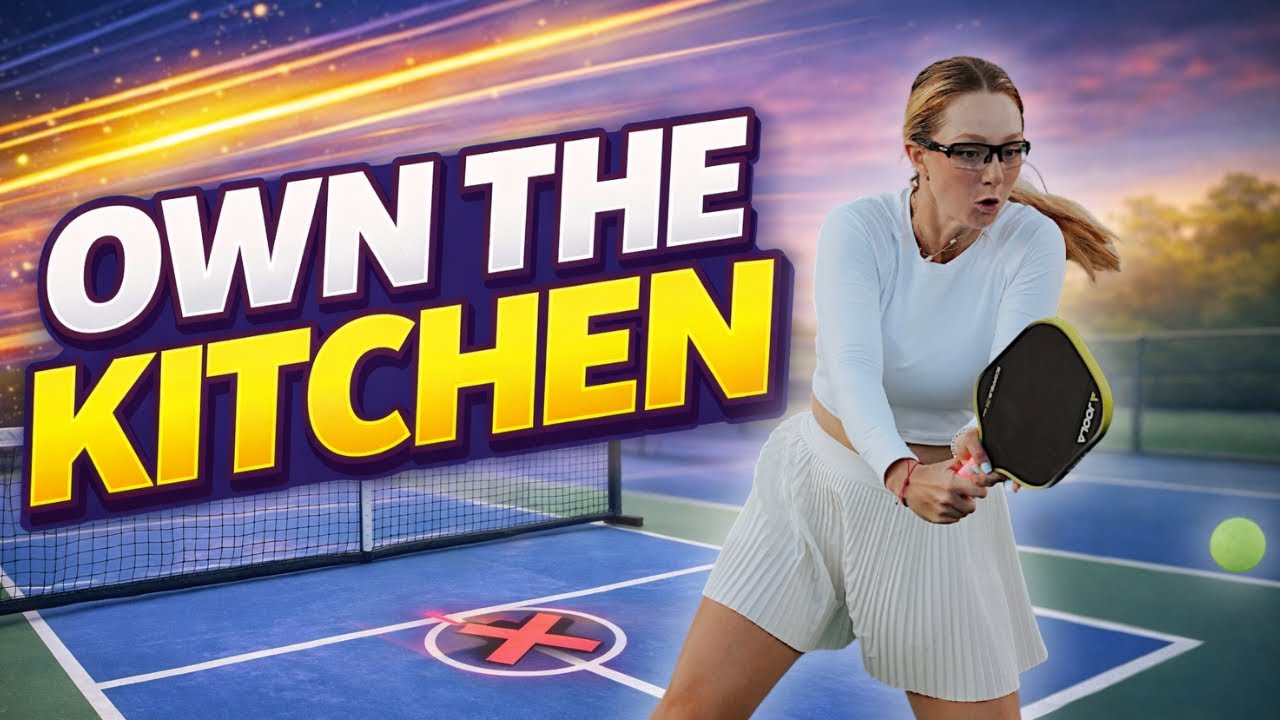
Most pickleball players struggle at the kitchen because they're hitting the wrong shot. A pro coach breaks down the four essential kitchen shot techniques you need to know to dominate at the net and start winning more points.
Every ball at the kitchen falls into one of four situations. Understanding which kitchen shot to hit in each zone is the foundation of net dominance.
Pro player Ashley Griffith organizes the kitchen into zones based on ball height and bounce: below the net, net level, above the net, and off the bounce.
Each zone demands a different response.
This isn't complicated stuff, but it's the difference between players who dominate the kitchen and those who keep popping balls up for easy put-aways.
Love pickleball? Then you'll love our free newsletter. We send the latest news, tips, and highlights for free each week.
1. Below the Net: The Reset Kitchen Shot
When the ball is below the net, you should almost never attack. Instead, you hit a reset, which is the most defensive kitchen shot in your arsenal.
A reset neutralizes the point when you're in a defensive position.
Ashley Griffith explains there are two ways to hit one: with upward topspin or with an open paddle face. Both work; it comes down to personal preference.
For the topspin version, you brush up on the ball with a whip-like motion. For the open-face version, you lift the ball up gently.
Either way, the key is staying low with bent knees and keeping your swing compact.
Being able to reset and neutralize the point from under the net is super key, Griffith says. It's the shot that sets up everything else.
2. Net-Level Balls: The Counter
When the ball sits at waist to chest level, you're looking at a counter, which is a neutral kitchen shot that sits between defense and aggression.
A counter lets you add pace without losing control.
Griffith calls it one of her favorite shots because it's versatile and effective. You can hit it on the forehand or backhand with a short, compact swing.
The motion is almost like a pump, using your opponent's pace against them.
The beauty of the counter is that you're not trying to lift the ball up or smash it down. You're simply redirecting it with a bit more pace than a dink.
This keeps your opponent honest and sets you up for the aggressive shot you really want.
 The Dink Media Team
3. Above the Net: The Attack Kitchen Shot
When the ball pops up above the net, it's time to finish the point. This is where aggression pays off.
Griffith emphasizes a short, compact swing with a downward snap. You're not taking a huge overhead; you're being surgical.
The goal is to hit the ball down and get it at your opponent's feet so the point ends immediately.
"Short swing, hit the ball down," Griffith repeats. This is the mantra for above-the-net kitchen shot situations.
Whether you're on the forehand or backhand, the principle stays the same: snap down with control, not wild power.
Eric Roddy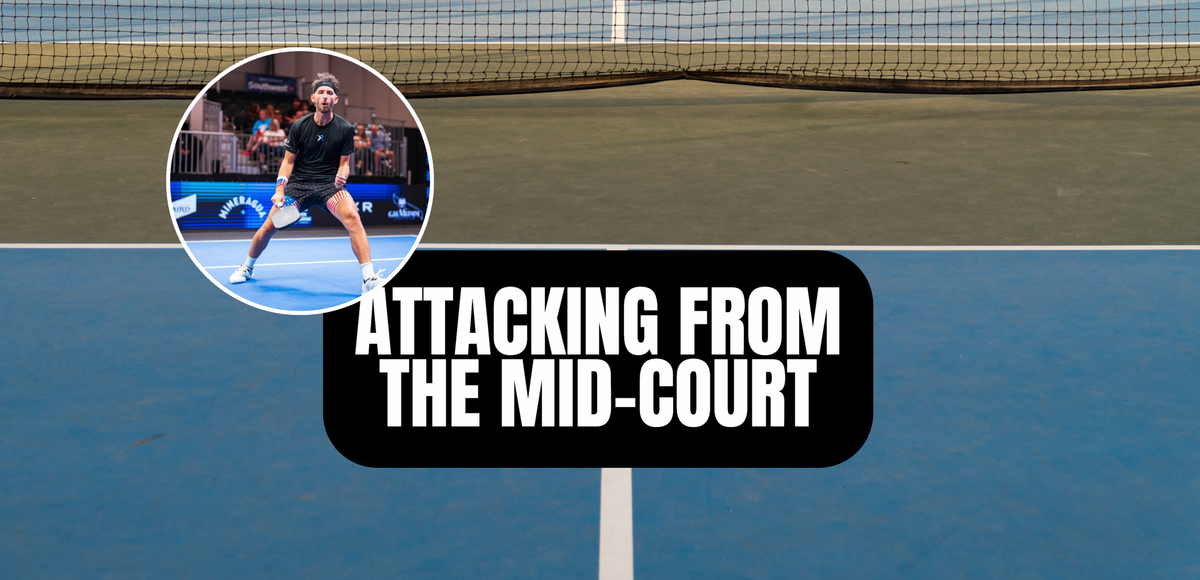
4. Off the Bounce: The Dink Kitchen Shot
When the ball bounces at the kitchen, you're hitting a dink, which is the most common kitchen shot you'll face in a match.
Dinks are the setup shots.
They're not meant to win the point; they're meant to create the opportunity for a counter or an attack. Griffith emphasizes that dinking is about consistency and margin.
It's better to pop a dink up slightly than to miss it in the net.
The fundamentals matter here. Your paddle motion should be smooth and pendulum-like on both sides.
Keep your dominant foot behind the ball (right foot for forehands, left for backhands).
This positioning sets you up for the aggressive shot you're building toward.
The Dink Media Team
Why Decision-Making Beats Hand Speed at the Kitchen
Here's what separates pros from recreational players: Griffith doesn't focus on hand speed or touch.
She focuses on knowing what shot to hit before the ball even arrives. Most players guess. They see the ball coming and react without a plan.
Pros have a framework. They know that:
- Below the net means reset
- Net level means counter
- Above the net means attack
- Off the bounce means dink
This clarity eliminates hesitation.
When you remove the guessing game, your game levels up fast. You're not thinking about technique; you're thinking about strategy.
Your hands follow your decision-making, not the other way around.
The Dink Media Team
Putting It All Together: Practice the Kitchen Shot Framework
The kitchen shot framework is simple, but mastering it takes practice. Start by drilling each zone separately.
Hit resets from below the net until they feel automatic. Practice counters at net level. Work on your attack from above the net. Spend time on dinks off the bounce.
Once each kitchen shot feels natural, start playing points and applying the framework in real time. You'll notice immediately that you're making better decisions and winning more points at the net.
Griffith promises that once you can recognize these four situations and respond with the right shot, your game improves by at least a full level.
That's not hype; that's the difference between playing pickleball and playing it well.
Most players who plateau do so because they lack a repeatable soft game framework. Understanding the pickleball plateau and how to break through it starts exactly here, at the kitchen.
If you're below a 4.0, coaches consistently point out that mastering two foundational shots before worrying about advanced technique is the fastest path to improvement.
Frequently Asked Questions
What is a kitchen shot in pickleball?
A kitchen shot in pickleball is any shot hit at or near the non-volley zone line, also called the kitchen. The four main kitchen shot types are the reset, the counter, the attack, and the dink, each triggered by where the ball is relative to the net.
What's the difference between a reset and a dink?
A reset is a defensive kitchen shot hit from below the net when the ball is still in the air. A dink is hit off the bounce at the kitchen line and is designed to create opportunities rather than end the point outright. Both are essential, but they serve very different roles.
When should I attack instead of dinking at the kitchen?
Attack when the ball pops up above the net because that is the highest-percentage opportunity to finish the point cleanly. Use a short, compact swing with a downward snap rather than a big overhead, and aim for your opponent's feet. Hesitation at this moment almost always costs you the point.
Why does my kitchen shot keep popping up?
Most kitchen shots pop up because players aren't staying low enough or are using too much paddle motion. Keep your knees bent, use a smooth pendulum swing, and prioritize margin over pace. According to pro coaching breakdowns, correcting your body position fixes this faster than any grip or paddle adjustment.
How long does it take to master the kitchen shot framework?
The framework itself takes minutes to understand, but applying it consistently in matches takes weeks of deliberate practice. Start by drilling each of the four kitchen shot zones separately before combining them in live play. Most players see noticeable improvement within a few weeks of focused, zone-specific drilling.

Love Pickleball? Join 100k+ readers for free weekly tips, news & gear deals.
Subscribe to The Dink