The Return-of-Serve Adjustment That Saves Senior Players' Legs
Suffer from heavy legs during late pickleball sets? Discover the simple return-of-serve footwork adjustment designed for players 50+. Eliminate heavy braking, protect your knees, and arrive at the kitchen line balanced and ready without outrunning younger opponents.
If you've played competitive pickleball into your 50s, 60s, or 70s, you know the feeling all too well.
It's midway through the second set, and your legs suddenly feel like they're filled with lead.
Your quads are burning, your patellar tendons are aching, and making that trek from the baseline up to the kitchen line feels like running through wet concrete.
According to the Sports & Fitness Industry Association (SFIA), pickleball participation has surged to over 24 million players, with senior players (65+) maintaining one of the highest levels of core engagement in the sport.
When your lower body gives out during these long matches, the natural reaction is to blame your conditioning.
 Benjamin Grant
You tell yourself you need to hit the gym, do more leg presses, or log extra miles on the treadmill.
The problem isn't your fitness. It's your footwork mechanics.
For senior pickleball players, traditional tennis-style returns, complete with explosive split-steps, deep squatting backswings, and heavy braking, act as a silent energy leak.
Recent epidemiological data published on ResearchGate highlights that lower-extremity issues, particularly knee strain and thigh muscle fatigue from repetitive braking mechanics, represent the single most common category of soft-tissue injuries in active players.
That is exactly the gap the pickleball return of serve for seniors is built to close.
By making one key return-of-serve adjustment, you can protect your joint health, conserve lower-body stamina, and arrive at the Non-Volley Zone (NVZ) balanced, calm, and ready to win.
Love pickleball? Then you'll love our free newsletter. We send the latest news, tips, and highlights for free each week.
Why Speed Is a Trap in the Pickleball Return of Serve for Seniors
Most senior players make the same fundamental mistake on the return: they try to play like they are 22 years old.
They jump high into a split-step, sink deep into their hips, load heavily on their back leg, and slam on the brakes as they strike the ball.
Then they wonder why their knees are screaming by game three. Pickleball knee pain is not a mystery, it is a mechanics bill coming due.
 Zoey Weil
When you look at the biomechanics of court movement, high-impact braking requires immense eccentric quadricep contraction, meaning your leg muscles are forced to lengthen under heavy load to stop your momentum.
A comprehensive review in Current Physical Medicine and Rehabilitation Reports notes that older athletes (ages 60+) face disproportionately higher rates of joint strain and overuse injuries compared to younger cohorts due to shifting tissue elasticity.
The pickleball return of serve for seniors flips that math. For players over 50, high-impact braking creates three major problems:
- Severe Localized Muscle Fatigue: Repetitive heavy braking rapidly drains quad glycogen, leaving your legs feeling heavy long before the match is over.
- Joint Strain: Sinking into deep squats puts excessive pressure on the patellar tendons and knee joints, which naturally lose elasticity as we age.
- The Stroke Breakdown: When your legs tire, your lower-body kinetic chain fails. You start arming the ball, leading to unforced errors, popped-up returns, and shoulder strain.
You don't need to push off harder or bend deeper. You need to stop coming to a complete stop.
Need some new pickleball gear? Get 20% off select paddles, shoes, and court equipment with code THEDINK at Midwest Racquet Sports.
The Fix: The "Forward-Flow" Step-Through Return
The leg-saving adjustment replaces vertical jumping and hard lateral stopping with continuous forward momentum, shallow dynamic loading, and a compact paddle motion.
Every piece of the pickleball return of serve for seniors is designed to keep you moving instead of stopping.
Instead of treating the return as a stop-and-start sprint, think of it as a smooth, continuous walk through the ball.
Clinical mobility studies archived on PubMed Central (NCBI) emphasize that low-impact, forward-moving dynamic control significantly improves balance and lowers fall and injury risks in senior racquet sport participants.
Comparing the Movement Flow
- Traditional Mechanics (High Joint Stress) High Split Jump ➔ Deep Squat Load ➔ Hard Braking ➔ Explosive Push-Off Sprint
- Leg-Saving Mechanics (Kinetic Flow) Shallow Staggered Creep ➔ Compact Paddle Turn ➔ Forward Step-Through Walk
1. Swap the Jumping Split-Step for a Staggered "Flowing" Step
Stop jumping two inches into the air and landing parallel in a wide squat.
As your opponent releases the serve toss, take two low-impact, creeping steps forward.
Right as they make contact, softly land with one foot slightly ahead of the other (a staggered stance) while keeping your knees relaxed, not deeply bent.
Because you stay in forward motion, you bypass high vertical landing forces entirely.
That single change is the foundation of senior pickleball footwork that lasts three sets.
 The Dink Media Team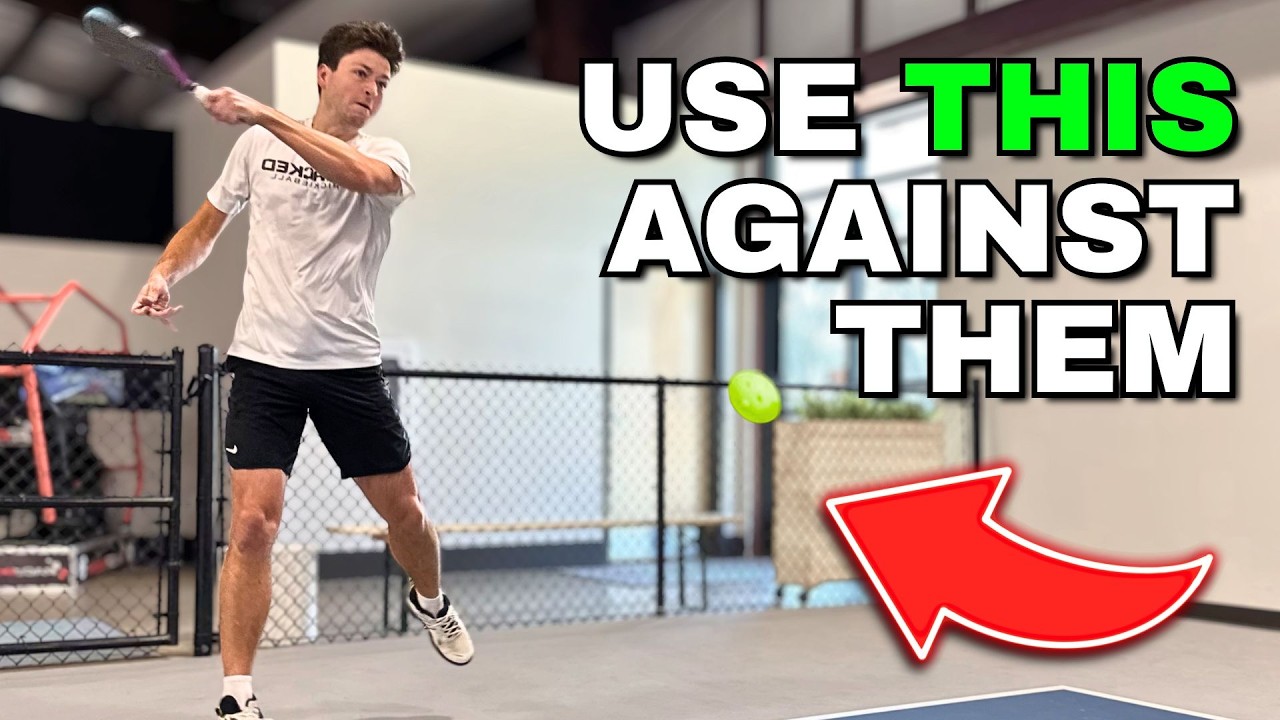
2. Ditch the Big Backswing for a Compact Unit Turn
A big backswing forces you to load all your weight onto your back leg in a deep squat.
Instead, turn your shoulders together in a quick unit turn while keeping your paddle face out in front of your body.
Let the server's incoming pace do 80% of the work. You are simply redirection-blocking the ball deep into their court.
Compact beats powerful in the pickleball return of serve for seniors.
3. Step Through the Ball (The Secret Weapon)
This is where the magic happens for your legs. As you make contact with the ball, let your trailing back leg naturally step forward past your front leg.
Instead of planting your feet and pushing off like a sprinter, you use the natural stroke momentum to carry you into your first walking step toward the kitchen.
Nothing else in the pickleball return of serve for seniors saves more energy over a long day of play.
 The Dink Media Team
Traditional Return vs. the Pickleball Return of Serve for Seniors
Footwork & Split-Step
- Traditional Return: High vertical jump landing with parallel, wide feet.
- Leg-Saving Senior Adjustment: Low-amplitude staggered creep that keeps body weight moving smoothly forward.
Joint & Muscle Load
- Traditional Return: Deep knee and hip flexion putting maximum eccentric torque on the quads and patellar tendons.
- Leg-Saving Senior Adjustment: Shallow, continuous forward motion that absorbs impact softly.
Backswing & Contact
- Traditional Return: Full racquet loop with heavy loading on the back leg.
- Leg-Saving Senior Adjustment: Compact unit turn with early contact in front of the body.
Weight Transfer & Effort
- Traditional Return: Static, forceful push-off requiring an aggressive 10-to-12-foot sprint to the NVZ.
- Leg-Saving Senior Adjustment: Passive step-through momentum turning the approach into a calm 6-to-8-foot stroll up to the kitchen.
 The Dink Media Team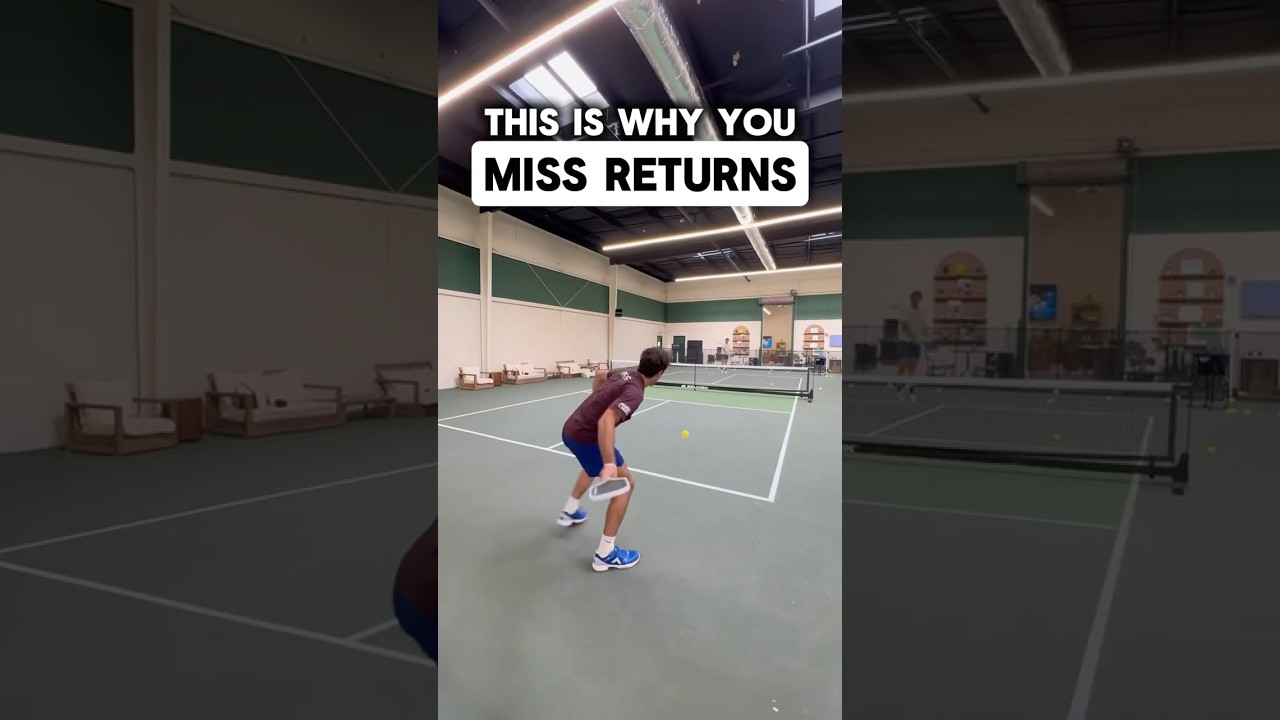
Smart Positioning: Let the Court Work for You
Standing four to five feet behind the baseline forces you to sprint maximum distance just to get to the kitchen line before your opponents hit their third shot.
As noted in the latest USA Pickleball Growth & Player Guidelines, effective court positioning is essential for long-term health and inclusive participation across all age brackets.
The leg-saving pickleball return of serve for seniors relies on standing on or just inside the baseline.
Catching the ball on the rise shortens your travel distance to the kitchen by 30 to 40 percent.
Fewer feet to cover means fewer braking steps, less running, and zero wasted energy.
Better senior pickleball footwork starts with where you choose to stand.
 The Dink Media Team
How to Drill the Pickleball Return of Serve for Seniors
Knowing the adjustment is one thing; making it automatic under pressure is another.
Run this simple 30-minute practice session with a drilling partner to re-train your muscle memory.
Block 1: The "Walk-Through" Return (15 Minutes)
- The Drill: Have your partner feed medium-paced serves from across the net.
- The Action: Start two steps behind your baseline. As the serve is tossed, walk continuously forward, hit the return off your front hip, and step through without ever stopping your forward stride. Walk all the way to the kitchen line.
- The Goal: Feel how forward momentum powers the return without needing quad strength or deep knee bends.
Block 2: Deep Target Transition Game (15 Minutes)
- The Drill: Place target cones or towels 2 feet inside your opponent's baseline.
- The Action: Play live points starting with a serve, but focus on lifting high, deep returns into the target zone using your compact step-through.
- The Goal: A deep return of serve buys you extra time, allowing you to calmly stroll up to the kitchen rather than sprinting.
Run both blocks twice a week and the pickleball return of serve for seniors stops feeling like a drill and starts feeling like instinct.
 The Dink Media Team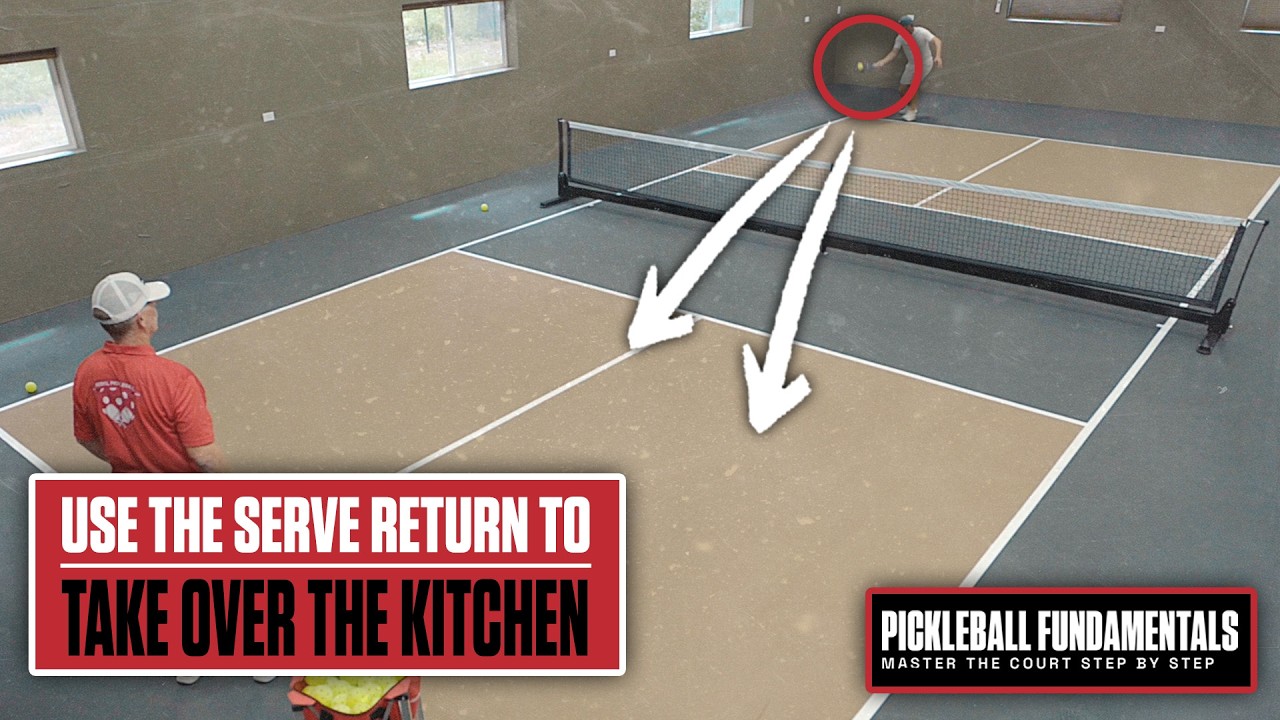
What Happens When You Make the Adjustment
When you stop treating the return of serve like an explosive sprint, everything changes.
You arrive at the kitchen line earlier and more balanced. Your paddle stays up and ready because you aren't gasping for air.
Best of all, when the match reaches a deciding third set, your legs are as fresh as they were during the warm-up.
Speed fades with age. Positioning, momentum management, and movement efficiency do not.
Work smarter, preserve your legs, and let the younger players do all the running.
The pickleball return of serve for seniors is not a concession to age, it is a competitive edge.
Frequently Asked Questions
Can senior pickleball players really beat younger, faster opponents?
Yes, and it happens on every court in America, because pickleball rewards positioning, patience, and consistency far more than raw athleticism. Move early, keep opponents pinned back with depth, and you neutralize raw speed without exhausting yourself.
What is the leg-saving pickleball return of serve for seniors?
It is a footwork adjustment that replaces a deep-squatting, jumping split-step with a low-impact staggered creep and a step-through follow-through. Instead of stopping hard and pushing off, you use forward momentum to walk smoothly up to the kitchen line.
How deep should the pickleball return or serve for seniors?
Your return should consistently land within the back 2 to 3 feet of the opponent's court. A deep return of serve keeps the serving team pinned near their baseline while giving you time to walk comfortably to the kitchen.
Why do my knees hurt after playing pickleball?
Pickleball knee pain is usually caused by heavy eccentric braking: jumping into deep split-steps and abruptly stopping on hard court surfaces. Shifting to shallow, forward-flowing footwork minimizes peak landing impact and protects the patellar tendons.
Does this return adjustment work in singles too?
Yes, though the payoff is smaller because singles demands far more lateral coverage than doubles. The step-through still cuts your braking load and gets you into a balanced hitting position sooner.

Love Pickleball? Join 100k+ readers for free weekly tips, news & gear deals.
Subscribe to The Dink