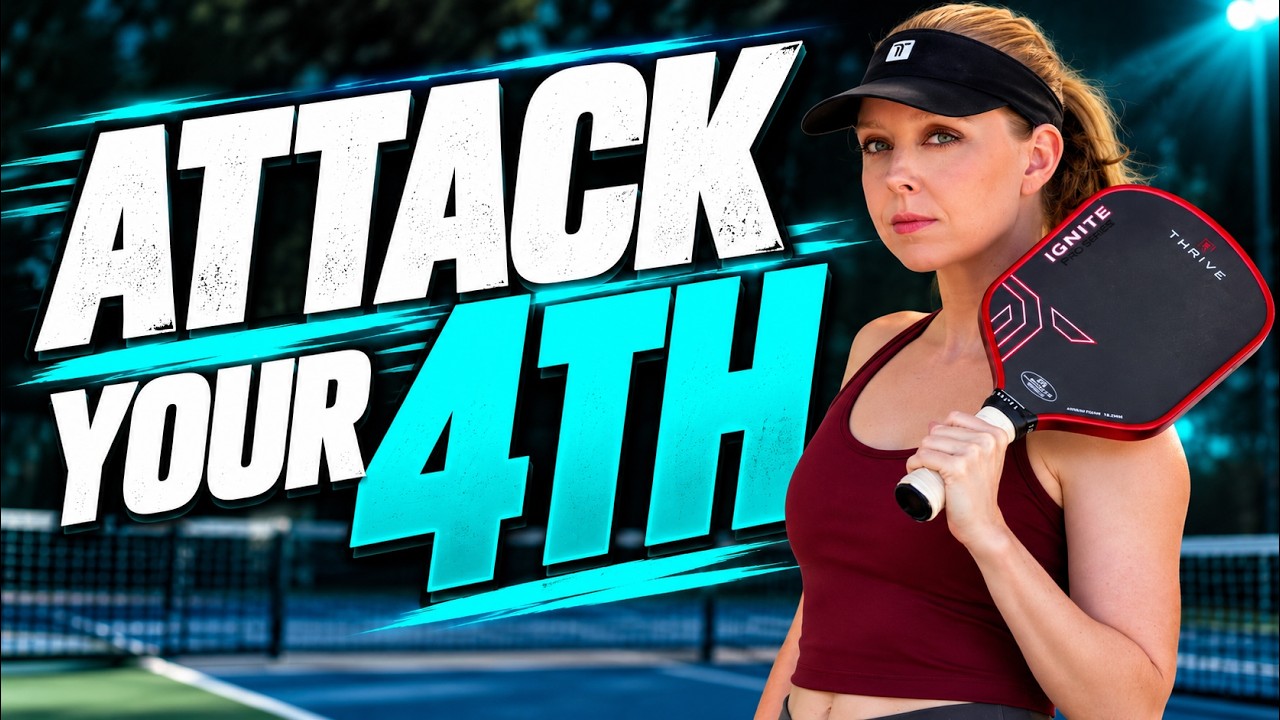
Why Your Return Keeps Going Long (And the Simple Fix That Works)
If your pickleball return keeps flying long, the problem is probably your backswing, not your footwork. Here is the simple adjustment that fixes it fast.
If your pickleball return keeps sailing past the baseline, you are probably doing what most players do wrong: swinging harder when your opponent hits harder.
That instinct feels right. Bigger shot coming at you, bigger reaction needed. But it is exactly backwards.
This fix comes from Richard Pickleball on YouTube, and it is one of the most counterintuitive corrections in the game.
Once you understand it, missing long on returns will become rare.
Love pickleball? Then you'll love our free newsletter. We send the latest news, tips, and highlights for free each week.
The Real Reason Your Returns Are Going Long
Most players assume that when they miss long on a return, they need to aim shorter or swing softer. That is only partially true.
The deeper issue is that your backswing is adding power you do not need, especially when the ball is already coming in hot.
When your opponent serves with pace, that incoming ball already carries energy.
If you take a full backswing and swing through the ball, you are stacking your power on top of theirs.
The result is a return that launches off your paddle with way more speed than you intended.
This is a physics problem, not a technique problem. And the fix is not to try harder. It is to do less.
Why Do Big Serves Make the Problem Worse?
As you improve, you will face bigger serves. Faster pace, heavier spin, deeper placement.
Many players respond by tightening their grip, stepping back, or trying to time a longer swing.
All of those responses make the miss-long problem worse.
The truth is, a powerful incoming serve is actually an opportunity. You can redirect that energy without adding any of your own.
The ball will still travel deep into the court, because the server already did the work for you.
Think about it this way: if someone throws a ball at a wall, the wall does not need to swing back.
The ball bounces off. Your paddle can work the same way when you stop overswinging on the return.
If you want to understand why your serve keeps getting attacked, this same principle applies in reverse.
Pace without control is exploitable from either side of the net.
The Compact Return: How to Actually Do It
Eliminate the backswing entirely. That is the core adjustment.
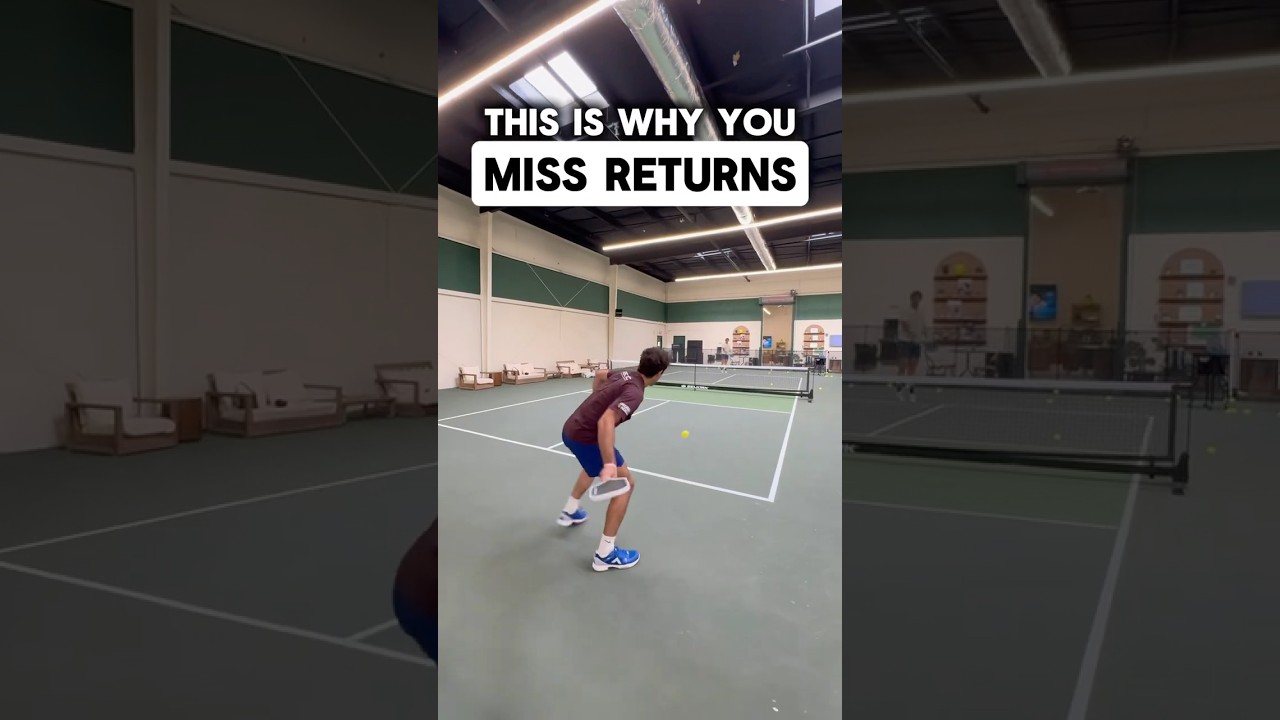
Instead of pulling your paddle back behind your hip and swinging through, you start your paddle in a neutral, ready position and simply guide the ball forward.
Richard demonstrates this as a motion from here to here, a short, controlled punch rather than a full swing. The paddle face does the work. Your arm stays quiet.
Here is how to build this into your game:
- Start with your paddle in front of your body, roughly at chest height, slightly forward of your torso. This is your ready position on the return.
- Watch the ball off the paddle on the serve. Track it early so you can set your feet and avoid reaching or lunging.
- As the ball arrives, guide it forward with a short forward push. No backswing, no full follow-through. Just a compact, controlled redirect.
- Let the incoming pace carry the ball deep. Trust that the server's power is doing the work for you. You are just steering.
- Keep your grip pressure medium to light. A death grip on the paddle transfers tension into the shot and causes pop-outs and long balls.
This is not a passive technique. You are still placing the ball with intention. You are just not adding unnecessary swing energy on top of what is already there.
For more on how to handle hard shots in pickleball, there are three distinct methods worth knowing. The compact return is one of them.
 The Dink Media Team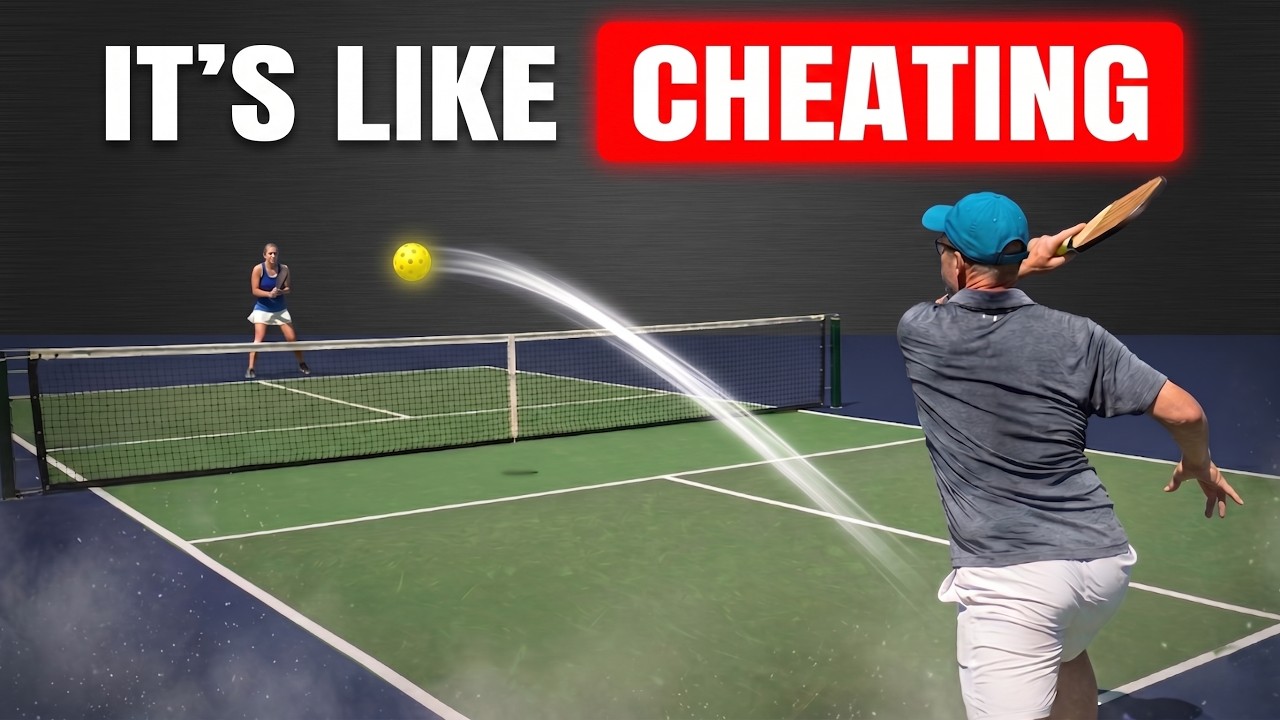
What Happens to Your Consistency When You Drop the Backswing?
Your return becomes dramatically more consistent. This is the part that surprises most players the first time they try it.
A shorter swing has fewer moving parts. Fewer moving parts means fewer things that can go wrong.
When you eliminate the backswing, you remove timing issues, over-rotation, and the off-center contact that causes errant returns.
The compact return is also much easier to repeat under pressure. When the game is tight and you are nervous, a big swing is the first thing to break down.
A short, controlled guide stroke holds up because there is almost nothing to it.
This is why unforced errors in pickleball so often trace back to swing mechanics rather than strategy. You are not making a bad decision.
You are making a technically correct decision with too much physical input.
 The Dink Media Team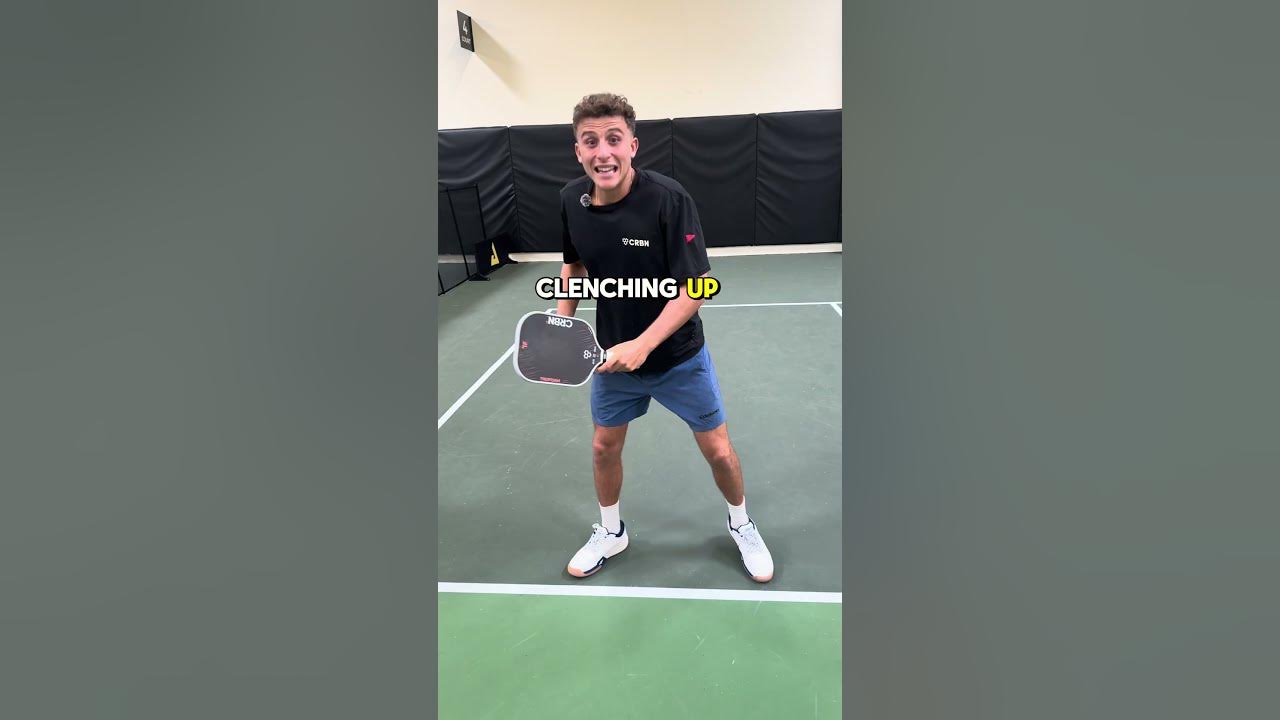
Does This Work on Slow Serves Too?
Yes, but with one adjustment.
On a slow serve, you do not have incoming pace to redirect, so you will need to add a small amount of controlled forward drive with your arm to ensure the return reaches the baseline.
The key word is small. You are still not taking a big backswing. You are just applying a gentle push rather than a pure redirect.
Here is how to tell if your opponent's serve is fast enough for a pure compact return:
- If the ball reaches you in under one second after leaving their paddle, you have plenty of pace to redirect.
- If the ball arcs high and slow and lands around the kitchen line or mid-court, you will need to add a bit of your own power.
- When in doubt, err toward less swing. A short return that lands in the court is always better than a long return that gifts your opponent a free point.
Understanding the keys to a pickleball return that creates offense starts with keeping the ball in play first.
You cannot create offense with a return that misses long.
 The Dink Media Team
Is Hitting Long on Returns Really That Costly?
Yes, missing a return long is one of the most expensive mistakes you can make.
It is a free point for the server, and it happens before the point even gets started.
At the recreational level, habits that keep 4.0 players stuck almost always include avoidable errors on returns and serve-plus-one situations.
The compact return removes one of those errors almost immediately.
Compare that to a missed third shot drop, which at least happened during a live rally.
A missed return gives the server a point with zero effort. You want to eliminate those as fast as possible.
If you are also struggling with other shots going long, the same principle applies broadly. Excess swing is usually the culprit.
 The Dink Media Team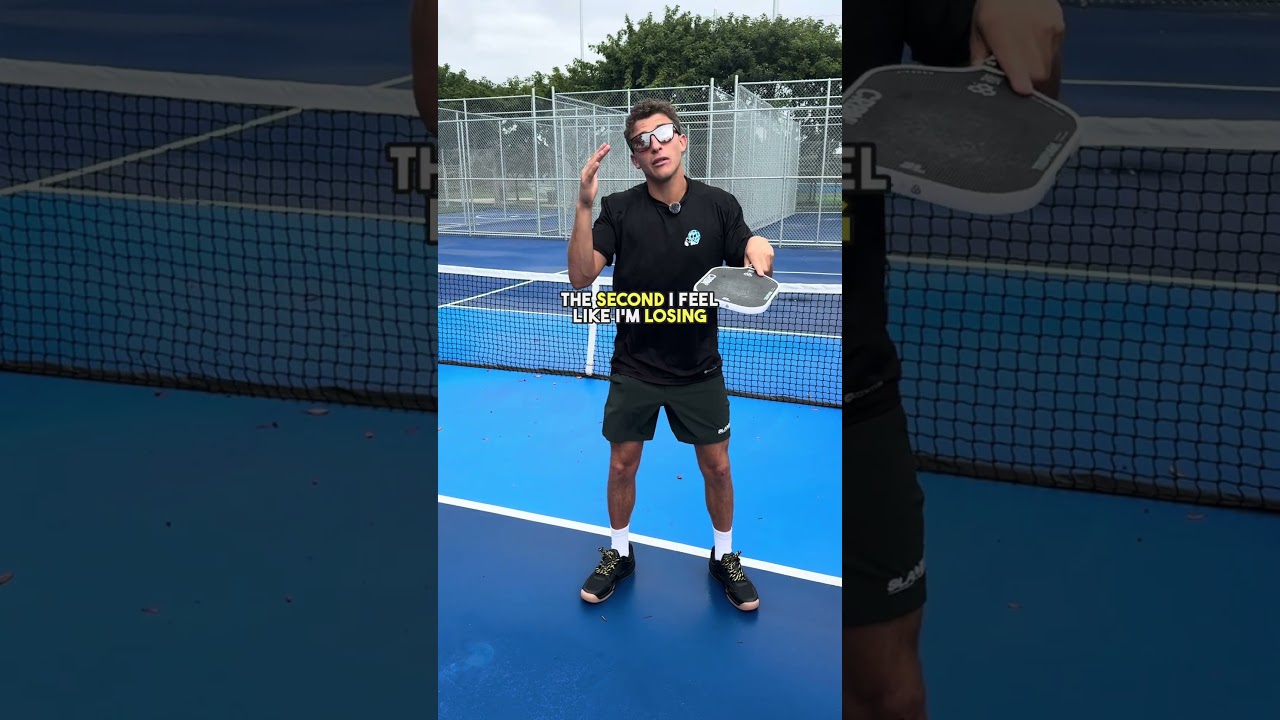
Building the Compact Return Into Match Play
The challenge is that a full backswing is a deeply ingrained habit for most players, especially those who came from tennis or racquetball.
You will not fix it in one session. But you can speed up the process with intentional practice.
Try these drills and warm-up habits:
- Shadow practice without a ball. Stand at the baseline and rehearse the compact forward guide without swinging back. Do this 20 to 30 times before you pick up a ball.
- Feed yourself slow self-serve tosses. Toss the ball up with your non-paddle hand and practice returning it with zero backswing. Focus on contact quality, not depth.
- Ask a partner to serve at full pace while you consciously pin your elbow to your side. This physically prevents a full backswing and trains your arm to stay compact.
- During warm-up rallies, count your backswings. Every time you catch yourself pulling back, reset. Awareness builds the habit.
Consistent repetition in low-pressure situations is how you make this automatic before match play.
If you want to practice pickleball with limited court time, this drill set is efficient and requires almost no court space to start.
 The Dink Media Team
What Else Can You Pair With the Compact Return?
Once your compact return is landing consistently deep, you can start thinking about where you are placing it, not just whether it stays in bounds.
A deep return to your opponent's backhand is the standard play. It forces a weaker third shot and gives you more time to advance toward the kitchen line.
Depth and placement together turn a neutral return into a genuine weapon.
You can also start working on your transition after the return, because once you stop missing long, the next problem becomes moving forward effectively after your return lands.
The compact return is the foundation. Get that right first, then build everything else on top of it.
If you are curious about serve techniques that force weak returns, understanding how servers create pace and spin will also make you a smarter returner.
Knowing what the server is trying to do helps you respond with the right amount of contact.
And if your opponents are starting to notice your improved return and attacking more aggressively at the net, check out backhand volley fixes that stop bangers at the kitchen to keep the pressure going in your direction.
Frequently Asked Questions
Why does my pickleball return keep going long even when I try to aim lower?
Aiming lower helps, but the root cause is usually too much backswing adding extra power to an already-paced ball. Eliminate the backswing first and your depth control will improve immediately. Aim adjustments work better once your swing mechanics are clean.
Should I use a compact return on every serve or only on hard serves?
Use the compact return on any serve with meaningful pace behind it. On slow, looping serves, add a small forward push to generate enough depth. The default should always be less swing, not more.
How do I stop myself from taking a backswing out of habit?
Shadow drill the compact motion before every practice session. You can also physically pin your elbow to your side during drills to break the reflex. Repetition in low-stakes situations is the fastest way to rewire the habit.
Will a compact return give me enough depth to keep my opponent back?
Yes, when the serve has pace on it. The incoming ball carries enough energy that a redirect with a compact stroke will send it deep into the court. Trust the physics and stop adding unnecessary power.
Does this technique work on both forehand and backhand returns?
Absolutely. The principle is the same on both sides: short forward guide, no backswing, let the incoming pace do the work. Many players actually find the compact backhand return easier to learn because the backhand naturally limits over-rotation.
Love Pickleball? Join 100k+ readers for free weekly tips, news & gear deals.
Subscribe to The Dink