Getting pinned at the back of the court kills your offense fast. This guide covers exactly what to do when you're stuck at the baseline in pickleball, shot by shot and step by step.
You know the feeling. Your opponents are camped at the kitchen line, you're stuck ten feet behind your own baseline, and every ball they hit dips just out of reach.
That's the exact moment most points in pickleball get decided: the moment you either drive yourself out of trouble instead of dropping from deep or watch the point slip away.
It's exactly where most rec players lose control of the rally.
Here's what to do when you're stuck at the baseline in pickleball: stop trying to win the point from back there.
Your only job is buying one more shot and getting to the kitchen line before your opponents put you away.
Positioning yourself correctly at the kitchen is the finish line every fix below is building toward.
Love pickleball? Then you'll love our free newsletter. We send the latest news, tips, and highlights for free each week.
What to Do When You're Stuck at the Baseline in Pickleball (Fast)
Short answer: reset, don't rip. That's pickleball baseline strategy in one sentence.
The three shot options from the baseline are a drop, a drive, or a lob, and picking the wrong one is how a winnable point turns into a hitting-the-fence highlight for your opponent.
Being stuck at the baseline just means your opponents control the net and you're forced to hit up on nearly everything.
That's a low-percentage spot, and exactly the kind of pressure zone most players cave under.
A 2025 USA Pickleball coaching resource puts it plainly: the team at the kitchen line wins the point roughly two out of three times once a rally settles into that pattern.
Reset First, Think Second
When the ball comes at your feet or below net height in baseline pickleball, your first instinct should be a soft reset, not a hard drive. Resetting better means taking pace off the ball and dropping it into the kitchen so your opponents can't attack it. Bend your knees, soften your grip, and think "land it," not "hit it."
If the reset feels awkward off your backhand, work your backspin instead of muscling through the shot. A little backspin buys extra time in the air, which is exactly what you need when you're pinned deep.
 The Dink Media Team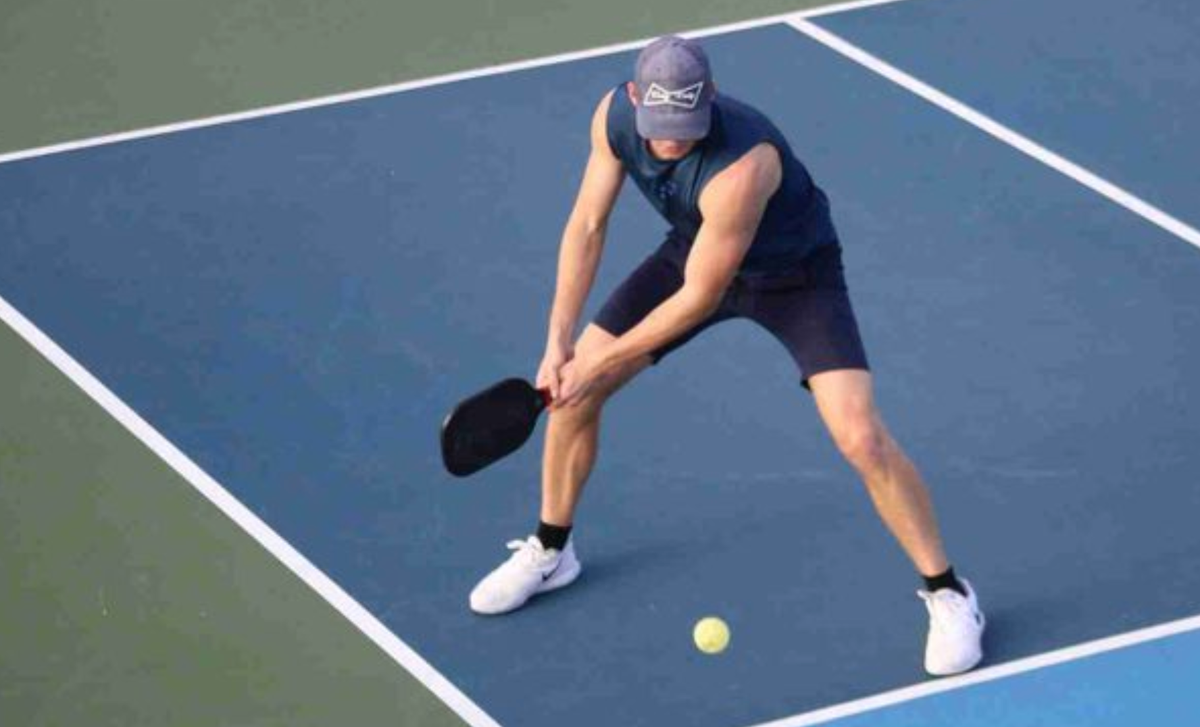
Drive When the Ball Sits Up
Not every ball from the baseline deserves a soft touch. If your opponent floats a ball high and slow, that's your cue to drive it flat and low at a body or a feet. A clean drive at an opponent's midsection is one of the few offensive options you get from deep court, so don't waste it by dropping instead.
Choosing wrong here is a common unforced error. The drive versus drop debate on the fifth shot applies just as much to any ball you're facing from the baseline: read the height, read the pace, then commit.
The Lob Is Your Emergency Exit
When you're completely out of position, the lob buys you time. It won't win the point, but it forces your opponents to retreat and gives you a window to reset your feet. The lob doctor's take on this shot is simple: use it sparingly, use it with height, and never lob short.
Why Do You Keep Getting Stuck at the Baseline in Pickleball?
Most players don't get stuck behind the baseline because of one bad shot. It's pickleball baseline math: two shots earlier, one bad habit.
They get stuck because of a chain reaction that starts two shots earlier, usually with a shot selection habit nobody ever bothered to drill on purpose.
Your Third Shot Drop Is Bailing You Out (Not In)
If your third shot drop consistently lands short in the middle of the court instead of tight to the net, you're frozen at the baseline for the rest of the rally.
Making your third shot spicy isn't about power. It's about arc, depth, and landing the ball soft inside the kitchen so your opponents can't attack it downward.
A 2025 review published through Human Kinetics on skill acquisition in racket sports found that players who trained drop-shot depth in isolation improved net-approach success rates faster than players who only drilled full points.
Depth control is a trainable skill, not a talent you're born with. Drills like the figure 8 pattern build exactly that kind of touch over time.
 David Groechel
You're Not Closing the Transition Zone
Here's the catch. Even a great third shot drop won't save you if you stand still after hitting it. You have to move forward.
Talking through the transition zone the right way means splitting your steps, staying low, and closing the gap between your drop and your next shot before your opponents can tee off on you.
Players who freeze at the baseline after their drop are the ones who stay stuck at the baseline for the rest of the point.
Movement is the fix, not just shot selection, and shadowing your footwork through a solo drill session makes the split step automatic long before match day.
 The Dink Media Team
What to Do When You're Stuck at the Baseline in Pickleball With a Partner
Doubles adds a wrinkle. If you're the one stuck deep while your partner is up at the kitchen, you're not just fixing your own footwork.
You're fixing a formation, and that's the real test of what to do when you're stuck at the baseline in pickleball as a team, not solo.
Doubles strategy around T and sideline placement matters here. Your partner needs to know whether to hold the middle or shade toward you.
Talk between points, since a quick "cover the middle" saves more points than silence.
 Thomas Shields
What to Do When You're Stuck at the Baseline in Pickleball and Your Partner Isn't
This is the more common doubles scenario, and it's trickier to fix than both players being back.
One partner at the net and one stuck deep creates a diagonal seam that good opponents will find immediately, especially off a serve angled near the kitchen.
Court coverage tips built around the fourth shot suggest the net player protect the middle and let the deep partner take the line.
Counterintuitive, but it closes the gap opponents exploit most.
 The Dink Media Team
How Do You Fix This for Good?
Short answer: you drill the decision, not just the shot.
Reactive footwork research from the NSCA in 2025 found that trained agility patterns cut reaction time meaningfully, the same edge that separates casual players from the players climbing DUPR's rating ladder year over year.
Build Your Kitchen Line Habit
Changing how you think about doubles starts with treating the kitchen line as home base, not the baseline.
Every drill and every rep should end with you moving forward, not staying put.
If your return of serve routinely leaves you flat footed, fixing where you return serve from can shave a full step off your recovery time toward the net.
Small positional habits compound over a match.
Drill the Two-Shot Rule Until It's Automatic
The two-shot rule is simple. Every time you hit a shot from the baseline, your very next move is a step forward, not a step back.
Pair that with better hands.
Practicing a reliable backhand volley and layering in topspin control for balls that sit up gives you more tools once you actually arrive at the net.
A DUPR-affiliated coaching note published in 2026 pointed out that players who consistently reach 4.0+ ratings share one trait more than any other: they spend more reps drilling the reset-and-advance pattern than any single stroke in isolation.
That's the real answer to what to do when you're stuck at the baseline in pickleball long term.
It's not one magic shot, and it's not becoming unattackable overnight. It's a repeatable pattern you trust under pressure.
 The Dink Media Team
Key Takeaways
- The default move from the baseline is a soft reset, not a hard drive, unless the ball sits up high and slow.
- Third shot drop depth is the root cause of most baseline traps. Fix the drop and you fix the pattern.
- Movement after your shot matters as much as the shot itself. Split step, advance, repeat, and treat it like any other drill worth mastering.
- In doubles, communicate your position so your partner can adjust coverage instead of guessing.
- Drill the reset-and-advance pattern deliberately. It's the single habit that separates players who escape the baseline from players who live there, and it's worth building into practice with your regular partners, not just live play.
Frequently Asked Questions
What is the fastest way to get unstuck from the baseline in pickleball?
Hit a soft, controlled reset that lands short in the kitchen, then immediately move forward while the ball is in the air. Speed in baseline pickleball comes from combining the right shot selection with quick footwork, built through repetition drills like the fridge and toaster drill, not from any single trick shot.
Should I always drop the ball when I'm stuck at the baseline?
No. If the ball is high and slow, driving it flat at your opponent's body or feet is often the better choice, the same block and smash principle that applies anywhere on the court. Dropping every ball regardless of height is a common mistake that keeps you pinned deep longer than necessary.
Why do I keep getting stuck at the baseline in doubles but not singles?
In doubles, a mismatched formation, one partner up and one back, creates a seam that opponents target on purpose. Fixing it usually comes down to simple teamwork habits more than raw skill. In singles, you control the whole court yourself, so recovery patterns are simpler even if the rally is more physically demanding.
How do I stop panicking when I'm stuck deep in the court?
Slow your feet down before you slow your mind down. Bend your knees, take a breath before contact, and commit to one clear shot choice instead of hesitating between a drop, a drive, and a lob at the last second. Learning to focus on your strengths instead of your weaknesses in that split second makes the decision faster every time.
Does the lob actually help when I'm stuck at the baseline?
Yes, but only as an occasional reset tool, not a primary strategy. A lob forces your opponents backward and buys you time to recover position, but relying on it too often makes your shot selection predictable and easy to counter. That's the short answer to what to do when you're stuck at the baseline in pickleball when the lob is your only option.

Love Pickleball? Join 100k+ readers for free weekly tips, news & gear deals.
Subscribe to The Dink