Pickleball gives people movement, competition, connection, improvement, and joy. But more than anything, it gives them a place to put their full attention.
Over the past five years, people have asked me some version of the same question again and again:
- What is the secret sauce of pickleball?
- Why do you love it so much?
- Why is everyone suddenly playing?
- Why is it so addicting?
- Why are people shifting their weekend plans, travel destinations, their entire identities around this game?
There are a lot of easy answers.
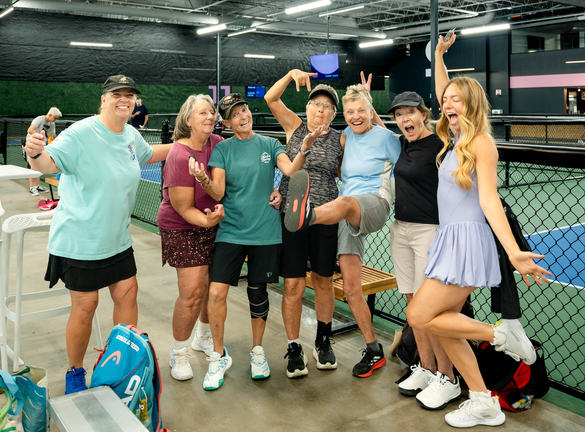
Pickleball is social. It is accessible, easier to learn than tennis, and less physically demanding than other sports. You can play it at almost any age. You can show up to an open play session, rotate in with strangers, and leave feeling like you are part of a community.
All of these are true and have been true for me. But I think the deeper answer is flow.
In psychology, flow is the state in which someone becomes fully immersed in an activity and experiences energized focus. Time seems to disappear, self-consciousness fades, and action can begin to feel almost automatic.
Flow is associated with heightened enjoyment and, in many settings, stronger performance and greater well-being.
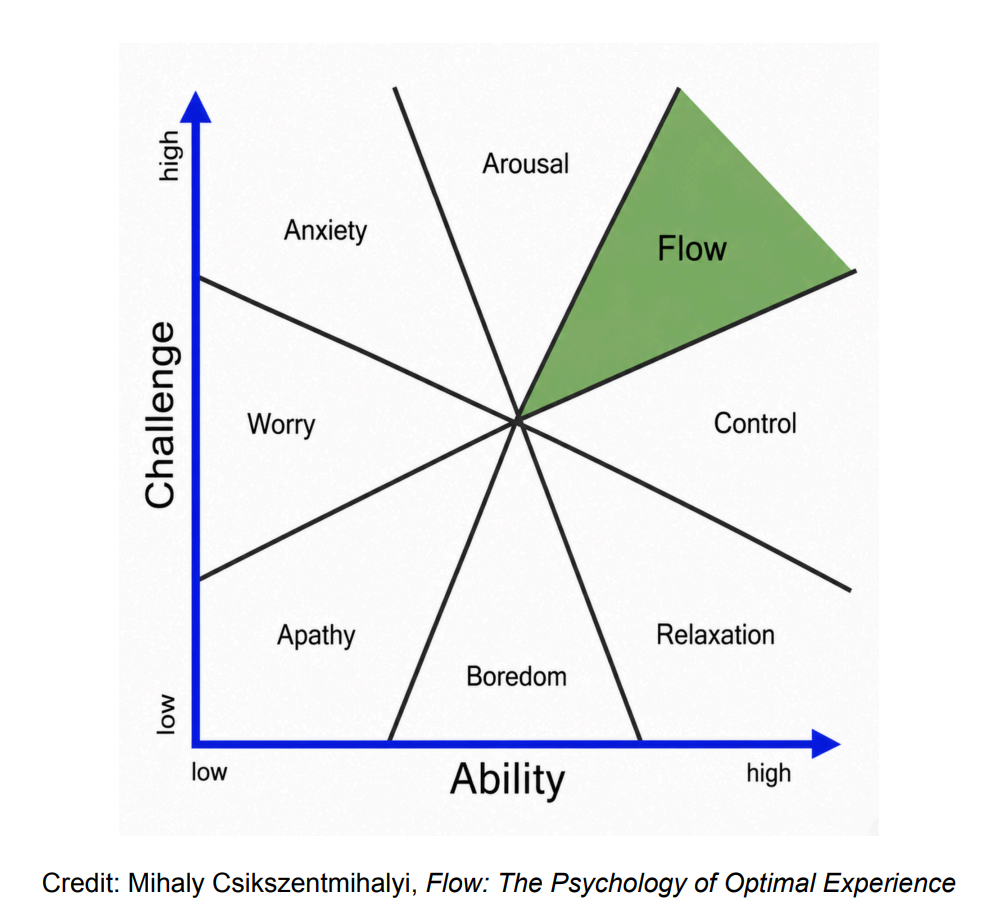
In the model developed and popularized by University of Chicago professor Mihaly Csikszentmihalyi, the “Flow Channel” occurs when the challenge in front of you and the skill you bring to it are both high and closely matched.
When these conditions are set, your full attention has somewhere to go:
Love pickleball? Then you'll love our free newsletter. We send the latest news, tips, and highlights for free each week.
Channeling 'Flow' on the Pickleball Court
I believe flow underpins so much of why people love this sport.
In pickleball, you could think of flow as what happens when the DUPR rating, or combined DUPRs, on both sides of the court are close enough that the outcome is uncertain.
The game is neither too easy nor too hard. Challenge matches skill. And when that balance is right, people can get completely pulled into a game.
That is true for two beginner teams with combined DUPRs around 4 all the way up to a 14 (E.g, Johns (7.1) and Tardio (6.9) versus a 13.8 (Patriquin (6.9) and Alshon (6.9).
It also explains why highly ranked players might be selective with their rep games. When one team’s level is substantially higher than their opponents, the flow chart reminds us that result is not “easy”, but instead sends players into a state of bored apathy.
The "accessibility of pickleball” can also be attributed to how quickly flow can happen. In many sports, it takes years of training before a beginner can feel anything close to deep flow.
In pickleball, we can experience it almost immediately with one extended rally, an instinctive counter, a point where the ball keeps coming back, our first ATP, or just a day when everyone on the court is laughing, moving, reacting, and locked in.
That one moment can be enough.
Think about the barriers to flow in tennis where learning to serve accurately or getting into an extended rally can be more of a source of frustration than an entry point into a deeper state of focus.
The Power of 'Group Flow'
It is not just individual flow either. Pickleball is unusually good at creating group flow. Because the court is small, the ball stays in play, and doubles is the dominant format, all four players are constantly connected. The best points feel almost musical or choreographed.
One player attacks, another resets, one partner shifts, the other covers, and the rhythm of the rally pulls everyone into the same shared state.
Flow also helps pickleball work across age, gender, and athletic background in a way that few sports do.
The game allows for unusual combinations of players to create surprisingly even matchups of skill vs. challenge.
A former college tennis player, a 65-year-old with great hands, a new teenage player with good instincts, and a tournament-level competitor could come together in different configurations to find a game that sings.
When the balance is right, the exact mix of players does not matter. The challenge meets the skill. The game absorbs everyone on court and flow emerges. Pickleball hooks people with early access to flow, but it keeps them engaged because they can watch higher-level players accessing deeper versions of that same feeling.
I am willing to bet that the average length of points, perhaps another way of considering the depth of flow, increases as the level of the match goes up. Beginner and intermediate players watch better players play the slow game, extend points, hit calmer resets, engage in drawn out hands battles. They see players who are not just reacting to the ball, but constructing a point in real time.
How many people have booked a lesson with a pro because of their desire to access deeper flow? Players start to see that getting better is not only about winning more games, it is about putting in the effort to be able to feel a richer, deeper version of the experience that hooked them in the first place.
An Elevated State
As my own game has progressed towards the 5.5 level, I have also started to reconsider the flow chart.
When I first learned about the Flow Channel, I considered that to be the destination when playing this sport. But there is another state, beyond it that, as a player, I have become more interested in: control.
When you reference the chart above, this is the zone that sits beneath flow. Control happens when your skill is greater than the challenge in front of you. And in many ways, that is the ideal place to be as a pickleball player.
Ben Johns embodies this state the vast majority of time he’s on court.
- He is not rushing, panicking, or forcing the game.
- He appears calm because he is operating from a place where the entire game and court feel manageable.
The ball or his opponents are not happening to him. He is shaping the point and putting them into a state of arousal, anxiety, or worry (not where you want to be):
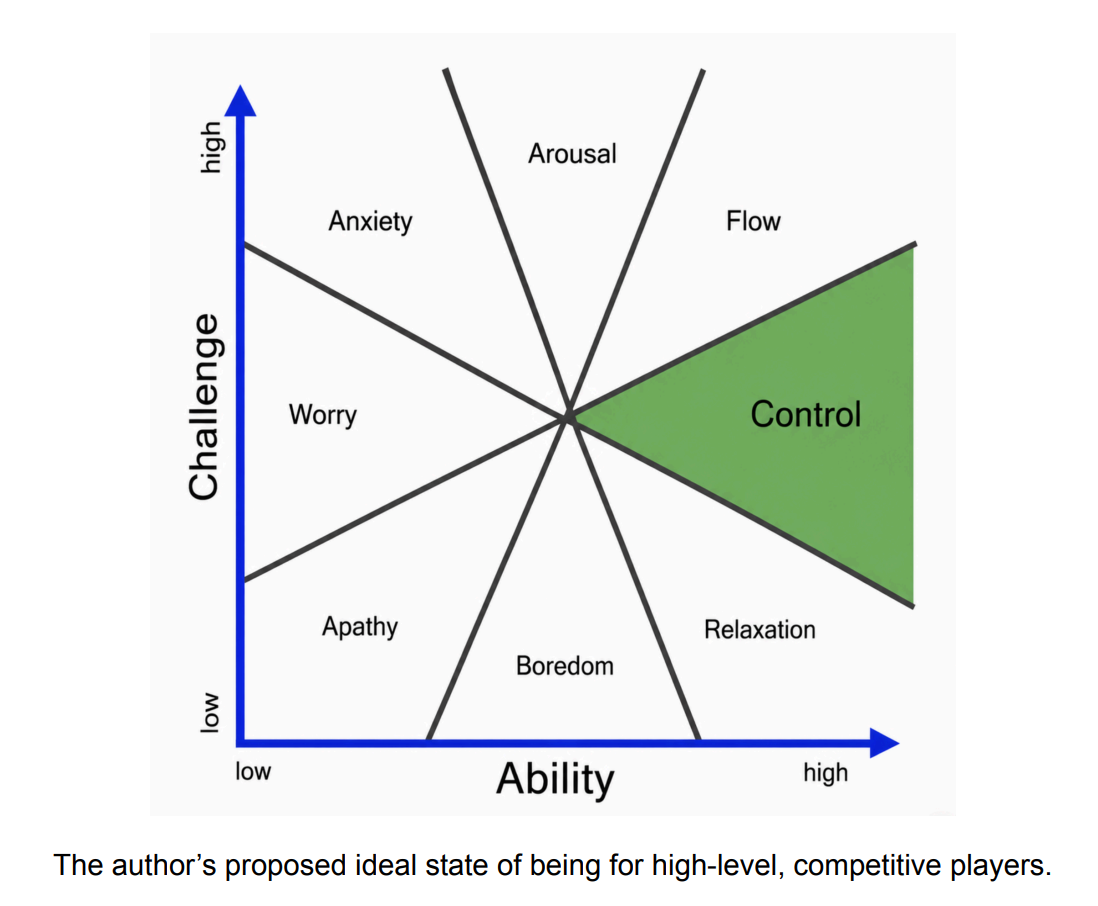
If you are putting in hard work on the drilling court or reviewing your games in the film room, you are trying to raise your level so that when tournament competition arrives, you feel in control throughout your matches.
This has completely shifted how I’m looking to feel during competition.
That is not to say flow has stopped mattering for me. It is still the hook, and it is still one of the best feelings in the sport. But the more I play, the more I see improvement as a movement from glimpses of flow toward longer periods of control.
At first, you are thrilled when one point feels effortless. Later, you want whole games to feel that way.
For most of us, pickleball begins with a glimpse. One rally. One game. One open play session where we forget about everything else for an hour and wonder why we feel so good afterward. Then the sport becomes a pursuit of finding that feeling more often, at higher levels, against better players.
That is the real secret sauce to me.
Pickleball gives people movement, competition, connection, improvement, and joy. But more than anything, it gives people a place to put their full attention.
In a world that constantly pulls that attention apart, that is no small feat. It may be the deeper reason we all keep running it back.


Love Pickleball? Join 100k+ readers for free weekly tips, news & gear deals.
Subscribe to The Dink