
After touring more than 75 pickleball facilities across 19 states and seven countries and territories, here's what separates the clubs players love from the ones they leave behind
I've walked into a lot of pickleball facilities. For my series The Joy of Pickleball, I've now toured nine of them in nine cities: a former Macy's in Richmond, a 1930s theater in Times Square where Frank Sinatra got his start, a mid-century modern club in Beverly Hills, Michigan, and a 50,000-square-foot "urban country club" in St. Pete that sold out 800 memberships before it opened.
And that's just the series. Between tournaments, events and travel, my running count is 75-plus facilities across 19 states and 7 countries and territories, which may be more than anyone else in the game.
Every one of them looked different.
But the clubs where players were happiest got the same five things right.
If you're building a facility, or just choosing where to spend your court time, here's what matters most.
1. Build for the player first
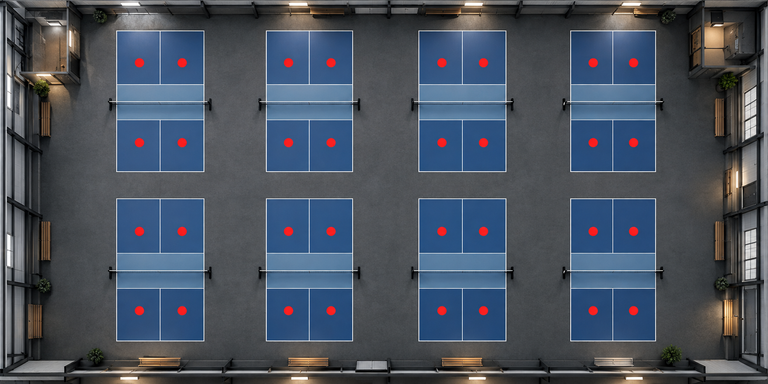
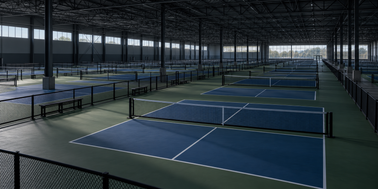
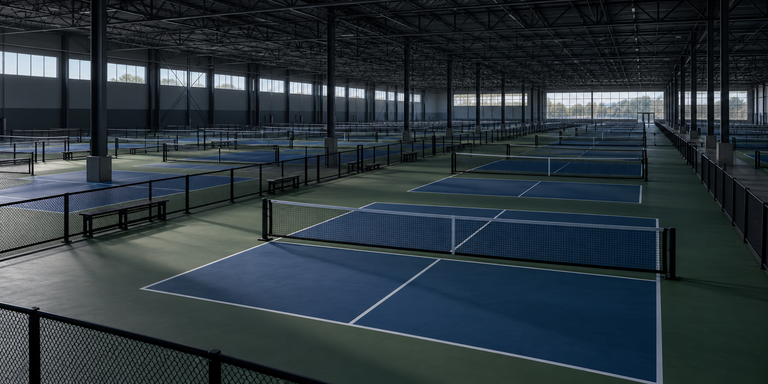
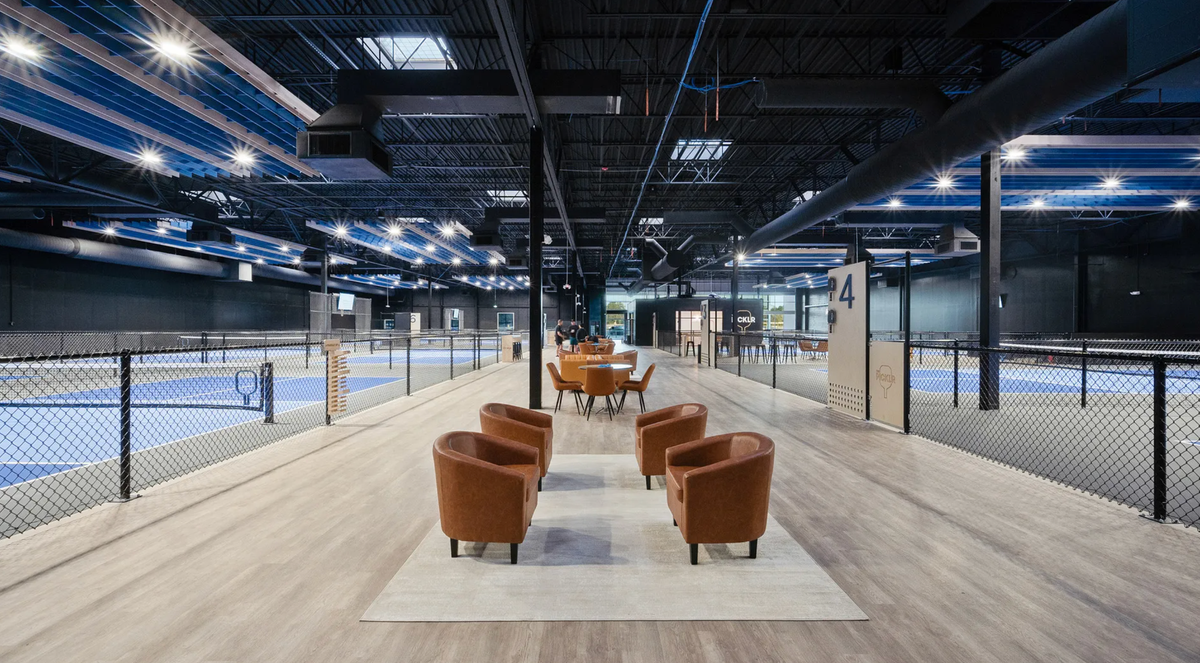
Players will forgive a lot, but not a cramped court. They need run-off behind the baseline, room between courts for an ATP, and a ceiling high enough that a good lob stays in play. Those are non-negotiable, and you can't fix them after the lease is signed.
The clubs that get this right make a choice that looks bad on a spreadsheet.
Sam Sood, owner of Pickleball Kingdom in Hamilton, NJ, put just 14 courts in more than 40,000 square feet. He could have squeezed in more.
He decided the people who love the game deserved the room. Ceilings matter just as much. Erica Desai and Mary Cannon, the founders of CityPickle, told me that when they walk into a space with high ceilings and no columns, they know right away it's perfect for pickleball.
Lighting is where most facilities quietly fail. Ben and Collin Johns' design firm, JDC, calls it the number one player complaint. The usual culprit is gym-style fixtures pointing straight down at the court. JDC recommends mounting lights beyond the court and angling them inward, lighting every court evenly so there are no "good" and "bad" courts, and avoiding fixtures so bright that players squint.
Pickleball Kingdom did exactly that. Sam had engineers come in with light meters to light every court evenly, with fixtures along the sidelines. Zero Zero Two in Fort Collins kept its lights off the courts and hung reflectors to cut glare. Down the Line in Annandale, VA, painted the walls behind the courts dark so the ball stands out. None of this shows up in a brochure, but all of it shows up in your game.
 West Shaw
2. You should be able to hear yourself think
This is my pet peeve: If I can't hear my partner call "yours" or hold a conversation at the bar, I'm not staying.
Pickleball is loud by nature, with hard paddles, a hollow ball and a dozen courts going at once. A big box with concrete floors and a metal roof turns that into a roar.
Nobody wants to hang out somewhere they have to shout to be heard.
The clubs that solved it treated sound as a design problem from day one. Paddle + Par in Beverly Hills, Michigan, lined its walls with acoustic panels and hung "ceiling clouds" overhead, so 11 courts of full dinking still feel calm. It's comfortable enough that people come in just for lunch or dinner, to sit and soak up the energy of the courts.
 Alex E. Weaver
Zero Zero Two put soundproofing above the courts and wrapped the walls in a thick vinyl that breaks up sound waves instead of bouncing them back. In their conference rooms, the courts all but disappear.
St. Pete Athletic even built a soundproof call booth so you can take a call from your boss without them knowing you're at the courts. It's so popular they're adding a second one.
Sound is the most underrated line item in a facility budget. Players may not be able to name it, but they feel it, and they leave.
3. Give people a reason to stay off the court
Not every club needs to be a restaurant. Some owners just want to build a great pickleball club, and that's a valid choice. The team at PickleBOS in Boston put it simply: pickleball players just want to play pickleball, and everything else is secondary.
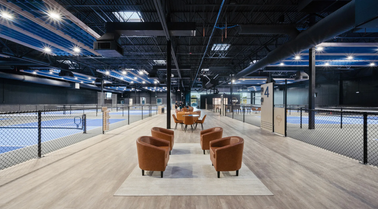
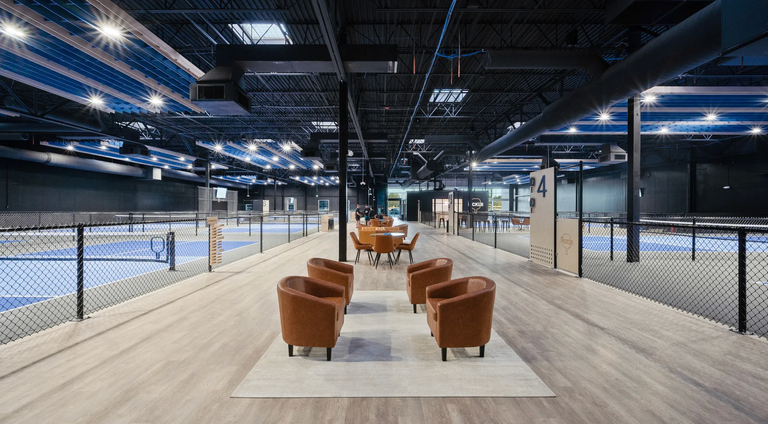
Still, they built a bar and an open lounge that flows right onto the courts, and they hand out free balls so nobody pays to borrow equipment. Even the play-first clubs I love give people somewhere to be when they're not on the court.
At other clubs, food is the draw.
At Performance Pickleball in Richmond, I met a group of women whose routine is two hours of play, then drinks at the bar, and the second half matters as much as the first.
SPF in Chicago gets its coffee, pastries and sourdough from neighborhood businesses. Paddle + Par bakes its own bread. St. Pete Athletic makes its own ketchup.
Either way, it's smart business. One club I visited hosted three events of more than 500 people in its first week. Nearly every club I visited books birthdays and corporate outings, and SPF members are planning everything up to a rehearsal dinner there. A court rents for an hour, but a place people want to stay books the whole evening.
The clubs that miss do neither. A front desk, a row of courts and nowhere to sit feels like renting a gym, and people leave the minute their game ends.
 Alex E. Weaver
4. Tech on every court, not just the showcase court
A few years ago, video replay was a luxury saved for the championship court. Every facility I visited for The Joy of Pickleball now has replay and digital scoring on every court, and players notice when it's missing. As one owner told me, there's no reason only a couple of courts should get it.
The obvious use is bragging rights. The bigger one is getting better.
Coaches told me again and again that players hear instructions but don't absorb them until they see themselves, and a replay closes that gap in seconds.
A coach at Performance Pickleball in Richmond told me it made her lessons easier: instead of describing what a student did, she just shows them. I ran one of my own matches through PB Vision and learned that only half my serves landed in the deep third of the court. I want 75 to 80 percent. I'd never have known without the data.
Good tech also fades into the background. At PickleBOS in Boston, the tournament director told me the system handles standings and court assignments so completely that "I get to be a viewer at my own tournament." And replays travel. One club told me its members' highlights have generated more than 875,000 impressions for its partners, and some of them have probably ended up right here on The Dink.
 Ben Borton
5. People build the community, not the building
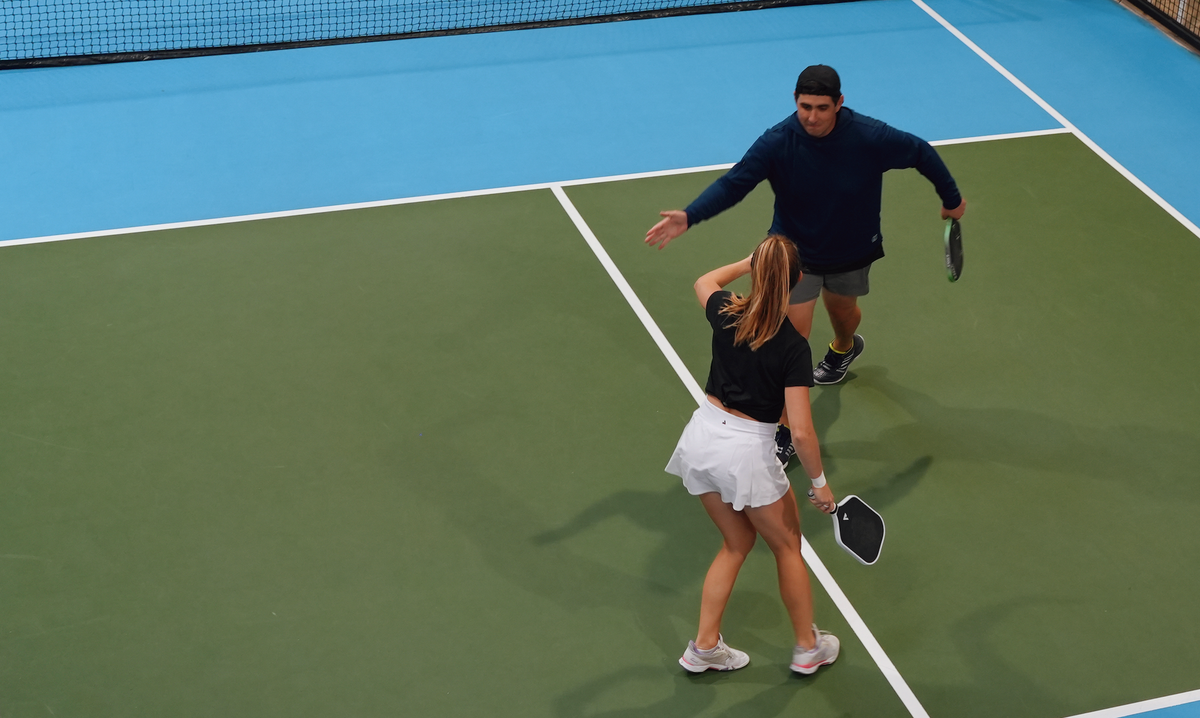
You can copy a floor plan, but you can't copy a culture. The clubs I'd go back to tomorrow all had owners and staff on the floor every day, building one on purpose.
PickleBOS runs what it calls a "one member at a time" policy. Every member gets welcomed and heard, and the owners would rather be in open play than behind a desk. At Zero Zero Two, the front desk greeted members by name. The owners survey members and act on the results, and they cap membership so there's always a court open.
One member described it to me as, "like going to a family picnic, but no weird uncles."
At Down the Line, founder Jenni Bae told me one big reason she kept playing is that her dad got hooked, and now it's how they spend time together. For the record, he does not miss.
That's the real product. Courts, sound, space and tech get people in the door, but people are why they come back.
 Ben Borton
The bottom line
The bar has moved. A warehouse with nets isn't really a pickleball facility anymore. It's a placeholder until a better one opens nearby.
Players now expect courts built for the game, a room they can hear in, a reason to stay off the court, tech that makes every match better, and people who know their name.
I have one last test I run everywhere: Show me your bathroom, and I'll tell you how premium your club is.
CityPickle Times Square passed with flying colors, with art deco bathrooms that nod to the building's Paramount Theater history. And St. Pete Athletic has my favorite member locker rooms anywhere, iconic sink faucets included. The clubs that pass this test almost always pass the other five.
My facility count is at 75-plus and climbing. So tell me: Where should I play next? Send me your favorite club, the one that nails all five, on Instagram at @pickleball.chick. See you on the courts.
Watch every episode of The Joy of Pickleball on YouTube.
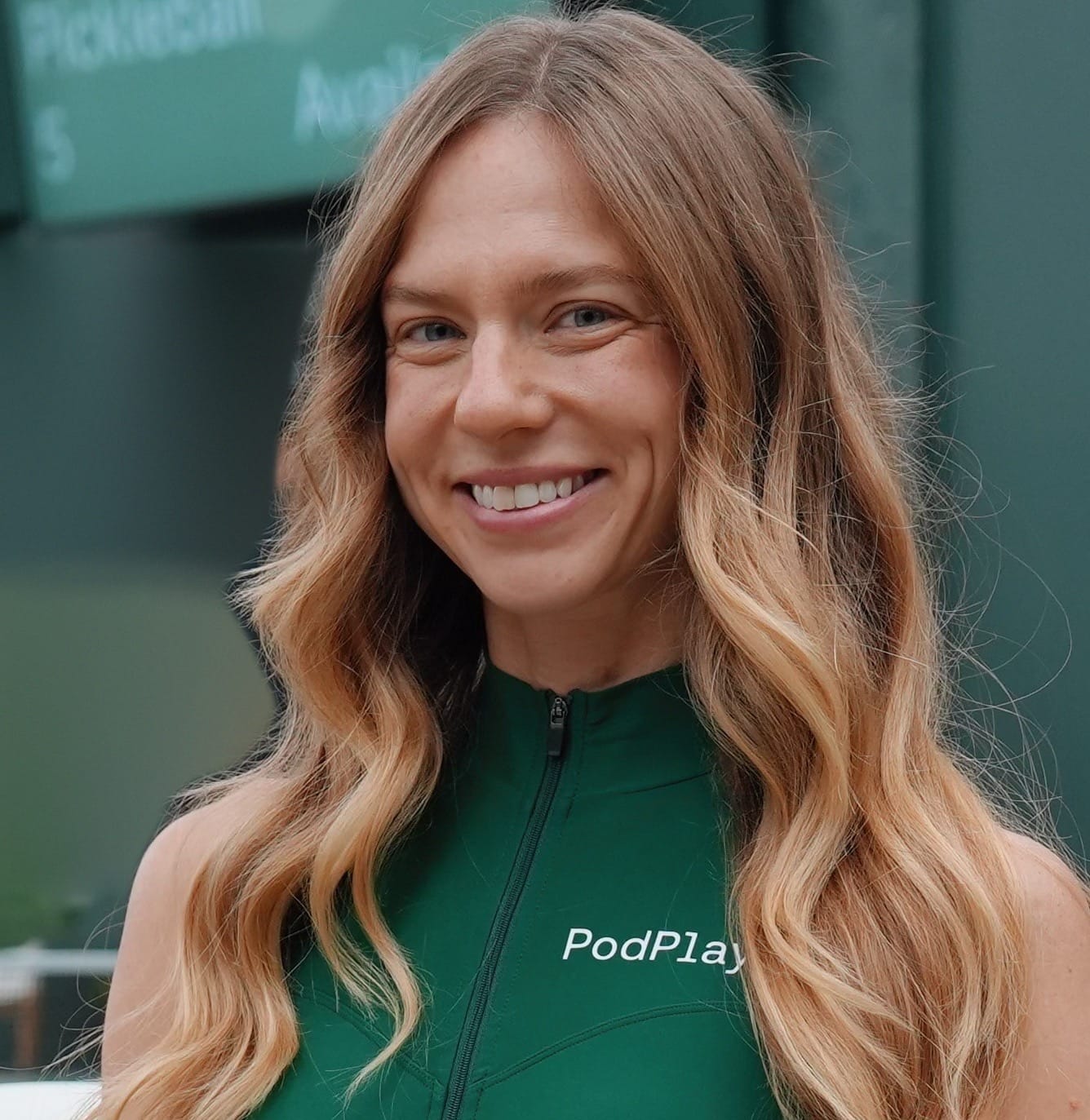
Disclosure: The Joy of Pickleball is produced with PodPlay, where Kaitlyn is Head of Content and Partnerships.
Heads up: hundreds of thousands of pickleballers read our free newsletter. Subscribe here for cutting edge strategy, insider news, pro analysis, the latest product innovations and more.

Love Pickleball? Join 100k+ readers for free weekly tips, news & gear deals.
Subscribe to The Dink